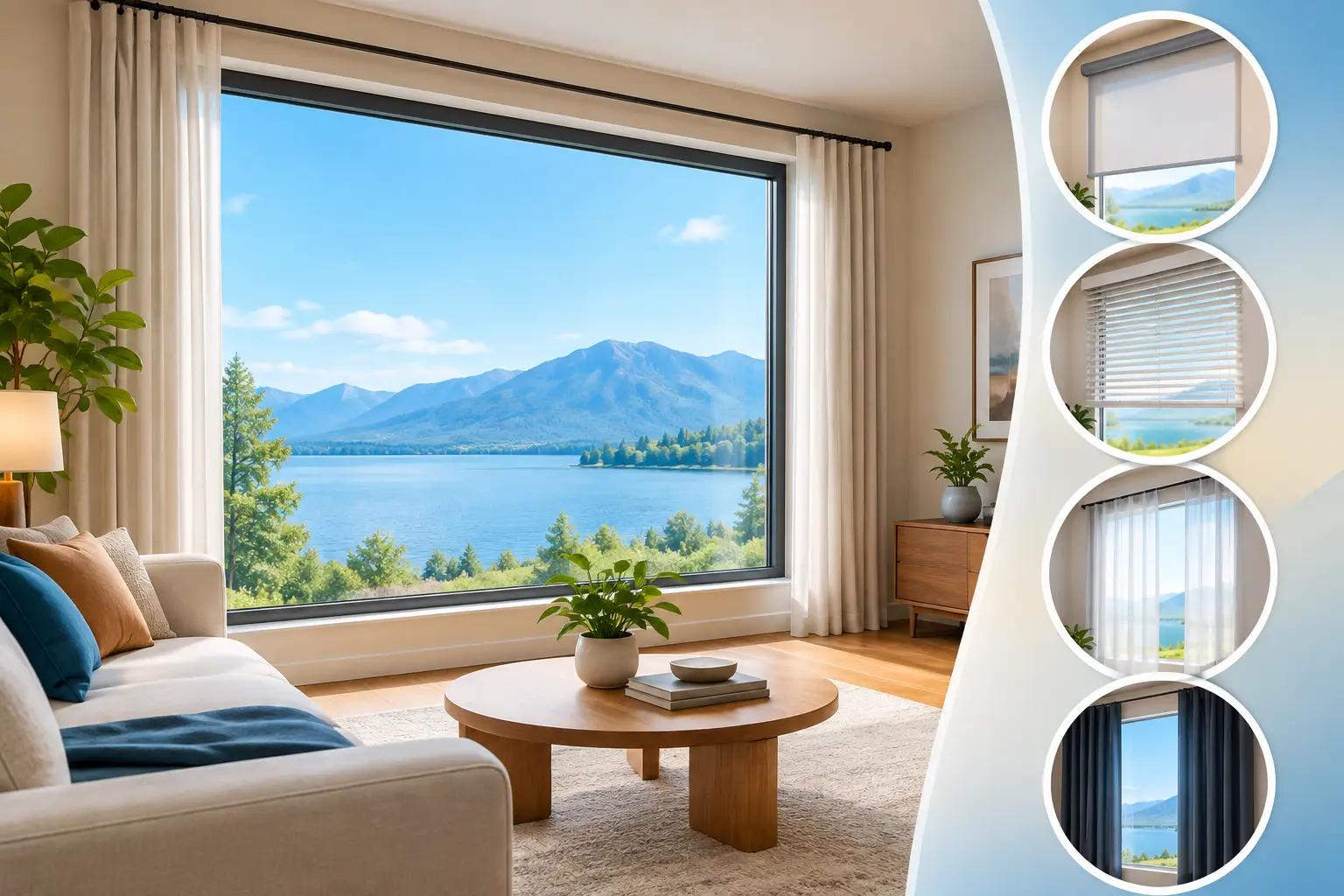
A picture window earns its name by framing a view – a wooded backyard in Great Falls, a carefully landscaped lawn in Vienna, or the changing light over a Reston neighborhood. But that same uninterrupted glass can bring intense afternoon glare, uneven temperatures, fading floors, and a surprising lack of privacy after dark. The best treatments for picture windows preserve what makes the window special while giving you control over the light, comfort, and finished look of the room.
A successful choice is rarely about selecting the most decorative fabric or the trendiest shade alone. It comes down to how the room is used, the window’s orientation, its size, nearby architecture, and whether you want the treatment to disappear into the design or become part of it. Custom sizing and professional installation matter especially here: on a large, highly visible window, a crooked hem, a light gap, or a poorly placed bracket is hard to ignore.
What a Picture Window Treatment Needs to Do
Picture windows usually do not open, so their treatment does not need to accommodate a crank, a sash, or frequent access. That gives homeowners more flexibility. Still, the broad expanse of glass creates its own demands. A treatment should sit in proportion to the window, operate reliably at a larger size, and look intentional whether it is raised, lowered, open, or closed.
Start with the problem you are trying to solve. South- and west-facing windows often call for serious solar management. A street-facing living room may need daytime view preservation and nighttime privacy. In a formal dining room, softness and architectural presence may be the priority. There is no single right answer, but choosing the primary goal early makes the design process far clearer.
Best Treatments for Picture Windows by Need
Cellular shades for insulation and soft light
Cellular shades are one of the strongest choices when energy efficiency is the concern. Their honeycomb-shaped cells trap air, helping reduce heat gain in summer and heat loss during colder Northern Virginia months. They also soften direct sunlight without making a room feel closed off.
For a picture window, consider a larger single shade when the dimensions allow it, or coordinated shades with carefully planned divisions when the window is exceptionally wide. The trade-off is visual: a single broad shade creates a clean look, while multiple shades introduce slim vertical breaks. A consultation can help determine which option will operate best and look most balanced from both inside and outside the home.
Top-down/bottom-up operation is useful for windows where privacy is needed without sacrificing all natural light. If the view is the main reason you chose the window, however, a standard bottom-up shade that fully clears the glass may be more satisfying.
Solar shades for glare without losing the view
Solar shades are often the best answer for a picture window overlooking a view you do not want to cover. Their specialized fabrics filter sunlight, reduce glare on televisions and computer screens, and help protect hardwood, upholstery, and artwork from harsh UV exposure. During the day, they maintain an outward view far better than an opaque shade.
Openness factor is the detail that changes the result. A more open weave provides a clearer view and more daylight, while a tighter weave offers greater glare control and privacy. Homeowners should also understand the nighttime limitation: when interior lights are on, solar shades do not provide the same privacy as blackout or room-darkening treatments. Pairing them with drapery panels is a beautiful way to add privacy and flexibility.
Roller shades for a clean, contemporary finish
Custom roller shades bring a streamlined, architectural appearance to large picture windows. They are available in light-filtering, solar, room-darkening, and blackout materials, so the same tailored silhouette can suit a bright family room, a media space, or a bedroom sitting area.
Their simplicity is their strength. When raised, roller shades roll into a compact profile that lets the window take center stage. When lowered, they create a smooth, uncluttered plane. For modern homes in Ashburn or McLean, they can feel especially natural alongside clean trim, neutral walls, and expansive glass.
For very wide windows, product specifications matter. Not every fabric and operating system is appropriate at every width. This is one area where professional measurement prevents a frustrating surprise after ordering.
Drapery panels for warmth, scale, and luxury
Drapery can turn a large picture window from a handsome architectural feature into a true focal point. Full-length panels add softness to stone, drywall, and expansive glass, and they can make ceilings appear taller when the rod or track is mounted high above the window.
For picture windows, stationary panels are often enough. They frame the glass without blocking it and create a layered, finished appearance. Functional drapery is the better choice when you need privacy, want to darken the room, or need an additional layer of insulation. Lined drapery provides more substance, while blackout lining is ideal for media rooms, bedrooms, and areas with strong evening light.
The key is proportion. Panels that are too narrow or mounted directly at the window edges can look undersized against a broad expanse of glass. Custom fabrication allows the stack-back, fullness, header style, and hardware placement to be planned around the actual window and room rather than guessed from a package label.
Layered shades and drapery for the most flexibility
For many homeowners, the most polished solution is a layered one: a functional shade closest to the glass, with drapery panels or a tailored valance adding depth. A solar shade plus drapery is excellent for bright living spaces. A cellular or room-darkening roller shade under decorative panels offers privacy, temperature control, and a more formal look.
Layering costs more than a single treatment, but it solves more problems at once. It also allows you to use a light, view-friendly shade most of the day and close the drapery only when privacy or darkness is needed. In a prominent room, that flexibility can make the investment feel worthwhile every day.
Plantation shutters for architectural definition
Wood shutters bring enduring craftsmanship and strong visual structure to a picture window. They work particularly well in traditional, transitional, and tailored interiors where the window needs to feel like part of the architecture. Wide louvers can admit generous light and direct it away from seating areas, while closed louvers provide meaningful privacy.
Shutters do have trade-offs. Even when open, panels and louvers remain visible, so they do not provide the completely unobstructed view available with raised shades or side-stacked drapery. On unusually large windows, panel configuration and weight need careful planning. The result can be striking, but it should be designed for the specific opening rather than treated as a one-size-fits-all solution.
Motorization Makes Large Windows Easier to Enjoy
A treatment that is difficult to reach or operate tends to stay in one position. Motorized shades change that equation. They are especially practical for tall picture windows, rooms with multiple large openings, and homes where sun exposure shifts throughout the day.
With motorization, shades can be adjusted from a remote, wall control, or compatible smart-home system. You can lower them during the brightest afternoon hours, raise them for a morning view, or schedule them to help protect interiors when the house is empty. For a bank of large windows, synchronized operation also keeps the room looking orderly.
Motorization is not only a luxury feature. For hard-to-reach glass, it is often the most realistic way to get the comfort and energy benefits you are paying for. The best approach depends on power access, window location, and how much automation you want, which is why planning it before installation is valuable.
Details That Separate a Good Result From a Custom One
Mounting location has a major effect on performance. An inside mount can look crisp and minimal when the window depth and trim allow it. An outside mount may provide better light coverage, conceal uneven window dimensions, and make the window appear larger. For room-darkening needs, outside-mounted shades with proper overlap are usually more effective.
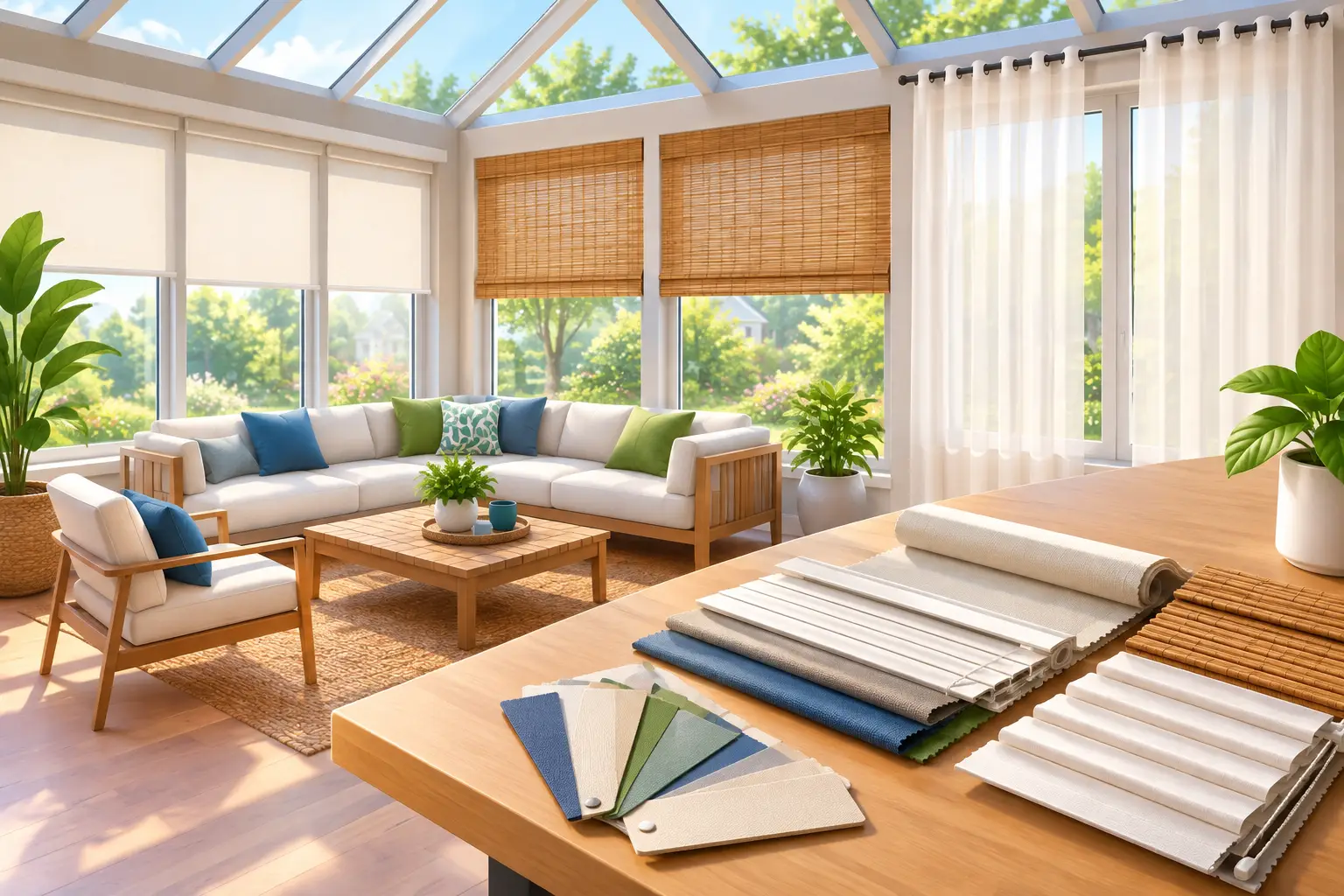
Fabric color also deserves more thought than most homeowners expect. Lighter fabrics reflect more heat and create an airy appearance, but may show silhouettes at night. Darker solar fabrics can offer a sharper daytime view outward, although they can feel visually stronger when lowered. The right selection should be viewed in your own room, under your own light, alongside flooring, paint, and furnishings.
Finally, do not treat a picture window as an isolated purchase if it shares a room with other windows. Coordinating treatments do not have to be identical, but they should share a visual language. A solar shade on the picture window, for example, can be matched with similar fabrics or complementary roller shades on adjacent doors and sidelights.
A large window should feel like an asset at every hour, not only when the sun is low and the view is perfect. The right custom treatment lets you enjoy the architecture, protect the room, and make the space feel finished. At Covering Windows, an in-home consultation makes it possible to compare real materials, see how options work in your light, and choose a solution designed around the window you already love.