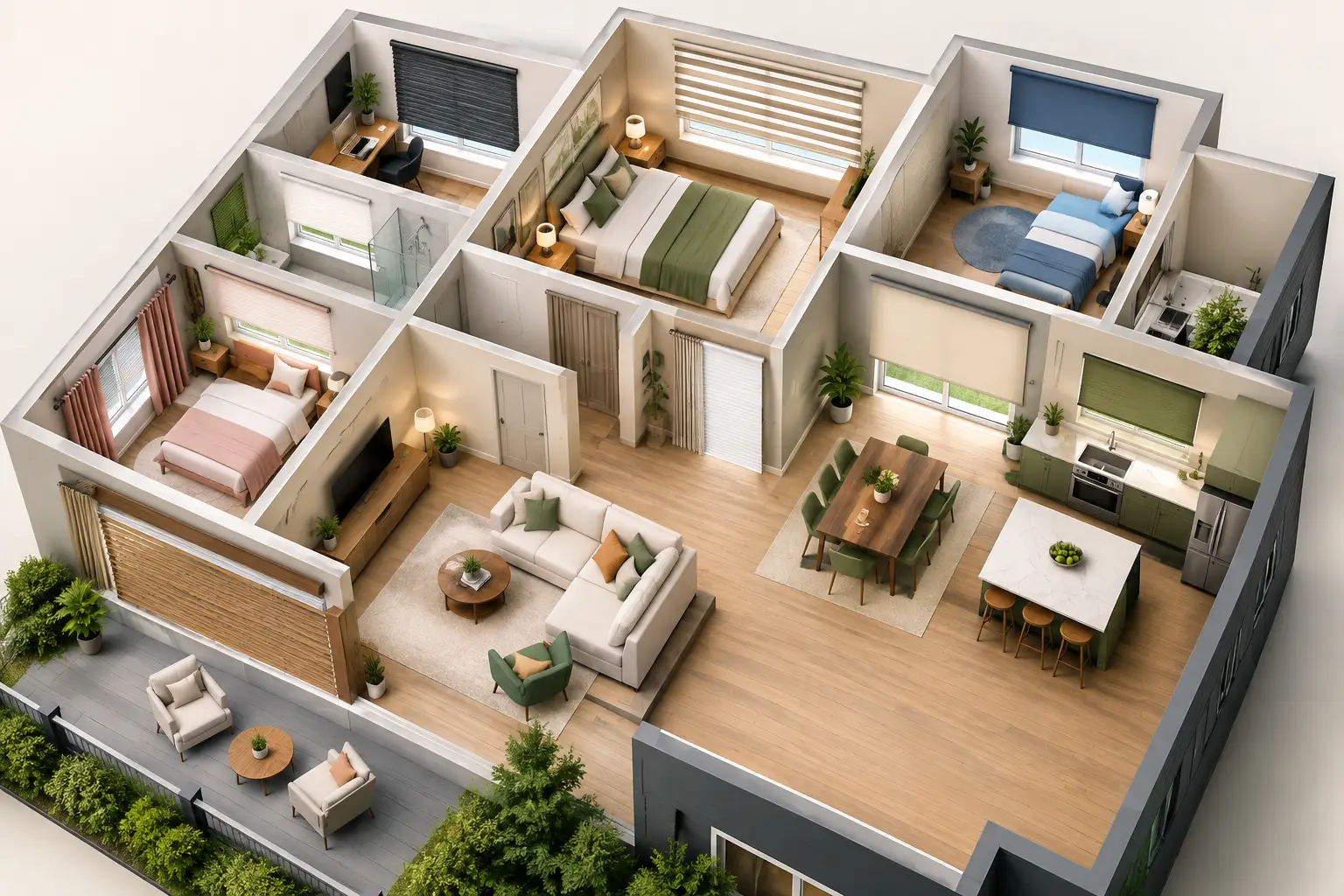
You watch the thermostat creep up while the air conditioning hums endlessly. Summer sunlight turns a comfortable living room into a sweltering oven. Winter drafts drain the warmth right out of your bedroom. Bare glass offers zero protection against these temperature swings, and you pay for that lack of protection every single month.
Adding energy efficient window coverings changes this dynamic entirely. These smart upgrades transform thin glass panes into robust barriers against the weather. We will explore exactly how these window treatments stop heat transfer, lower your daily HVAC costs, and improve your overall home comfort. You will learn the specific benefits of different shade types and discover exactly how to choose the right solution for every room.
Why Energy-Efficient Window Coverings Matter
Windows represent the weakest link in your home’s thermal envelope. During the summer, unfiltered sunlight pours through bare glass and creates significant solar heat gain. Your air conditioner must work twice as hard to remove that excess heat. During the winter, the exact opposite problem occurs. Warm indoor air pulls toward the cold glass and escapes outside.
You literally throw money out the window when you ignore this thermal transfer. Energy efficient window coverings directly tackle this problem. They create a physical barrier that stops the cycle of heat gain and heat loss. By controlling the temperature right at the glass, these treatments dramatically reduce the workload on your heating and cooling systems. You achieve a more comfortable living space and easily save energy bills month after month.
Types of Energy-Efficient Window Coverings
Different window treatments handle thermal control in unique ways. Let us examine the most effective options available for your home.
Cellular (Honeycomb) Shades
Cellular shades feature a unique pleated design that forms a series of honeycomb-like pockets.
How it works: These pockets trap stagnant air right against the glass. This trapped air creates a powerful layer of insulation between your room and the harsh outdoor temperatures.
Heat reduction benefit: The honeycomb design excels at helping to reduce heat loss in the winter and blocks intense solar radiation in the summer. They offer some of the highest insulation ratings of any interior window treatment.
Best use case: Install cellular shades in bedrooms and living rooms where you need maximum temperature control and privacy.
Solar Shades
Solar shades utilize a specially woven mesh fabric designed to filter incoming light.
How it works: The tight weave of the fabric reflects harsh sunlight back out the window before it can heat up the room. They come in various “openness” percentages, which dictate how much light filters through.
Heat reduction benefit: These shades block harmful UV rays and drastically cut down solar heat gain while still allowing you to see outside.
Best use case: Use solar shades in sunrooms, home offices, and west-facing windows that take a beating from the afternoon sun.
Thermal Curtains
Thermal curtains look like standard drapery but feature heavy, insulated backing materials.
How it works: Multiple layers of dense fabric, high-density foam, and reflective vapor barriers block light and trap air. When hung closely to the window frame, they prevent room air from interacting with the cold or hot glass.
Heat reduction benefit: Heavy thermal window treatments effectively stop drafty winter air from chilling your room and completely block baking summer sun from heating your floors.
Best use case: Hang thermal curtains in drafty older homes, primary bedrooms, or media rooms that require complete blackout conditions.
Roller Shades
Roller shades consist of a single piece of fabric that rolls up tightly around a tube.
How it works: Modern roller shades use advanced, thermally reflective fabrics to bounce solar energy away from the interior space. They fit snugly within the window frame to minimize air movement.
Heat reduction benefit: While they lack the trapped air pockets of cellular shades, a high-quality, reflective roller shade drastically cuts down on summer heat gain.
Best use case: Choose roller shades for kitchens and bathrooms where you want a sleek, easy-to-clean profile with solid sun-blocking capabilities.
Blinds & Shutters
Traditional horizontal blinds and interior shutters feature adjustable louvers made from wood, faux wood, or vinyl.
How it works: You tilt the slats to deflect direct sunlight away from your living space or toward the ceiling. When closed tightly, solid wood or faux-wood materials provide a thick, physical barrier.
Heat reduction benefit: Solid shutters offer excellent insulation against both heat and cold. Slatted blinds reduce summer heat gain effectively by redirecting the sun’s rays before they heat up your furniture.
Best use case: Install interior shutters in street-facing living areas where you desire classic architectural style alongside strong thermal control.
How Window Coverings Reduce Energy Bills
Understanding the science behind these treatments helps you maximize their value. The right home insulation window solutions tackle multiple energy-wasting problems simultaneously.
First, they provide a strong insulation effect. Bare windows allow heat to pass through them rapidly. When you install thick curtains or cellular shades, you add an R-value (insulation rating) to the window opening. This extra insulation keeps your expensive conditioned air inside where it belongs.
Second, they offer critical UV protection. Ultraviolet rays fade your furniture and bake your floors. By blocking these rays, you keep the ambient temperature of the room much lower.
Third, they directly reduce your HVAC usage. When your home stays naturally cooler in July and warmer in December, your thermostat triggers your air conditioner and furnace far less often. This reduced runtime translates directly into monthly financial savings.
Finally, they adapt to seasonal performance needs. You can open them during winter days to harness free solar heat, then pull them shut at night to trap that warmth. In the summer, you simply keep them closed during peak daylight hours.
How to Choose the Best Option
Selecting the right treatment requires looking at your specific living situation.
Climate-based selection: If you live in a notoriously cold climate, prioritize heavily insulated cellular shades or thick drapery to stop freezing drafts. If you live in a scorching southern climate, focus on solar shades and reflective roller shades that reject intense UV rays.
Room-based selection: Match the treatment to the room’s function. Bedrooms need the dark, quiet insulation of thermal curtains. Home offices benefit from solar shades that cut screen glare but preserve the view. Living rooms often look best with classic interior shutters or layered treatments.
Budget considerations: Simple roller shades and standard cellular shades offer excellent thermal protection for a modest price. Custom interior shutters and motorized thermal drapery require a larger upfront investment but add significant long-term value to your property.
Expert Tips for Maximum Efficiency
Simply buying the right shade solves only half the problem. You must install and use them correctly to see real savings.
Layering curtains with blinds: Combine different treatments for maximum effect. Hang a cellular shade inside the window frame, and add heavy thermal curtains over the outside. This double-layer system traps an enormous amount of air and creates an ultimate thermal barrier.
Proper installation close to the window: Always mount your energy efficient window coverings as close to the glass as possible. A tight fit prevents air from sneaking around the edges of the shade. If you use curtains, ensure they drop all the way to the floor to stop air circulation.
Using reflective or blackout materials: Choose lighter colors or reflective white backings for window treatments that face the sun. The white material bounces the heat away much faster than dark fabrics, which tend to absorb solar energy.
Keeping coverings closed during peak sunlight: Develop a daily routine. Close the blinds on your east-facing windows in the morning, and close your west-facing shades in the afternoon. Active management ensures your home stays naturally comfortable all day long.
Conclusion
Energy efficient window coverings provide a practical, beautiful way to upgrade your home’s thermal performance. By choosing the right cellular shades, thermal curtains, or shutters, you stop seasonal temperature swings right at the glass. You protect your furniture from harsh UV rays, reduce the daily strain on your HVAC system, and create a much more comfortable environment for your family.
Evaluate the most problematic windows in your home today. Measure the frames, pick a style that matches your climate needs, and start enjoying a more comfortable house and a lower utility bill next month.