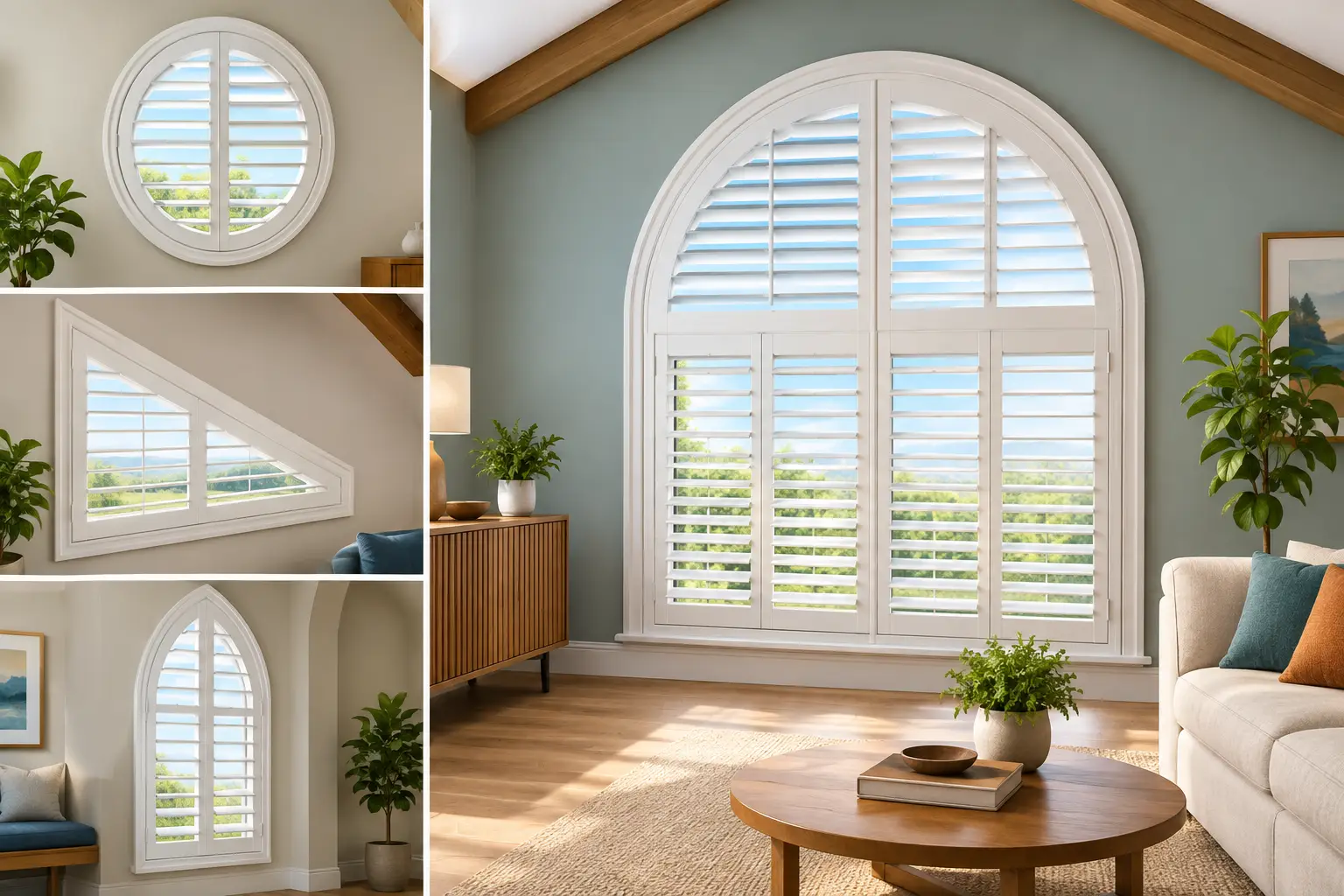
An arched window above a front entry, a dramatic wall of angled glass, or a round window in a stairwell can make a home feel distinctive. They can also make homeowners hesitate when it is time to add privacy and light control. Can shutters fit specialty windows? In many cases, yes. Custom shutters can be built for a remarkable range of shapes, but the right result depends on the window’s geometry, location, operating needs, and the experience of the person measuring and installing it.
For homeowners in Northern Virginia, specialty windows are often a signature architectural feature rather than a problem to hide. The goal is to preserve that character while adding the comfort, polish, and practical control that well-designed window treatments provide.
Can Shutters Fit Specialty Windows of Any Shape?
Custom shutters are one of the most adaptable treatments for nontraditional windows because they are fabricated to the opening rather than pulled from a standard shelf size. Unlike a ready-made blind or curtain panel, a shutter can follow a window’s curves, angles, and proportions with a tailored, furniture-quality appearance.
That said, “custom” does not mean every window should receive the exact same shutter design. A fixed arch needs a different solution than an operable casement window. A triangular gable window may need stationary panels, while a bay or bow window may use several individually measured shutter sections. The best design starts with what the window needs to do, not simply what shape it is.
Arched and Half-Round Windows
Arched windows are among the most popular candidates for custom shutters. A sunburst-style shutter is shaped to follow the curve of the arch, with louvers radiating from a central point. It creates a refined architectural finish and can be made as a fixed panel when the upper arch does not need daily adjustment.
Many homeowners pair a fixed sunburst in the arch with standard operable shutter panels below. This approach keeps the window looking cohesive while allowing the lower section to provide everyday privacy, airflow, and light control. It is especially effective for arched bedroom, living room, and entryway windows.
Circle, Oval, and Eyebrow Windows
Round, oval, and eyebrow windows can also be fitted with custom shutters. These shapes tend to become focal points, so proportion matters. Oversized louvers or heavy framing can overwhelm a small porthole-style window, while a carefully scaled design can turn it into an intentional design detail.
Because these windows are often positioned high on a wall, homeowners should consider whether adjustability is truly necessary. A fixed shutter may offer the finished look and privacy desired without adding unnecessary complexity. If direct sunlight is an issue, the louver orientation and panel layout should be planned around the window’s exposure.
Angled, Triangle, and Trapezoid Windows
Angular windows require precise measuring and careful fabrication. Triangles, rake-top windows, trapezoids, and windows beneath vaulted ceilings can be fitted with shaped shutter panels, but the louvers may be fixed depending on the angle and the manufacturer’s capabilities.
This is one area where a low price can become expensive quickly. An incorrect angle, an out-of-square opening, or an imprecise template can leave visible gaps or create a panel that simply will not sit correctly. Professional measuring is not an extra step for these windows. It is the foundation of a clean final result.
Bay, Bow, and Corner Windows
Bay and bow windows are not difficult because of unusual glass shapes. They are challenging because multiple windows meet at changing angles. Each shutter panel must be measured independently, and the spacing between panels must allow them to open without colliding.
A thoughtful shutter layout can make a bay window feel more tailored and substantial. It also offers valuable flexibility for rooms facing neighbors or busy streets: tilt the louvers for privacy, open the panels for a broad view, or close them to soften late-day sun.
What Determines Whether Shutters Are the Right Choice?
The shape of the window is only one part of the decision. Before selecting shutters, consider how much you use the window, how accessible it is, and what problem you want the treatment to solve.
For example, a fixed transom over a door may only need visual warmth and occasional glare reduction. A specialty-shaped bedroom window may need reliable privacy every evening. A tall, angled window in a great room may need solar control but be too high for manual adjustment. In that case, a custom shade, possibly motorized, may be a more practical companion or alternative to shutters.
Shutters are a strong choice when you want architectural presence, durable light control, and a finish that looks built into the home. They are less ideal when the primary need is room-darkening around an irregular shape, since shaped shutters can have small light gaps at the frame and louver intersections. A layered solution, such as shutters paired with drapery or a specialty shade, may better serve a media room or a light-sensitive bedroom.
Material Matters for Specialty Window Shutters
The right material affects appearance, durability, and how well a shutter performs in its location. Premium wood shutters bring natural grain, warmth, and an elevated furniture-like feel. They are often a beautiful fit for formal living spaces, libraries, and homes with stained wood details or traditional millwork.
Composite and high-quality faux wood options can be practical in humid spaces such as bathrooms, laundry rooms, or sun-exposed areas where moisture and temperature swings are a concern. The best option is not automatically wood or faux wood. It is the material that fits the room’s conditions and your design priorities.
For specialty shapes, fabrication skill matters just as much as material. Curved and angled panels involve more than cutting a frame to size. The louver pattern, stile widths, hinge placement, and mounting method all need to be considered so the finished shutter looks balanced rather than improvised.
Why Professional Measurement Makes the Difference
A standard rectangular window leaves some room for adjustment. Specialty windows do not. Walls and window openings are rarely perfectly level, square, or symmetrical, even in high-end homes. An arch may be slightly uneven. A triangle may have angles that differ by a fraction of a degree from the original plan. Those small variations are visible once a rigid shutter frame is installed.
A professional consultation allows the installer to evaluate the opening in person, confirm how the window operates, inspect trim depth, and identify obstructions such as handles, cranks, or alarm sensors. It also gives you the chance to compare louver sizes, frame profiles, finishes, and materials against the actual light and furnishings in the room.
This hands-on process avoids one of the most common frustrations with online window treatments: a product that looked right in a rendering but does not fit the window or the home. At Covering Windows, custom shutter projects are measured and planned around the details that make your windows unique, then professionally installed for a finished result that feels intentional.
Design Choices That Keep Specialty Windows Beautiful
Specialty shutters should complement the architecture, not compete with it. For a striking Palladian window, matching the shutter finish to nearby trim can create a cohesive, built-in look. In a contemporary home, a clean white finish and larger louvers may keep the design crisp and uncluttered.
Consider sightlines, too. If an arched window frames mature trees or a valued view, choose a layout that preserves as much of that view as possible when panels are open. If privacy is the priority, a divider rail can allow the bottom louvers to stay closed while the upper section admits daylight.
Color deserves a careful look. White shutters remain timeless and versatile, but warm neutral paints, soft greige, or a stained wood finish can add depth to a room with substantial trim and millwork. Samples viewed in your own home are far more reliable than making a decision under showroom lighting.
A Better Way to Approach an Unusual Window
Do not assume an unusual window must remain bare, or that it requires a compromise that feels temporary. Specialty windows call for a treatment designed around them. Sometimes that means a shaped shutter alone. Sometimes it means shutters below an arch and a fixed sunburst above, or a shade solution where daily operation and light control matter most.
The most satisfying result comes from treating the window as an architectural asset first. With accurate measurements, the right material, and a design that respects how you live in the room, custom shutters can make even the most distinctive window feel finished, comfortable, and entirely at home.