That sunny wall in your living room may look beautiful at 9 a.m., then make the room feel unbearable by midafternoon. In Northern Virginia, intense summer sun can heat floors, fade furnishings, strain air conditioning, and leave certain rooms noticeably warmer than the rest of the house. The right window treatments can reduce heat through windows while preserving the light, views, and polished look you want.
The best choice is rarely the most obvious one. A treatment that blocks glare may not provide enough insulation. A beautiful fabric may soften a room but leave too much solar heat entering the glass. The goal is to match the solution to your window direction, room use, architecture, and design preferences.
Why Windows Make Rooms Feel So Hot
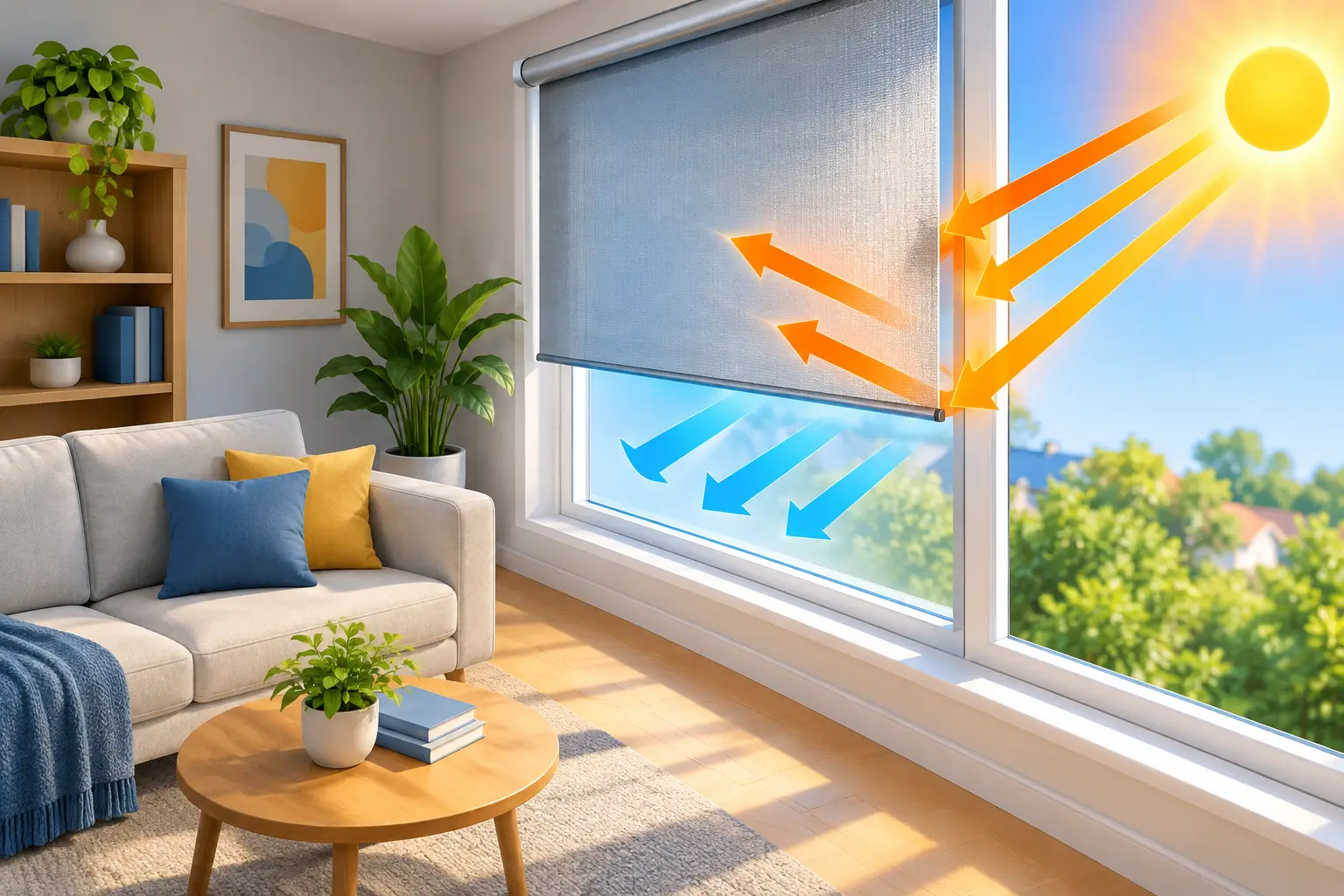
Sunlight carries solar energy through glass. Once that energy reaches interior surfaces such as hardwood, rugs, countertops, and upholstery, those materials release heat into the room. That is why closing a treatment after a room is already hot can help with glare but may not immediately make it comfortable.
Large windows, skylights, sliding doors, and west-facing exposures are frequent trouble spots. South-facing windows receive substantial sun throughout the day, while west-facing glass often creates the strongest late-day heat gain. Even high-quality windows benefit from a well-chosen shading strategy, particularly in rooms with expansive glass or limited tree cover.
Heat control is also about placement. Treatments mounted close to the glass generally stop more heat from moving into the room than treatments installed farther away. Exterior shading can be even more effective because it intercepts sunlight before it reaches the window.
How to Reduce Heat Through Windows Without Losing Style
There is no single treatment that is right for every home. Custom window coverings give you more control because materials, opacity, liner options, operating systems, and fit can be selected around the actual conditions in each room.
Cellular shades create an insulating layer
Cellular shades are a practical choice when comfort and energy efficiency are the priority. Their honeycomb-shaped pockets trap air, creating a layer between the glass and the room. This can help limit heat gain in summer and heat loss during colder months.
They are available in light-filtering and room-darkening fabrics, as well as single- and double-cell constructions. A room-darkening option can be especially helpful in bedrooms, media rooms, and west-facing spaces where direct sun is a daily concern. The trade-off is that darker or more opaque materials reduce daylight and may limit the view when lowered.
Top-down/bottom-up operation can offer a smart compromise. It allows daylight to enter from the top while keeping the lower portion of the window covered for privacy and solar control.
Solar shades manage glare and preserve views
Solar shades are designed to filter sunlight rather than block it completely. They are often an excellent fit for rooms with a view, including great rooms, home offices, breakfast areas, and commercial spaces with broad glass walls. The openness factor of the fabric determines how much you can see through it and how much light it filters.
A lower openness factor generally provides stronger glare and heat control, while a higher openness factor maintains a clearer view. This is one of those choices where it depends on the room. A home office facing afternoon sun may benefit from a more protective fabric, while a shaded family room may call for a lighter filter.
Solar shades are clean-lined and unobtrusive, but they do not provide the same insulation as cellular shades or lined drapery. They are often most effective when selected for sun exposure and paired with other layers where needed.
Plantation shutters add structure and control
Custom wood shutters bring architectural presence to a room while giving homeowners flexible control over sunlight. Adjusting the louvers lets you redirect light away from seating areas and television screens without closing off the room entirely. When panels are closed, shutters create another barrier at the window.
For homeowners who value natural materials and a tailored finish, wood shutters can be both a design investment and a comfort upgrade. The exact energy performance depends on fit, louver size, and how consistently the panels are closed during peak sun. Proper measurement and installation matter because gaps around a poorly fitted treatment reduce its effectiveness.
Draperies improve insulation when properly lined
Draperies are often selected for softness, color, and luxury, but they can also contribute meaningfully to heat control. Fullness, a close-to-window installation, and the right lining all make a difference. A quality lining helps protect decorative fabrics and furnishings from sun exposure while improving the treatment’s ability to slow heat transfer.
For particularly sunny rooms, lined drapery panels can be paired with solar shades or cellular shades. The shade handles daily glare and direct sun, while the drapery adds insulation, visual warmth, and an elevated finished look. Layering is especially useful for large living room windows, bedrooms, and formal spaces where homeowners do not want to choose between performance and beauty.
Exterior shades stop sun before it reaches the glass
Exterior shades, awnings, and other exterior solar-control solutions can make a major difference on patios, sunrooms, large window walls, and commercial storefronts. Because they block sunlight outside, they reduce the amount of solar energy that reaches the glass in the first place.
This approach is particularly compelling for windows with punishing afternoon exposure. Exterior shades can also make outdoor living areas more usable by limiting glare and creating cooler, more comfortable shade. They need to be chosen with weather exposure, mounting conditions, wind ratings, and the home’s exterior design in mind.
Use Motorization to Make Heat Control Consistent
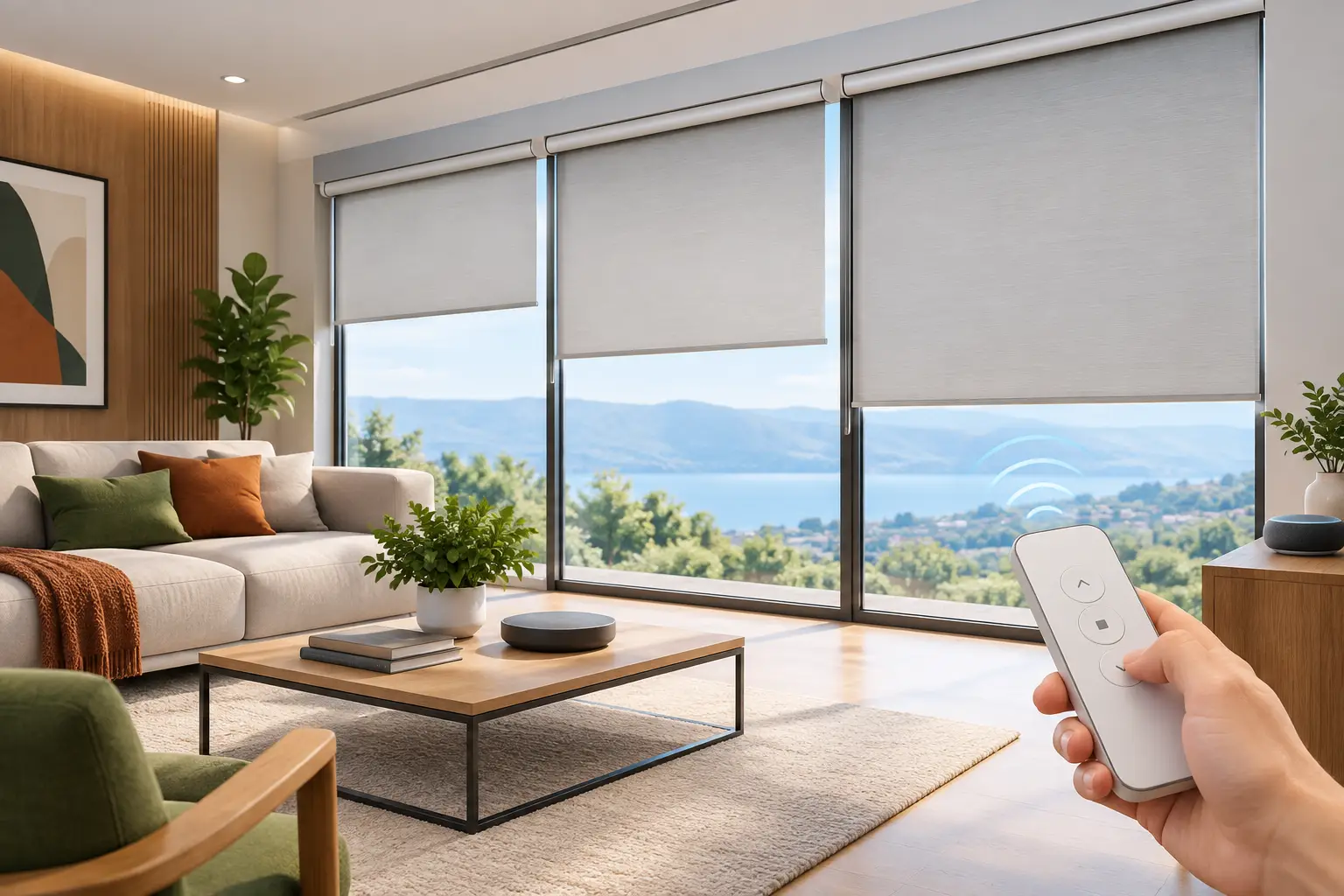
The most effective treatment is one you will actually use at the right time. Busy households do not always remember to lower shades before leaving for work or before the afternoon sun reaches a west-facing room. Motorized shades solve that practical problem.
With scheduled operation, shades can lower during the hottest part of the day and raise later to restore the view. Some homeowners prefer room-by-room control, while others automate a group of shades across a sunny wall of glass. Motorization is not only a convenience feature. It helps make a heat-control plan more consistent, especially for high or hard-to-reach windows.
For a home with several types of exposure, it may make sense to automate only the most challenging windows and use manual treatments elsewhere. That targeted approach can keep the investment focused where it delivers the greatest everyday benefit.
Small Details That Affect Window Heat Control
The material is only part of the equation. A carefully designed installation can improve how well a treatment performs and how finished it looks in the room. Consider these factors during the selection process:
- Window direction: West-facing and south-facing windows often need the strongest solar-control strategy.
- Mounting position: Inside-mounted treatments can look streamlined, while outside mounts may cover more glass and reduce light gaps.
- Side gaps: A treatment that fits poorly allows light and heat to pass around the edges.
- Fabric color and opacity: Lighter reflective materials can help with solar control, but visibility, privacy, and room design should guide the final choice.
- Daily routine: Bedrooms, offices, kitchens, and entertaining spaces need different levels of light control at different times.
Window film, weatherstripping, and energy-efficient replacement windows may also be part of the larger picture. They can be worthwhile, especially if the windows are older or show signs of air leakage. Still, custom shades, shutters, drapery, and exterior products are often the fastest way to gain day-to-day control over sunlight while improving the room’s appearance.
A Room-by-Room Approach Works Best
Treating every window the same way can create a flat look and miss the needs of individual spaces. A street-facing bedroom may need room-darkening cellular shades for privacy and sleep. A formal dining room may call for lined drapery over a light-filtering shade. A home office may need solar shades that control screen glare without making the space feel closed in.
This is where a professional in-home consultation is valuable. Seeing the sunlight, window proportions, surrounding finishes, and furniture layout in person leads to better recommendations than choosing from small online swatches. It also removes uncertainty around measurements, mounting, and whether the final treatment will operate correctly.
At Covering Windows, the process is built around that level of personal guidance, from samples and design direction through custom ordering and professional installation. The result should feel intentional: cooler rooms, better light control, and window treatments that look like they belong in the home.
When the afternoon sun turns one part of your home into the room everyone avoids, do not settle for a quick fix that fights the architecture. A tailored shading plan can protect your comfort and your interiors while making every window feel like part of the design.