A well-chosen Roman shade can make a room feel finished in a way few window treatments can. This Roman shades guide is designed for homeowners who want the softness of fabric, the clean function of a shade, and a result that looks intentionally tailored to the room rather than ordered from a screen and hoped for the best.
Roman shades are especially appealing in Northern Virginia homes, where large windows, changing daylight, and layered interior styles call for more than a one-size-fits-all solution. They can frame a breakfast nook without crowding it, bring warmth to a formal dining room, soften a primary bedroom, or give a home office the privacy and glare control it needs. The key is matching the style, fabric, lining, and operating system to how you actually live.
Roman Shades Guide: What Makes Them Different?
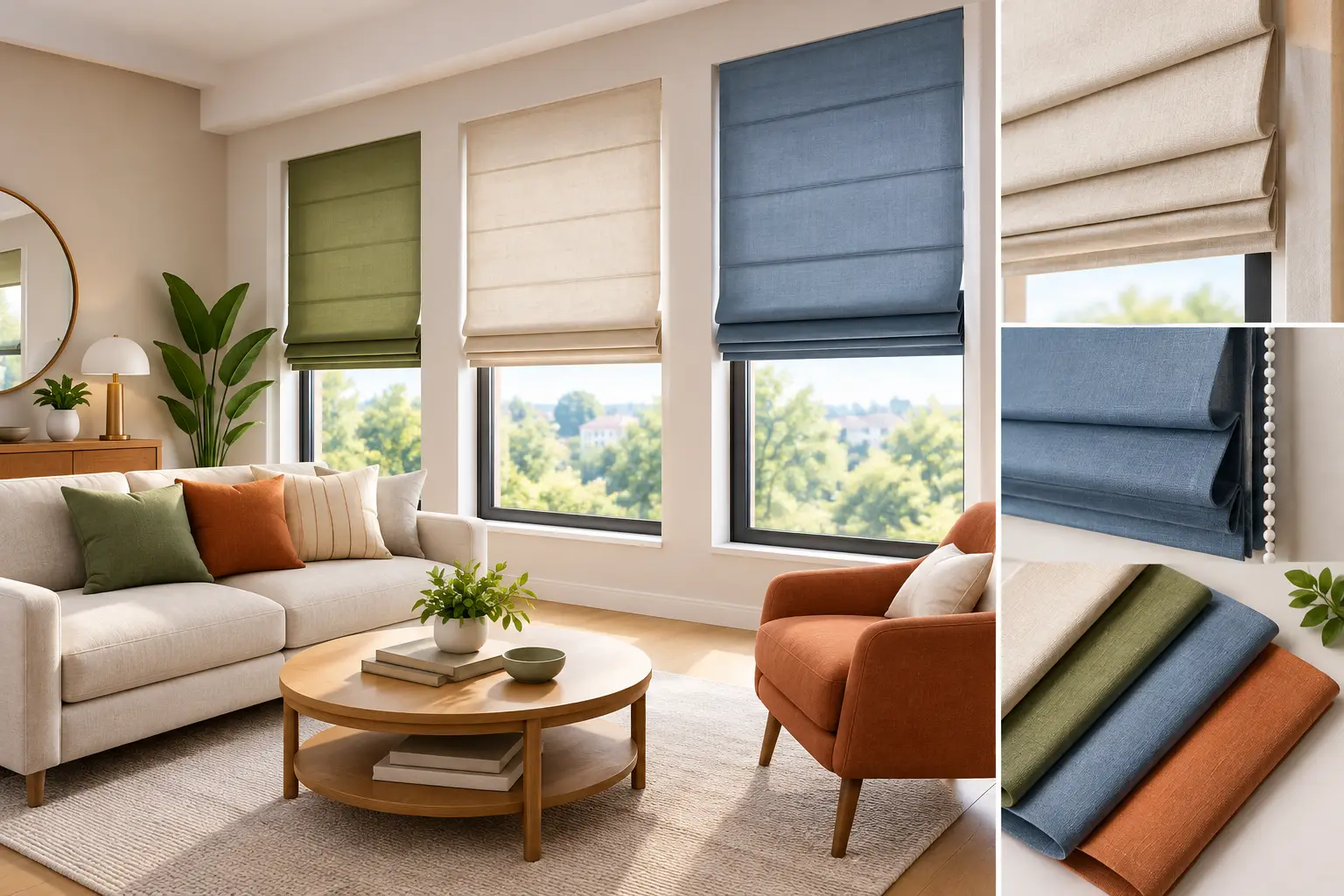
A Roman shade is a fabric window treatment that raises in horizontal folds. When lowered, it presents a smooth panel of fabric across the window. When raised, the fabric stacks or folds near the top of the window, creating a more decorative look than a typical roller shade or blind.
That combination is the reason Roman shades work so well in polished, design-forward spaces. They offer the warmth, color, and texture of drapery but take up less visual and physical space. In rooms where full-length draperies would feel too formal, too busy, or impractical near furniture, a Roman shade can provide the same sense of softness with a cleaner profile.
They are not automatically the right answer for every window. A Roman shade has a fabric stack when open, so homeowners who want the most unobstructed view possible may prefer a roller shade, solar shade, or a different treatment. But when the priority is a custom, layered appearance with useful light control, Roman shades are hard to beat.
Start With the Room, Not the Fabric Swatch
Fabric is often the first thing homeowners notice, but the room should lead the decision. Consider how the space is used, how much sun it receives, and whether privacy is needed during the day, at night, or both.
In a living room, a light-filtering linen-look fabric can create a relaxed, elevated feel while reducing harsh afternoon light. In a bedroom, a room-darkening lining may be more valuable than a delicate sheer fabric, particularly if streetlights or early sun interrupt sleep. A kitchen often benefits from a durable, easy-care material that sits neatly above the sill and stays clear of sinks, counters, and cooking surfaces.
For a home office, think beyond privacy. Screen glare can make video calls and computer work uncomfortable even when a room does not feel particularly sunny. A Roman shade with the right lining can diffuse direct light while preserving a welcoming residential look.
The best choice is rarely based on one factor. A beautiful fabric that does not offer the needed privacy will become a daily frustration. A heavy blackout shade in a naturally dark room may feel unnecessary. Professional guidance is valuable because it helps balance what looks right with what performs well.
Inside Mount or Outside Mount?
Mounting location changes the finished look and the shade’s performance. An inside mount sits within the window frame. It looks neat and architectural, and it can highlight attractive trim. However, inside-mounted shades may allow small gaps at the sides where light can enter.
An outside mount is installed above or beyond the window opening. It can make a modest window feel larger, cover uneven or shallow frames, and improve light blocking. This option is often the better choice when privacy or room darkening matters most.
There is no universal winner. Deep, well-proportioned windows may look excellent with an inside mount. Windows with limited mounting depth, prominent light gaps, or less-than-perfect frames may benefit from an outside mount. Precise measuring is essential either way, which is one reason custom installation brings real peace of mind.
Choose a Fold Style That Fits Your Home
Roman shades come in several constructions, and their folds influence the overall personality of the room. Flat Roman shades have a smooth face when lowered and create clean horizontal folds when raised. They are a versatile choice for contemporary, transitional, and traditional interiors, especially when the fabric has a subtle pattern or texture worth showing off.
Relaxed Roman shades have a gentle curve along the bottom when lowered. They feel softer and more casual, making them a natural fit for bedrooms, sitting rooms, and homes with a traditional or cottage-inspired point of view. Because the bottom is intentionally less structured, this style is usually better for decorative applications than spaces requiring highly precise light control.
Hobbled or looped Roman shades have cascading folds that remain visible even when the shade is fully lowered. They offer depth and classic richness, often suiting formal living rooms, dining rooms, and spaces with traditional millwork. The trade-off is a fuller appearance that may not fit a very minimal interior.
Tailored Roman shades use defined horizontal sections for a crisp, structured result. They can feel refined without looking overly formal, especially in textured neutrals or understated solids. Seeing full-size samples in the actual room makes these differences much easier to evaluate than viewing small images online.
Fabric, Lining, and Color Do the Heavy Lifting
The fabric you select determines more than the color of the shade. It affects how light enters the room, how the folds hold their shape, and whether the treatment feels airy, tailored, casual, or luxurious.
Natural-looking woven fabrics and linen blends add texture and depth, even in neutral colors. They are popular in homes that need warmth without visual clutter. Smooth fabrics can look more formal and make a bolder color or print feel intentional. Patterned Roman shades can be a beautiful focal point in a powder room, nursery, breakfast area, or guest room, but scale matters. A large pattern may disappear on a narrow window or overwhelm a small room.
Lining deserves equal attention. An unlined shade offers the most natural light transmission but may not provide much privacy. Privacy lining softens the view into the home while allowing daylight through. Room-darkening and blackout linings are better suited to bedrooms, media rooms, and windows exposed to bright exterior light.
Keep in mind that blackout does not always mean total darkness. Light can still enter around the sides of the shade, especially with an inside mount. If darkness is a priority, the full design should account for the mount, the shade’s side gaps, and whether coordinating drapery panels are appropriate.
Consider Operation Before You Fall in Love With the Look
A beautiful shade becomes less appealing if it is inconvenient to use. Cordless operation offers a clean appearance and avoids exposed cords, making it a strong option for homes with children and pets. It works well for many everyday windows, provided the shade is within a comfortable reach.
Motorization is worth considering for high, wide, or frequently adjusted windows. It allows shades to move with a remote, wall control, app, or compatible smart-home system. For a wall of windows in a great room, a hard-to-reach stair landing, or a primary bedroom where morning light varies by season, motorized Roman shades add genuine convenience rather than novelty.
The trade-off is cost. Motorization is an investment, and not every window needs it. Many homeowners choose motorization for the most difficult or most-used windows and select cordless operation elsewhere. A thoughtful plan can deliver convenience where it matters without stretching the budget unnecessarily.
Why Custom Measuring and Installation Matter
Roman shades are deceptively detailed. The finished fit depends on window depth, trim, mounting surface, fabric behavior, stack height, hardware clearance, and the way multiple treatments align across a room. Even a small measuring error can cause a shade to rub, sit crookedly, leave uneven gaps, or interfere with a window handle.
Online ordering can look simple until the measurements, lining choices, and mounting requirements become your responsibility. Big-box options may solve a short-term need, but they often limit fabric selection, fit, and customization. A custom approach gives you the opportunity to compare materials in your own light, understand the cost differences clearly, and make decisions with someone who sees the full room.
At Covering Windows, an in-home consultation brings those decisions together. You can evaluate fabric samples beside existing paint, flooring, furniture, and trim, then receive professional measurement and installation for a finished result that looks considered from every angle.
The most satisfying Roman shades do not call attention to the compromises behind them. They simply filter the light beautifully, provide the privacy you expect, and make the room feel like it finally belongs to your home.