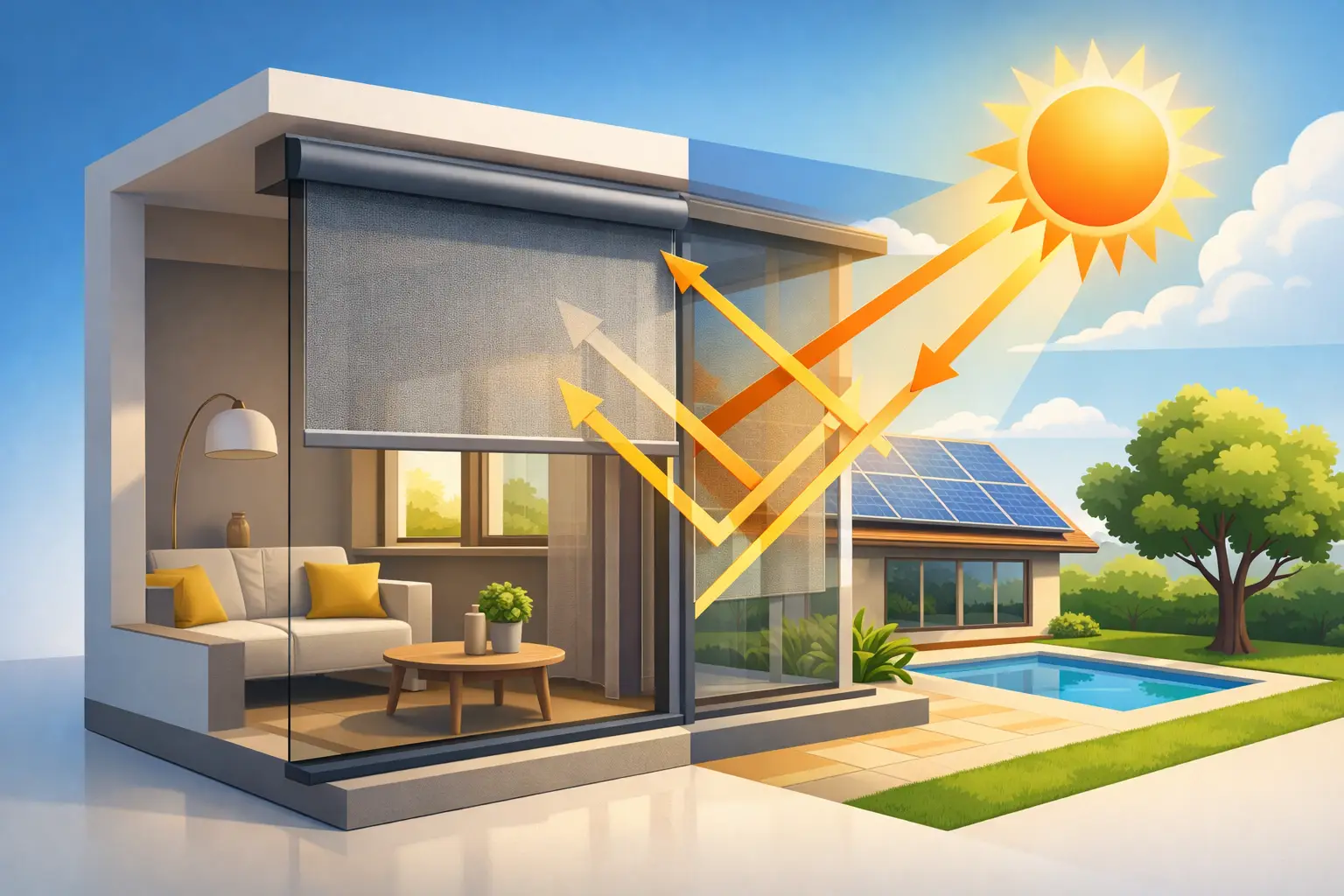
The afternoon sun pouring through a wall of windows can make a beautiful Great Falls living room feel unusable by 3 p.m. It washes out artwork, creates glare on screens, and adds heat exactly where you want to relax. So, what are solar shades? They are streamlined roller shades made with specialty screen fabrics that filter sunlight while preserving a connection to the view outside.
What Are Solar Shades Made to Do?
Solar shades are designed for homes and businesses with a specific challenge: too much direct light without the desire to close off the room. Their woven fabric reduces glare, softens harsh sunlight, and helps block a meaningful amount of UV exposure that can fade flooring, furnishings, and artwork over time.
Unlike traditional opaque roller shades, solar fabrics have tiny, consistent openings between the threads. From inside, those openings allow you to see out during daylight hours. From the street or yard, the fabric appears more solid, giving the room useful daytime privacy.
That balance makes solar shades especially appealing for rooms with expansive glass, scenic views, home offices, kitchens, sunrooms, and family rooms. They are also a practical choice for commercial spaces where employees need relief from screen glare without turning a bright office into a cave.
How Solar Shades Control Light, Heat, and Views
The key specification is the fabric’s openness factor. This number describes how much open space is built into the weave. A lower percentage means a tighter weave and more solar control. A higher percentage allows more light and a clearer view.
Choosing the right openness factor
A 1% openness fabric offers strong glare reduction, more daytime privacy, and a more filtered view. It often works well on sunny west-facing windows, media rooms, or rooms where light control matters more than visual clarity.
A 3% to 5% openness fabric is a popular middle ground for Northern Virginia homes. It cuts harsh brightness while maintaining a recognizable view of the landscape, pool, garden, or neighborhood. For many living areas and kitchens, this range provides the easy, polished look homeowners want.
A 10% openness fabric offers the clearest outward view, but it allows more light and heat to pass through. It can be a good fit for covered patios, shaded exposures, or spaces where preserving the view is the primary goal. The right choice depends on window direction, how the room is used, and how much direct sun it receives.
Solar shades can reduce solar heat gain, but they are not a replacement for insulation, properly selected windows, or a true room-darkening shade. Their strongest benefits are glare management, UV filtering, and a more comfortable visual environment. For intense afternoon heat, pairing solar shades with side drapery panels or choosing a tighter fabric can provide more relief.
Solar Shades vs. Privacy Shades and Blackout Shades
These products can look similar at first glance, but they solve different problems. A solar shade is best when you want to preserve daylight and maintain an outside view. A privacy shade uses a more opaque material and gives greater visual coverage, usually with less visibility through the fabric. A blackout shade is designed to block light far more completely, making it a better fit for bedrooms, nurseries, and media rooms.
One detail is often misunderstood: solar shades provide privacy primarily during the day. When it is dark outside and lights are on indoors, people outside may be able to see silhouettes or activity through the shade depending on the fabric and lighting conditions. If nighttime privacy is nonnegotiable, a dual-shade system, secondary drapery, or a more opaque shade may be the better solution.
This is where a fabric sample matters. Holding a swatch against the actual glass at different times of day reveals much more than a product photo ever can.
The Design Advantages of Custom Solar Shades
Solar shades have a clean, modern profile that works beautifully in contemporary homes, but they are not limited to minimalist interiors. In the right color and texture, they can disappear into the architecture, complement warm wood finishes, or act as a quiet backdrop for more decorative draperies.
Fabric color affects both appearance and performance. Darker fabrics generally deliver a sharper outward view because they reduce reflected light on the inside surface. Lighter fabrics can make a room feel softer and brighter, though the view may be less crisp. The best choice is rarely just black or white. Warm greiges, soft linens, charcoal, bronze, and natural woven tones can coordinate with cabinetry, wall color, and exterior finishes while still delivering the solar control the room needs.
Custom details elevate the result. A properly sized shade avoids awkward gaps and operates smoothly. Fascia options can create a more finished architectural look, while a carefully selected bottom rail adds visual weight or disappears into the fabric. For unusually wide windows, corner glass, doors, or multiple shades across one wall, professional planning keeps the finished treatment aligned and intentional.
Are Motorized Solar Shades Worth It?
For tall windows, large banks of glass, and hard-to-reach areas, motorized solar shades are often more than a luxury. They make it easy to lower shades when the afternoon sun hits, raise them to enjoy a view, or set schedules around changing daylight.
Motorization is particularly useful in homes with great rooms, clerestory windows, and windows behind furniture. It can also help protect interiors when homeowners are away by automatically lowering shades during the brightest part of the day. Battery-powered systems may work well in many existing homes, while wired options can be ideal during a remodel or new construction project.
The trade-off is budget. Motorization adds cost, and smart-home integration should be selected for reliability and ease of use rather than for features you may never use. During a consultation, it helps to identify which windows truly benefit from automation and which ones are simple enough to operate manually.
Where Solar Shades Work Best
Solar shades are a natural fit for rooms that need daytime light control without a heavy or formal look. In a home office, they can reduce monitor glare while keeping the room connected to the outdoors. In a kitchen, they protect finishes and make late-day meals more comfortable. Along sliding doors or picture windows, they provide a low-profile solution that does not compete with the architecture.
They can also be highly effective in commercial settings. Offices, medical practices, conference rooms, retail spaces, and restaurants benefit from glare reduction and a more comfortable interior for staff and guests. For businesses with prominent street-facing glass, the right solar fabric can improve comfort without hiding the space from view.
Still, solar shades are not the answer for every window. Bedrooms that require darkness, bathrooms that need dependable privacy, and rooms with severe heat exposure may call for another treatment or a layered approach. A well-designed window treatment plan can combine solar shades in shared living areas with blackout or privacy solutions where those needs are stronger.
Why Professional Measuring and Installation Matter
A solar shade may look simple, but precise fit has a major effect on performance. Mounting location, window depth, trim, handles, door clearance, and the spacing between adjacent shades all influence the final result. Small measuring errors can create unwanted light gaps, interfere with operation, or make a beautiful wall of windows look uneven.
A professional in-home consultation removes the guesswork. You can compare fabrics against your actual light, see how colors relate to the room, and discuss the practical details that online ordering does not always address. At Covering Windows, that process is built around matching the product to the way you live, then ensuring the installation delivers the refined finish you envisioned.
The best solar shade is not simply the one with the highest performance rating. It is the one that gives your room the right amount of light, comfort, privacy, and view – while looking like it belonged there from the start.