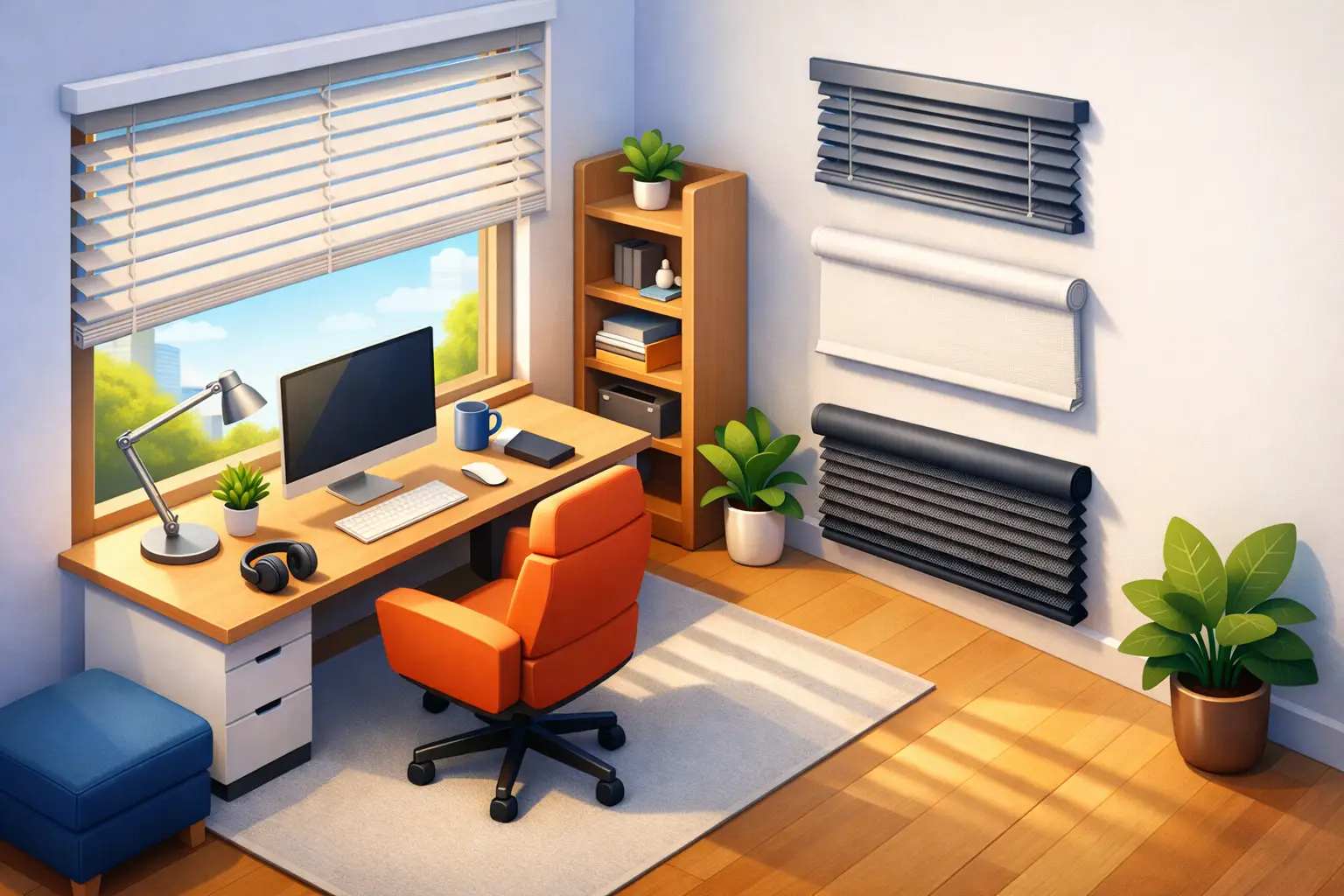
A sun-filled office can feel like a luxury until the morning light lands directly on your monitor, video calls turn you into a silhouette, and the room heats up before lunch. The best blinds for home offices do more than cover a window. They control glare, protect privacy, soften the room’s acoustics, and make a hard-working space feel as polished as the rest of your home.
For homeowners across Northern Virginia, the right choice usually comes down to how you use the room, which direction the windows face, and how much flexibility you need throughout the day. A beautiful treatment that cannot manage afternoon sun is not a smart office investment. Neither is a bargain blind that rattles, gaps at the sides, or looks out of place in a thoughtfully designed home.
What a Home Office Window Treatment Needs to Do
Home offices ask more of window coverings than many other rooms. You may need bright, natural light for paperwork in the morning, filtered light for computer work in the afternoon, and complete privacy after dark. If your office faces a street, neighboring home, or backyard gathering area, privacy can matter just as much as sunlight.
Start by identifying the room’s biggest frustration. Is glare washing out your screen? Is direct sun making the room uncomfortable? Do you need a cleaner backdrop for video meetings? Or does the office simply need a more finished, intentional look? Your answer will point you toward the right material and operating style.
Window direction matters, too. East-facing offices can be challenging early in the day, while west-facing rooms often need serious solar control later in the afternoon. South-facing windows receive abundant light for much of the day. North-facing rooms may benefit from treatments that preserve every bit of available daylight rather than block it.
The Best Blinds for Home Offices by Priority
Cellular shades for heat and energy efficiency
Cellular shades are one of the strongest choices for an office that gets too warm or too cold. Their honeycomb-shaped pockets trap air at the window, helping reduce the temperature swings that make a workspace uncomfortable. This is especially valuable in a room with large windows, older glass, or strong southern and western exposure.
They are available in light-filtering and room-darkening fabrics, so you can choose between a softly illuminated office and more complete light control. Top-down/bottom-up operation is particularly useful in offices: lower the top portion to bring in daylight while keeping the lower glass covered for privacy.
The trade-off is visual. Cellular shades offer a clean, tailored appearance, but they do not have the architectural presence of wood blinds or shutters. For a contemporary office, that simplicity often works beautifully. In a more traditional study, you may prefer a treatment with more texture or structure.
Roller shades for clean lines and reliable glare control
Roller shades are an excellent answer for homeowners who want a crisp, uncluttered look with strong performance. Solar screen fabrics filter harsh sunlight and reduce monitor glare while preserving a degree of the view outside. They are a natural fit for offices with scenic views, modern furnishings, or wide expanses of glass.
Fabric openness is the key decision. A more open weave lets in more light and retains more of the view, but it provides less privacy and less glare control. A tighter weave offers greater solar protection and daytime privacy, though it can make the room feel more enclosed. For street-facing offices, a dual-shade setup can be worth considering: a solar shade for daytime and a room-darkening shade for evening privacy.
Roller shades also pair well with motorization. Instead of stopping work to adjust a cord or reach behind a desk, you can raise, lower, or schedule shades with a remote, wall control, or smart-home system.
Wood and faux wood blinds for adjustable light
If you want precise control over the direction of light, horizontal blinds remain a practical choice. Tilt the slats upward to bounce daylight toward the ceiling, reduce direct glare, and maintain some brightness in the room. This can be more adaptable than a single-panel shade when conditions change from hour to hour.
Real wood blinds bring warmth, grain, and natural craftsmanship to an office. They are especially attractive in studies with built-ins, hardwood floors, rich paint colors, or classic furnishings. Covering Windows can help homeowners compare premium wood options with faux wood alternatives at the consultation, where color samples and slat sizes make the decision far easier than viewing a small image online.
Faux wood blinds are durable and budget-conscious, and they perform well in spaces with humidity or frequent temperature changes. However, they can be heavier on very large windows and may not offer the same refined character as natural wood. The right selection depends on whether your office calls for the warmth of real materials or the practicality of a resilient, lower-maintenance option.
Plantation shutters for privacy and lasting design value
Plantation shutters are a standout choice when the office is visible from the front of the home or serves as a client-facing space. Their louvers give you excellent control over light and privacy, while their fitted construction creates a finished, custom-built look that standard blinds cannot duplicate.
Shutters are particularly well suited to offices with prominent windows, traditional architecture, or a desire for a permanent design feature. Open the louvers for daylight and air, angle them to redirect sun away from your desk, or close them fully when you need privacy for a sensitive call.
The consideration is cost and flexibility. Shutters are a premium, long-term investment, and their solid panels do not disappear fully like a raised shade. Yet for many homeowners, the craftsmanship, durability, and elevated appearance make them a worthwhile addition to a high-use room.
Roman shades for a softer, more decorative office
A home office should support concentration, but it does not need to feel corporate. Roman shades introduce fabric, color, and texture, making them a strong option for an office that doubles as a guest room, library, or creative workspace. Choose a lined fabric to improve privacy and light control, or layer the shade with drapery panels for a more luxurious finish.
Roman shades work best when light filtering is more important than minute-by-minute adjustment. They can soften sun effectively, but they do not offer the same directional control as slatted blinds. If glare is your primary concern, a roller shade or wood blind may be the more functional choice.
Consider Motorized Blinds for Hard-to-Reach Windows
Motorization is not only for dramatic rooms with tall windows. It is a practical office upgrade when furniture blocks access to the window, when you use multiple screens, or when your day follows a predictable rhythm. Program shades to lower before late-afternoon sun hits your desk, then raise again after the glare has passed.
Motorized shades can also make your office more energy-efficient without adding another task to your day. During summer, lowering shades during peak sun can reduce heat gain. In winter, opening them during daylight hours can bring in welcome warmth. The best system is one you will actually use, and automation makes consistent use much easier.
Details That Make the Difference
The best blinds for home offices are not chosen by material alone. Proper fit changes the result. An inside mount can look sleek and built-in when the window has enough depth and square, usable framing. An outside mount can cover more glass, reduce light gaps, and make a smaller window appear larger.
Color deserves careful attention. White and light neutral treatments reflect light and tend to keep an office feeling open. Darker colors can add contrast and sophistication, but they may absorb more heat in sunny rooms. For video calls, avoid highly reflective materials directly behind your desk, since they can create distracting highlights on camera.
Cordless operation is a clean, safer choice in homes with children or pets. And do not overlook valances, fabric-wrapped cassettes, and hardware details. These finishing elements conceal operating components and help the treatment feel like an integrated part of the room rather than an afterthought.
Why Custom Measurement and Installation Matter
Online ordering can make window treatments appear simple until the measurements are off by a fraction, the mounting surface is uneven, or the finished color looks different from the screen. Offices are often the rooms where these small mistakes become most visible because you spend so many focused hours there.
A professional in-home consultation gives you the chance to evaluate fabrics and finishes in your actual light, compare privacy levels, and discuss how the treatment will work around desks, built-ins, and window trim. Professional installation also ensures smooth operation, accurate alignment, and a finished look worthy of the rest of your home.
Your office should not ask you to choose between natural light and concentration. With the right custom blind or shade, you can keep the view when you want it, block the distractions when you need to, and create a workspace that feels calm, comfortable, and distinctly yours.