A drapery panel can look like a finishing touch in a showroom, then become the first thing you notice for the wrong reason at home. It may hang too high, stop awkwardly above the floor, leave gaps at the sides, or fall flat against a beautiful window. When comparing custom drapes vs ready made, the real question is not simply which option costs less. It is which one will give your room the proportion, privacy, light control, and polished look you expect.
Ready-made drapes have a place, especially for simple windows and short-term needs. But for many Northern Virginia homes, where large windows, layered design, and carefully finished interiors are common, custom drapery is often what turns a room from furnished into complete.
Custom Drapes vs Ready Made: The Core Difference
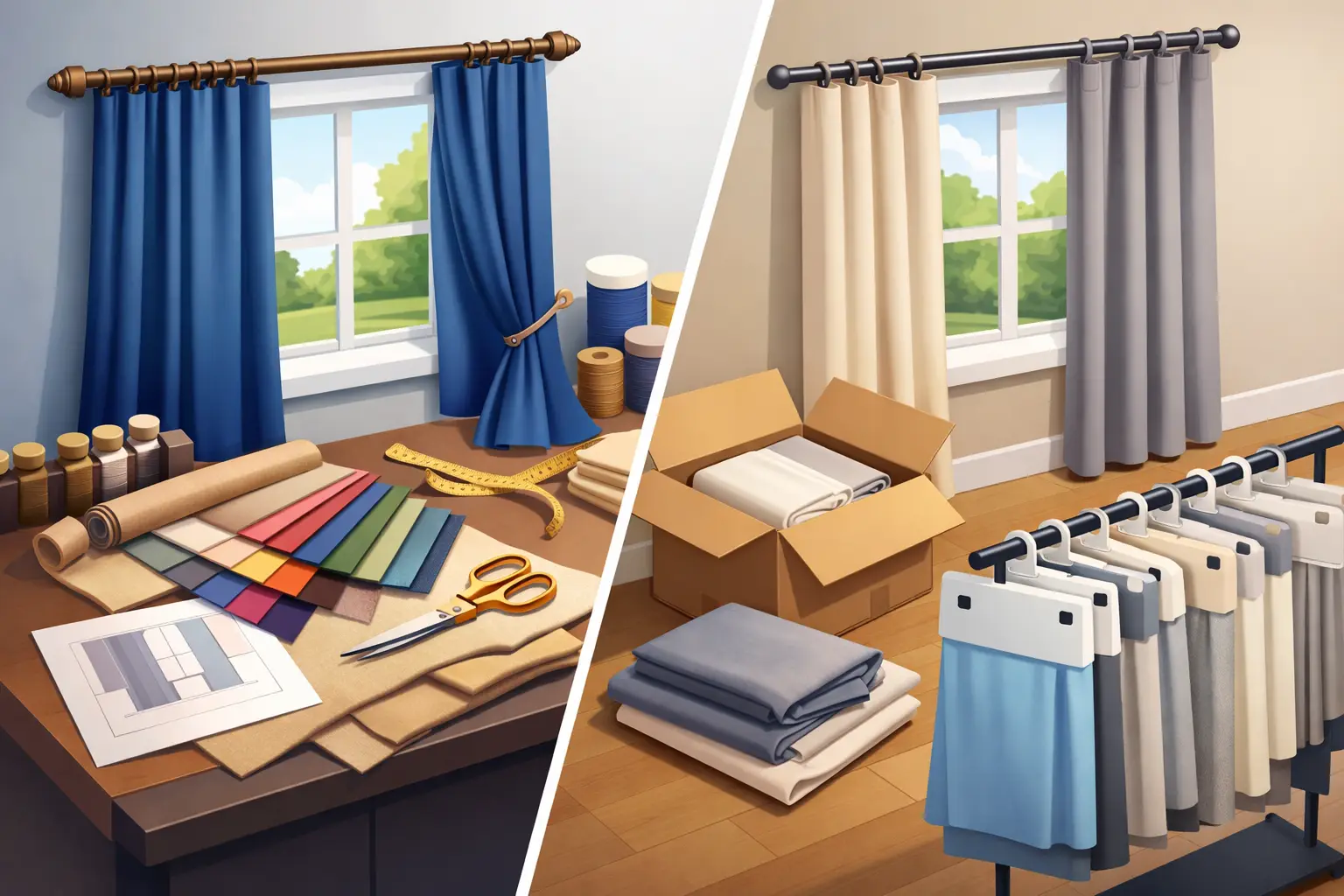
Ready-made drapes are produced in standard widths, lengths, colors, and heading styles. You buy what is available, then choose the size that comes closest to your window. This approach can work when your needs are straightforward and your expectations are flexible.
Custom drapes are designed around your specific windows and your goals for the room. The fabric, fullness, lining, length, hardware, pleat style, and installation height are all selected intentionally. Rather than asking your room to adapt to a prepackaged panel, the treatment is built to complement the architecture and furnishings already in place.
That difference becomes especially visible with tall ceilings, wide expanses of glass, French doors, bay windows, and rooms with more formal design details. Standard panels can cover a window. Custom drapery can reshape how the entire room feels.
Fit Is Where Custom Drapery Earns Its Value
The most common ready-made drapery issue is not poor fabric quality. It is proportion. A panel may be technically long enough but still look undersized. It may cover the glass when closed but lack the width needed for elegant folds when open. It may be hung directly over the window trim when mounting it higher and wider would make the ceiling feel taller and the window feel more generous.
Custom drapes are measured for the exact placement of the rod or track, not just the glass. That matters because professional design often calls for mounting hardware well above the window and extending it beyond each side. The result is a more architectural look, with more glass visible when the drapes are open and better coverage when they are closed.
Fullness matters, too. Drapery needs enough fabric to create graceful folds rather than a stretched, flat appearance. The appropriate fullness depends on the fabric weight, pleat style, lining, and whether the panels will be decorative, functional, or both. A professional consultation helps prevent the guesswork that leads to skimpy-looking panels or unnecessary fabric expense.
Fabric, Lining, and Details Change the Result
A ready-made panel may look attractive online or under retail lighting, but its texture and drape can feel very different once it is in your home. Fabric responds to natural light, room color, furniture, and the weight of the lining behind it. A fabric that appears crisp and structured in a product photo may look thin, shiny, or limp across a large window.
With custom drapery, you can see and feel samples in your own space. This makes it easier to select a color that works with your wall paint throughout the day, rather than only under a store’s lighting. It also allows you to choose the right material for the effect you want, whether that is relaxed linen, tailored cotton, textured woven fabric, velvet depth, or a sophisticated pattern.
Lining is another major distinction. A quality lining can improve the way drapes hang, protect fabric from sun exposure, increase privacy, and help soften outside light. Interlining can add body and a more luxurious appearance, particularly for formal rooms or heavier fabrics. Blackout lining is useful in bedrooms, nurseries, media rooms, and any space where better sleep or stronger light control matters.
These choices are not only decorative. They determine how the drapery performs every day.
When Ready-Made Drapes Make Sense
Ready-made drapes can be a practical option when you are furnishing a first apartment, preparing a guest room quickly, staging a home, or working with a limited budget for a temporary solution. They are also useful for small, standard-size windows where a simple, casual look is the goal.
They can be especially appealing when you need something immediately. You can purchase panels, bring them home, and install them yourself without waiting for fabrication. For a homeowner who enjoys hands-on projects and is comfortable measuring, hemming, sourcing hardware, and troubleshooting installation, that convenience may be worth the compromise in fit.
The trade-off is that the true cost can grow when you add upgraded rods, rings, extra panels for fullness, hemming, returns, and multiple attempts to get the color or length right. Ready-made can be the lower upfront purchase, but it is not always the lower-cost finished solution.
When Custom Drapes Are the Better Investment
Custom drapes are particularly worthwhile when the windows are a focal point, the room is highly visible, or the treatment needs to solve a functional problem. Living rooms, dining rooms, primary bedrooms, home offices, and rooms with tall or unusually shaped windows are often strong candidates.
They are also a smart choice when you want layered window treatments. For example, a room may need shades for daytime privacy and glare reduction, with drapery panels to add warmth, softness, and evening privacy. Coordinating those layers requires careful planning so the fabrics, mounting depth, and operating functions work together instead of competing for space.
For busy homeowners, custom service removes several frustrating decisions from the process. You do not have to calculate finished lengths from a vague online chart, wonder whether a rod will support the fabric weight, or climb a ladder to install heavy hardware over a tall window. A professional measures, presents materials, recommends options based on your priorities, and installs the final treatment correctly.
That level of guidance is valuable when you are making a long-term design decision. Drapery is not like a throw pillow that can be swapped next season. It is a visible feature that influences the scale and atmosphere of a room every day.
Cost: Look Beyond the Price Per Panel
It is fair to say that ready-made drapes usually cost less at checkout. Custom drapes cost more because they involve made-to-order fabrication, higher-grade materials, detailed measurements, and professional installation. But comparing only the price per panel does not tell the whole story.
Think about the cost in relation to the life of the treatment and the importance of the room. A poorly sized panel may need replacing sooner because it never looks quite right. A well-designed custom treatment can remain relevant through furniture changes and repainting because it was selected for the room’s scale, light, and function rather than a passing retail trend.
Custom does not have to mean extravagant. The budget can be guided by fabric selection, lining, header style, number of panels, and whether the drapery will be operational. A skilled designer can help you direct investment where it will have the greatest visual impact, then make practical choices elsewhere.
Installation Is More Than Hanging a Rod
Even beautiful drapery can lose its effect if it is installed at the wrong height or with inadequate hardware. Heavy panels need secure brackets and properly placed support. Motorized drapery tracks require precise planning. Doors, crown molding, window cranks, and nearby furniture all affect where the treatment can be mounted and how it will operate.
Professional installation is one of the clearest advantages of custom drapery. The hardware is aligned, the panels are dressed properly, the hems are checked, and the finished treatment is adjusted to hang as intended. Those final details are what create the smooth folds and tailored appearance people associate with luxury interiors.
At Covering Windows, the process begins with an in-home consultation, where fabrics and design options can be considered in the actual light of your home. That personal approach helps ensure the finished result reflects both your style and the way you live.
How to Choose With Confidence
Start by considering what you need the drapes to do. If they are mainly decorative and the window is small and standard, ready-made panels may be enough. If you need light control, privacy, insulation, room-darkening performance, or a more finished design statement, custom options deserve serious consideration.
Next, look at the room as a whole. Are the ceilings high? Is the window unusually wide? Does the room need softness to balance hard surfaces? Will the drapes sit beside shades, shutters, or doors? These details quickly reveal whether standard panels are likely to look intentional or merely adequate.
The best choice is the one that suits your timeline, budget, and expectations. Ready-made drapes offer speed and simplicity. Custom drapes offer a tailored fit, richer material options, and a finished look that honors the investment you have already made in your home. When the window is central to the room, choosing a treatment designed specifically for it can be the detail that makes the rest of the space feel beautifully resolved.