Choosing window treatments becomes much easier when you start with the life happening around the window. In the conversation around roman shades vs blinds, the best choice is rarely about which option is universally better. It is about how you use the room, how much light you want to manage, the architectural style of your home, and the level of softness or structure you want in the finished design.
For Northern Virginia homeowners updating a family room in Ashburn, a primary bedroom in McLean, or a sun-filled kitchen in Vienna, both Roman shades and blinds can deliver beautiful, custom results. They simply do it in different ways.
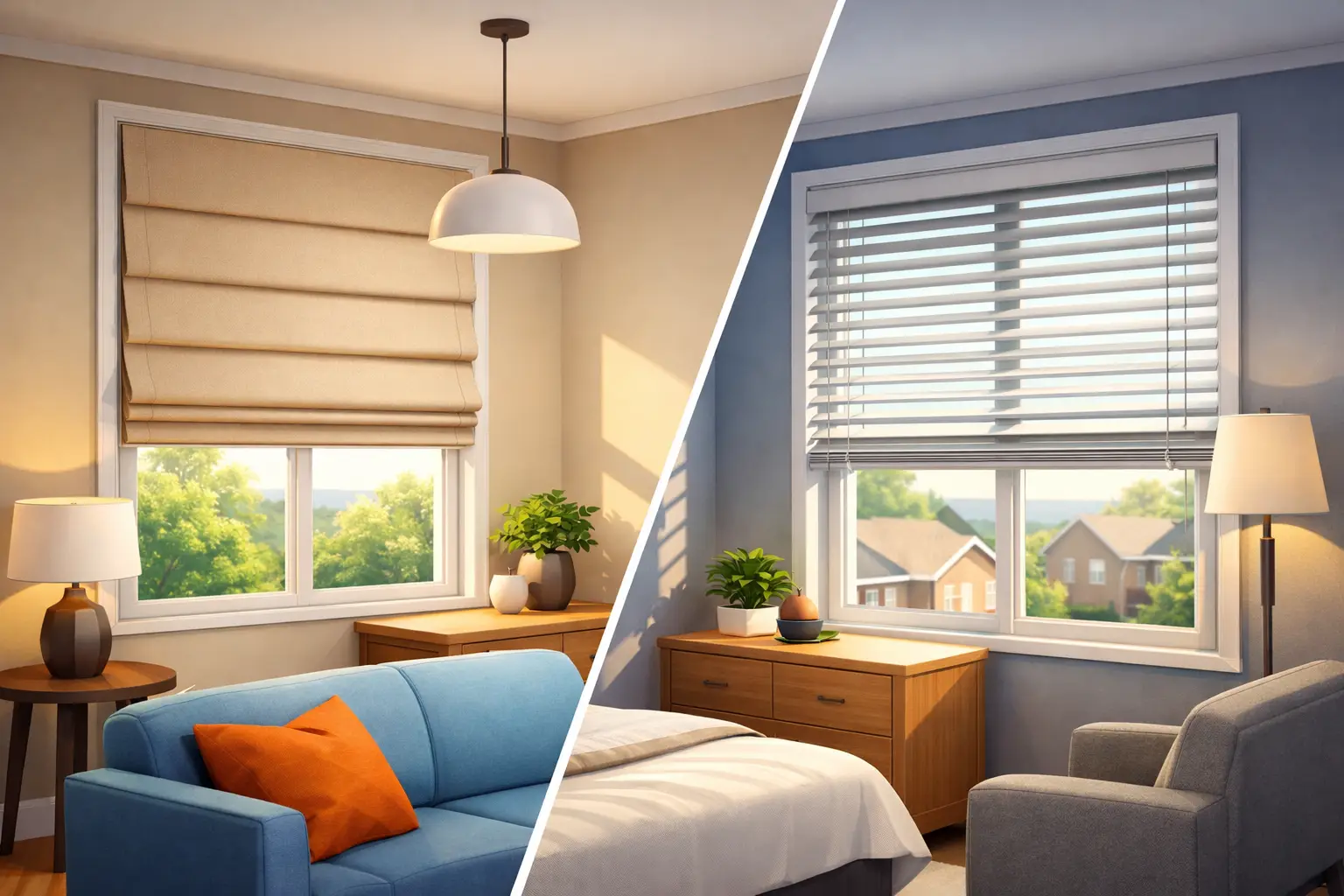
Roman Shades vs Blinds: The Design Difference
Roman shades are fabric window treatments that raise into soft, tailored folds. When lowered, they present a smooth panel of fabric that can feel refined, relaxed, traditional, or strikingly modern depending on the material and fold style. Linen-like textures, woven materials, subtle patterns, and rich solids all give Roman shades a furniture-quality presence at the window.
Blinds are made with individual slats that tilt to direct light and provide privacy. They are available in wood, faux wood, aluminum, and other materials, with wood and faux wood blinds being especially popular in homes where warmth, durability, and clear architectural lines matter. Their look is more structured and streamlined than fabric shades.
This is often the deciding aesthetic question: Do you want the window treatment to blend in as a crisp architectural element, or do you want it to contribute softness, texture, and a more decorative finish? Blinds tend to suit spaces with clean trim, built-ins, and a polished transitional look. Roman shades are especially effective when a room needs visual warmth without the fullness of draperies.
Light Control: Precise Adjustment vs Soft Diffusion
Blinds have a practical advantage for homeowners who want to adjust daylight throughout the day. Because the slats tilt, you can redirect harsh afternoon sun away from a television screen or work surface while still allowing daylight into the room. You can also angle the slats upward for more privacy while preserving some natural light.
Roman shades work differently. A standard Roman shade is either lowered to cover the window or raised to expose it, although the fabric itself can filter the light beautifully. A light-filtering fabric softens glare and creates an inviting glow. A room-darkening or blackout lining can make the same shade far more effective for bedrooms, nurseries, media rooms, and any space where sleep or screen viewing is a priority.
The trade-off is straightforward. Blinds offer more incremental control during the day. Roman shades offer a softer quality of light when they are down. For a kitchen where you want to tame direct sun without closing off the view, blinds may be the more flexible choice. For a bedroom where you want an elegant, tailored treatment that closes fully at night, a lined Roman shade may feel more complete.
Privacy After Dark
Privacy depends on more than the product category. It depends on fabric opacity, slat material, window location, and whether the treatment is mounted inside or outside the window frame.
With blinds, closed slats provide dependable privacy, but small gaps can still allow light to pass through. With Roman shades, privacy is determined by the fabric and liner selected. A privacy liner is suitable for many living spaces, while a blackout liner is the better choice for street-facing bedrooms or homes with bright exterior lighting.
For wide, prominent windows, a professional consultation can prevent a common mistake: choosing a treatment based only on daytime appearance. What looks private in the afternoon may feel very different when interior lights are on at night.
Energy Efficiency and Comfort
Windows are a major source of heat gain in summer and heat loss in winter. Both Roman shades and blinds can improve comfort, but neither should be selected based on broad promises alone. Window direction, glass type, and the amount of coverage all matter.
Roman shades with insulating or blackout linings create a more continuous layer across the glass. That can help reduce drafts and soften solar heat, particularly when the shade is mounted to cover more of the window opening. They are often an appealing option for bedrooms, sitting rooms, and older homes where comfort is as important as appearance.
Wood and faux wood blinds can also reduce direct sun and add a useful barrier at the window. Their adjustable slats are particularly helpful on east- and west-facing windows, where sunlight changes quickly. Faux wood is a strong choice in humid rooms such as bathrooms, laundry rooms, and kitchens because it handles moisture better than natural wood.
If energy performance is the primary goal, cellular shades may deserve consideration as well. But if your decision is specifically Roman shades versus blinds, a lined Roman shade generally provides the more continuous fabric coverage, while blinds offer greater flexibility for managing shifting sunlight.
Best Rooms for Roman Shades
Roman shades are ideal when the room benefits from fabric, pattern, or a more customized design statement. They work especially well in dining rooms, formal living rooms, bedrooms, nurseries, and home offices. They are also a smart choice for windows where full drapery panels would feel too heavy or interfere with furniture placement.
A tailored flat Roman shade can give a contemporary home a clean, sophisticated look. A relaxed fold can bring softness to a traditional space. Patterned Roman shades can become a focal point in a powder room, breakfast nook, or reading corner without overwhelming the room.
They are not always the easiest choice for windows that need constant, minute-by-minute adjustment. If someone routinely opens and closes the treatment several times each day to manage glare, a blind or a motorized shade may be more convenient.
Best Rooms for Blinds
Blinds are a reliable choice for hardworking spaces that need adjustable privacy and durable performance. Kitchens, bathrooms, home offices, playrooms, and street-facing rooms often benefit from their flexibility. They also pair naturally with plantation shutters, wood flooring, and trim details common in many Northern Virginia homes.
Natural wood blinds bring genuine warmth and character to dry areas such as studies, living rooms, and bedrooms. Faux wood blinds offer a similar visual effect with greater moisture resistance and often a more budget-conscious price point. Both can be customized by slat size, color, lift system, and decorative details.
Blinds are also a strong solution for homeowners who want a tidy appearance without introducing fabric into the room. Their horizontal lines create order and can make a window feel more substantial, particularly when sized and installed correctly.
Operation, Safety, and Everyday Convenience
The way a treatment operates matters as much as the way it looks. Cordless lift systems create a cleaner appearance and are a safer option for homes with young children or pets. Motorization can make both Roman shades and blinds easier to use, especially on tall windows, large banks of windows, or hard-to-reach areas above a tub or staircase.
Motorized Roman shades are particularly compelling in bedrooms and living spaces where homeowners want a simple morning and evening routine. Motorized blinds are useful when you want to fine-tune slat position as the sun moves. The right system can be controlled by a remote, wall control, or smart-home integration, depending on the product selected.
This is where custom service makes a meaningful difference. A beautiful fabric or a popular blind color will not solve a window that is out of square, unusually deep, or partially blocked by trim. Accurate measuring, thoughtful mounting, and professional installation determine whether the finished treatment operates smoothly and looks intentional.
Cost: Look Beyond the Starting Price
Ready-made blinds may appear less expensive at first, but comparing them directly with custom Roman shades is not always fair. Cost is shaped by window size, material, lining, lift system, customization, and installation requirements. A premium faux wood blind with cordless operation and custom sizing can cost more than a simple fabric Roman shade, while a fully lined, motorized Roman shade in a designer fabric can be a significant investment.
The more useful question is where the investment will be felt every day. In a high-visibility living room, Roman shades may add the finished, luxurious layer that makes the room feel designed rather than merely furnished. In a busy kitchen or bathroom, durable faux wood blinds may provide the best combination of value, performance, and easy care.
At Covering Windows, an in-home consultation allows you to see samples against your wall color, flooring, furnishings, and changing daylight before making that call. It also gives you a realistic view of construction, opacity, lift options, and installation details rather than relying on a small online swatch.
The Right Choice Should Feel Natural in Your Home
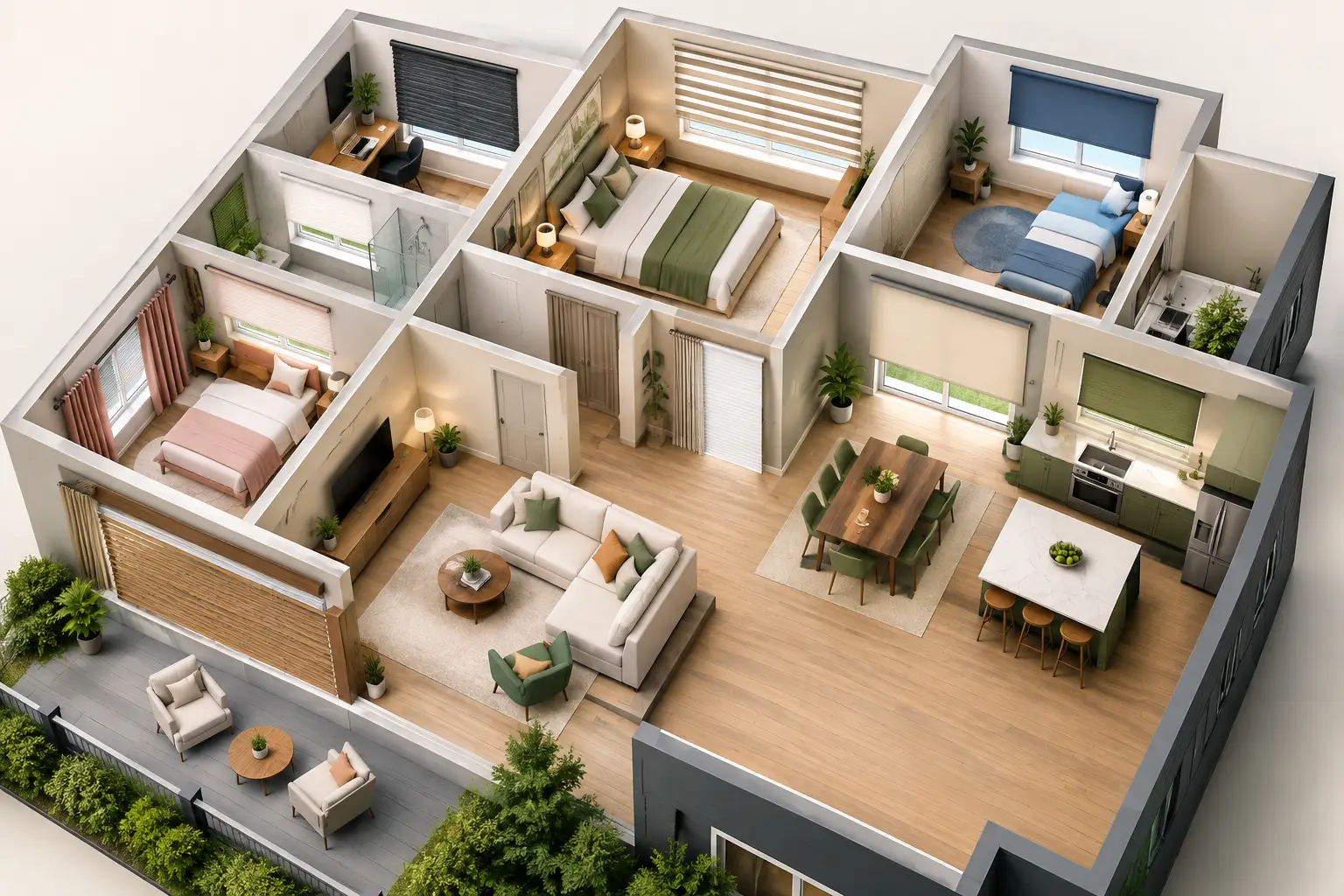
Choose Roman shades when you want fabric softness, a tailored design element, and the option for light-filtering or blackout coverage. Choose blinds when adjustable light control, moisture resistance, clean lines, and everyday flexibility lead the conversation. Many well-designed homes use both: Roman shades in bedrooms and formal spaces, blinds in kitchens, baths, and practical rooms.
The best window treatment is the one that still looks beautiful after the morning rush, a bright summer afternoon, and a quiet evening at home. When you can see the materials in your own space and have the fit handled professionally, the decision becomes less about choosing a category and more about creating rooms that work beautifully for you.