A shaded wall of windows can look beautifully finished and still feel surprisingly inconvenient. The tall shade behind a sofa stays closed because reaching it is a hassle. The nursery shade has a dangling cord. The west-facing room overheats every afternoon. Learning how to motorize existing window shades starts with one practical question: can your current shades accept a motor, or will a custom replacement deliver a better-looking, longer-lasting result?
Motorization can make daily comfort feel effortless, but not every shade is a good retrofit candidate. The right choice depends on the shade’s operating system, age, size, fabric, mounting condition, and the level of control you want. For Northern Virginia homeowners, it also depends on how the room is used. A media room, sun-filled great room, child’s bedroom, and home office all call for different solutions.
Can You Motorize Existing Window Shades?
Sometimes, yes. Shades with a roller tube or a compatible cordless lift system are often the strongest candidates for motorization. Certain roller shades, solar shades, cellular shades, Roman shades, and woven wood shades can be upgraded with a motorized tube or a manufacturer-approved retrofit kit.
The key word is compatible. A motor needs to fit inside or alongside the shade’s existing mechanism while still having enough power to lift the fabric evenly. It must also work with the brackets, mounting space, and weight of the shade. A small roller shade with a clean, modern tube is very different from an older pleated shade with worn hardware or a decorative Roman shade with a complex cord system.
Corded shades are not automatically motorization-ready. In many cases, replacing a cord loop with a motor changes how the shade carries its weight and rolls onto the tube. If the original components were designed for manual use only, forcing a retrofit can create uneven operation, noisy movement, or premature wear.
That is why an in-home evaluation is more useful than choosing a motor online based on window width alone. A professional can inspect the hardware, confirm clearances, and determine whether the finished shade will operate and look the way it should.
Start With the Shade Type and Condition
Before selecting a motor, look closely at what is already installed. The shade type tells you what is possible, while its condition tells you whether an upgrade is worth the investment.
Roller and solar shades are usually the simplest to motorize because they operate around a tube. If the tube diameter, brackets, and fabric weight are compatible, a motor can often replace the manual mechanism. These shades are especially popular for large windows, sliding doors, and rooms where glare control matters throughout the day.
Cellular shades may be motorized through an integrated lift system rather than a traditional roller motor. The same is true for many Roman and woven wood shades. These styles can be excellent motorization candidates, but the hardware needs to be matched precisely to the shade’s construction.
Older shades deserve a realistic assessment. Faded fabric, bent headrails, loose brackets, fraying lift cords, or uneven hems are signs that a replacement may be the wiser value. Adding a new motor to a shade that already looks tired can solve one problem while leaving several others in place.
A custom replacement also gives you the chance to improve light control, privacy, insulation, color, and fit. For example, a homeowner may begin by asking about motorizing an existing solar shade, then decide that a new dual shade system better serves a room that needs both daytime views and nighttime privacy.
Choose the Right Power Source
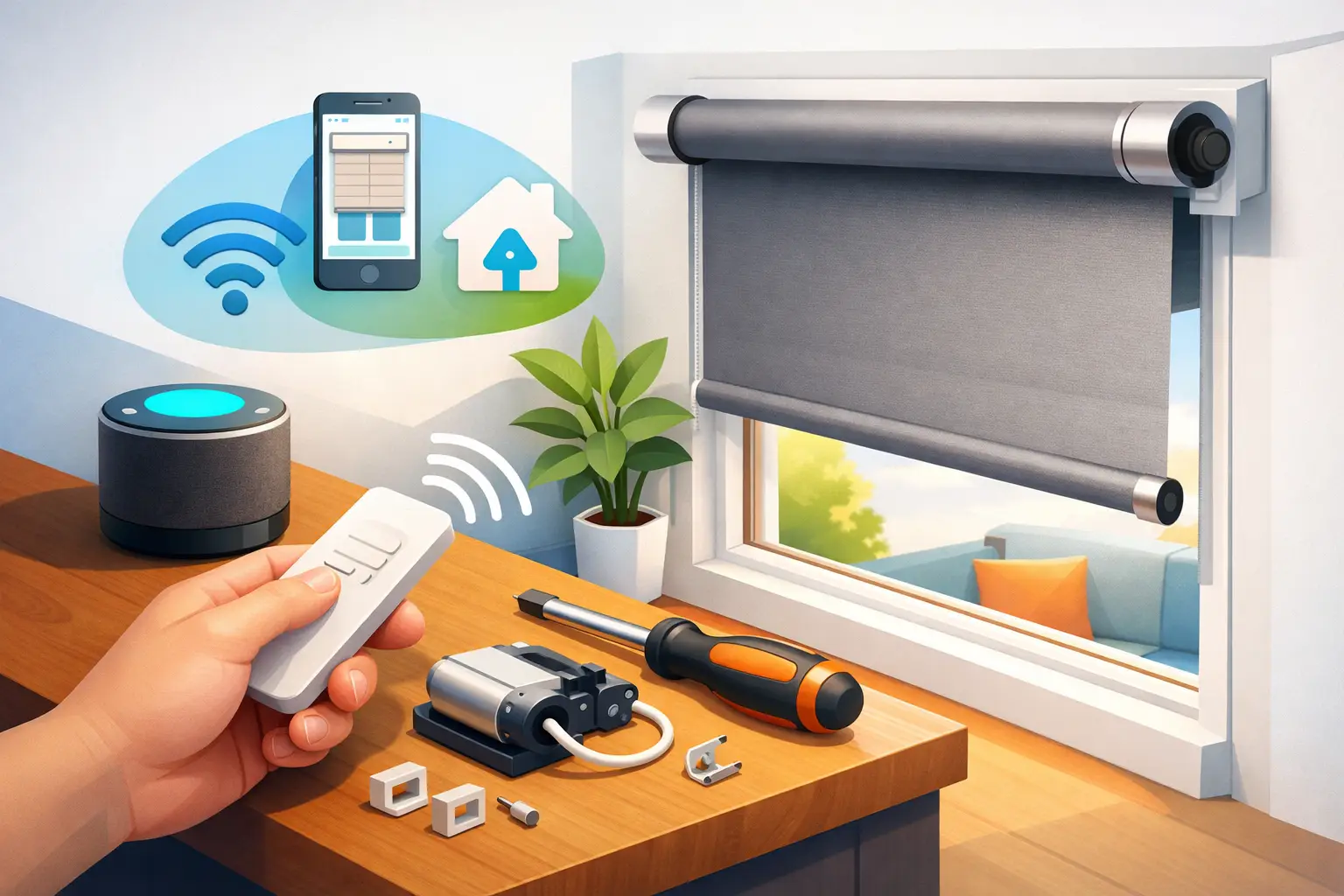
Most motorized shades use battery power, hardwired power, or a rechargeable battery system. Each option has advantages, and the best one depends on the window location and your renovation plans.
Battery-powered motors are popular for existing homes because they avoid opening walls or hiring an electrician for every window. The battery is typically concealed in the headrail, behind the shade, or in a slim external wand. Depending on shade size, use, and motor type, batteries may need replacement or recharging periodically. They are a practical choice for single windows, finished rooms, and projects where preserving walls is a priority.
Hardwired motors are often the preferred choice for new construction, major renovations, and large banks of shades. They offer dependable, continuous power without routine battery maintenance. The trade-off is planning. Wiring needs to be placed correctly before drywall is closed or carefully routed afterward, which can add cost and coordination.
Rechargeable systems offer a middle ground. Some use a charging wand, while others can be paired with a discreet solar charging panel. Solar charging can be particularly helpful on sunny windows, though it is not ideal for every orientation or every interior design. A visible panel may also not suit a carefully designed room.
Decide How You Want to Control the Shades
A motor is only part of the experience. The controls determine how the shades fit into your daily routine.
A handheld remote is simple and reliable, especially for a single room. Wall-mounted controls create a familiar switch-like experience and are useful near entrances, beds, or seating areas. App control adds flexibility, allowing you to operate shades from another room or while away from home. Many systems can also connect with popular home automation platforms and voice assistants.
Scheduling is where motorization becomes especially valuable. You can set bedroom shades to rise gently in the morning, lower west-facing solar shades before the strongest afternoon sun, or close privacy shades at dusk. In homes with tall windows or multiple stories, groups and scenes make it easy to control several shades at once instead of managing them individually.
More technology is not always better. A homeowner who simply wants to raise a shade behind a bathtub may be happiest with a quiet motor and one wall control. A whole-home project may benefit from app control, scenes, and automated schedules. The right system should feel natural for everyone who uses the home.
Measure More Than Window Width
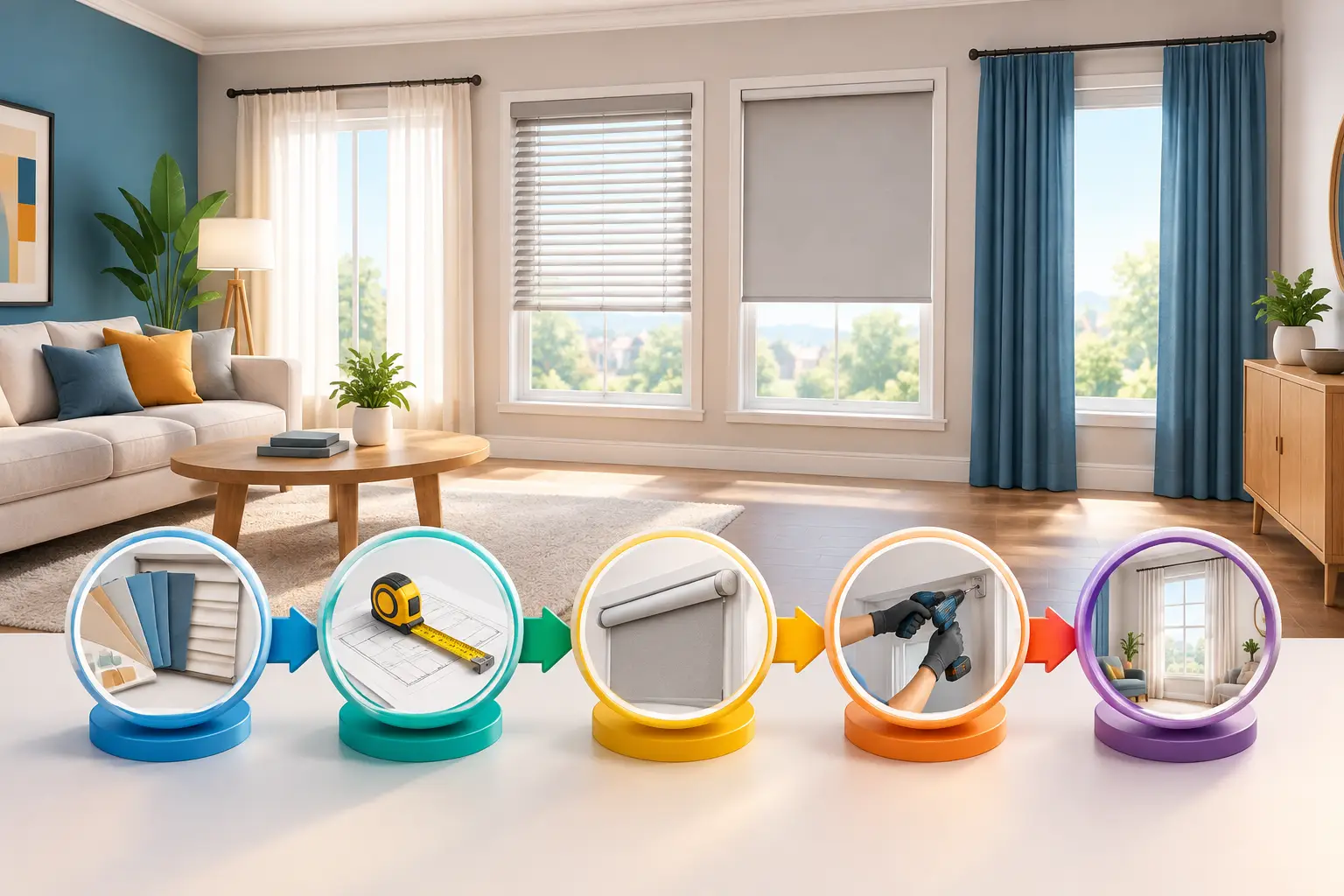
When homeowners research how to motorize existing window shades, measurements are often the first concern. Width and height matter, but a motorization assessment goes further.
The installer needs to confirm the depth of the window opening, the room available above the shade, bracket condition, and the location of trim, handles, locks, or molding. For an outside-mounted shade, the space around the window can affect both the appearance and the ability to conceal the motorized headrail. Large shades may need stronger brackets, a larger tube, or a different mounting approach to prevent sagging.
Fabric weight matters as well. Blackout materials, lined Roman shades, and wide woven woods can require more lifting power than lightweight solar fabrics. A properly specified system moves quietly and evenly. An undersized motor may struggle, while an oversized solution can add unnecessary expense.
Professional measurement also protects the finished look. Motorized shades should not appear like an afterthought. The hardware, headrail, fabric, and controls should complement the room rather than compete with it.
Safety, Privacy, and Energy Comfort
Motorization is often associated with luxury, but it solves practical household concerns too. Eliminating accessible cords can create a cleaner look and reduce a potential safety concern in homes with young children or pets. It also makes hard-to-reach windows usable rather than decorative.
For privacy, programmed shades can close when exterior visibility increases in the evening. For comfort, solar shades can lower during peak sun exposure to reduce glare and help protect flooring, artwork, and furnishings from harsh light. Insulating cellular shades can be scheduled around morning and evening routines, adding a layer of comfort at windows that feel cold in winter or warm in summer.
Motorized shades do not replace efficient windows or HVAC planning, but they can help you manage sunlight more consistently. That consistency is often what makes a room more comfortable to use.
When Replacement Is Better Than a Retrofit
A retrofit is worth considering when the existing shades are high-quality, in excellent condition, and designed with compatible hardware. It can be a smart way to add convenience without changing a room’s established design.
Replacement is usually the better long-term decision when shades are outdated, damaged, poorly fitted, difficult to clean, or incompatible with modern motor systems. It is also the better path when you want a different opacity, upgraded fabric, blackout capability, layered privacy, or a more refined architectural finish.
Custom motorized shades allow every part of the solution to work together: fabric, lift system, bracket placement, valance or fascia, power source, and controls. That coordination matters on expansive windows, bay windows, doors, and prominent rooms where small inconsistencies are easy to notice.
At Covering Windows, an in-home consultation makes it easier to compare both paths with real samples and accurate measurements. Rather than guessing whether an online retrofit kit will fit, you can see what is possible in your own light, against your own finishes, and make a decision that respects both the room and the budget.
The best motorized shade is not necessarily the one with the most features. It is the one that moves when you need it, disappears gracefully when you do not, and makes your home feel more comfortable every day.