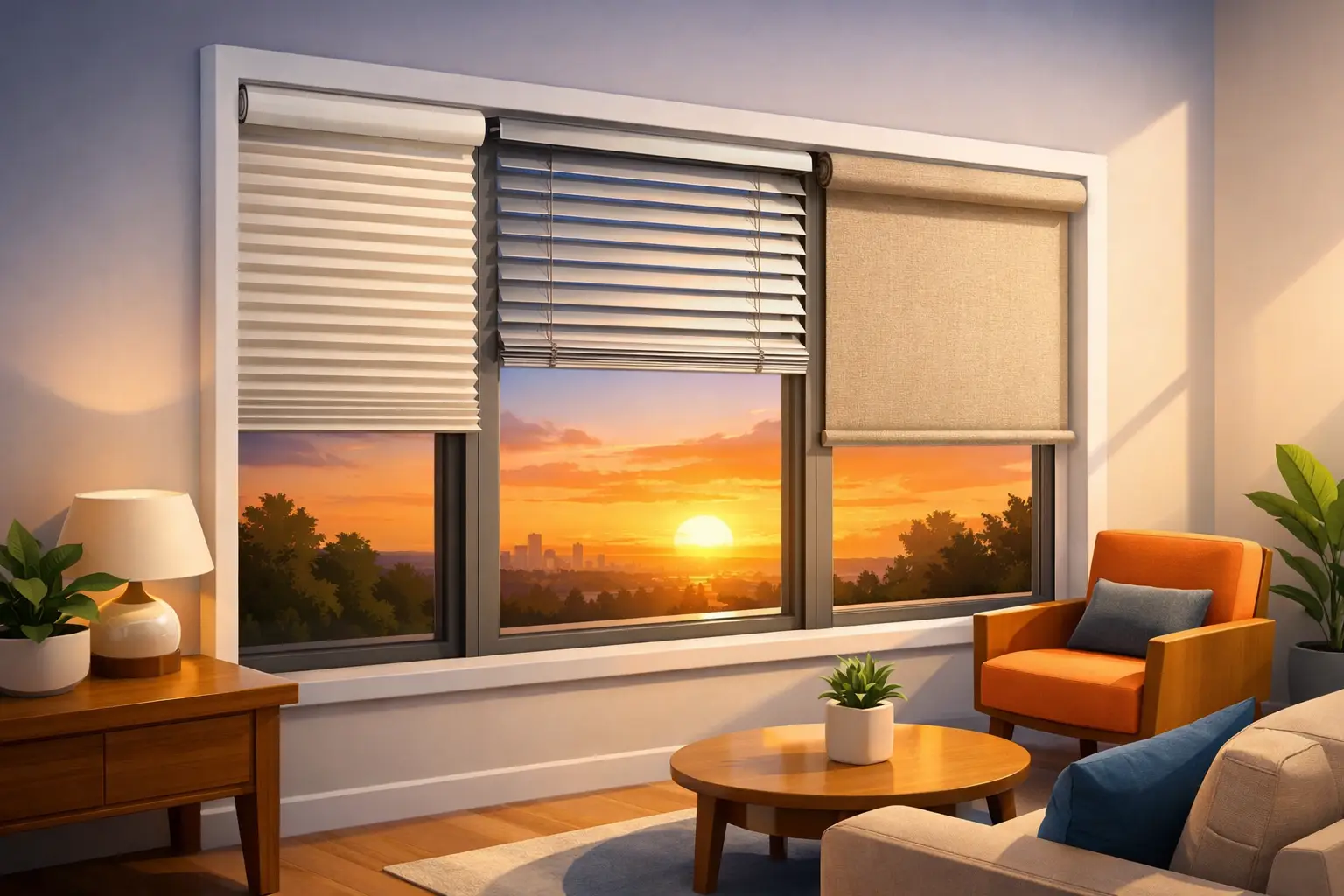
By late afternoon, west-facing windows can turn a beautiful room into the hottest seat in the house. If you are searching for the best shades for west facing windows, you are usually trying to solve more than one problem at once – harsh glare, rising indoor temperatures, fading floors and furniture, and a room that feels less comfortable than it should.
The right answer is not always the darkest shade or the most expensive fabric. It depends on how much sun the room gets, whether you want to preserve your view, how much privacy you need, and how polished you want the final design to feel. In homes across Northern Virginia, west-facing exposures often need a more thoughtful solution than a simple off-the-shelf blind.
What makes west-facing windows so challenging?
West-facing windows take the brunt of intense afternoon sun, which is often hotter and more disruptive than morning light. That means more glare on screens, more UV exposure on hardwood and upholstery, and more heat gain just when the outdoor temperature is already peaking.
This is why homeowners are often disappointed when they choose a window treatment based on looks alone. A shade may be beautiful at noon and frustrating by 5 p.m. The best option needs to work hard without making the room feel closed off or overly dark.
Best shades for west facing windows: what actually works
The best shades for west facing windows usually balance four things well: solar control, insulation, privacy, and style. Here are the options that consistently perform best.
Solar shades for glare and view preservation
Solar shades are one of the strongest solutions for west-facing rooms, especially living rooms, home offices, and spaces with large windows. They are designed to filter sunlight, reduce glare, and block a significant amount of UV rays while still allowing you to keep your view to the outside.
That trade-off is what makes them so appealing. You do not get the same soft, fully private look as a fabric Roman shade, but you gain excellent daytime comfort and a cleaner, more contemporary appearance. Openness factor matters here. A tighter weave gives you better heat and glare control, while a more open weave preserves more view. In a room that gets brutal late-day sun, a lower openness fabric is often the better call.
Cellular shades for heat reduction
If heat is your biggest complaint, cellular shades deserve serious attention. Their honeycomb construction traps air and adds insulation at the window, helping reduce solar heat gain and improve year-round efficiency.
This makes them a smart choice for bedrooms, bonus rooms, and family spaces that overheat in the afternoon. They also create a softer, more tailored look than many people expect. The main trade-off is that they are less view-friendly than solar shades. When lowered, they block the view more completely. But if comfort is the priority, that compromise is often worth it.
Double-cell fabrics can offer even more insulation, although single-cell options may be enough depending on the size of the window and the intensity of the exposure. Light-filtering cellular shades are a popular middle ground because they soften sunlight without making the room feel heavy.
Roman shades for design-first spaces
Roman shades are often chosen for their beauty first, but they can also perform well on west-facing windows when the fabric and liner are selected carefully. A quality lining can make a major difference in reducing glare and helping protect interiors from sun damage.
These are ideal when the room calls for more softness, texture, or a custom designer feel. Dining rooms, sitting rooms, and formal spaces often benefit from Roman shades because they elevate the architecture rather than looking purely functional. The caution is that fabric selection matters a great deal. A lightweight decorative fabric without proper lining may not hold up well against sustained western sun.
Roller shades for clean lines and reliable performance
Roller shades are a practical favorite because they are streamlined, versatile, and available in a wide range of performance fabrics. With the right material, they can do an excellent job controlling afternoon glare and light while fitting neatly into both modern and traditional interiors.
Compared with solar shades, roller shades can offer more privacy and a broader range of opacity levels. Compared with Roman shades, they tend to look more minimal and require less visual space. For many homeowners, they hit the sweet spot between performance and simplicity.
Layered shades when you want flexibility
Some west-facing windows need two jobs done at once. You may want filtered daylight for part of the day and stronger privacy in the evening. In those cases, layering can be the smartest solution.
A solar shade paired with drapery is one of the most effective combinations. The shade handles daytime glare and UV control, while the drapery adds softness, insulation, and a more finished custom look. This approach works especially well in larger rooms where bare shades alone can feel too stark.
How to choose the right shade for your room
There is no one-size-fits-all answer because west-facing windows behave differently from room to room. A two-story family room with expansive glass needs a different strategy than a small bedroom or breakfast nook.
If screen glare is your biggest issue, solar shades are often the strongest fit. If the room becomes noticeably hotter in the afternoon, cellular shades may serve you better. If design impact matters just as much as performance, Roman shades or layered treatments often create the most luxurious result.
You also need to think about privacy after sunset. Solar shades are excellent during the day, but at night, interior lighting changes the equation. That is why many homeowners choose to layer them or use them in spaces where nighttime privacy is less of a concern.
Fabric color, opacity, and lining matter more than most people realize
When people shop for shades, they often focus on the style first and the fabric details second. For west-facing windows, those details are where performance lives.
Lighter colors generally reflect more sunlight and can help keep a room cooler, although darker solar fabrics may preserve the outside view better during the day. Opacity also changes the experience. Light-filtering materials create a softer glow, while room-darkening fabrics provide stronger control but can make a living space feel more enclosed if overused.
For fabric shades, lining is not optional on a demanding exposure. A good liner improves light control, helps protect the face fabric, and contributes to a more substantial, finished appearance. This is one of the biggest differences between a custom solution and a quick online purchase that looks fine in photos but underperforms in real life.
Motorization makes west-facing windows easier to live with
West-facing sun tends to arrive at the exact time people are busiest. You are cooking dinner, finishing work, helping with homework, or trying to relax. Motorized shades remove the daily hassle by letting you schedule adjustments before the sun becomes a problem.
This is especially valuable for large or hard-to-reach windows. It also helps protect interiors more consistently, since shades are more likely to be used as intended. For busy households, convenience is not a luxury feature alone. It improves the performance of the whole system.
Why custom fit matters on sun-heavy windows
With west-facing windows, small gaps and poor fit are more noticeable because the light is so aggressive. Even a decent shade can disappoint if it leaves too much light at the edges or fails to sit correctly inside the opening.
Custom measurement and installation help the treatment look better and perform better. That is particularly true for oversized windows, specialty shapes, and rooms where the window treatment needs to complement trim, furnishings, and architecture. At Covering Windows, this is often where homeowners realize the value of a guided in-home consultation. Samples in the actual room, at the actual time of day, tell a much clearer story than a website thumbnail ever will.
The best shades for west facing windows are the ones that solve your real problem
The best shades for west facing windows are rarely chosen by style name alone. They are chosen by how you want the room to feel at 4 p.m. Cool or overheated. Bright but comfortable or washed in glare. Private, polished, and easy to use or constantly in need of adjustment.
A beautiful room should still be livable when the sun is strongest. When the shade is selected with the exposure, fabric, fit, and daily routine in mind, west-facing windows stop being a source of frustration and start feeling like part of the design.