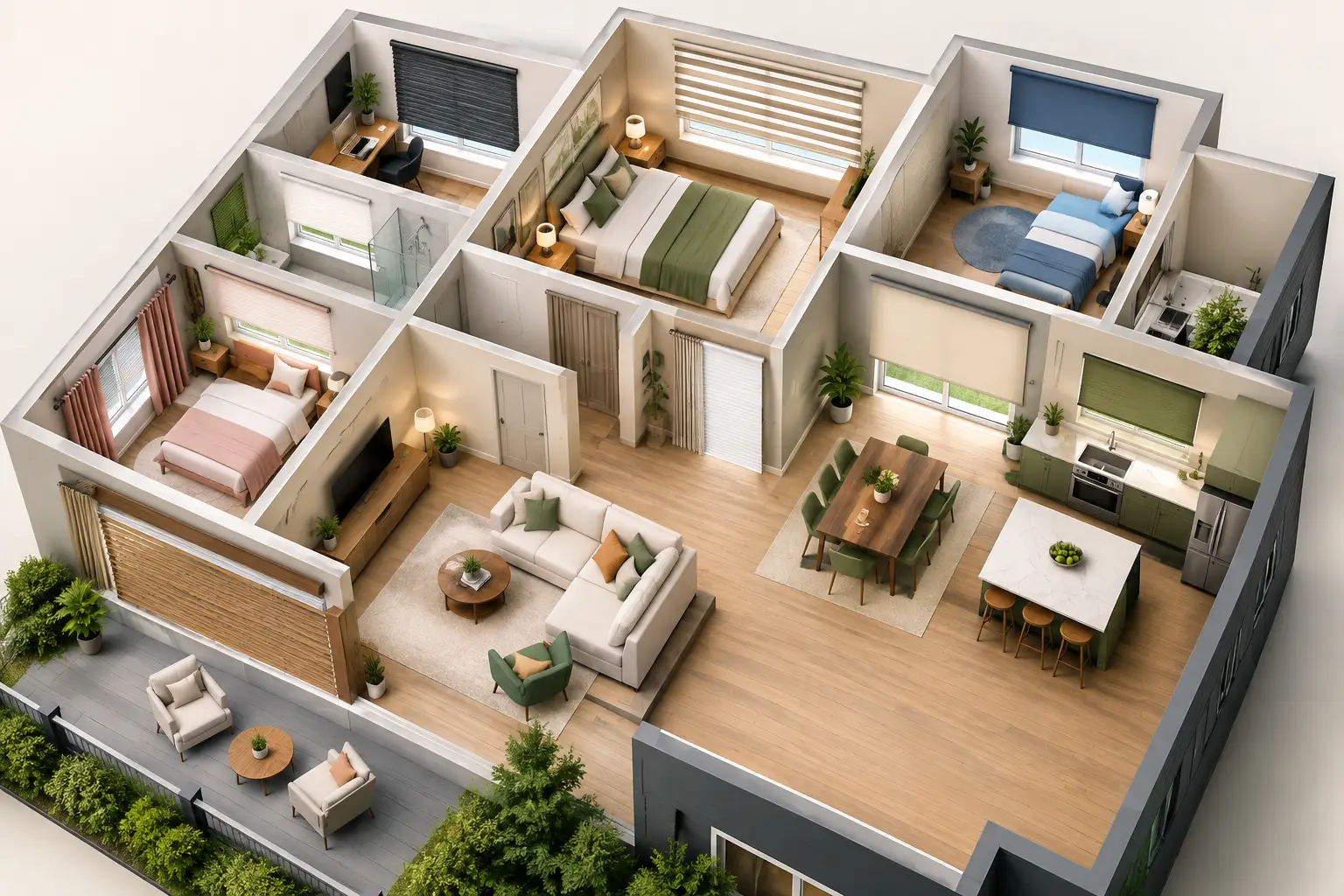

A beautiful window treatment should make a room feel more comfortable, private, and complete – not create another household concern. This cordless blinds safety guide is designed for homeowners who want the polished look of custom blinds or shades while making thoughtful choices for children, pets, guests, and everyday living.
Cordless window treatments remove the dangling lift cords that can pose a serious risk to young children. They also create a cleaner visual line, which is one reason they have become a preferred choice in family rooms, bedrooms, nurseries, and modern open-concept homes across Northern Virginia. But “cordless” is not a single product category. The best option depends on the window, the room, the material, and how you want the treatment to operate over time.
Why Cordless Window Treatments Are the Better Starting Point
Traditional blinds often use pull cords to raise, lower, and tilt the slats. In a home with infants, toddlers, or visiting grandchildren, loose cords deserve careful attention. Children can become entangled quickly, including when a crib, bed, chair, or other climbable furniture sits near a window.
Cordless blinds and shades eliminate the exposed lift-cord loop. Depending on the style, you raise and lower the treatment by gently moving the bottom rail or handle, using an internal lift system, or choosing motorized control. The result is a more refined appearance with fewer visible components competing with your furnishings and window trim.
That said, cordless is not simply a safety upgrade to check off a list. A manual cordless shade may be ideal for a guest room or a standard bedroom window, while motorized shades may make more sense for tall windows, a wall of glass, or a space where daily adjustments are part of your routine. The right choice balances safety, convenience, light control, and design.
Cordless Blinds Safety Guide: What to Look For
The first decision is whether every window in the home needs a cordless treatment. For homes with children or pets, cordless operation is generally the practical standard for interior blinds and shades. It is especially valuable in nurseries, playrooms, bedrooms, and living areas where children spend unsupervised moments.
Even in homes without young children, cordless operation can be worth choosing. It reduces visual clutter, prevents cords from tapping against the wall or window, and gives custom treatments a more intentional finish. For design-conscious homeowners, that cleaner profile is a real benefit, not an afterthought.
Choose the operating system for the window, not just the room
Manual cordless systems are simple, attractive, and dependable for many windows. You lift or lower the blind or shade using a bottom rail, fabric-covered handle, or integrated pull. They are often a smart value for accessible, average-size windows.
However, manual operation is not always the most convenient choice. Larger shades can be heavier to move, and a high or deep-set window may be difficult to reach comfortably. In those cases, motorization can offer a safer and more enjoyable solution. With a remote, wall control, or smart-home setting, you can adjust light and privacy without pulling on the treatment at all.
Top-down/bottom-up shades deserve special consideration for bedrooms and street-facing rooms. They allow daylight to enter from the top while the lower portion of the window remains covered for privacy. This can be an excellent solution in Reston, Vienna, or McLean homes where neighboring windows are close, but natural light is still a priority.
Pay attention to more than lift cords
Cordless products remove a major concern, but overall window safety still depends on the environment around the window. Keep cribs, toddler beds, benches, chairs, and storage pieces away from windows whenever possible. A child who cannot reach a treatment from the floor may still reach it by climbing.
If any existing window covering in the home still has cords, secure them immediately with the appropriate tension device or cord cleat, and keep the cords out of reach. Do not knot cords together, cut them without manufacturer guidance, or improvise a restraint with household items. Those quick fixes can create new problems or interfere with normal operation.
Also consider the window itself. A shade can help with privacy and glare, but it is not a substitute for secure window locks, guards, or stops where fall prevention is needed. Upper-story bedrooms and playrooms may require a broader safety plan, particularly if children can open the window.
Insist on proper measurement and installation
A cordless shade that is poorly measured can rub, hang unevenly, or fail to operate as intended. Installation matters just as much. Brackets need to be fastened into appropriate mounting surfaces, aligned carefully, and tested through the full range of motion.
This is where custom service can remove a lot of uncertainty. Rather than trying to interpret online measuring diagrams or guessing whether a window can support an inside mount, homeowners can see the options in their own rooms. A professional can account for window depth, trim, handles, molding, uneven openings, and how a treatment will look when fully raised.
For wider windows, the goal is not merely to cover the glass. It is to choose a treatment that raises evenly, stacks neatly, and remains comfortable to operate. The difference is visible every day, especially in a kitchen, primary bedroom, or main living space.
Which Cordless Styles Work Best?
Cellular shades are a popular choice for family homes because they offer soft light control, insulation, and a streamlined cordless design. Their honeycomb structure can help reduce heat gain in sunny rooms and add a layer of comfort during colder months. They are available in light-filtering and room-darkening fabrics, so they work well from nurseries to media rooms.
Roller shades offer a crisp, minimal look that suits contemporary interiors and large windows. They can be cordless or motorized and come in a wide range of fabrics, from open-weave solar materials that preserve a view to opaque options for stronger privacy. They are particularly effective when you want clean architecture to remain the focus.
Cordless faux wood and wood blinds bring more structure and adjustable light control. Tilt the slats to soften direct sun, protect furnishings, or maintain privacy without closing the room off completely. Wood offers warmth and natural character, while faux wood is often a practical choice in humid spaces such as bathrooms, laundry rooms, and kitchens.
Roman shades are another elegant cordless option, especially where softness and fabric texture are central to the design. Their tailored folds can make a dining room, bedroom, or sitting area feel finished and luxurious. Because fabrics, linings, and folds vary, it helps to review samples at the window rather than selecting only from a screen.
Plantation shutters do not use lift cords, making them a naturally appealing option for homes focused on long-term safety and architectural presence. Their louvers provide flexible light control, and their solid construction gives windows a built-in look. They are an investment, but for the right home, they can deliver lasting value and a dramatic design upgrade.
Questions Homeowners Often Ask
Are cordless blinds completely childproof?
No window treatment should be described as completely childproof. Cordless blinds remove accessible lift cords, which is a meaningful safety improvement, but supervision, furniture placement, secure windows, and correct installation still matter. Think of cordless operation as one important layer in a safer home.
Are motorized shades safer than manual cordless shades?
Both can be excellent choices because neither relies on exposed operating cords. Motorized shades are especially helpful for oversized, hard-to-reach, or frequently adjusted windows. Manual cordless shades can be a more budget-conscious fit for smaller, easily accessible windows. The better option depends on how the room is used.
Can I update only the rooms my children use?
You can, and prioritizing nurseries, bedrooms, and play areas is a sensible first step. Still, children move through the entire home, and visiting grandchildren may explore spaces that are usually adults-only. Many homeowners choose to create a phased plan, beginning with high-risk rooms and updating other windows as budgets and renovation plans allow.
What should I do with older corded blinds?
If replacement is not immediate, keep cords secured and inaccessible, move furniture away from windows, and inspect the hardware regularly. If the blinds are difficult to operate, damaged, or missing safety devices, replacement is usually the better long-term choice.
The most successful window treatments make daily life feel easier. When your shades are sized correctly, installed with care, and selected around the people who live in the home, safety and beauty do not compete. They become part of the same thoughtful design decision.