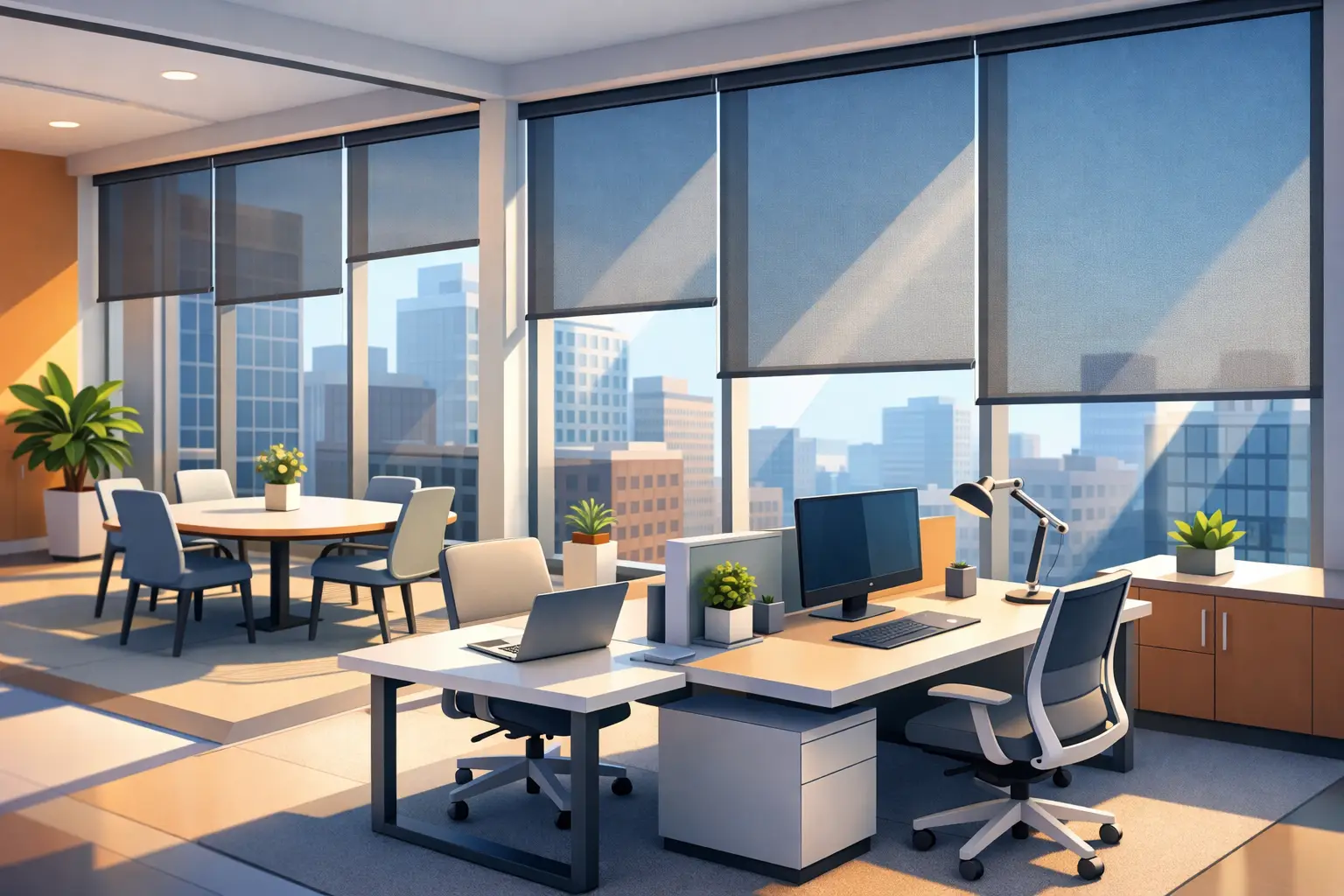
At 3:00 p.m., a wall of west-facing glass can turn an otherwise polished office into a row of squinting employees, washed-out monitors, and overheated meeting rooms. Commercial solar shades for offices address that daily problem without sacrificing the daylight, views, and architectural presence that made those windows valuable in the first place.
For offices across Northern Virginia, Washington, DC, and Maryland, solar shading is rarely just a decorative finish. It is a practical investment in comfort, screen visibility, energy performance, privacy, and the impression a workplace makes on clients. The right shade system gives a space a composed, intentional look while helping people work more comfortably throughout the day.
What Commercial Solar Shades Actually Do
Solar shades use specially engineered open-weave fabrics that filter sunlight before it reaches the room. Unlike blackout shades, they are designed to reduce glare and heat while preserving a degree of outward visibility. How much visibility remains depends largely on the fabric’s openness factor.
A lower openness factor, such as 1% or 3%, has a tighter weave. It blocks more light, offers stronger daytime privacy, and provides more protection from glare. A higher openness factor, such as 5% or 10%, allows more daylight and a clearer view outside, but it also permits more solar energy into the room. Neither is automatically better. A bright conference room facing direct afternoon sun may benefit from a tighter fabric, while a reception area with indirect light may look and feel best with a more open weave.
The result should not be an office that feels closed off. It should be a workplace where employees can see their screens, guests can sit comfortably near the windows, and natural light remains an asset rather than a distraction.
Why Offices Need More Than Basic Blinds
Off-the-shelf blinds can seem like a quick answer, especially when a space needs coverage fast. But large commercial windows, irregular openings, glass partitions, and high-traffic areas create demands that standard retail products often cannot meet. Poorly fitted treatments leave light gaps, operate unevenly, and can look temporary in a client-facing environment.
Custom commercial solar shades are measured for the exact opening, specified for the room’s exposure, and selected to complement the interior finishes. That matters in a law office with a refined reception area, a medical practice where patients need comfort and discretion, or a tech workplace built around glass walls and collaborative spaces.
There is also a durability question. Commercial-grade shade systems are designed for frequent operation and larger window spans. The hardware, brackets, chains, motors, and fabrics need to perform reliably, especially in spaces where staff may raise and lower shades every day. Choosing the least expensive option upfront can become costly when a shade sags, a mechanism fails, or replacements no longer match the original installation.
The Workplace Benefits People Notice First
Glare control is usually the immediate win. Employees do not have to rearrange desks every time the sun shifts, and presentation screens remain visible during meetings. Solar shades can also help reduce UV exposure, protecting hardwood flooring, furniture, artwork, merchandise displays, and fabrics from fading over time.
Comfort is equally important. While window coverings do not replace a well-designed HVAC system, they can reduce the intensity of solar heat entering through exposed glass. This can make perimeter offices, conference rooms, and reception areas more usable during peak sun hours. It may also reduce the pressure on air conditioning systems during the warm Virginia summer.
For businesses that welcome clients, the visual effect matters too. Uniform, tailored shades make a space feel finished. They replace the mismatched look of temporary blinds, taped-up paper, or employees improvising with curtains that do not belong in a professional setting.
Choosing Commercial Solar Shades for Offices
A successful project begins with the windows, but it should not end there. The best selection considers how each room is used, who occupies it, which direction it faces, and what the business needs the shades to accomplish.
Start With Light Exposure and Screen Use
South- and west-facing glass usually deserves the closest attention because it receives strong direct sun for long periods. In offices where employees work on monitors, even moderate glare can cause eye strain and lower productivity. Conference rooms need careful planning as well. A fabric that looks beautiful in a sample may not provide enough glare reduction for video calls, slide presentations, or wall-mounted displays.
This is where a professional consultation adds real value. Instead of choosing a fabric from a small image online, you can view full-size samples at the window and see how color, openness, and weave affect the room’s light. A shade that appears charcoal in a showroom may read softer or warmer against your existing wall color and natural daylight.
Select Fabric Color With Purpose
Darker solar shade fabrics generally provide better outward visibility during the day because they reduce reflected light inside the room. They can create a sophisticated, contemporary appearance and work especially well against bright exterior conditions.
Lighter fabrics reflect more solar energy and may help a room feel brighter, but they can soften the view outside. They are often an excellent choice for offices that prioritize a light, airy design or need to coordinate with pale finishes. The right answer depends on whether your priority is view-through, heat reduction, brightness, or a particular interior palette.
Keep in mind that solar shades primarily provide daytime privacy. Once interior lights are on at night, silhouettes may be visible from outside. Offices with ground-level exposure, neighboring buildings, or sensitive work areas may need a second layer, such as draperies, blackout roller shades, or a different privacy solution in select rooms.
Consider Manual, Motorized, and Automated Controls
Manual shades remain a dependable choice for smaller offices and individual windows. They are straightforward, cost-effective, and available with commercial-quality components. For a larger office, though, motorization can make daily operation much easier.
Motorized shades allow multiple windows to move together, creating a consistent appearance across a conference room, lobby, or entire glass façade. They can be controlled by wall switches, remotes, apps, or programmed schedules. For example, shades can lower automatically before the afternoon sun hits a west-facing suite, then rise later to restore the view.
Automation is particularly valuable when windows are high, wide, or difficult to reach. It also helps businesses avoid the familiar pattern of one shade left down for weeks while another stays open all day because no one is responsible for adjusting them. The trade-off is a higher initial investment and the need to plan for power, charging, or battery access. A thoughtful site review prevents those details from becoming surprises later.
Design Details That Shape the Finished Look
Commercial shade systems should look intentional from every angle. Roller shade fascia, cassettes, exposed hardware, bracket finishes, and bottom rails all influence the final appearance. In a sleek modern office, a clean cassette can conceal the roller and provide a crisp architectural line. In another setting, exposed hardware may suit the design and help manage the budget.
For large expanses of glass, aligned shade heights and consistent fabric direction are essential. Small inconsistencies become highly visible when several shades sit side by side. The same is true for glass-walled conference rooms and private offices. Careful measurement and installation keep the treatment looking balanced, not pieced together.
Branding can also play a role. Some commercial spaces use coordinated fabric colors to support their brand palette or create visual continuity across departments. The goal is usually subtle sophistication, not turning every window into an advertisement. A well-chosen neutral can often support a brand’s visual identity while remaining timeless through future renovations.
Why Professional Measurement and Installation Matter
Office projects often involve conditions that are easy to underestimate: steel framing, deep window mullions, uneven ceilings, sprinkler clearances, door swings, electrical access, and after-hours installation requirements. The product is only part of the solution. The planning behind it determines whether the shades operate cleanly and look like they belong in the space.
Professional measurement also helps establish where shades should be mounted. Inside mounts offer a tailored appearance when there is enough depth and a square opening. Outside mounts can cover more glass, reduce side light gaps, and solve challenges created by shallow frames or obstructions. A specialist can explain the visual and functional difference before the order is placed.
Covering Windows provides a hands-on process that starts with understanding the space, presenting appropriate samples, and recommending a custom solution rather than asking a business owner or office manager to make a high-stakes decision from a screen. Professional installation then completes the project with the fit, alignment, and finish a commercial setting requires.
Plan for the Office You Will Have Next Year
Commercial solar shades are easiest to specify during a build-out or renovation, but they are equally valuable in an established office that has outgrown its temporary window coverings. The best time to address glare is before employees begin avoiding certain desks, clients comment on the heat in the lobby, or furnishings show visible sun damage.
A clear conversation about sun exposure, privacy, design, controls, and budget can turn a frustrating glass-wall problem into one of the most polished features in the office. When the shades fit the windows, the way people work, and the character of the business, the room feels calmer, more comfortable, and ready for whatever the day brings.