The difference between a bedroom that feels restful at 6 a.m. and one that fills with summer sunrise often comes down to a single decision: blackout shades vs room darkening. The terms are frequently used as if they mean the same thing, but they deliver noticeably different results. Choosing well matters when you are investing in custom window treatments for a nursery, media room, primary suite, or any space where light and privacy affect how you live.
A room-darkening shade softens and significantly reduces incoming light. A blackout shade is designed to block as much light as possible. Neither is automatically the better choice. The right one depends on your room, window shape, daily routine, and the finished look you want.
What Room-Darkening Shades Actually Do
Room-darkening shades use an opaque or tightly woven fabric that filters out a substantial amount of daylight. During the day, they make a bright room feel calmer and more comfortable without necessarily creating complete darkness. At night, they offer strong privacy and reduce the glow from streetlights, neighboring homes, and passing cars.
For many Northern Virginia homeowners, room darkening is the practical middle ground. It is well suited to bedrooms where you want to sleep later but still appreciate some natural light in the morning, family rooms with afternoon glare, and home offices that need less screen reflection without feeling closed off.
The amount of light reduction varies by fabric color, weave, and shade construction. A pale room-darkening fabric may allow a soft halo of light, while a darker, denser material can create a much deeper level of dimness. This is why seeing full-size samples in your own home is more useful than judging fabric from a small online image.
What Makes Blackout Shades Different?
Blackout shades are made with materials or linings designed to prevent light from passing through the shade itself. They are the strongest choice for rooms where darkness is the goal: nurseries, bedrooms for shift workers, guest rooms, media rooms, and spaces with intense direct sun.
There is one important distinction homeowners often miss. A blackout fabric does not always create a perfectly black room. Light can still enter around the sides of the shade, above the headrail, or below the bottom rail. On a sunny morning, even a small perimeter gap can be visible.
For the closest possible result to total darkness, the shade needs the right installation and product configuration. An inside-mounted roller shade may have small side gaps because it must operate within the window opening. An outside-mounted shade can cover more of the trim and minimize those gaps. Side channels, cassette systems, layered drapery panels, and carefully planned measurements can improve results further.
Blackout Shades vs Room Darkening: The Real Comparison
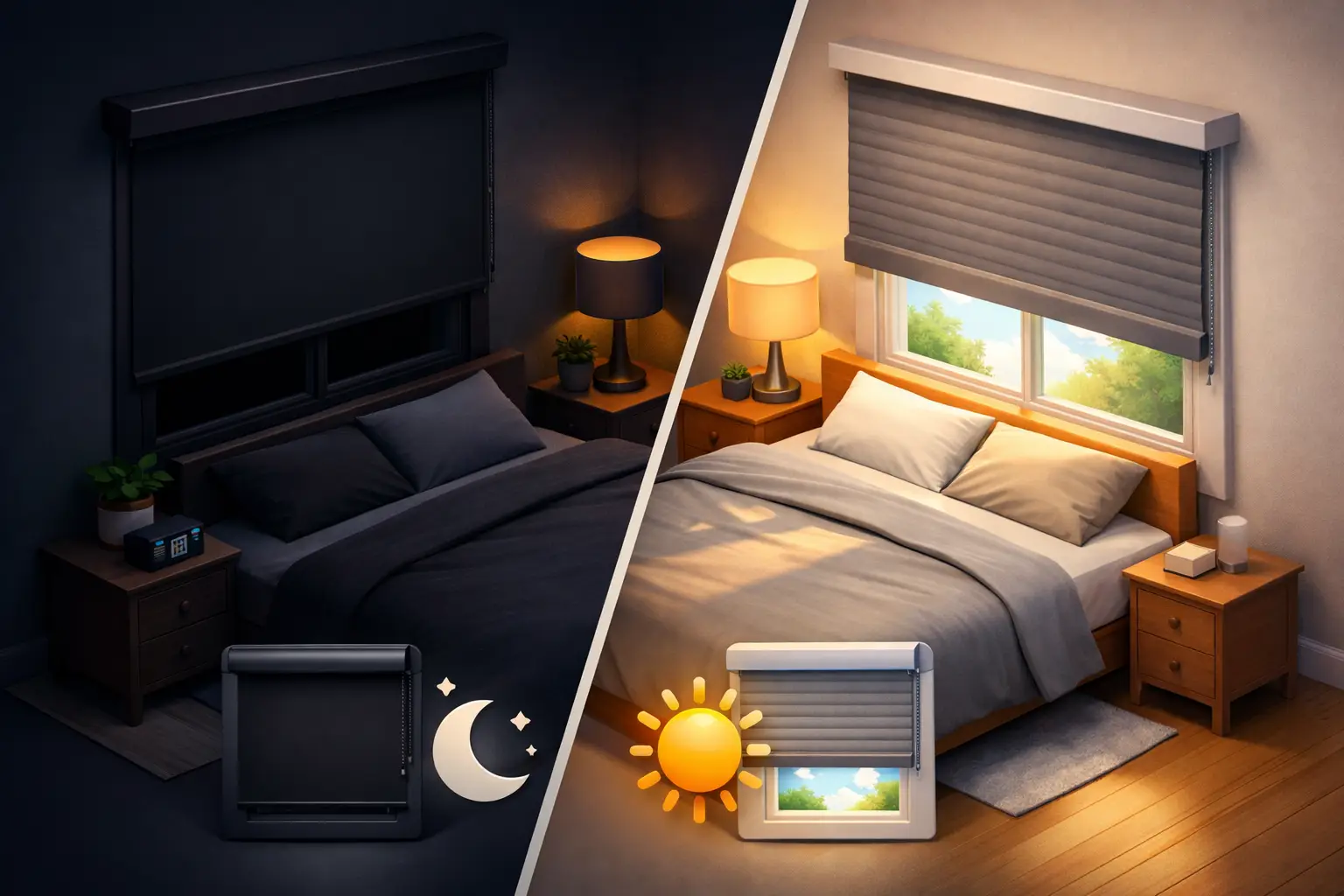
The simplest way to compare the two is by the experience they create. Room-darkening shades reduce light enough to make a room peaceful, private, and easier to use. Blackout shades are designed for people who need the room substantially darker, even when daylight is strong.
Light control
Blackout is the clear choice when sleep quality, nap schedules, or screen viewing depends on limiting daylight. Parents often choose blackout treatments for nurseries because an early sunrise can easily interrupt a child’s schedule. Home theater spaces also benefit from blackout shades, particularly when windows face west or receive strong afternoon sun.
Room-darkening shades are often better for living spaces and standard bedrooms. They tame glare and create a cozy atmosphere while preserving a sense of daytime connection. If you enjoy waking gradually to natural light, full blackout may feel more restrictive than you need.
Privacy
Both options offer excellent privacy when closed. At night, room-darkening fabrics generally prevent people outside from seeing into the home, but exact performance can vary by material and backlighting. Blackout shades provide the greatest confidence in highly private rooms, especially when the interior lights are on after dark.
If privacy is your primary concern rather than darkness, a room-darkening shade may deliver everything you need with a broader selection of fabrics and visual textures.
Energy comfort
Both room-darkening and blackout shades can help manage solar heat and reduce the discomfort of hot, bright windows. The shade style, fabric, fit, and direction of the window all influence performance. Cellular shades, for example, add insulating air pockets that can be especially valuable on large bedroom windows or rooms that run hot in the afternoon.
Blackout lining may add another barrier against sunlight, but it is not the only path to a more comfortable room. A well-selected room-darkening cellular shade or solar-control treatment can be a smart solution where glare and heat are more pressing concerns than complete darkness.
Style and design flexibility
Room-darkening treatments usually offer the greatest range of colors, patterns, and textures. They can look soft and decorative in a primary bedroom, tailored in a study, or relaxed in a family room. Roman shades, woven-style shades with liners, cellular shades, and roller shades can all provide room-darkening performance.
Blackout options are also far more attractive than their reputation suggests. Modern blackout roller shades can be clean and architectural. Blackout Roman shades can add warmth and softness. Draperies with blackout lining can bring a polished, luxurious finish to a bedroom while covering the light gaps that standalone shades may leave behind.
Where Each Choice Works Best
A primary bedroom is the classic blackout candidate, especially if it faces east, sits near outdoor lighting, or belongs to someone with an early or irregular sleep schedule. But a room-darkening shade can be the better fit for a bedroom with limited direct sun or for homeowners who prefer a gentler morning atmosphere.
In a nursery, blackout is usually worth serious consideration. Young children often sleep best in a consistently dark environment, and a blackout shade paired with side panels can provide both practical darkness and a finished designer look.
For home offices, room darkening is often the smarter choice. It reduces glare on monitors and helps control the heat from sunny windows without making the workspace feel like a closed theater. If video calls are common, you can also select a fabric and color that complements the room behind you.
Media rooms may call for blackout treatments, particularly if the space is used during the day. Yet if the room doubles as a family room, a layered approach can provide more flexibility: a room-darkening shade for daily use and lined drapery panels for movie time.
The Installation Details That Change the Result
The best fabric can disappoint if it is not measured and installed for the way you use the room. Window depth, trim profile, handle placement, and nearby furniture all affect whether an inside or outside mount makes sense.
Inside mounts create a clean, built-in appearance, but they typically allow some light around the edges. Outside mounts can improve light coverage and visually enlarge a window, though they require enough wall or trim area for the brackets. For the strongest blackout result, the treatment should extend beyond the window opening whenever possible.
Motorization is another consideration for large, high, or hard-to-reach windows. It makes it easy to close shades before a hot afternoon or schedule them around bedtime. In bedrooms, that convenience can turn light control from a task you forget into a consistent part of your routine.
Why Custom Guidance Makes a Difference
Online product labels can make blackout and room darkening sound simple, but the right choice is rarely just about the fabric category. A charcoal roller shade in one room may perform differently than the same shade in another because of orientation, trim, window depth, and reflected light.
At Covering Windows, an in-home consultation allows you to compare real fabrics, discuss how dark you want the room to feel, and see which mounting approach will support that goal. Professional measuring and installation also help avoid the uneven gaps, fit issues, and costly do-overs that can come with ordering window treatments sight unseen.
The best window treatment should do more than block light. It should make bedtime easier, screen time more comfortable, privacy more dependable, and the room itself more beautiful. Start with how you want the space to feel at the time you use it most, then choose the level of darkness that supports that life.