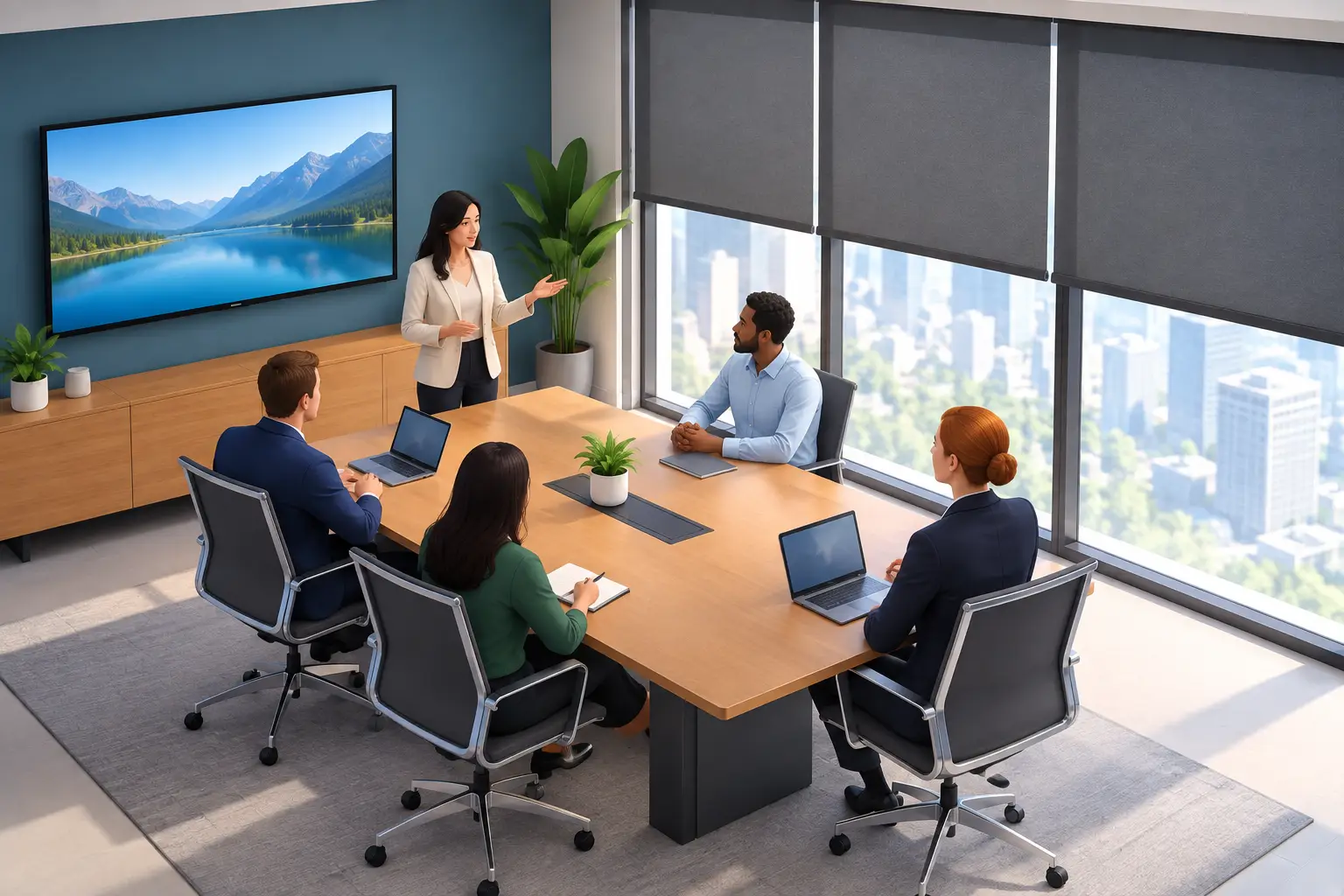
A bright conference room is an asset until a 10 a.m. presentation disappears behind screen glare. That was the central issue in this conference room shade case study: a polished, glass-lined meeting space that looked impressive from the outside but was difficult to use for video calls, projected presentations, and private discussions.
The business did not need to make the room darker all day. It needed control. The right commercial shades had to preserve the daylight and architectural appeal that made the space valuable while giving employees a dependable way to manage heat, glare, and visibility when meetings began.
The Challenge: A Beautiful Room That Was Hard to Use
The conference room featured large windows along two walls, with a strong eastern exposure in the morning and a western exposure late in the day. Sunlight created sharp reflections on the wall-mounted display, washed out presentation slides, and made it difficult for people seated near the windows to see clearly. On video calls, the bright backdrop also left faces underexposed and unprofessional.
Privacy was a second concern. The room faced a busy shared parking area, and employees wanted the option to block outside views during confidential conversations. Standard blinds had been considered, but the management team did not want a product that would make the room feel segmented, cluttered, or closed off when not in use.
This is a common commercial shading problem. An off-the-shelf solution may cover the glass, but it rarely addresses the room’s orientation, the display location, how often the room is occupied, and the visual standards of the business. Measurements alone are not enough. The shade system has to support how the space actually works.
A Conference Room Shade Case Study Built Around Control
The recommended solution was a custom roller shade system using solar screen fabric paired with motorization. The solar fabric was selected for its ability to filter harsh sunlight and reduce screen glare while maintaining a measured degree of outward visibility during the day. Rather than turning the conference room into a dark box, it softened the light and created a more comfortable setting for meetings.
Fabric openness was a key decision. A more open weave would have preserved more view and daylight but offered less glare reduction and daytime privacy. A tighter weave provided stronger solar control and a cleaner presentation environment, though it slightly reduced the connection to the outdoors. For this room, the tighter solar fabric offered the better balance because display visibility and employee comfort were the priority.
The shades were specified in a neutral architectural color that complemented the room’s wall finish, flooring, and furnishings. That choice mattered. Commercial window treatments should feel integrated with the design, not like an afterthought added to correct a problem. When the shades were raised, the room retained its open, modern appearance. When lowered, the fabric created a refined, uniform backdrop rather than a row of uneven slats.
Why Motorization Made Sense
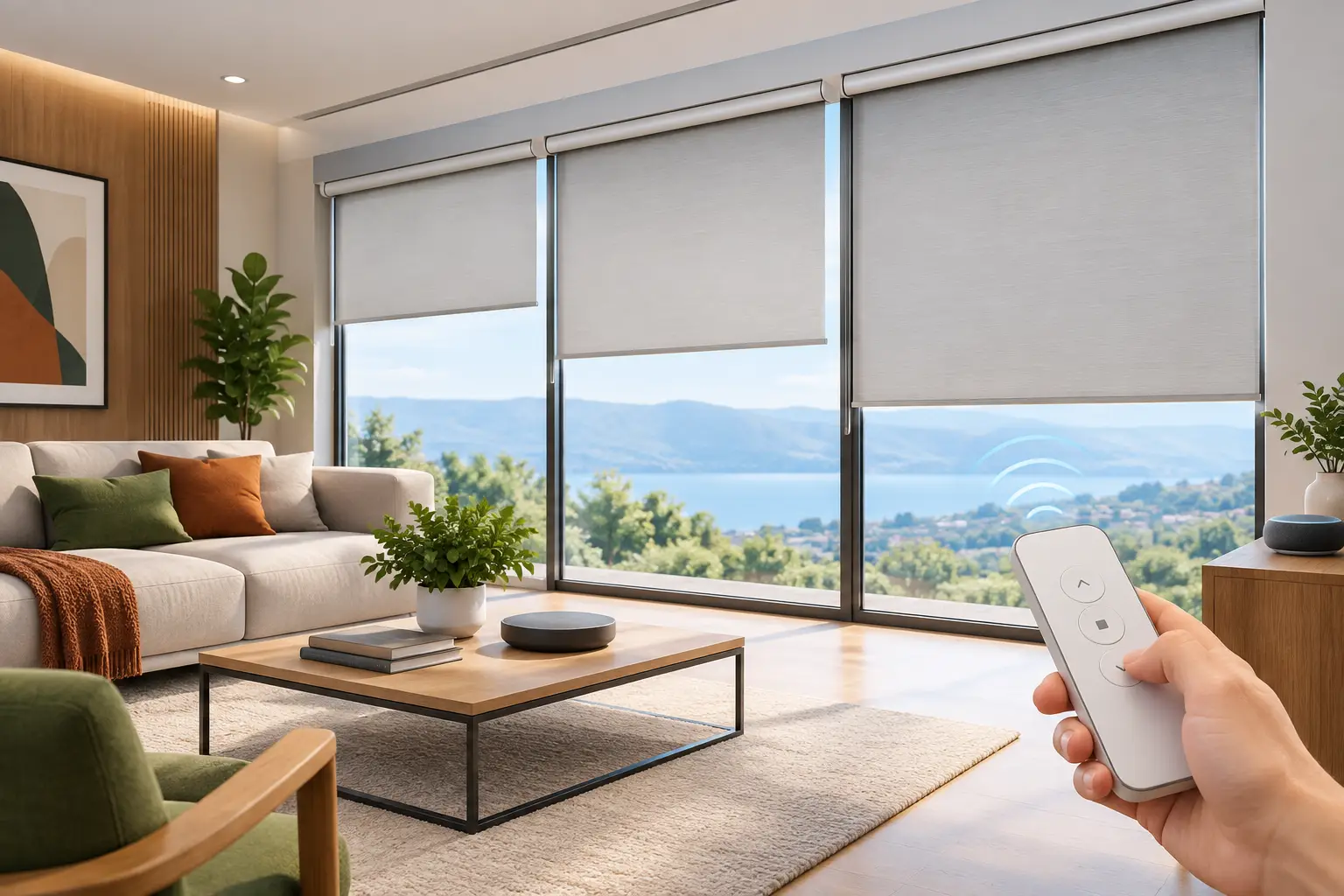
With multiple large windows, manually operating each shade would have been inconvenient and inconsistent. If one person lowered only one shade, glare could still fall across the display or create uneven lighting for a video call. Motorized shades allowed the team to adjust the entire room at once.
A wall control made everyday operation simple, while preset positions gave employees practical options for different needs. One setting filtered direct sun while maintaining daylight for casual meetings. Another lowered the shades farther for presentations and video conferences. A privacy setting provided more coverage when sensitive conversations required it.
Motorization does add upfront cost, so it is not necessary for every room. In a small interior conference room with one modest window, manual shades may be a sensible choice. But for highly visible, frequently used rooms with wide glass expanses, the convenience and consistency of motorization can justify the investment quickly.
The Installation Details That Protected the Result
A successful commercial shade project depends on more than fabric selection. Before installation, the window openings, mounting surfaces, display placement, and furniture layout all needed to be reviewed. In this case, the shades were mounted to provide broad glass coverage without interfering with the window operation or the room’s clean sightlines.
Precise sizing was especially important. Gaps at the sides of a shade can allow direct light to cut across a screen at the worst possible angle. Mounting too close to obstructions can affect the shade’s travel and appearance. A professional site visit identifies these issues before products are ordered, which is far less costly than trying to adapt a poorly fitted system later.
The installation was also scheduled to minimize disruption to the office. Once the shades were in place, the controls and preset settings were reviewed with the team so the system would be used as intended. That handoff is easy to overlook, but a well-designed shade system only delivers its full value when people feel comfortable operating it.
The Results: More Productive Meetings, Better Light
The change was immediate. Presentations became easier to see without asking employees to relocate seats or turn off every light in the room. Video calls looked more balanced because the window wall no longer overpowered the camera. Employees could use the room throughout the day instead of avoiding it during the brightest hours.
The visual effect was just as meaningful. The chosen solar shade fabric kept the room connected to daylight, so it did not lose the open feeling that had made the space attractive in the first place. At the same time, the room gained a more finished, intentional appearance. The shades supported the business’s professional image for both employees and visitors.
There was also a comfort benefit. By reducing direct sun exposure, the shades helped limit heat buildup near the windows. That can make a noticeable difference in rooms with extensive glass, especially when the HVAC system struggles to keep up with afternoon sun. Shades are not a replacement for proper climate control, but they can reduce a major source of discomfort and help the room feel more consistent.
What This Project Shows About Commercial Window Shades
The best conference room shades are rarely chosen by color alone. They are a practical design decision shaped by window direction, glass size, meeting technology, privacy expectations, and the way employees use the space. A room used primarily for team check-ins may need modest glare filtering. A client-facing boardroom with a large display and frequent video meetings may benefit from a more sophisticated motorized system.
It also depends on what happens after dark. Solar shades are excellent for managing daytime glare, but they do not provide complete nighttime privacy when interior lights are on. In spaces where after-hours privacy is essential, a dual-shade system can pair a solar shade with an opaque roller shade. That approach costs more and requires additional planning, but it gives the room greater flexibility.
At Covering Windows, commercial shade recommendations begin with the room, not a one-size-fits-all product. Seeing the windows in person, assessing the light, and understanding how meetings happen makes it possible to recommend a solution that looks polished and performs reliably.
A conference room should help people focus on the conversation, the presentation, and the decisions being made. When sunlight, heat, and privacy concerns stop competing for attention, the room can finally do the job it was designed to do.