A beautiful front room can quickly become the least-used room in the house when every passing neighbor, dog walker, or delivery driver has a clear view inside. The best privacy solutions for street facing windows do more than block visibility. They let you enjoy natural light, preserve architectural character, and make your home feel comfortably yours from morning through night.
For Northern Virginia homeowners, the right choice often depends on more than the window itself. A home close to the sidewalk in Vienna has different needs than a Great Falls property with a long driveway but highly visible first-floor living spaces. Your preferred look, the direction of the sun, nighttime exposure, and how often you want to adjust the treatment all shape the best answer.
Start With the Privacy You Actually Need
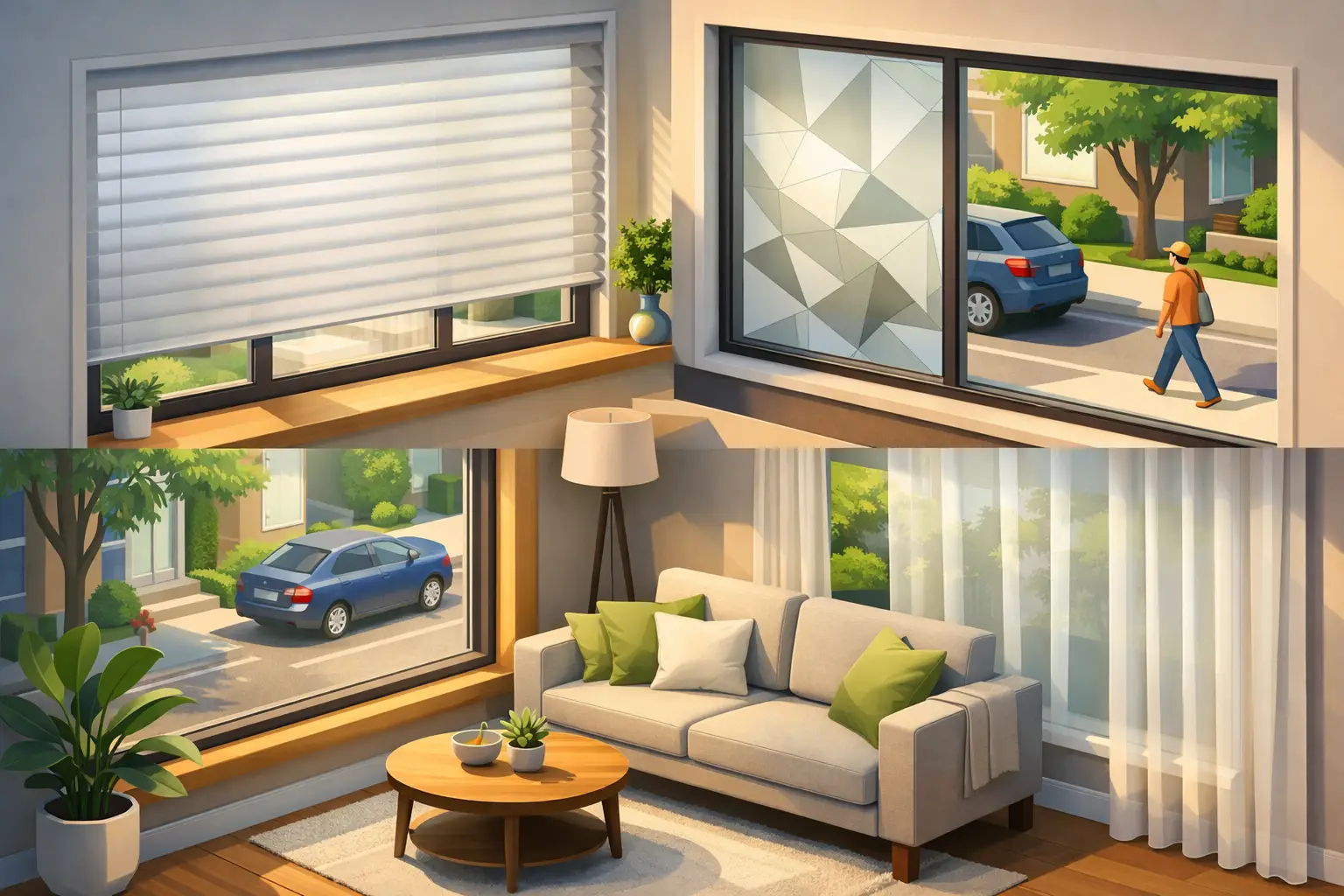
Street-facing privacy is not one single condition. During the day, sunlight outside can make it harder for people to see into your home, even with lighter fabrics or open louvers. At night, that changes. Once indoor lights are on, sheer shades and open blinds may offer very little privacy from the street.
Think about when the room is used and what is visible from outside. A formal dining room may need privacy mostly in the evening. A front-facing office may need a filtered view all day without creating a closed-in feeling. A first-floor bedroom, bathroom, or family room usually calls for more complete coverage.
Also consider sightlines rather than treating every inch of glass the same way. If a window begins several feet above the floor, you may only need coverage across its lower portion. That distinction can open up more attractive options than fully covering the window at all times.
Privacy Solutions for Street Facing Windows That Still Welcome Light
Plantation Shutters for Lasting Control
Custom wood shutters are one of the strongest choices for homes that need dependable privacy with a tailored, architectural finish. Adjustable louvers allow you to angle the view toward the sky while limiting visibility from the sidewalk. Close them fully at night, or tilt them during the day to soften direct sun without losing the room’s natural brightness.
Shutters work especially well in front living rooms, dining rooms, home offices, and bedrooms where the treatment should look polished from both inside and outside. They are also a smart fit for bay windows and uniquely shaped openings that can be difficult to cover with ready-made products.
The trade-off is that shutters create a more defined, permanent look than fabric treatments. They are ideal when you appreciate clean lines, craftsmanship, and easy daily control, but they may not be the first choice if you want a softer, layered design. High-quality wood shutters can offer a luxury finish without the visual heaviness some homeowners expect from traditional shutters.
Top-Down Bottom-Up Shades for Targeted Coverage
For many street-facing windows, top-down bottom-up shades provide the most elegant balance of daylight and discretion. The bottom of the shade can remain raised enough to cover the sightline from the street, while the top stays open to bring in light and preserve a view of the sky or treetops.
Cellular shades are particularly useful in bedrooms, offices, and front rooms because their honeycomb construction can also improve insulation. Roman shades bring more texture and softness to a space, making them a natural choice in homes with traditional, transitional, or layered interiors.
This style is not a complete substitute for blackout coverage at night unless the fabric and operating position are chosen carefully. If the room needs full nighttime privacy, plan to lower the shade completely or pair it with drapery panels.
Roller Shades for Clean, Modern Privacy
Roller shades offer a streamlined appearance that fits contemporary spaces, renovated townhomes, and rooms where you do not want the window treatment to dominate the design. Privacy fabrics are available in varying opacities, from light-filtering materials that soften the view to room-darkening options that give stronger coverage.
For a front-facing office or sitting room, a carefully selected light-filtering roller shade can reduce the feeling of being on display while maintaining a bright, open atmosphere. For bedrooms and ground-level family rooms, room-darkening fabrics provide a more secure sense of privacy after sunset.
Be cautious with solar screen shades if privacy is the main goal. They are excellent for glare and heat control, but their openness factor matters. A more open weave preserves a clearer outward view during the day, yet it can also reveal more of the room at night when lights are on.
Layered Window Treatments Solve Day-to-Night Challenges
A single treatment does not always have to carry the entire job. Layering shades with drapery is often the most versatile solution for prominent windows facing the street. A light-filtering shade can manage daytime glare and offer casual privacy, while stationary or operable drapery panels bring softness, color, and fuller evening coverage.
This approach works beautifully in formal living rooms, dining rooms, and front bedrooms. Drapery also helps visually enlarge a window when the rod is installed wider and higher than the frame. The result feels more intentional than a basic privacy fix, particularly in rooms that are visible from the entry or open to the rest of the home.
If you prefer the crisp structure of shutters but want more warmth, decorative side panels can add fabric without interfering with the louvers. The combination gives you precise light control and an elevated, finished look.
Do Not Forget the View From Outside
Street-facing treatments should complement your home’s exterior as well as your interior. White or neutral shutters often create an orderly, classic façade. Woven shades can add warmth, although they may require a liner if you need consistent privacy. Roller shades tend to look minimal from the street, especially when fitted close to the window.
Color matters, too. A dramatic drapery fabric may look stunning inside but can create a dark, uneven appearance from outdoors if it is not lined appropriately. During an in-home consultation, viewing samples against your wall color, trim, furnishings, and natural light makes these choices far easier than selecting from a small online image.
For homes with windows directly exposed to strong afternoon sun, privacy and solar control should be planned together. The right fabric or louver size can reduce glare and help protect floors, artwork, and furnishings from harsh light while maintaining the welcoming appearance you want.
Motorization Makes Privacy Easier to Maintain
The most beautiful privacy treatment only works when it is used. Motorized shades are especially practical for busy households, tall windows, and rooms where you want privacy on a dependable schedule. Set front-facing shades to lower before evening routines begin, then raise in the morning to bring daylight back into the home.
Motorization is also useful when a room has multiple street-facing windows. Instead of adjusting several treatments one at a time, you can manage them together. For homeowners in Ashburn, Reston, or McLean who are often moving between work, family activities, and travel, that convenience can make a real difference.
Automation should support your lifestyle, not add complexity. Some clients prefer simple remote control, while others want scheduled operation. The right option depends on how you use the room and how much hands-on control you prefer.
Why Custom Fit Matters on Front Windows
Off-the-shelf blinds can leave side gaps, sit unevenly in older window frames, or fail to account for handles, trim, and uneven depths. Those details are more noticeable on windows that face the street, where both privacy and curb appeal are at stake.
Custom treatments are measured for the specific opening and designed around how the window operates. That means better coverage, cleaner proportions, and a finished look that supports the value of your home. Professional installation also prevents common frustrations such as crooked brackets, light leaks, and shades that do not raise or lower smoothly.
At Covering Windows, the process begins with seeing the room in person. Samples, design guidance, precise measurements, and professional installation help turn a broad concern about privacy into a treatment that looks as though it was always meant to be there.
A front window should frame your home, not make you feel exposed inside it. Choose a solution that gives you the level of privacy you need at night, the light you want during the day, and a design you will be glad to see every time you pull into the driveway.