A well-made shutter can make an ordinary window feel architectural. It frames the view, controls the light, and gives a room the finished look that off-the-shelf blinds rarely achieve. This custom plantation shutters buying guide helps Northern Virginia homeowners make decisions that hold up long after installation day, from material and louver size to the details that affect daily use.
Plantation shutters are a design investment, but they are also working window treatments. The right choice should suit your home’s architecture, how you use each room, and the amount of privacy, sunlight, and insulation you want. A thoughtful consultation brings those factors together before anything is measured or ordered.
Start With the Window, Not the Swatch
It is tempting to begin with color, especially when you are refreshing a kitchen, living room, or primary suite. Color matters, but the window itself should lead the conversation. Its size, shape, depth, trim, opening direction, and placement in the room determine which shutter configuration will look best and operate properly.
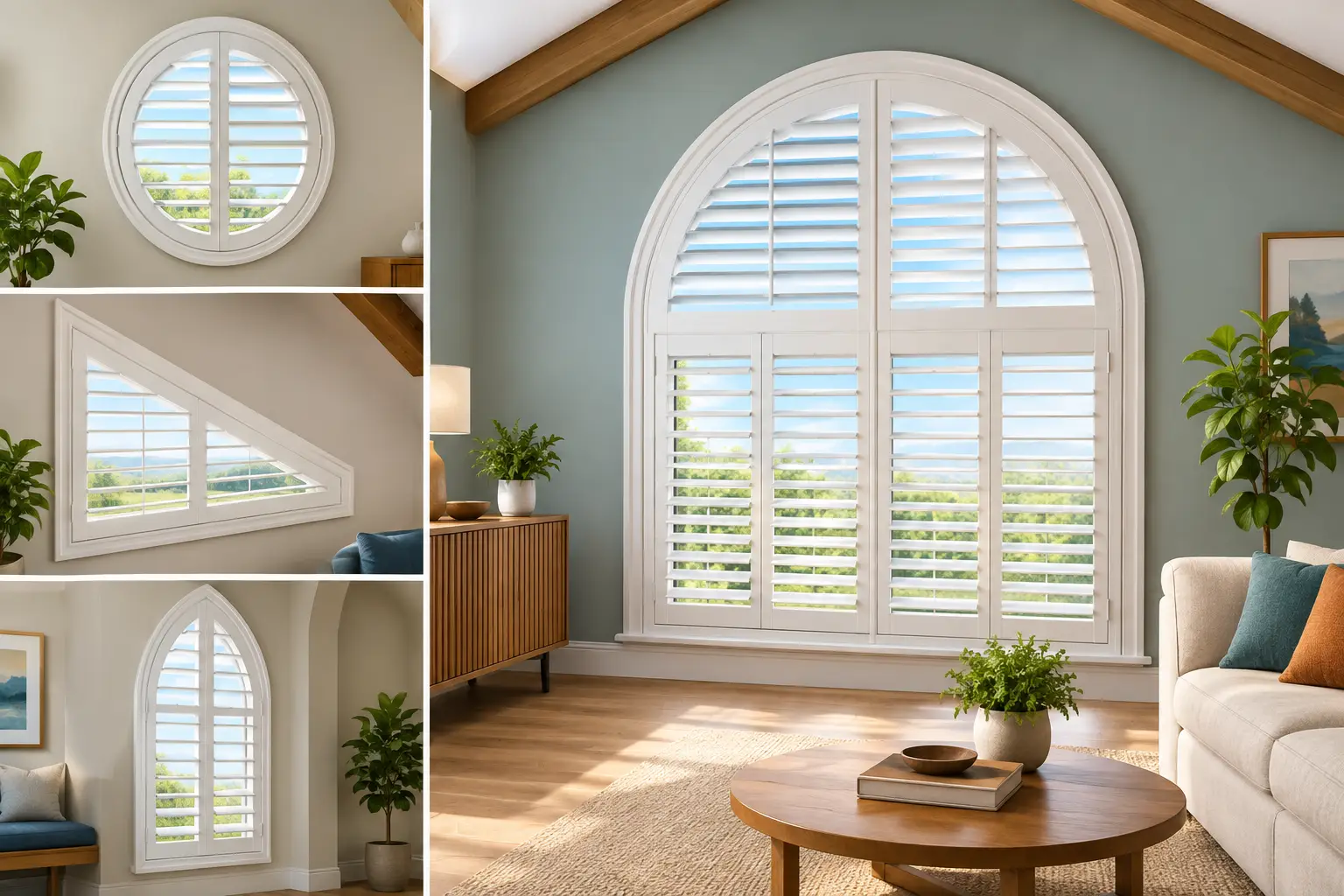
A wide picture window may need multiple shutter panels so the louvers remain proportional and the panels are manageable to open. A shallow window opening may require a specific frame or mounting approach. French doors, bay windows, arched openings, and windows behind furniture each call for their own solution. These are the details that can be difficult to judge from an online photo or a small showroom display.
During an in-home consultation, a specialist can assess whether an inside mount will create the clean, built-in appearance many homeowners want or whether an outside mount makes more sense. They can also identify potential obstacles such as window cranks, alarm sensors, protruding trim, or handles that need clearance.
Choose the Right Shutter Material
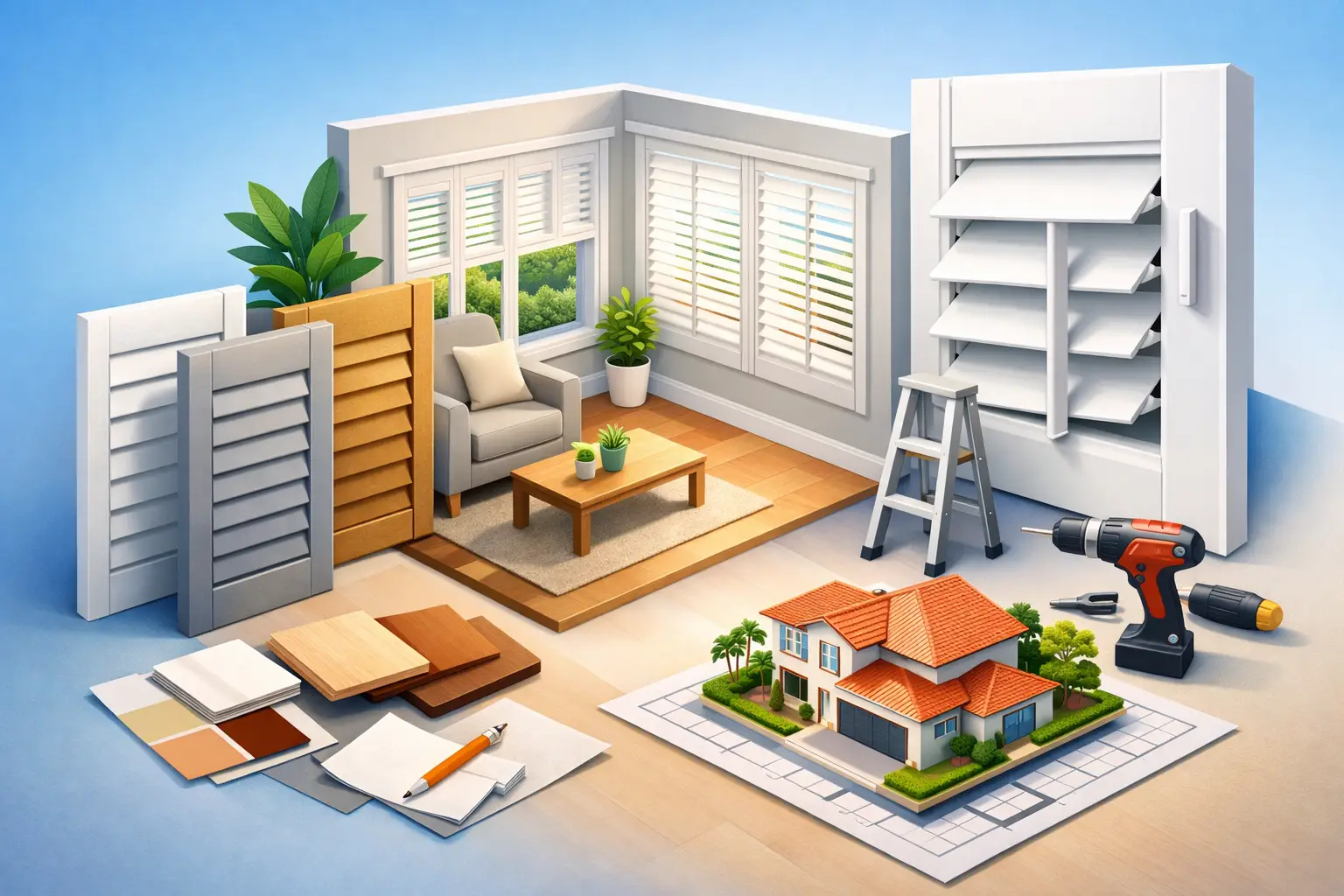
The best shutter material is not always the same throughout the house. Your design goals, budget, moisture exposure, and window size all matter.
Wood shutters
Wood shutters offer a warm, refined appearance that complements traditional homes, painted millwork, and higher-end interiors. They are naturally lightweight, which can be an advantage on large openings or when panels need to be wider. Their crisp finish and craftsmanship bring a sense of luxury that is difficult to duplicate.
Quality wood shutters are especially appealing in living rooms, dining rooms, bedrooms, home offices, and formal spaces where the shutters are part of the room’s design. At Covering Windows, homeowners can often access high-quality wood shutters at pricing comparable to faux wood, making it worth comparing both options in person rather than assuming wood is automatically out of reach.
Faux wood and composite shutters
Faux wood or composite shutters are popular for baths, laundry rooms, kitchens, and other humid spaces. They are designed to resist moisture and are easy to clean, making them a practical choice where splashes, steam, and everyday wear are concerns.
The trade-off is that some composite materials can be heavier than wood, particularly on larger windows. Product quality also varies. A professional will help you compare the finish, panel weight, construction, and available configurations, not simply choose based on a material label.
Vinyl shutters
Vinyl options can be budget-friendly and work well in certain applications, but they are not interchangeable with premium wood or composite shutters. Their available colors, panel sizes, and structural support may be more limited. For homeowners pursuing a tailored, furniture-quality finish in a main living area, a higher-grade shutter is often the better long-term value.
Get Louver Size and Panel Design Right
Louvers are the horizontal slats that tilt open and closed. Their size changes both the look of the shutter and the view through it. Larger louvers, often 3 1/2 or 4 1/2 inches, create a more open, contemporary feel and provide a clearer view when open. Smaller louvers can suit more traditional interiors or windows with narrower proportions.
There is no universal rule that larger is better. A large louver on a small cottage-style window can look out of scale, while a narrow louver on an expansive wall of windows may feel busy. The strongest choice is one that feels intentional alongside your trim, furnishings, and the age of the home.
Panel configuration deserves equal attention. A shutter can be designed as full-height panels, café-style panels covering the lower portion of the window, or tier-on-tier panels with independently operating top and bottom sections. Full-height shutters deliver a classic, uninterrupted look. Café shutters preserve privacy at eye level while keeping the upper window open for daylight. Tier-on-tier shutters offer exceptional flexibility in bedrooms and street-facing rooms, though they typically involve a higher investment because of the additional construction.
Think About How You Want to Control Light and Privacy
Plantation shutters are excellent at managing daylight, but they do not create the same total darkness as a room-darkening shade. Closed louvers significantly reduce light and offer strong privacy, yet tiny lines of light can remain between louvers. For most living spaces, that is part of their charm. For a nursery, media room, or bedroom where darkness is a priority, consider pairing shutters with drapery panels or a secondary room-darkening treatment.
Also consider the tilt control. A traditional tilt rod provides a timeless, recognizable shutter look. Hidden tilt systems place the mechanism out of sight for cleaner lines and a more contemporary finish. Both work beautifully. This is largely a style preference, although hidden tilt can make dusting slightly simpler.
For privacy, ask a practical question: what can someone outside see when the louvers are tilted? In a home close to the street or neighboring properties, you may want a configuration that lets you direct daylight upward while limiting direct sightlines into the room. This is where seeing samples at your own windows is far more helpful than making a decision under showroom lighting.
Understand What Drives Custom Shutter Pricing
Custom shutter pricing is based on more than square footage. Material, window shape, louver size, panel count, frame style, specialty openings, paint or stain finish, and installation complexity all influence the final quote. A rectangular window with standard panels will generally cost less than a large bay, an arch, or a French door shutter with handle cutouts.
The lowest quote is not always the lowest-cost decision over time. Poorly measured shutters may have uneven gaps, difficult operation, or frames that do not sit cleanly against the trim. Installation also affects how the panels align, how smoothly they close, and whether the finished treatment looks like a natural part of the home.
Ask what is included in the price. A clear proposal should account for measuring, product specifications, hardware, delivery, and professional installation. It should also make it easy to understand where a design choice increases cost and where it does not. That transparency helps you make budget-conscious decisions without compromising the details you will see every day.
Why Professional Measuring and Installation Matter
A custom shutter is only as good as its fit. Windows are rarely perfectly square, even in newer homes. Professional measurement accounts for slight variations in width, height, depth, and trim so the shutter can be manufactured and installed for a precise appearance.
Installation is not a final convenience added after the sale. It is part of the product experience. Properly installed shutters should open smoothly, close evenly, and sit securely without distracting gaps or awkward interference with window hardware. For busy homeowners, professional installation also removes the risk of receiving a beautiful product that becomes a frustrating weekend project.
Questions to Ask Before You Order
Before approving a shutter design, make sure you know which material is being specified, how the shutters will mount, and how the panels will open. Ask to see the color and finish against your walls and trim in natural light. If you are comparing wood and composite, handle both samples and look at the edges, louvers, and frame details rather than judging from a photograph.
It also helps to discuss the windows that matter most. You may choose a premium wood shutter for the front living room, a moisture-resistant composite for the bathroom, and a different privacy strategy for bedrooms. A cohesive home does not require every opening to use the exact same construction. It requires each treatment to look coordinated and perform well in its setting.
The best shutters should feel less like an accessory and more like a permanent improvement to your home. Choose the material and configuration that suit your windows, then let expert measuring and installation protect the beauty of that decision for years to come.