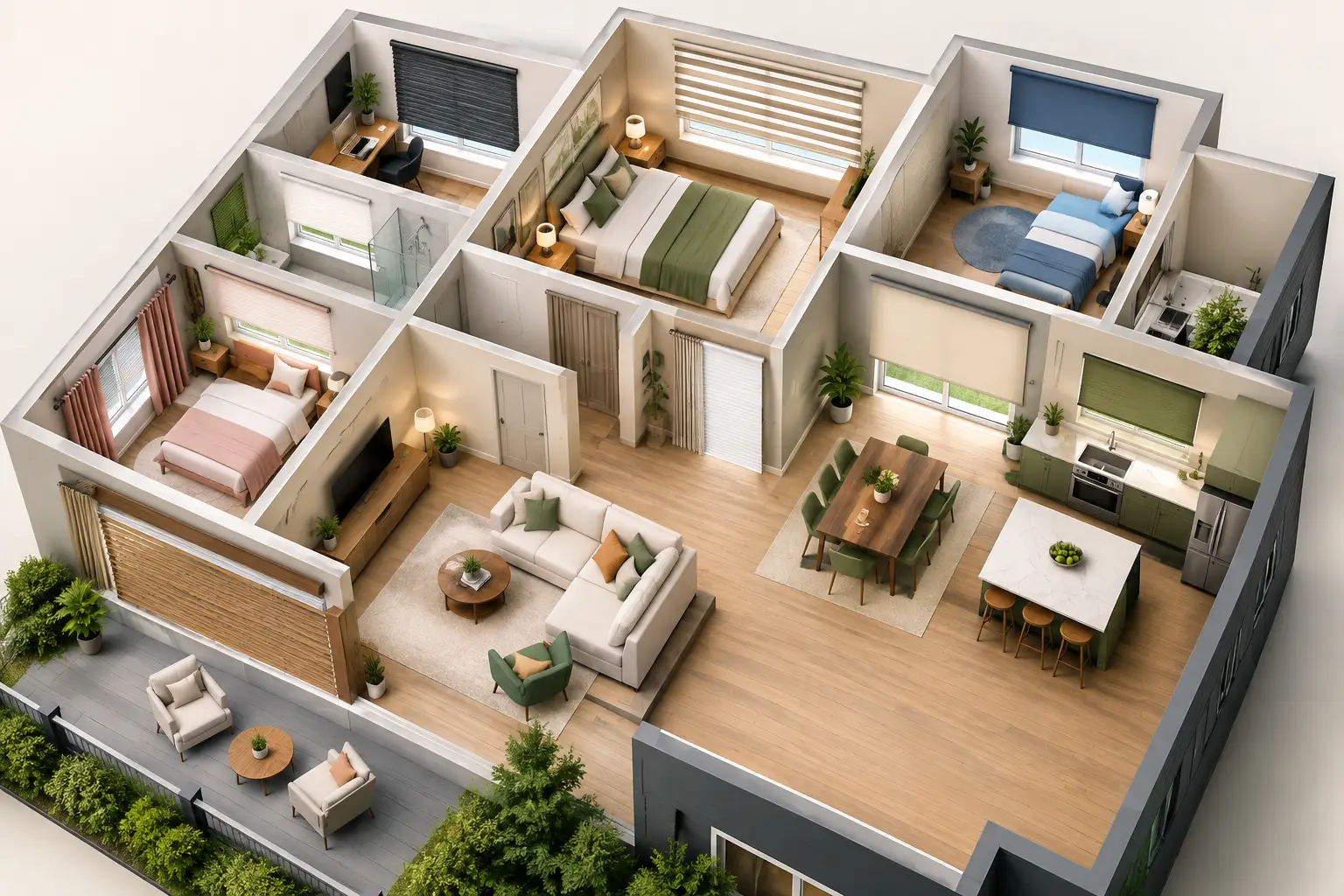
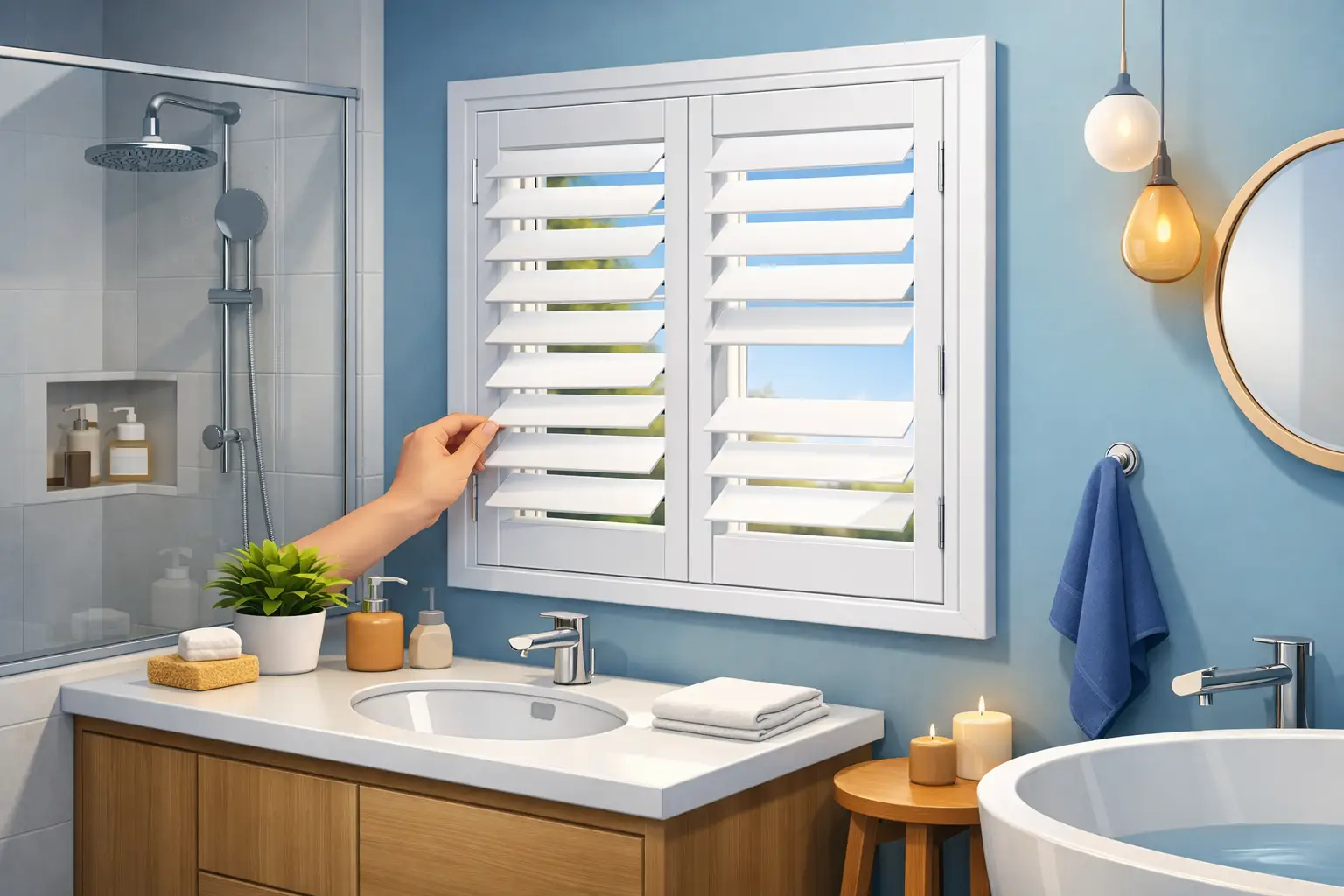
A beautiful bathroom can lose its polished feel quickly when a window treatment warps, stains, or leaves the room feeling exposed. Knowing how to choose shutters for bathrooms means looking beyond color and style to consider humidity, window placement, privacy needs, and the details that make the finished result feel custom rather than improvised.
For Northern Virginia homeowners, bathroom shutters are often the answer to a difficult balance: they create a tailored architectural look while giving you control over light and privacy. The right choice can elevate a primary bath, finish a powder room, or bring a cohesive, luxury-minded look to every bathroom in the home.
Start With the Bathroom’s Moisture Level
Not every bathroom presents the same conditions. A guest powder room with no shower may have modest humidity, while a primary bathroom with a large walk-in shower, soaking tub, and limited ventilation demands a more moisture-tolerant solution.
The closer a window is to a shower, tub, or other direct source of steam and splashing, the more carefully material selection matters. Even a high-quality window covering can have a shorter lifespan if it is not designed for its environment. Good ventilation helps, but it should not be the only line of defense against moisture.
For high-humidity bathrooms, composite or premium faux wood shutters are usually the practical choice. These materials are designed to resist the swelling, cracking, peeling, and warping that can occur with lesser products over time. They also wipe clean easily, which matters in rooms where hairspray, soap residue, and everyday moisture can collect.
When Real Wood Shutters Can Still Work
Wood shutters bring depth, warmth, and exceptional craftsmanship to a home. They can be an excellent fit for a powder room, a well-ventilated bathroom, or a window set well away from the shower area. They are especially appealing when you want the bathroom to coordinate with custom wood shutters elsewhere in the home.
That said, wood is a natural material. In a consistently damp setting, it requires more consideration than a moisture-resistant alternative. A professional consultation can help determine whether the room’s ventilation, window location, and intended use make wood a sensible design investment or whether a high-quality composite shutter will deliver the same visual impact with less risk.
Choose Bathroom Shutter Materials for Real Life
The material you choose affects durability, appearance, maintenance, and price. It also changes how confident you can feel about your shutters years after installation.
Composite shutters are engineered for demanding spaces. They offer a substantial, painted finish and are a strong option for bathrooms, laundry rooms, and kitchens. Quality matters here. Better composite shutters have reinforced construction and refined finishes that look intentional, not plasticky.
Faux wood shutters can offer excellent moisture resistance and a clean, classic look. They are often a value-conscious option for homeowners who want the structure and privacy of shutters without choosing natural wood. The best options are made to fit the opening precisely, with proper hardware and professional installation.
Real wood shutters remain the premium choice for homeowners who value the distinctive grain, lighter weight, and custom finish options of wood. In the right bathroom, they create an elevated, furniture-like detail that is difficult to replicate. Their suitability depends on the room, not simply the budget.
Avoid treating all faux wood or composite shutters as interchangeable. Big-box and online options may appear similar in a product photo, yet differences in construction, louver tension, paint finish, frame quality, and installation can become obvious once they are on the wall. Bathroom windows often reveal those details because they are viewed up close every day.
How to Choose Shutters for Bathrooms With Privacy in Mind
Privacy is usually the first functional reason homeowners consider bathroom shutters, but total blackout is not always the goal. Most people want to let daylight in without giving neighboring homes a clear view inside.
Café-style shutters are a popular choice for bathrooms facing a street or nearby property. They cover the lower portion of the window, protecting privacy while leaving the upper glass open for natural light. This style works particularly well in bright powder rooms and bathrooms with attractive architectural trim.
Full-height shutters provide complete coverage from top to bottom. They are often the better fit for a primary bathroom, a second-floor window visible from another home, or any space where privacy needs can change throughout the day. With adjustable louvers, you can angle the slats to soften sunlight and block sightlines without closing the room off.
For additional flexibility, ask about divider rails. A divider rail separates the shutter panels into upper and lower louver sections, allowing you to close the bottom louvers for privacy while keeping the top section open. It is a small design decision that can make a meaningful difference in a bathroom.
Select Louver Size Based on the Window and the Room
Louver size changes the appearance of shutters more than many homeowners expect. Larger louvers create a more open, contemporary feel and provide a clearer view when tilted open. Smaller louvers feel more traditional and can suit compact windows or more detailed interiors.
A larger louver can be especially attractive in a spacious primary bathroom, where it complements clean tile lines, larger mirrors, and a more modern layout. In a smaller hall bath or classic Arlington, Vienna, or Leesburg home, a narrower louver may feel more proportionate to the window and surrounding millwork.
The best choice is rarely about following one design rule. It is about scale. The window size, ceiling height, trim depth, vanity placement, and overall style of the room should all inform the recommendation. Seeing physical samples in the bathroom’s natural light makes this decision far easier than comparing small images online.
Think Through Window Shape, Access, and Obstacles
Bathrooms frequently have challenging windows: narrow openings above a tub, windows behind a freestanding bathtub, transoms, arched openings, or windows close to faucets and mirrors. These are exactly the situations where custom shutters show their value.
A properly measured shutter accounts for trim, sill depth, tile, handles, and how the window actually opens. If the window needs to be accessed regularly, panel configuration and hinge placement matter. If a vanity or tub limits reach, the shutters should still be easy to operate without forcing you to stretch across the room.
For specialty shapes, shutters can often be made to follow the architecture rather than cover it up. An arched or angled window can become a design feature instead of a problem to hide. This level of fit is difficult to achieve with ready-made products, and errors in measurement are costly in a tiled bathroom.
Coordinate the Finish With Your Bathroom Design
White shutters remain a favorite because they work with nearly every bathroom palette, from crisp white marble to warm wood vanities and soft painted walls. They also echo traditional trim, giving the room a built-in appearance.
However, white is not the only choice. A soft off-white can feel warmer in a spa-inspired bathroom, while a custom painted finish can connect the shutters to cabinetry or wall color. For wood shutters in an appropriate setting, a stained finish may bring warmth to a bathroom with natural stone, brass fixtures, or rich millwork.
Consider the undertones already in the room. A bright white shutter beside creamy tile can look stark, while a warm white may clash with cool gray finishes. A design professional can place samples next to the tile, paint, and cabinetry so you can make the choice with confidence before anything is ordered.
Do Not Overlook Installation Quality
Shutters are precision products. A fraction of an inch can affect whether panels close properly, louvers align, or frames sit cleanly against uneven walls and tile. Bathroom windows are not always square, especially in older homes or spaces with substantial trim work.
Professional measurement and installation protect the investment. The installer can identify potential concerns before production, ensure the frame is secure, adjust the panels for smooth operation, and leave the finished shutters looking like part of the home’s original architecture.
At Covering Windows, the process begins with an in-home consultation, where you can compare materials and finishes in the actual bathroom rather than guessing from a screen. That hands-on approach helps homeowners choose a shutter solution that fits their design, their budget, and the practical demands of the room.
Bathroom shutters should feel effortless once they are installed: easy to clean, simple to adjust, and beautiful from every angle. Choose a material that respects the room’s moisture level, a configuration that protects privacy without sacrificing daylight, and a custom fit that lets the window become one of the bathroom’s best details.