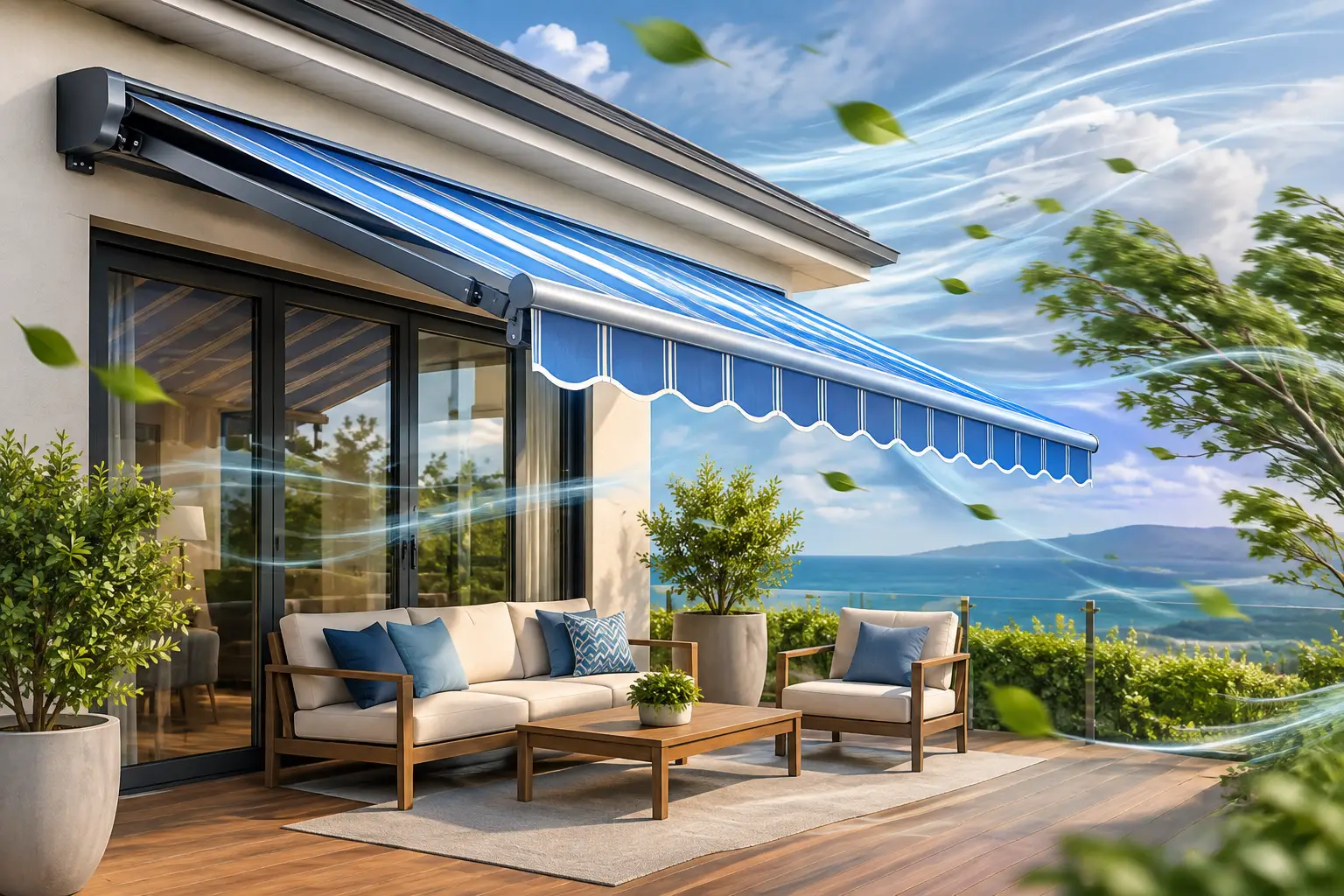
A beautiful awning can make a sunny patio feel like an outdoor room, protect furniture from fading, and make afternoons outside far more comfortable. But Northern Virginia weather can turn quickly. So, can awnings withstand strong winds? Yes, many can handle normal breezes and moderate wind conditions when they are properly selected, installed, and used. They are not, however, designed to stay extended through every storm.
The right answer depends on the type of awning, its size and mounting surface, the hardware behind it, and whether it is retracted before severe weather arrives. A custom solution gives homeowners far more confidence than treating an awning as a one-size-fits-all purchase.
Can Awnings Withstand Strong Winds in Real Conditions?
Fixed awnings and retractable awnings respond to wind differently. A fixed awning is permanently supported by a frame and can be engineered for specific site conditions. It may be an excellent option for a commercial storefront, entryway, or patio that needs continuous coverage. Because it remains in place year-round, its frame, fabric, anchors, and structural attachment all need to be designed with wind exposure in mind.
A retractable awning offers flexibility. It extends when you want shade and retracts when conditions become less welcoming. That convenience is also its greatest advantage in wind: when a storm is approaching, the awning can be brought safely back against the house rather than left exposed.
No residential retractable awning should be considered storm-proof while extended. Even a well-made system can be damaged by sudden gusts, wind-driven debris, or the lifting force created when wind gets underneath the fabric. The practical rule is simple: enjoy it in fair weather, and retract it when winds are expected to become strong or unpredictable.
Wind Resistance Depends on More Than the Fabric
Homeowners often focus on awning color, pattern, and projection first. Those decisions matter for curb appeal and shade coverage, but wind performance comes from the entire system.
The awning style and frame design
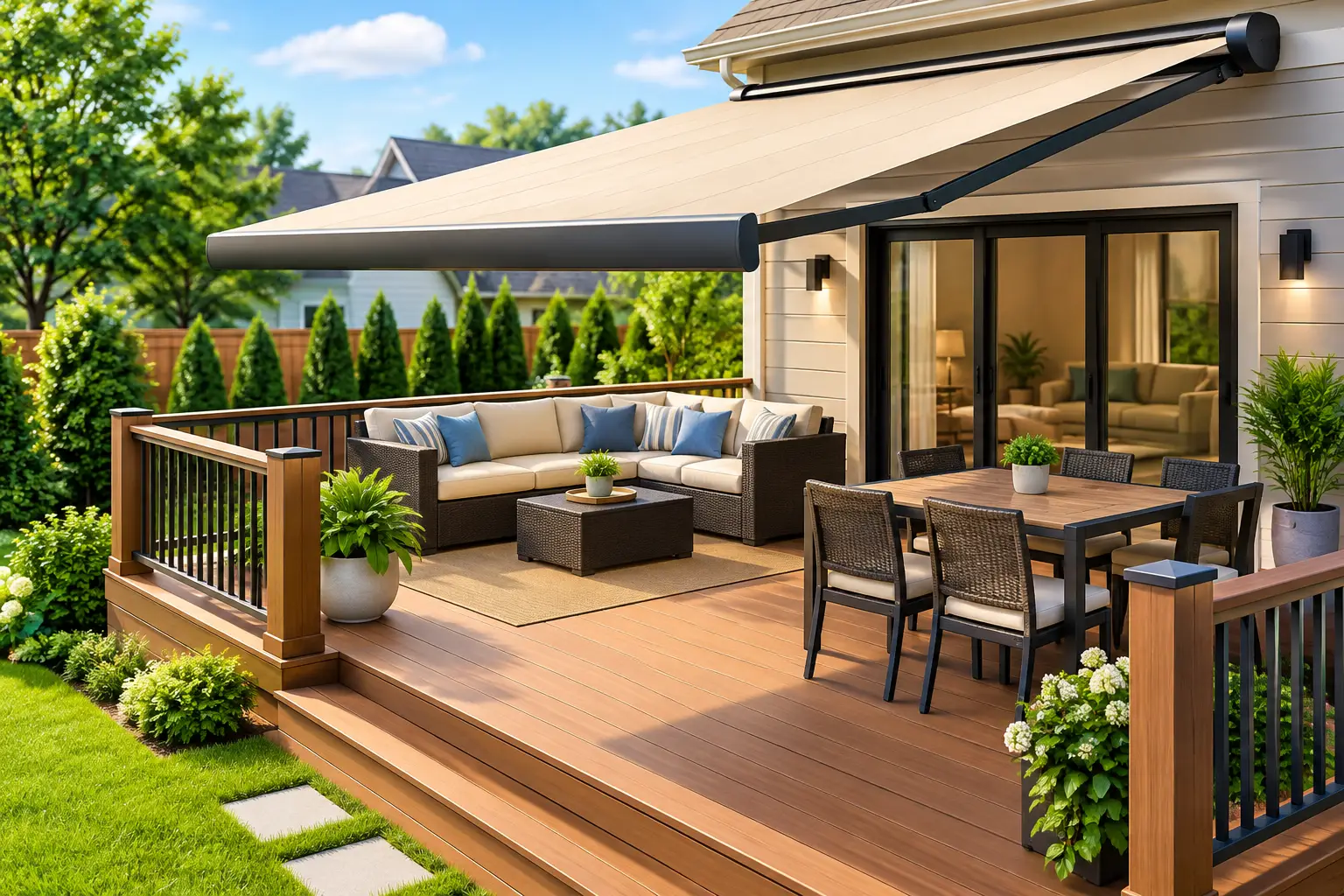
A fixed-frame awning, a lateral-arm retractable awning, a pergola-style shade structure, and exterior solar shades each have different strengths. For example, a retractable awning with heavy-duty arms and a secure wall mount may be ideal for a rear patio where it can be retracted as needed. A permanently installed canopy may make more sense over a door or business entrance, provided the supporting structure is engineered for that application.
Larger awnings catch more air. A generous projection can deliver luxurious shade for a dining area, but it also creates a larger surface for wind to push against. This does not mean large awnings are a poor choice. It means their proportions, placement, and support requirements deserve professional attention.
The mounting surface
An awning is only as secure as the structure holding it. Mounting into sound framing is very different from fastening to a thin exterior finish, aging trim, or masonry without the correct hardware. Improper installation can lead to loose brackets, water intrusion, wall damage, or failure during high winds.
During a professional consultation, the wall construction and installation location should be evaluated before a product is recommended. Brick, stucco, vinyl siding, wood framing, rooflines, and soffits can all require different approaches. This is one reason homeowners should be cautious about selecting an awning online based on dimensions alone.
Exposure around your home
A sheltered patio behind the home does not experience wind the same way as an elevated deck, an open corner lot, or a property near a ridge. In communities from Ashburn and Leesburg to McLean, Vienna, and Great Falls, the landscape around a home can create surprising wind patterns.
Open yards, nearby gaps between homes, and taller elevations can channel gusts directly toward an awning. On the other hand, mature trees and adjacent structures may offer some protection, although falling branches introduce another concern during storms. The location should guide the product choice rather than the other way around.
When Should You Retract an Awning?
The safest practice is to retract a retractable awning whenever strong winds, thunderstorms, heavy rain, or snow are expected. Waiting until the wind is already whipping the fabric is not ideal. Conditions can change quickly, and it may become difficult or unsafe to operate the awning once gusts pick up.
Awnings should also be retracted when you leave home for an extended period. A forecast may look calm in the morning and change by afternoon, especially in warmer months when thunderstorms can develop with little warning.
Wind sensors can add welcome protection. These sensors monitor movement or wind conditions and automatically retract compatible motorized awnings when a programmed threshold is reached. They are valuable for busy households and for homeowners who travel frequently, but they are not a replacement for good judgment. A sensor cannot prevent every weather-related problem, particularly if power is out, the unit requires maintenance, or debris strikes the awning.
If your property is especially exposed, consider pairing motorization with a wind sensor and a clear routine: retract the awning before storms, before overnight high-wind forecasts, and whenever you are away.
What Strong Winds Can Do to an Extended Awning
Wind damage is not always dramatic at first. Repeated stress can loosen mounting points, strain arm mechanisms, stretch fabric, or cause the awning to sit unevenly when it is later extended. A sudden gust can do more immediate harm by bending arms, tearing fabric, or pulling hardware away from the mounting surface.
Rain creates another issue. Water can pool on an awning if the pitch is too low or the fabric is not properly tensioned. Add wind to that weight, and the system is under even greater stress. Snow should never be allowed to accumulate on a retractable awning. Retract it before winter weather arrives.
If an awning has been exposed to a significant wind event, inspect it before using it again. Look for sagging fabric, bent components, loose brackets, unusual sounds during operation, or a canopy that no longer opens evenly. Stop using the awning if anything appears damaged and arrange for an experienced professional to assess it.
Choosing an Awning That Fits Your Home and Habits
The best awning is not simply the one with the highest advertised wind rating. It is the one that suits your space, the way you use it, and your willingness to retract it when weather changes.
A homeowner who wants shade for occasional weekend entertaining may love a retractable awning with motorization. Someone seeking permanent coverage over an entrance may be better served by a fixed design engineered for that location. A restaurant, retail business, or office may need a commercial-grade solution that balances weather performance with branding, pedestrian comfort, and long-term durability.
Fabric selection also matters. Quality outdoor fabrics are designed to resist fading, moisture, and everyday exposure, but they still need proper care. Keeping the canopy clean, allowing it to dry before long-term retraction when possible, and addressing small issues early can help preserve its appearance and performance.
At Covering Windows, the goal is to make these choices easier. A hands-on consultation can account for your home’s architecture, sun exposure, patio layout, desired coverage, and the weather conditions your awning is likely to face. That creates a finished result that looks intentional, operates smoothly, and fits your daily life.
Professional Installation Is Part of Wind Protection
Even premium products can disappoint when installation is treated as an afterthought. Proper measurements determine the right width and projection. Correct bracket placement distributes weight and wind load as intended. Secure attachment to appropriate structural points helps the system perform the way the manufacturer designed it to perform.
Professional installation also delivers a cleaner visual result. The awning should complement your exterior rather than look added on. Coordinating the frame finish and fabric with your siding, trim, brick, or outdoor furnishings can turn a practical shade solution into a genuine upgrade to your home’s architecture.
Awnings can absolutely stand up to everyday outdoor use, including breezy afternoons, when they are thoughtfully specified and correctly installed. The confidence comes from respecting their limits: choose a system suited to your site, use it as intended, and retract it before the weather asks it to do more than it was built to handle.