You usually know something is off in a room before you can name it. The furniture works, the paint color is right, and the layout makes sense – but the windows still feel unfinished, too bright, too exposed, or simply out of place. A strong window treatment buying guide helps you solve that gap with more confidence, and just as importantly, avoid the expensive mistakes that happen when style, function, and fit are treated as separate decisions.
For most homeowners, buying window treatments is not difficult because there are too few choices. It is difficult because there are too many, and many of them look similar until you live with them. The right selection depends on how you use the room, how much light you want, how much privacy you need, and whether you want the treatment to disappear quietly or define the space.
How to use this window treatment buying guide
Start with the room, not the product. That sounds simple, but it is where many purchases go wrong. A beautiful woven shade in a sample book may not be the best answer for a west-facing family room that gets intense afternoon sun. A crisp plantation shutter may look perfect in a photo, but if your window has a shallow depth or a specialty shape, the details matter.
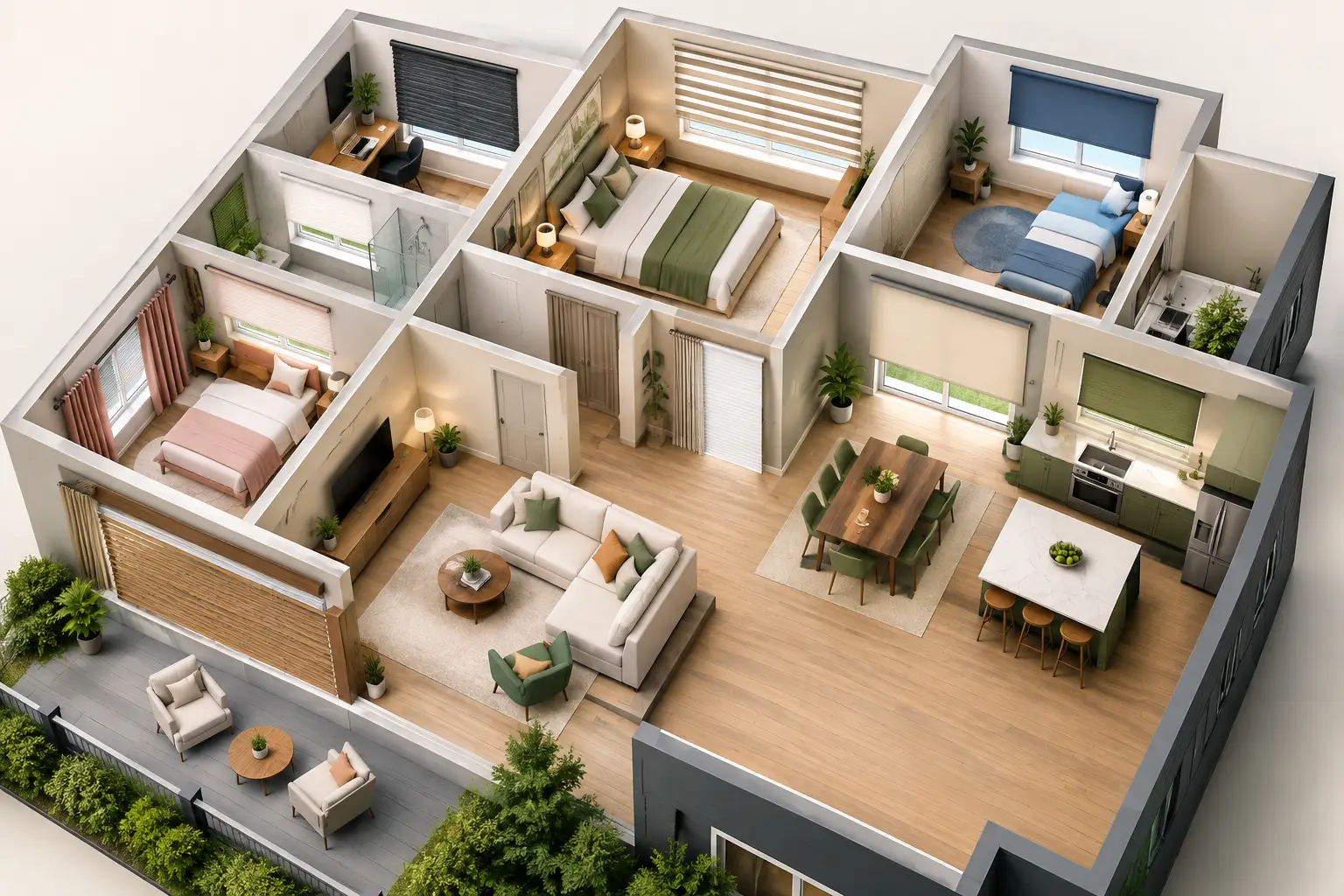
When you begin with the room, your priorities become clearer. Bedrooms often need privacy and light control. Living areas usually ask for softness, style, and glare reduction. Kitchens and bathrooms need materials that handle humidity and daily wear. Large windows and sliding doors call for scale, smooth operation, and often motorization.
That is why custom guidance matters. Measurements, mounting conditions, trim depth, and fabric behavior all affect the final result in ways an online cart cannot explain.
The first decision: what do you need the treatment to do?
Every window treatment performs a few core jobs, but most rooms have one primary need. If you identify that first, the product categories become easier to sort through.
If privacy is the biggest issue, shades, blinds, shutters, and draperies can all work, but they do it differently. Top-down bottom-up shades give you a flexible balance of privacy and daylight. Wood or composite blinds offer adjustable louvers, though they do show more visual movement. Shutters create a tailored architectural look with excellent privacy and long-term appeal. Drapery adds softness and fullness, especially in formal rooms or spaces that need a finished designer look.
If light control is the priority, think beyond simple open and closed positions. Sheer shades soften daylight beautifully, but they will not darken a room like a blackout-lined shade or drapery panel. Solar shades help preserve views while cutting glare and UV exposure, which is ideal in sunrooms, offices, and large contemporary spaces. In media rooms or bedrooms, layering often performs better than relying on one treatment alone.
If energy efficiency matters, cellular shades are one of the strongest performers because of their honeycomb structure. Shutters also provide insulation benefits and a substantial presence at the window. In rooms with significant sun exposure, the right treatment can make the space more comfortable and help protect flooring, furnishings, and artwork from fading.
Choosing between shades, blinds, shutters, and drapery
This is the point where many homeowners want a quick winner, but there is no universal best option. There is only the best fit for your home, your windows, and your priorities.
Shades
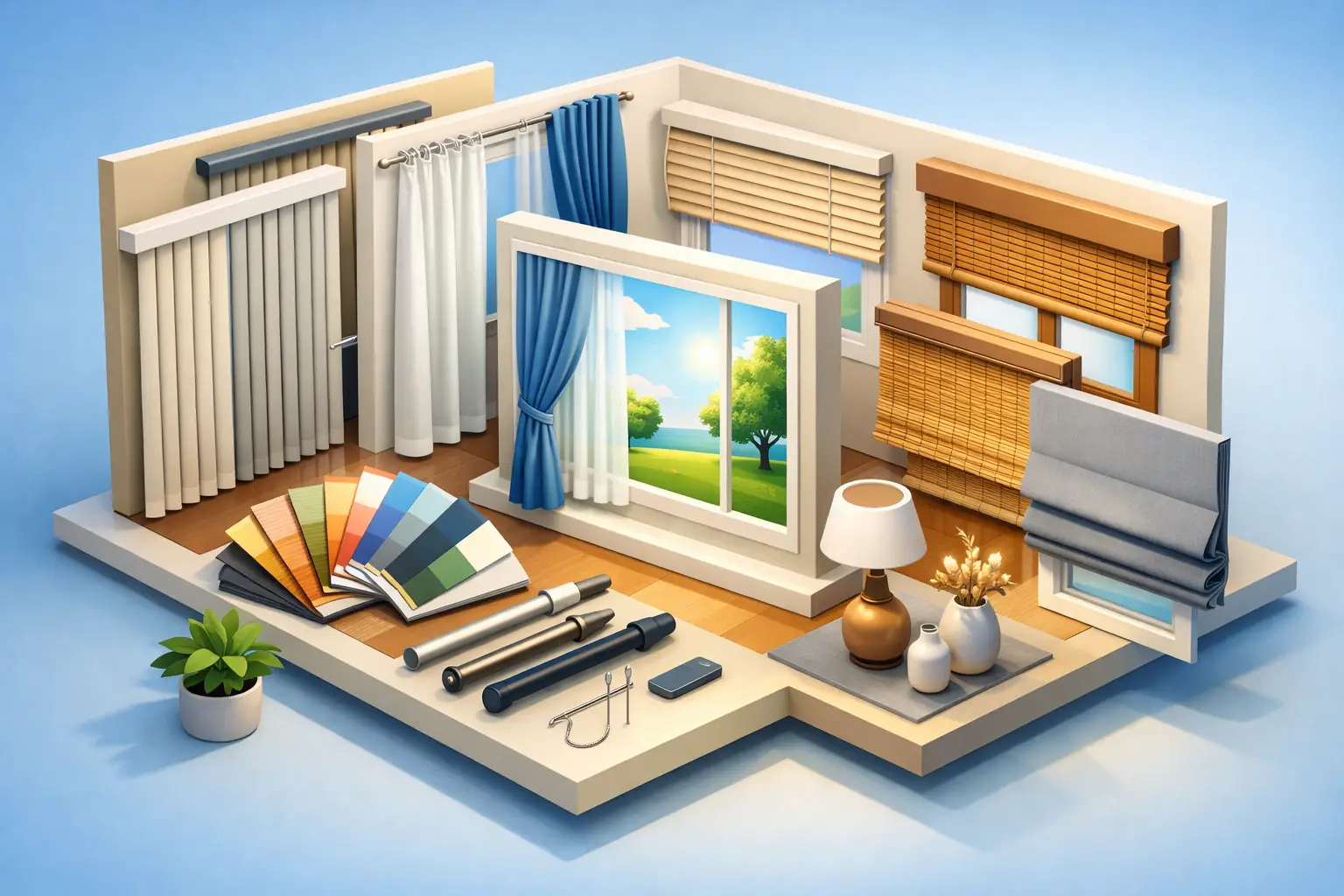
Shades are one of the most versatile choices because they come in a wide range of styles, textures, and opacity levels. Roller shades suit clean, modern interiors and can be surprisingly elegant when paired with the right fabric. Roman shades bring softness and dimension. Cellular shades are practical without feeling basic. Woven shades add warmth and an organic texture that works especially well in transitional and casual refined interiors.
The trade-off is that shades generally offer less incremental light adjustment than blinds. Depending on the style, they are often either raised, lowered, or somewhere in between.
Blinds
Blinds remain popular because they are familiar, functional, and budget-friendly in many applications. They give you good control over light direction and privacy, and they work well in secondary rooms, offices, and homes where durability matters.
The question is usually material and finish. Real wood blinds bring richness and warmth, while faux wood handles moisture better and is often chosen for bathrooms, laundry rooms, or hardworking family spaces. Blinds are practical, but they do not always deliver the same polished custom look as shutters or drapery in a highly designed room.
Shutters
Shutters are often treated as a premium upgrade because they add structure, permanence, and strong curb appeal. Inside the home, they feel tailored and substantial. They work beautifully in traditional, transitional, and many modern classic homes across Northern Virginia, especially where owners want a clean look without fabric.
Price is part of the conversation, of course, but so is value. A well-made shutter can become part of the architecture of the room. This is also where product sourcing matters. Not all shutters are built the same, and material quality, finish consistency, and installation precision have a major impact on how they perform over time.
Drapery
Drapery is often underestimated because people think of it as decorative only. In reality, it can solve several design problems at once. It softens hard lines, adds height, improves acoustics, frames views, and elevates a room that otherwise feels flat. It also layers beautifully over shades or shutters.
The key is proportion. Length, fullness, pleat style, lining, and hardware all affect whether drapery looks custom and luxurious or simply added on.
What most buying guides miss about fit and installation
A true window treatment buying guide should talk honestly about where the risk is. It is not usually in choosing a color you end up second-guessing. It is in measurement errors, awkward mounting, poor proportions, and products that looked good online but do not suit the actual window.
Inside mount versus outside mount changes the look and function of the treatment. Window depth can limit certain products. Door handles, trim, and tilt-in windows may affect operation. Motorized shades need planning for power access and control preferences. Large or specialty-shaped windows may require customization that is easy to miss until installation day.
This is why professional measuring and installation are not small add-ons. They are part of getting the result you thought you were paying for in the first place.
Budgeting without buying twice
Price matters, and most homeowners are trying to balance design goals with smart spending. The best approach is not to ask which treatment is cheapest. Ask which one gives you the look and performance you want without forcing compromises that bother you every day.
There are rooms where a more economical blind is perfectly appropriate. There are other spaces – a front sitting room, a primary bedroom, a two-story family room, or a street-facing main level – where a custom solution pays off visually and functionally. Mixing product types throughout the home is often the smartest path. You do not need the same answer in every room to create a cohesive look.
It also helps to compare long-term value, not just ticket price. Better materials, stronger warranties, cleaner installation, and a more tailored fit tend to hold up better and feel better longer. That matters when the treatments are used every single day.
Style should support the architecture
Good window treatments do not fight the home. They reinforce it. A sleek roller shade may be exactly right in a contemporary renovation, while linen drapery panels or wood shutters may feel more natural in a traditional or transitional home. In many cases, the most successful result is not the most dramatic one. It is the one that makes the room feel complete.
Color and texture are where subtle decisions make a big difference. A treatment can blend with the wall color for a quiet, refined effect, or introduce contrast to frame the windows more intentionally. Texture often adds more sophistication than bold pattern, especially if the room already has strong materials and furnishings.
For homeowners who want expert help without the usual showroom fatigue, working with a local full-service specialist like Covering Windows can remove a great deal of guesswork. Seeing samples in your own lighting, on your own windows, tends to change decisions for the better.
When motorization is worth it
Motorized shades are no longer a niche upgrade reserved for luxury projects. For many homes, they are simply practical. They make sense for tall windows, hard-to-reach areas, media rooms, bedrooms, and homes where convenience matters. They are also especially useful when you want multiple shades to move together cleanly.
The value is not just in the technology. It is in how the room functions once the treatment is easy to use every day. If a window covering is difficult to operate, people tend to leave it in one position and stop getting the full benefit.
A good buying decision should leave you with more than a better-looking window. It should give you a room that feels calmer, more comfortable, and more finished every time you walk into it.