That wide wall of glass is often the feature that sells the room – until the afternoon glare hits, privacy disappears after sunset, or a bulky panel keeps catching every time the door opens. Choosing the right window treatments for sliding glass doors is less about filling a large opening and more about solving several problems at once without compromising the look of the space.
Sliding doors need to work hard. They connect indoor and outdoor living, bring in natural light, and create a clean architectural line. The treatment you choose has to respect all of that while still handling traffic, pets, children, sun exposure, and daily use. That is why the best choice is rarely the cheapest off-the-shelf option. Fit, stack, operation, and fabric all matter more here than they do on a standard window.
What makes window treatments for sliding glass doors different
A sliding glass door is not just a big window. It is a moving entry point, which means access matters just as much as appearance. A treatment can look beautiful in a showroom and still be frustrating at home if it blocks the handle, drags on the floor, or requires too much effort every time someone steps outside.
Scale is another factor. Because these openings are wide, anything undersized looks skimpy fast. At the same time, anything too heavy can dominate the room and make the space feel dated. The ideal solution gives the door visual presence without making the wall feel crowded.
Then there is light control. Many Northern Virginia homeowners want the openness of glass during the day but need privacy and heat protection when the sun shifts. That usually calls for a treatment that can do more than one job, or a combination that balances softness with performance.
The best options for sliding glass doors
Vertical shades and blinds
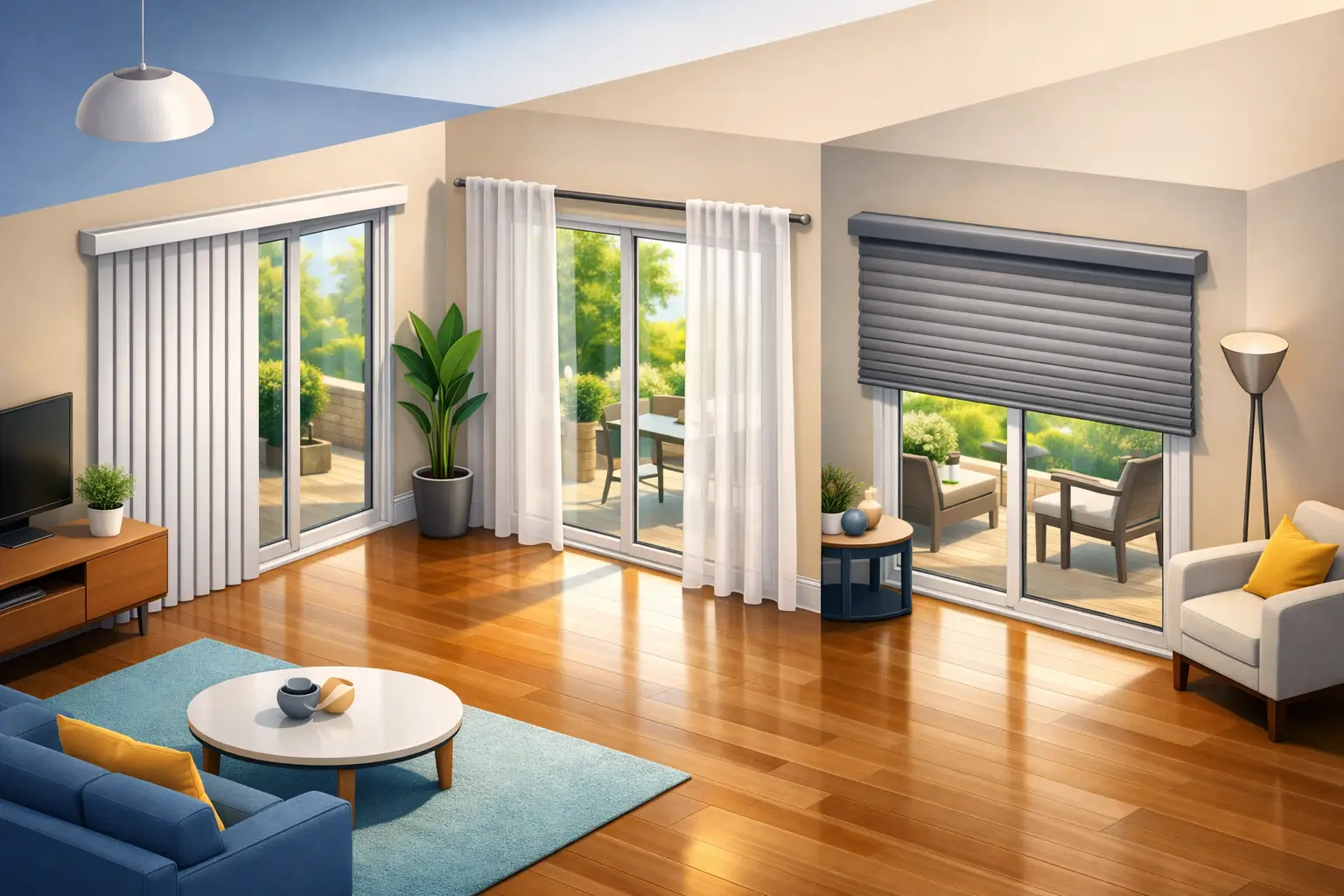
Vertical solutions remain one of the most practical answers for wide openings because they move in the same direction as the door. That sounds simple, but it makes a real difference in daily life. When the treatment stacks neatly to one side, access feels natural instead of awkward.
Today’s vertical options are far more refined than the stiff vinyl styles many people remember. Modern fabric vanes, textured materials, and cleaner headrail designs can feel tailored and current. They are especially useful if you want adjustable light control throughout the day.
The trade-off is style preference. Some homeowners love the clean lines and functionality, while others want a softer, more residential look. The right fabric and color can close that gap, but verticals still read more structured than drapery.
Sliding panel track systems
Panel track shades are a strong fit in contemporary homes and open floor plans. They use large fabric panels that glide smoothly across the opening and stack neatly when open. Visually, they create a calm, architectural effect that suits modern interiors without looking cold.
These systems work well when you want broad coverage with minimal fuss. They are also a smart choice for rooms where a standard blind would feel too busy. Depending on the fabric, they can filter light gently or provide better privacy and sun control.
The key here is proportion. A panel track system needs the right panel width, stack space, and material selection to look intentional. If those details are off, the treatment can feel clunky.
Drapery panels
For homeowners who want softness, height, and a finished designer look, drapery is hard to beat. Well-made panels can make a sliding door feel taller, wider, and far more polished. They also offer excellent flexibility because the fabric choice determines whether the room feels airy, dramatic, casual, or formal.
Drapery is especially effective in living rooms, family rooms, and primary bedrooms where style matters as much as function. Ripplefold and pinch pleat styles are both popular for sliding doors because they move well and maintain an elegant shape.
Still, fabric choice matters. Too light, and privacy may suffer. Too heavy, and opening the door starts to feel like work. Hardware placement also needs to allow easy access without interfering with the door itself. This is where custom design and installation pay off.
Sheer shadings and layered solutions
If your priority is preserving light while softening glare, sheer-style treatments can be a beautiful answer. These work particularly well in rooms with a strong backyard view where you do not want to lose the sense of openness.
In many homes, the best result comes from layering. A functional shade or blind handles privacy and light control, while side panels add warmth and visual depth. Layering gives you more control and often creates the most finished look in formal or highly visible spaces.
The downside is cost and complexity. Layered treatments involve more planning, more components, and more decisions. But when done well, they solve more problems than a single treatment can.
Plantation shutters for sliding doors
Shutters can work beautifully on sliding glass doors when they are designed specifically for that application. Bypass shutter systems and bi-fold configurations offer a tailored, architectural look that feels substantial and high-end.
They are especially appealing for homeowners who want durability, privacy, and a permanent custom finish. In the right home, shutters can add real value and visual consistency, especially if other windows nearby also use shutters.
That said, not every room is the right fit. You need enough clearance, the right door layout, and careful planning around operation. This is one of those categories where a consultation matters because the wrong configuration can create headaches.
How to choose the right treatment for your space
Start with how the door is used
A door that opens ten times a day needs a different solution than one used only when guests come over. If children, pets, or frequent outdoor traffic are part of the picture, smooth operation and durability should move to the top of the list. In that case, simple glide systems often outperform anything delicate or fussy.
If the door is mostly visual and less frequently used, you can prioritize decorative impact a bit more. That might open the door to fuller drapery, layered treatments, or more luxurious materials.
Consider the light
East-facing doors create one kind of challenge. West-facing doors create another. Harsh afternoon sun can fade floors and furniture, increase room temperature, and make the space uncomfortable right when the room is most used.
Light-filtering fabrics can soften glare without making the room feel closed off. Room-darkening materials are better when privacy and solar control matter more. The right answer depends on whether you want the room to glow or whether you need stronger protection.
Match the room, not just the door
Sliding glass doors are large enough to influence the whole room, so the treatment should connect with the interior design around it. Clean-lined panel tracks may look perfect in a modern condo but feel too stark in a traditional family room. Rich drapery may elevate a formal sitting area but feel too heavy in a casual breakfast nook.
This is where samples are essential. A fabric that looks perfect online can feel entirely different once it is next to your flooring, wall color, trim, and furniture.
Why custom fit matters on sliding doors
Sliding door treatments fail in predictable ways. They are too short, so they look unfinished. They are too long, so they drag. They stack awkwardly and block glass. They do not clear the handle. Or they leave gaps that defeat the point of adding privacy in the first place.
Custom window treatments for sliding glass doors solve these issues before they happen. Proper measuring accounts for width, height, frame depth, handle clearance, stack-back, and mounting conditions. Professional installation then makes sure the system glides correctly and hangs the way it should.
For many homeowners, this is the difference between a treatment that feels like an upgrade and one that feels like a workaround. It is also why local guidance matters. An experienced consultant can help you compare options in your actual home, with your actual lighting, instead of guessing from a product photo.
At Covering Windows, that hands-on process is what helps homeowners move past uncertainty and choose something that looks beautiful on day one and still works beautifully months later.
Common mistakes to avoid
One of the biggest mistakes is choosing based only on appearance. A door treatment has to move well, not just look good when closed. Another is underestimating how much stack space is needed when the treatment is open. If the panels cover too much glass when retracted, the room can feel darker than expected.
It is also easy to focus only on privacy and forget about scale. Sliding doors need enough visual weight to feel intentional. Small, narrow treatments often look lost. On the other hand, oversized hardware or overly heavy fabrics can overpower the room.
Finally, do not assume one product is always the best. The right answer depends on the room, the architecture, your design goals, and how you live in the space. That is exactly why this decision benefits from expert guidance rather than a one-size-fits-all approach.
A sliding glass door should make a room feel brighter, more open, and more connected to the outdoors. The right treatment keeps all of that intact while adding privacy, comfort, and a finished sense of design that feels like it was always meant to be there.