
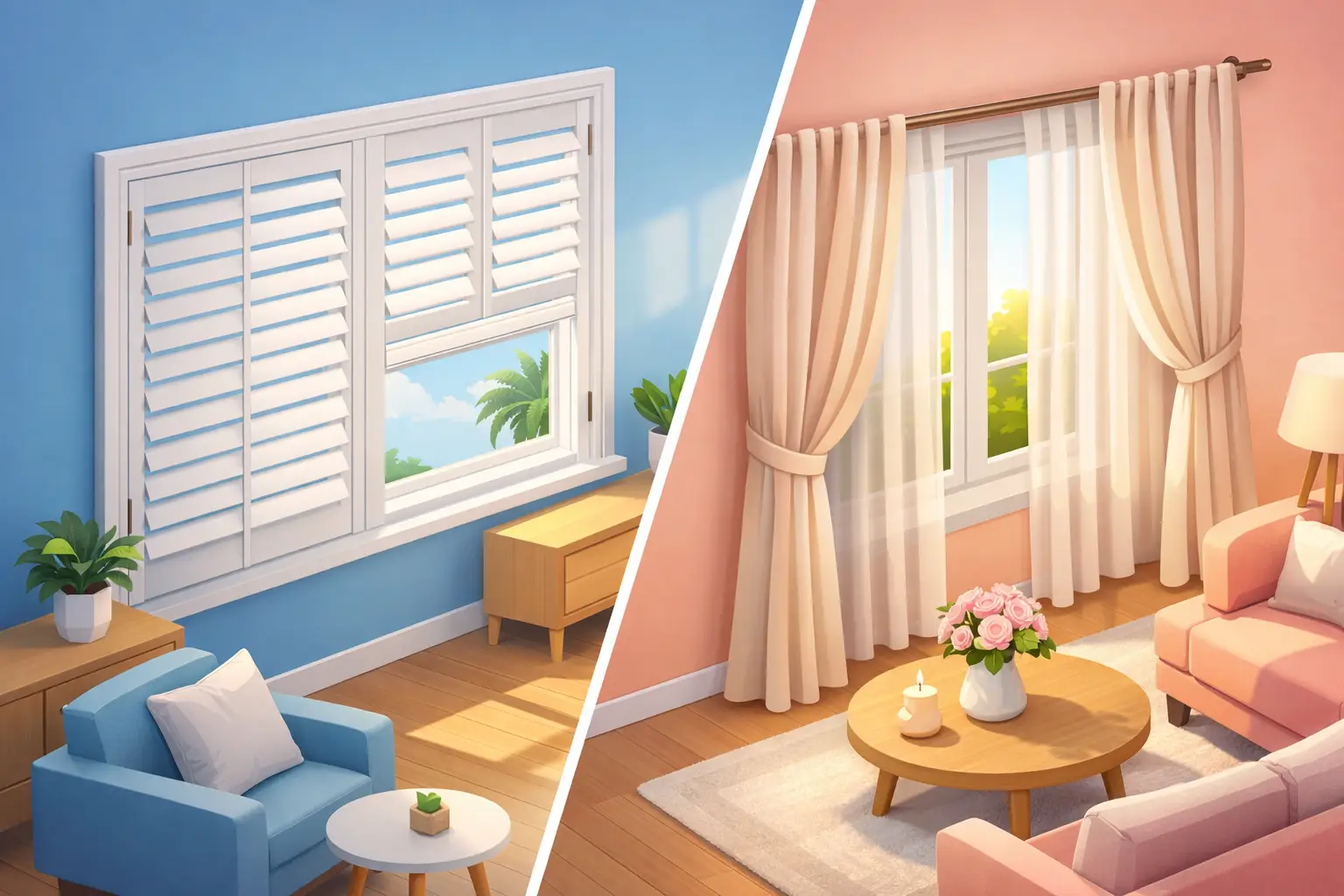
A sun-filled great room in McLean, a bedroom that faces a neighbor in Fairfax, or a historic dining room in Leesburg can each call for a different answer. The shutters vs curtains decision is not simply about covering a window. It affects how a room feels every day, how easily you control privacy and sunlight, and whether the finished space looks tailored or temporary.
Both options can be beautiful. The right choice depends on your architecture, lifestyle, budget, and the performance you expect from your window treatments. Here is how to weigh the details before committing to a look.
Shutters vs Curtains: The Essential Difference
Shutters are fitted, structured panels mounted within or around the window frame. Their louvers tilt to direct sunlight, preserve privacy, and bring in fresh air when the window is open. They become a permanent-looking architectural feature, much like custom millwork.
Curtains are fabric panels that hang from a rod or track. They can frame a window softly, cover it fully, or serve as a decorative layer over shades or blinds. Their strength is visual flexibility: fabric introduces color, pattern, texture, and movement in ways shutters generally do not.
For homeowners who want crisp lines, precise light control, and a polished built-in appearance, shutters often lead the conversation. For those looking to soften a room, add drama, or coordinate with upholstery and rugs, curtains can be the more expressive choice.
Style: Architectural Detail or Softness and Drama?
Custom shutters suit a wide range of homes across Northern Virginia. They are a natural fit for traditional colonials, modern farmhouses, transitional interiors, and clean-lined contemporary spaces. White shutters feel bright and timeless, while stained wood shutters can add warmth and depth to studies, dining rooms, and living areas.
Because shutters follow the shape of the window, they are especially valuable for specialty openings. Arches, angled windows, bay windows, and French doors often look more intentional with a fitted treatment than with fabric trying to accommodate an unusual outline.
Curtains have a different design role. They can make standard windows appear taller and wider when mounted thoughtfully, and they provide a rich finishing layer in formal living rooms, primary bedrooms, and dining spaces. Linen panels create relaxed elegance. Velvet can make a room feel luxurious. A patterned drapery fabric can become the visual anchor in an otherwise neutral space.
There is a trade-off. Curtains can look exceptional, but the result depends heavily on correct fullness, hem length, rod placement, fabric weight, and lining. Ready-made panels are often too narrow, too short, or poorly proportioned for the window. Custom draperies solve those issues, but they require design guidance and professional measuring to look their best.
Privacy and Light Control
If privacy is a daily priority, shutters offer exceptional control. You can angle the louvers upward to admit daylight while limiting direct views into the room. That is useful in street-facing living rooms, bathrooms, and bedrooms where you want daylight without feeling exposed.
Shutters also let you adjust the amount and direction of light throughout the day. In a sunny home office, tilting the louvers can reduce glare on a screen without turning the room dark. Split-tilt configurations can provide even more flexibility, allowing the lower section to remain closed for privacy while the upper section brings in light.
Curtains generally offer two primary positions: open or closed. Sheer curtains diffuse bright sunlight beautifully, while lined or blackout curtains can block it effectively. However, a sheer panel does not provide the same adjustable privacy as shutter louvers, and a closed blackout drapery can make a room feel much darker.
For bedrooms, media rooms, and nurseries, blackout draperies remain a strong option. Many homeowners also choose a layered solution, pairing shutters with decorative side panels or combining curtains with a blackout shade. This approach offers both tailored light control and a softer, more finished design statement.
Energy Efficiency and Comfort
Windows are a common source of solar heat gain in summer and heat loss in winter. Both shutters and curtains can make a room more comfortable, although the results depend on materials, fit, and how consistently they are used.
Well-fitted shutters create an insulating layer at the window and allow you to manage direct sun before it heats the room. Their adjustable louvers are particularly useful in west-facing rooms that become hot in the afternoon. Quality wood shutters also bring a substantial, crafted feel that complements premium interiors.
Curtains can help with insulation when they are lined and fully closed, especially heavier draperies with thermal lining. The fabric acts as a barrier, but performance decreases if panels leave wide gaps around the window or are left open during the hottest part of the day.
For a bright family room or kitchen where you still want to use daylight, shutters are often the more practical choice. For a bedroom that needs deep darkness and extra warmth overnight, lined curtains or draperies may have the advantage.
Maintenance and Everyday Living
Shutters are among the easiest window treatments to maintain. A quick dusting with a microfiber cloth or vacuum brush attachment is usually enough. They do not need laundering, and their structured construction stands up well to active households, children, and pets.
Curtains require more attention. Lightweight panels may be washable, but lined draperies, delicate fabrics, and custom pleated treatments often need professional cleaning. Fabric also collects dust and can absorb cooking odors or pet hair over time. This does not make curtains impractical, but it is worth considering before adding them to a busy kitchen, playroom, or allergy-sensitive home.
For French doors and frequently used windows, shutters have another practical advantage. They can be designed to operate with the door or fit tightly to the opening, reducing the need to move fabric aside every time someone walks outside.
Cost and Long-Term Value
The initial investment is often where shutters vs curtains becomes most personal. Plantation shutters typically cost more upfront than basic ready-made curtains because they are custom measured, manufactured for the opening, and professionally installed. The material also matters. Real wood provides a refined finish and is lightweight, while composite or faux wood options can be a sensible choice in humid areas.
At Covering Windows, homeowners can explore high-quality wood shutters at pricing comparable to many faux wood alternatives, making the upgrade more attainable without sacrificing craftsmanship.
Curtains span an enormous price range. Off-the-shelf panels may appear inexpensive, but the total can rise quickly after adding quality rods, rings, hardware, lining, alteration, and installation. Custom draperies are a premium design investment, particularly when using designer fabrics and detailed pleating.
Shutters often hold their value well because they are fitted to the home and remain in place when the property is sold. They are not usually treated as temporary decor. Curtains can move with you, which is helpful for renters or homeowners who expect their style to change soon, but their sizing may not translate to the next home.
Where Each Option Works Best
Shutters are often the strongest choice for bathrooms, kitchens, home offices, street-facing rooms, bay windows, and spaces with architectural windows. Their moisture-resistant options and easy cleaning make them particularly practical where humidity, splashes, or daily activity are concerns.
Curtains shine in primary bedrooms, formal dining rooms, living rooms, and spaces where acoustics or softness matter. Fabric can absorb some sound in rooms with hard flooring and high ceilings, while a carefully selected textile adds personality that shutters alone may not deliver.
The best answer is sometimes both. A wood shutter can handle privacy and sun control while stationary drapery panels add scale, color, and a more layered luxury look. This combination works beautifully in larger rooms where bare windows can feel visually underdressed.
Get the Fit Right Before You Choose
The most expensive mistake is choosing a product from a screen or store shelf without seeing how it works in your home. Light direction, trim depth, furniture placement, ceiling height, and the view outside all influence the right treatment. A color that looks warm in a showroom may read differently beside your flooring, wall paint, and natural daylight.
A professional in-home consultation replaces guesswork with real options. Seeing shutter samples next to your trim, or drapery fabrics next to your sofa, makes the decision clearer. Accurate measuring and expert installation then ensure your investment operates properly and looks finished from every angle.
Choose shutters when you want enduring architectural beauty, adjustable privacy, and easy everyday care. Choose curtains when your room needs softness, color, blackout capability, or a stronger decorative statement. The right window treatment should not merely cover glass – it should make the room feel more comfortable, more personal, and unmistakably complete.