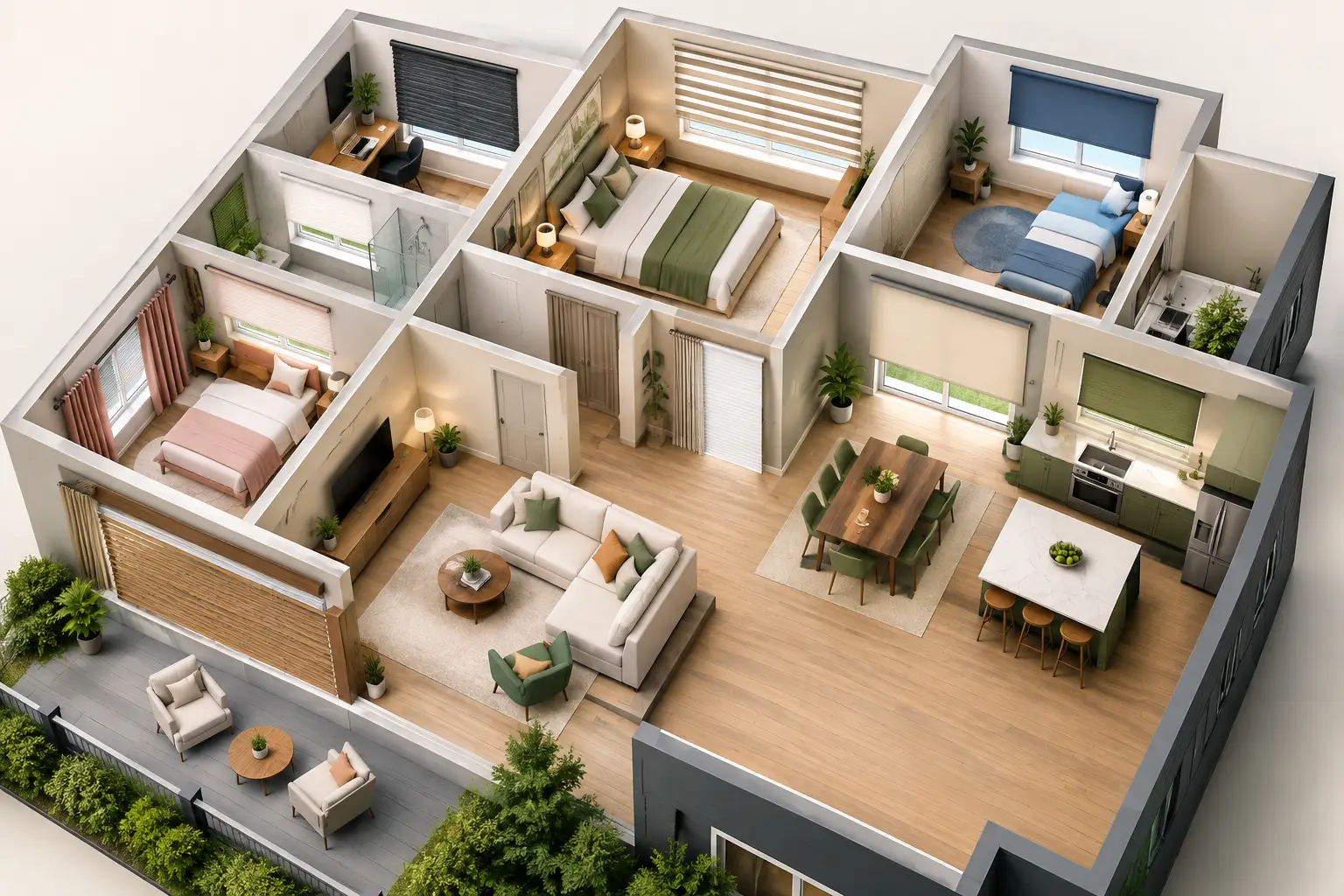
Have you ever walked into a room and felt instantly drawn to the windows? Expert interior designers rarely rely on a single window treatment to achieve that polished, high-end look. Instead, they use a strategic approach that balances practical function with undeniable beauty.
Layering window treatments solves the ultimate design dilemma: choosing between gorgeous aesthetics and essential functionality. You want soft, flowing fabrics to frame your view, but you also need to block harsh morning sunlight and keep prying eyes out.
This guide breaks down exactly how to mix and match different treatments. You will learn the core benefits of this design strategy, discover top styling combinations, and gain expert tips to transform your windows into a stunning focal point.
What Are Layered Blinds & Curtains?
Layering window treatments involves installing two or more types of coverings on a single window. Most commonly, this means pairing a hard, functional base layer with a soft, decorative top layer.
Designers frequently pair layered blinds and curtains to create depth and visual interest in modern homes. The blinds sit closest to the glass, doing the heavy lifting for light management and privacy. The curtains hang on the outside, adding texture, color, and framing the window.
This dual-layer system works brilliantly in contemporary interiors. It gives you multiple ways to adjust your room’s atmosphere throughout the day without sacrificing your personal aesthetic. You get the crisp, clean lines of modern blinds combined with the classic elegance of drapery.
Key Benefits of Layered Window Coverings
Combining different window treatments offers incredible advantages for your daily life. A well-designed layered system upgrades your home in several key ways.
Better Light Control
A single curtain panel forces you to choose between completely dark or fully bright. Layers give you ultimate control over natural light. You can pull the curtains back while keeping the blinds tilted, allowing a soft glow to enter the room without causing screen glare.
Improved Privacy
Privacy matters deeply, especially in ground-floor rooms or homes close to neighbors. With layers, you can drop a sheer blind to obscure the view from the street while still enjoying natural daylight. When night falls, you simply draw the heavy curtains closed for complete seclusion.
Enhanced Energy Efficiency
Windows account for a massive amount of heat loss in the winter and heat gain in the summer. Layering creates multiple pockets of trapped air between the glass and your room. This barrier keeps your home warmer during chilly months and cooler during heatwaves, directly lowering your energy bills.
Stronger Interior Aesthetics
Designers love layering because it adds instant architectural interest. The combination of hard materials and soft fabrics creates a dynamic contrast that elevates the entire room. It makes standard windows look larger, taller, and much more expensive.
Seasonal Flexibility
Your home’s needs change with the seasons. A layered system adapts easily to these shifts. You can rely on heavy drapes to block winter drafts, then pull them back and let your light-filtering blinds handle the bright summer sun.
How Blinds Improve Functionality
Blinds serve as the hard-working foundation of your window design. They offer precise mechanical control over exactly how much sunlight enters your space.
You can tilt the slats to direct harsh rays toward the ceiling, protecting your furniture and hardwood floors from UV damage. Blinds also eliminate frustrating television and computer screen glare with a simple twist of a wand.
Different types of blinds offer unique functional benefits:
- Roller Blinds: These provide a sleek, minimalist base that virtually disappears when rolled up.
- Venetian Blinds: These excel at directional light control, letting you angle sunlight exactly where you want it.
- Cellular Shades: These feature a unique honeycomb structure that provides unmatched insulation and energy efficiency.
How Curtains Add Style & Comfort
While blinds handle the practical requirements, curtains bring the emotional elements of design into your home. Fabric treatments inject softness into rooms filled with hard surfaces like wood floors, metal fixtures, and drywall.
Curtains introduce essential texture and movement. A gentle breeze catching a fabric panel instantly makes a room feel more relaxed and inviting. You can use drapery to introduce bold accent colors or subtle, luxurious patterns that tie your room’s decor together.
Beyond their beauty, heavy curtains provide substantial insulation. Thick fabrics dampen street noise and echo, making your home sound quieter and feel more peaceful. Lined blackout curtains also offer the ultimate solution for bedrooms, guaranteeing a dark, restful environment for sleep.
Best Layering Combinations
Creating the perfect look requires matching the right base with the right top layer. Try these proven interior design combinations for guaranteed success.
Roller Blinds and Sheer Curtains
This pairing creates a bright, breezy, and modern atmosphere. Install a solid blackout roller blind for nighttime privacy. Frame it with light, sheer curtains that diffuse daytime sunlight. This combination works beautifully in contemporary living rooms and minimalist bedrooms.
Venetian Blinds and Blackout Curtains
This classic duo offers maximum versatility and a traditional aesthetic. The Venetian blinds give you flexible daylight control and privacy. The heavy blackout curtains add dramatic elegance and ensure complete darkness when closed. Use this pairing in formal dining rooms or primary bedrooms.
Cellular Shades and Long Drapes
Combine high-tech efficiency with sweeping luxury. The cellular shades tackle extreme temperatures and lower your energy costs. Floor-to-ceiling drapes cover the functional shades and add incredible height to the room. This combination elevates drafty historic homes and rooms with large, difficult-to-insulate windows.
Common Mistakes to Avoid
Even seasoned decorators sometimes stumble when mixing window treatments. Watch out for these frequent layering pitfalls.
Overcrowding Windows
Trying to fit too much hardware into a small space ruins the look. Ensure you have enough depth in your window frame to mount the blinds properly. Extend your curtain rod past the window frame so the fabric has room to stack without bunching up against the blinds.
Poor Color Coordination
Clashing patterns and competing colors create visual chaos. If your curtains feature a bold, busy print, choose a solid, neutral color for your blinds. Conversely, if you select textured or brightly colored blinds, stick to subtle, solid-color drapery.
Wrong Fabric Thickness
Pairing bulky wood blinds with heavy velvet curtains often feels oppressive and shrinks the room. Always balance visual weight. Pair heavy base layers with lighter fabrics, or use sleek, minimal blinds under thick, dramatic drapes.
Expert Tips for Perfect Layering
Follow a few professional guidelines to ensure your layered treatments look intentional and custom-made.
Always balance function and aesthetics. Ask yourself what the room needs most before shopping. If you need complete darkness for a home theater, start with your blackout requirements, then build the stylish layers around that core function.
Match tones with your existing interior design. Look at your room’s permanent fixtures. If your space features cool gray walls and silver hardware, select window treatments with cool undertones. Warm beige walls and brass accents demand fabrics and blind materials with complementary warm tones.
Choose proper mounting techniques to maximize impact. Mount your blinds inside the window frame for a clean, tailored appearance. Then, mount your curtain rod high above the window—close to the ceiling—and extend it wide. This clever trick draws the eye upward, making your ceilings look higher and your windows appear massive.
Conclusion
Mastering the art of layered window coverings transforms standard rooms into stunning, designer-quality spaces. By carefully combining functional blinds with stylish curtains, you no longer have to compromise between controlling light and creating a beautiful aesthetic.
This dual-layer approach improves your home’s energy efficiency, maximizes your privacy, and adds undeniable luxury to your interior design. Take a look at your current windows today. Consider which room needs better light control, and start experimenting with the perfect combination of blinds and drapery to elevate your space.