A patio can look full at noon and sit empty by 2 p.m. for one simple reason: the sun has moved. For restaurants, breweries, cafes, country clubs, and hospitality venues, restaurant patio shades turn an exposed outdoor area into seating guests can enjoy longer, more often, and in more weather conditions.
The right shading system does more than block glare. It protects diners from intense heat, reduces fading on furnishings, gives servers a more workable environment, and makes the patio feel like an intentional extension of the business rather than a few tables placed outdoors. The key is choosing a system that fits the building, the service style, and the way sunlight actually reaches the space.
Why restaurant patio shades affect the guest experience
Outdoor dining is an asset only when people are comfortable enough to use it. A beautiful patio with direct western exposure can become unpleasant during the busiest part of the afternoon. Guests squint at menus, move chairs into narrow strips of shade, and leave sooner than they otherwise would. Those small frustrations affect check averages, repeat visits, and reviews.
Exterior solar shades and retractable awnings create a more dependable atmosphere. They soften direct sun while preserving the open-air appeal that guests came for. Depending on the fabric openness selected, solar shades can maintain outward visibility during the day, so the patio still feels connected to the street, garden, waterfront, or surrounding view.
There is also a visual benefit. A custom shade in a well-chosen neutral, a deep architectural color, or a branded accent can make an outdoor dining area feel finished and memorable. It frames the patio, provides a sense of enclosure, and supports the quality guests expect from the rest of the property.
Start with the sun, not the product
A common mistake is choosing a patio shade based on a photo or a favorite color before evaluating exposure. Two patios with the same footprint may need entirely different solutions. A south-facing terrace receives a long period of overhead light, while a west-facing dining area often needs strong late-day glare control. An east-facing cafe patio may primarily need morning protection.
Observe the patio at the hours when it earns the most revenue. Note where sunlight reaches each table, where heat reflects off glass or light-colored paving, and whether wind moves through the space. Consider seasonality as well. A solution that is perfect for June may be more coverage than a business wants during a mild October lunch service.
This is where a site visit matters. Measurements alone do not reveal the angle of the sun, a sloped ceiling, the reach of a roofline, or the clearance needed for doors, walkways, and service paths. A professional assessment helps prevent a costly system that technically fits but does not solve the comfort issue.
The main types of restaurant patio shades
Exterior solar shades
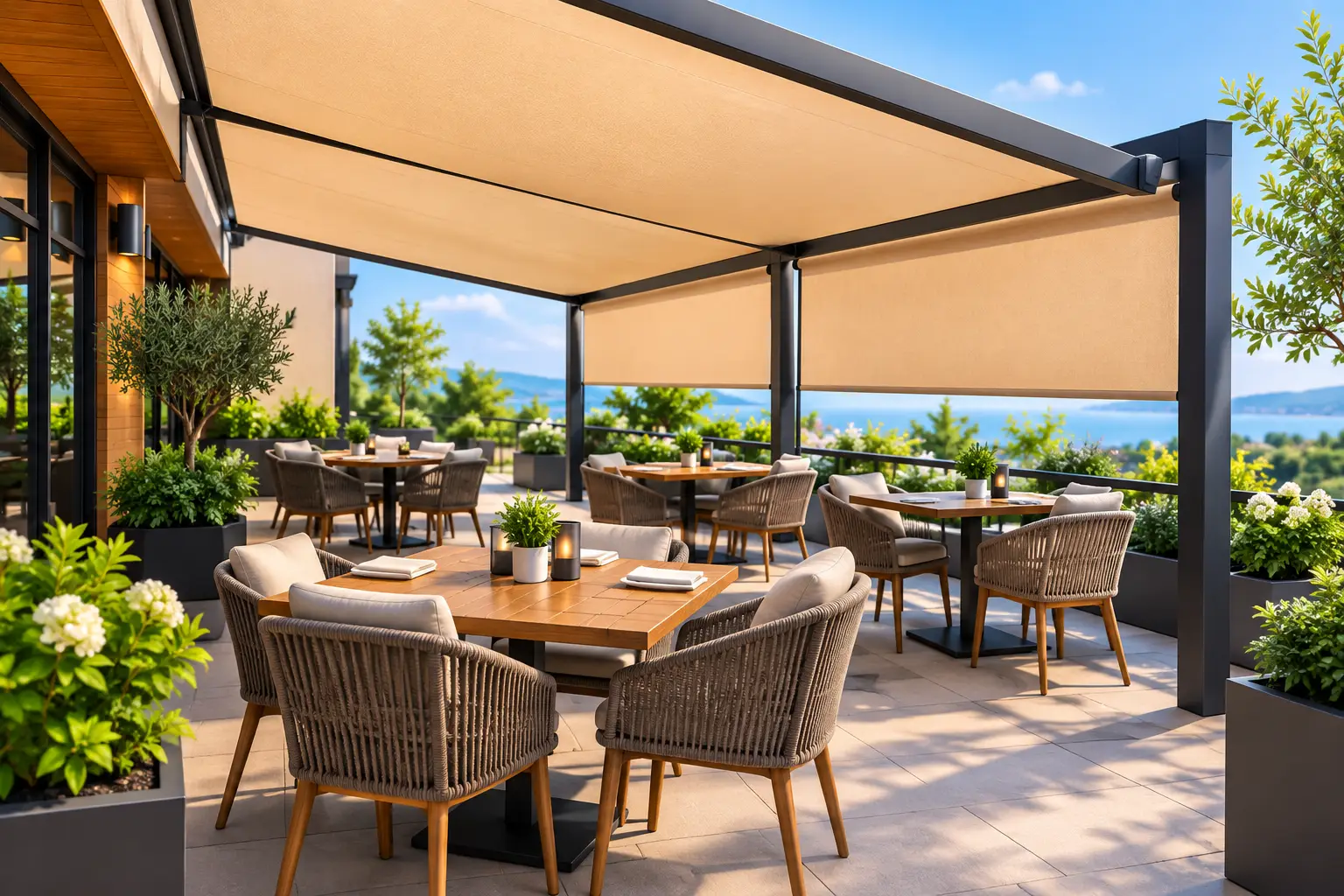
Exterior solar shades are often the most flexible choice for patios with pergolas, overhead structures, covered porches, or wide openings. The shade lowers vertically to block low-angle sun and glare, then retracts when an open view is preferred. Mesh fabrics are designed for outdoor conditions and are available in different openness factors, which determine how much light and view pass through.
For many restaurants, a medium openness fabric provides the best balance. It cuts glare and solar heat while allowing diners to see outside. A tighter weave offers more privacy and shade but can make a small patio feel more enclosed, especially after sunset. The best choice depends on the direction of the sun, neighboring sightlines, and the atmosphere the business wants to create.
Retractable awnings
Retractable awnings extend outward from the building to cover a larger seating zone from above. They are especially effective when the main problem is midday sun over tables positioned close to the structure. When retracted, they preserve the building facade and allow sunlight into adjacent indoor spaces.
Awnings work beautifully for cafes and restaurants with straightforward wall-mounted conditions, but they require suitable structural support and enough clearance. They also need thoughtful sizing. An awning that is too shallow may leave the front tables exposed when the sun is low. One that projects too far can interfere with trees, lighting, signage, or circulation.
Pergola and canopy shading
For larger patios, a pergola with integrated retractable shade panels can create a more architectural destination. This approach is ideal when the venue wants a defined outdoor room for dining, private events, or lounge seating. It can also create a stronger sense of luxury than a basic umbrella layout.
The trade-off is investment and planning. Permanent structures can involve more coordination with property owners, local codes, drainage requirements, and permitting. However, for a high-traffic patio used across multiple seasons, the added structure can pay off through a more polished, usable seating environment.
Fixed exterior shades and side screens
Some patios need protection from more than overhead sun. Side screens can block intense low-angle light, wind, and visual distractions from a parking lot or neighboring property. They are useful along the exposed edge of a covered patio or beneath a pergola, where an awning alone cannot address afternoon glare.
Fixed systems deliver consistent coverage, while motorized retractable screens offer more flexibility. A venue may lower screens during a bright lunch rush and raise them for an evening event. The choice comes down to how often conditions change and whether staff need quick control without disrupting service.
Details that separate a good installation from a great one
Fabric and frame color deserve more attention than they usually receive. Darker solar-screen fabrics generally offer better outward visibility during daylight and can feel sophisticated against brick, stone, or modern metal finishes. Lighter fabrics may reflect more heat and suit a brighter, coastal, or casual design palette. Either can work, but the material should complement the facade, furniture, umbrellas, and signage rather than compete with them.
Hardware matters just as much. Commercial patio shades need durable mounting, quality tracks or cable guides where appropriate, and components suited to local wind exposure. An exposed rooftop restaurant in Arlington or a breezy open patio in Northern Virginia may require a different approach than a sheltered courtyard in a mixed-use development.
Motorization is often worth considering for larger systems. It eliminates the inconvenience of manually operating multiple shades and helps staff respond quickly when weather shifts. Controls can be grouped by patio zone, which is useful when only one section gets direct sun. Wind sensors may also be appropriate for certain retractable systems, though the right safety features depend on the product and installation conditions.
Do not overlook nighttime use. Solar mesh is highly effective during the day, but interior lighting can reverse privacy after dark. If evening privacy is important, pair the shade plan with thoughtful landscape lighting, curtains, side panels, or a fabric selection that suits the venue’s after-hours needs.
Plan for operations, codes, and maintenance
The best restaurant patio shade is not simply the one with the most coverage. It must work with daily operations. Servers need clear paths. Emergency exits must remain unobstructed. Doors and windows need room to open. Hosts need sightlines to arriving guests, and managers need a system that staff can operate confidently.
Before selecting a product, confirm landlord requirements, signage rules, HOA or property-management guidelines, and applicable local permitting. Freestanding and structural systems can have different requirements from wall-mounted shades. Planning these details early avoids delays and helps protect the investment.
Maintenance is generally straightforward, but it should be part of the decision. Outdoor fabrics benefit from periodic cleaning to remove pollen, dust, and food-service residue. Mechanisms should be inspected seasonally, particularly after severe weather. A professional installation with properly selected materials makes ongoing care far easier than an improvised setup.
A custom approach protects the investment
Commercial shading is not a one-size-fits-all purchase. Standard retail solutions may look appealing at first, but they can leave gaps at the edges, struggle in wind, fade prematurely, or create a mismatched appearance across a high-visibility property. Custom sizing, fabric selection, and professional mounting produce a cleaner result and a more reliable experience for guests.
Covering Windows helps commercial clients evaluate exterior shades, awnings, and solar-control options with the same hands-on guidance that makes custom window treatments easier for homeowners. The goal is not to sell the biggest system. It is to create comfortable, attractive patio seating that works with the building and supports the business.
When guests can enjoy the patio without chasing shade from table to table, the space begins to do what it was meant to do: extend the welcome, protect the experience, and make every open seat more valuable.