A beautiful room can still feel unfinished when the windows are bare, poorly fitted, or covered with a temporary solution that never quite works. Smart window treatment budgets help you avoid that frustrating middle ground. The goal is not simply to spend less. It is to put your investment toward the rooms, features, and materials that will make the greatest difference in how your home looks, feels, and functions.
For Northern Virginia homeowners, window treatments are often part of a larger update: settling into a new home, refreshing a dated living space, improving privacy, or managing intense afternoon sun. A thoughtful budget gives you room to make design-forward choices without being surprised by the details that influence the final price.
Start With What the Windows Need to Do
Before choosing a fabric, finish, or operating system, decide what each window needs to accomplish. A bedroom may need room-darkening and privacy. A south- or west-facing family room may need glare reduction and better temperature control. A formal dining room may call for drapery that adds softness, scale, and a more finished look.
This matters because the right product is not necessarily the same product in every room. Matching every window can create a clean, cohesive appearance, but it can also mean paying for features where they are not needed. A layered treatment with shades and drapery may be worth it at the front of the home, while a simple custom shade may be the better choice in a laundry room or secondary bedroom.
Try to rank your priorities in order: privacy, light control, energy efficiency, child safety, appearance, convenience, or durability. That ranking makes the consultation process more productive and keeps the conversation focused on value rather than on a single starting price.
What Shapes Window Treatment Budgets?
Custom window coverings are priced around more than the product category. Window size, quantity, shape, fabric or material selection, lining, control options, and installation requirements all affect the final investment. Two homes with the same number of windows can have very different budgets if one has oversized great-room windows, French doors, bay windows, or specialty shapes.
Product Type and Material
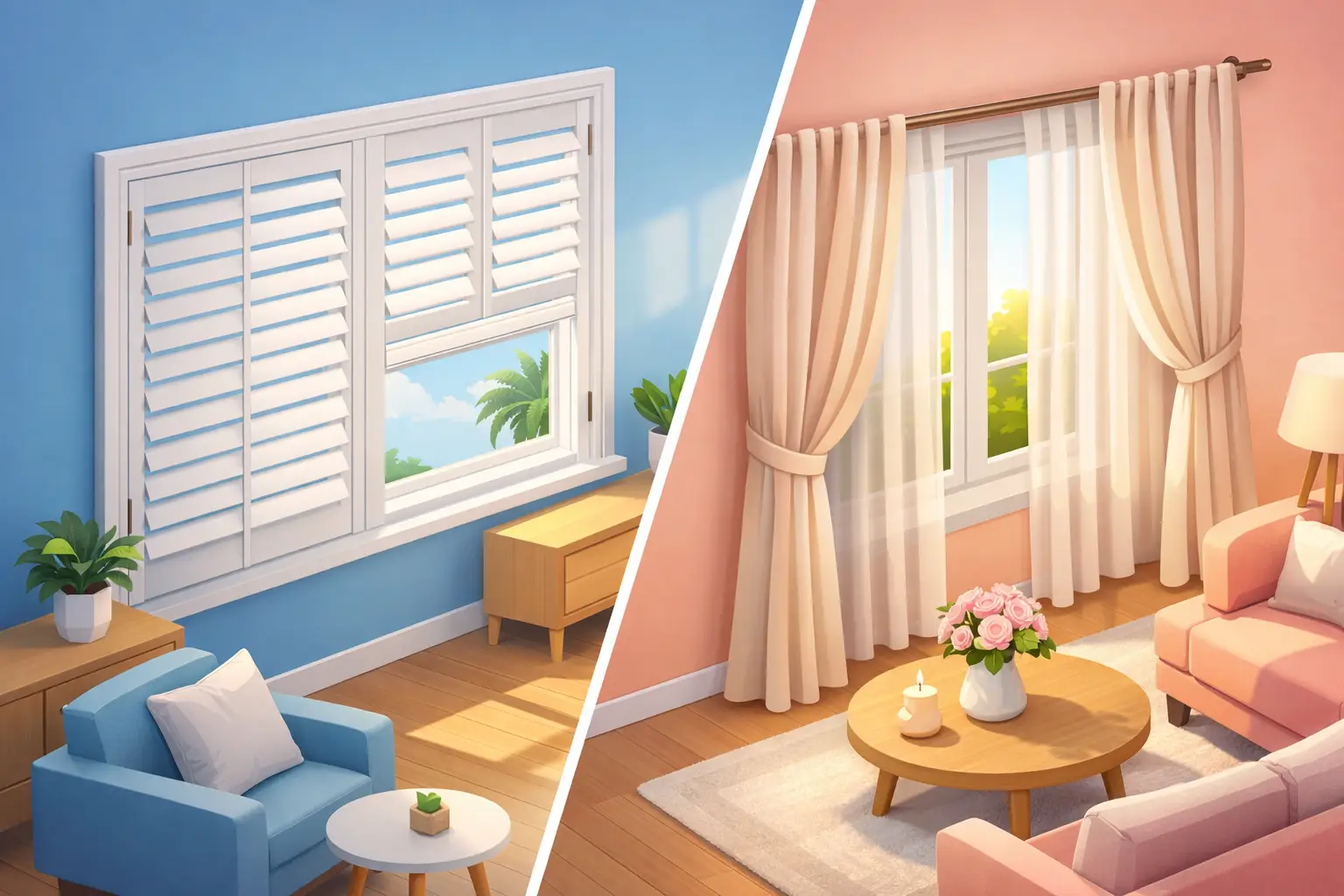
Blinds, shades, shutters, and draperies each bring a different visual and functional benefit. Cellular shades can be an excellent choice for insulation and a clean profile. Roller and solar shades are popular for contemporary rooms, glare control, and maintaining a view. Wood blinds and shutters add warmth and architectural presence, while drapery offers the greatest opportunity for color, texture, softness, and a tailored designer look.
Material choices matter within every category. Natural woven shades, premium fabrics, real wood, decorative hardware, and upgraded linings can elevate a room dramatically. They also carry a different cost than standard materials. The right decision depends on visibility and use. Investing in premium finishes for your entry, living room, or primary suite can make sense, while quieter, more practical selections may suit less prominent rooms.
Window Size, Shape, and Access
Large windows use more material and often require stronger hardware or specialized operating systems. Tall stairwell windows, arched openings, corner windows, and hard-to-reach locations can require additional planning during measurement and installation.
This is where online estimates can become misleading. A product price may look attractive until you account for exact dimensions, mounting requirements, the need for extension brackets, or the challenge of installing a treatment safely at height. Professional measuring identifies those conditions before an order is placed, not after the boxes arrive.
Control Options and Motorization
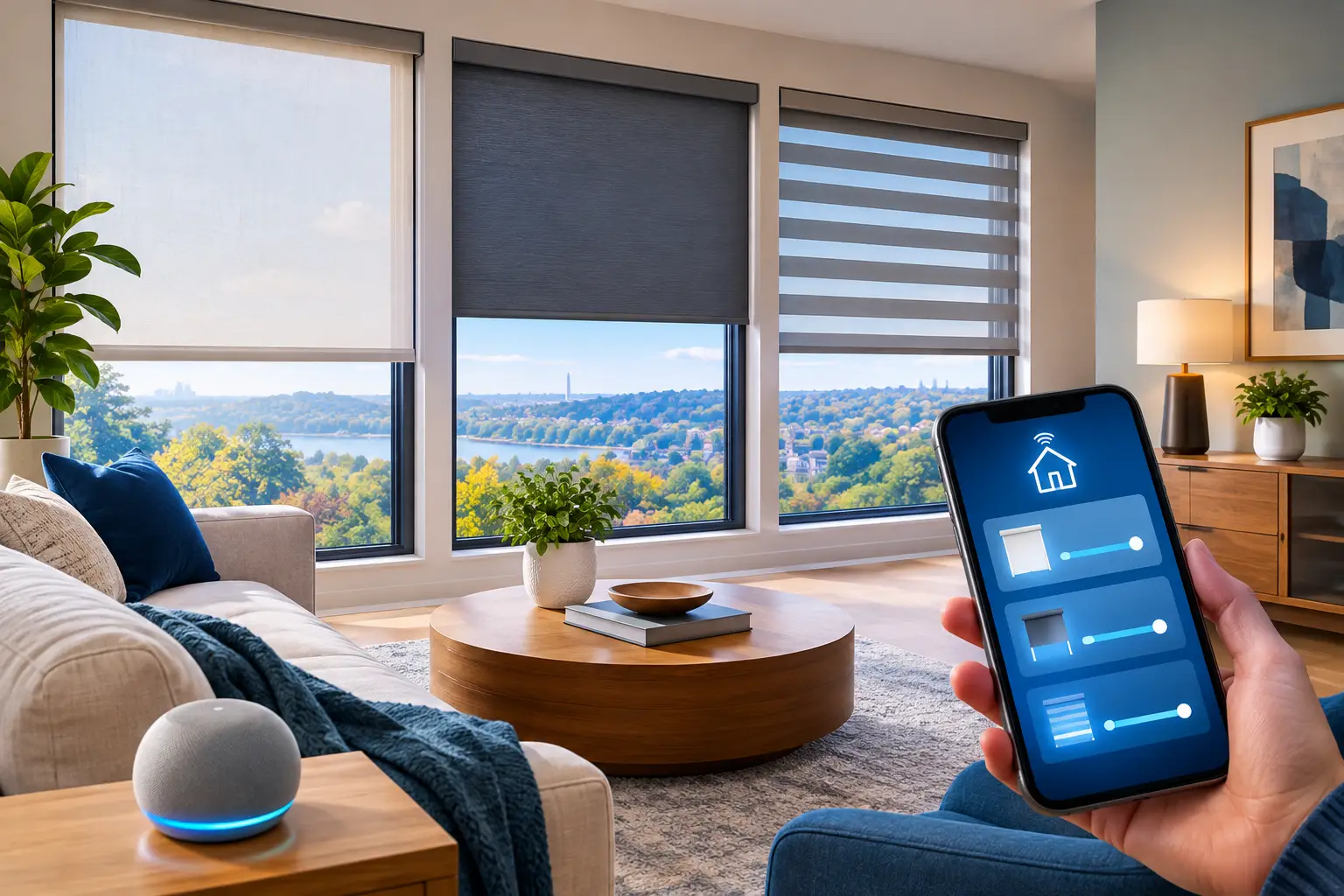
Motorized shades can be a meaningful part of a window treatment budget, particularly in rooms with many windows or difficult-to-reach glass. They offer daily convenience, a cleaner appearance without cords, and easy scheduling for privacy or sun control. They are especially useful for tall great-room windows, media rooms, bedrooms, and spaces where glare shifts throughout the day.
Motorization is not an all-or-nothing decision. Some homeowners motorize only the windows they use most, then select manual treatments elsewhere. This targeted approach can protect the budget while still delivering the convenience that makes smart shades appealing.
Spend More Where You See and Use It Most
A practical way to allocate a budget is to separate your project into three groups: high-impact public spaces, daily-use private spaces, and lower-priority windows. Your living room, kitchen, family room, front-facing windows, and primary bedroom usually deserve the most attention because they influence curb appeal, comfort, and the way you experience the home every day.
In public spaces, consider treatments that contribute to the overall design rather than disappearing into the background. Custom drapery, wood shutters, woven shades, or carefully selected layered treatments can make a room feel intentional and complete. In private rooms, the emphasis may shift to sleep, privacy, and practical light control.
Lower-priority spaces do not need to look inexpensive. They simply may not need the same level of customization, premium fabric, or automated operation. A consistent color palette and coordinated style can preserve a polished whole-home look even when product selections vary by room.
Build the Full Project Cost Into Your Plan
The least expensive product is not always the least expensive project. When comparing options, account for measuring, design guidance, product quality, shipping, hardware, installation, and the cost of correcting mistakes. A treatment that is measured incorrectly or mounted poorly can lose much of its value, no matter how attractive it looked online.
Professional installation is particularly valuable for shutters, drapery hardware, oversized shades, exterior shades, and motorized products. Proper alignment, secure mounting, clean finish work, and reliable operation are part of the finished result. They also protect your investment in materials that should serve your home for years.
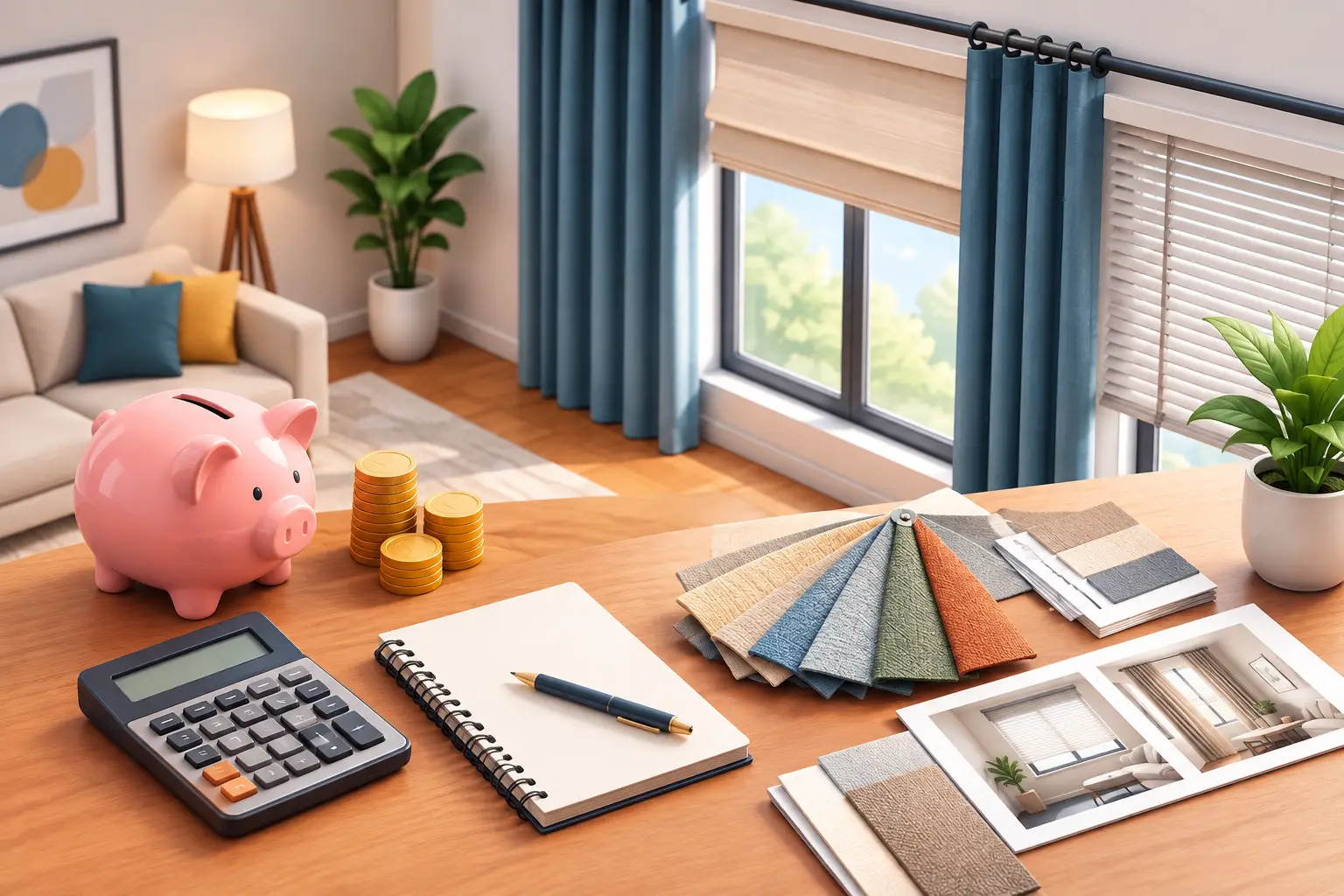
A full-service consultation helps clarify these costs upfront. You can see samples in your own light, compare textures against your furnishings, and understand which choices are driving the quote. That kind of clarity is useful when you are deciding whether to adjust a fabric, simplify a treatment, phase the project, or invest more heavily in a feature that will improve daily life.
Consider a Phased Approach Without Sacrificing Design
If you are furnishing a new home or renovating several rooms at once, completing every window at the same time may not be the best financial decision. Phasing the project lets you begin with the windows that need immediate privacy, light control, or finishing attention.
The key is to create a whole-home design plan before ordering the first phase. Choose the overall direction, preferred color family, and product style so later selections feel connected. You might begin with the primary bedroom and family room, then complete secondary bedrooms, offices, and formal spaces over time.
This approach works best when the early selections are flexible enough to coordinate with future choices. A neutral cellular shade, tailored roller shade, or classic shutter can provide a strong foundation while you save for decorative drapery or premium layers in focal rooms.
Avoid the False Economy of Temporary Solutions
Temporary paper shades, undersized ready-made panels, and low-cost blinds can solve an immediate privacy problem. But when they become a long-term fix, homeowners often end up purchasing twice. They may replace warped slats, live with gaps that let in unwanted light, or spend time trying to make an off-the-shelf size work on a nonstandard window.
Custom does not mean every decision must be extravagant. It means the treatment is selected and sized for your window, your room, and your priorities. The best value often comes from choosing a well-made, appropriate solution once, then having it measured and installed correctly.
Make Your Consultation Work Harder
Come prepared with photos of rooms you like, paint and flooring information, and a sense of what is not working now. Mention practical concerns early, including pets, children, allergies, television glare, street-facing privacy, and windows that are difficult to reach. These details can change the recommendation in useful ways.
It is also helpful to share your preferred investment range. A good design professional can show you where a modest adjustment will have little visual impact and where it could compromise performance, fit, or durability. At Covering Windows, that hands-on guidance is designed to make the process feel more certain, from samples at your home through professional installation.
The strongest budget is one that reflects how you actually live. When each treatment has a purpose and the most visible rooms receive the attention they deserve, your windows become more than openings to cover. They become part of the comfort, privacy, and lasting beauty of your home.