A roller shade that is easy to reach is convenient. A roller shade over a two-story foyer window, behind a soaking tub, or across a wall of glass is often left in the same position all day because adjusting it feels like a chore. Learning how to automate roller shades changes that equation. With the right system, your shades can rise for morning light, lower during the strongest afternoon sun, and close for privacy without interrupting your routine.
For Northern Virginia homeowners, automation is not simply a gadget upgrade. It is a practical design decision that can improve comfort, protect furnishings, add privacy, and give custom window treatments the polished finish they deserve.
Start With the Way You Want the Room to Feel
The best automated roller shade system begins with the room, not the remote control. Before choosing motors, apps, or smart-home integrations, consider what you need the shades to do at different times of day.
In a family room with broad west-facing windows, automation may be primarily about reducing glare and heat before the afternoon sun makes the space uncomfortable. In a bedroom, the priority may be a quiet schedule that opens shades gradually in the morning and closes them before bedtime. A home office may need precise control over screen glare, while a street-facing living room may benefit from privacy scenes that lower shades at dusk.
This is also the time to select the right fabric. Solar screen fabrics preserve some outward visibility while filtering glare and UV exposure. Light-filtering fabrics soften daylight and create a warm, finished look. Room-darkening and blackout roller shades are better suited to bedrooms, media rooms, and spaces where privacy is nonnegotiable. Automation makes each option more useful because you are more likely to adjust the shade as conditions change.
Choose a Power Source That Fits the Window
Automated roller shades need power, but the best power method depends on the window location, how often the shade will operate, and whether wiring is practical during your project.
Battery-powered shades
Battery-powered roller shades are often an excellent choice for finished homes because they avoid opening walls or adding visible wiring. Modern rechargeable battery systems can provide clean, dependable operation for many residential applications. They are especially useful for individual windows, secondary bedrooms, and locations where electrical access is difficult.
The trade-off is maintenance. Batteries eventually need charging or replacement, and very large or frequently operated shades may require more attention. A professional can help position the battery tube discreetly and recommend a system with realistic service intervals for your window size and usage.
Hardwired shades
Hardwired motorized shades receive power through concealed low-voltage wiring. This is often the preferred solution for new construction, major renovations, large window walls, and hard-to-reach installations. Once installed, hardwired shades offer a refined appearance and eliminate the need to manage batteries.
Planning matters. Electrical pathways should be considered before drywall is complete, and coordination with a builder or electrician may be required. For homeowners already renovating a kitchen, primary suite, or whole floor, this is often the right moment to make automation part of the design plan.
Solar charging options
Some battery-powered systems can be paired with slim solar panels that recharge from daylight. These can reduce maintenance on windows that receive consistent sun, although their appearance and performance should be evaluated carefully. They are not the ideal answer for every room, particularly heavily shaded windows or spaces where a completely concealed installation is the goal.
Select Controls You Will Actually Use
There is no single best way to control automated roller shades. The right approach is the one that feels natural for your household and provides dependable access when you need it.
A handheld remote is simple and familiar, making it a good choice for homeowners who want one-touch operation without relying on a phone. Wall-mounted keypads offer a more permanent, intentional solution near entrances, bedside tables, or seating areas. They can operate a single shade or a group of shades together.
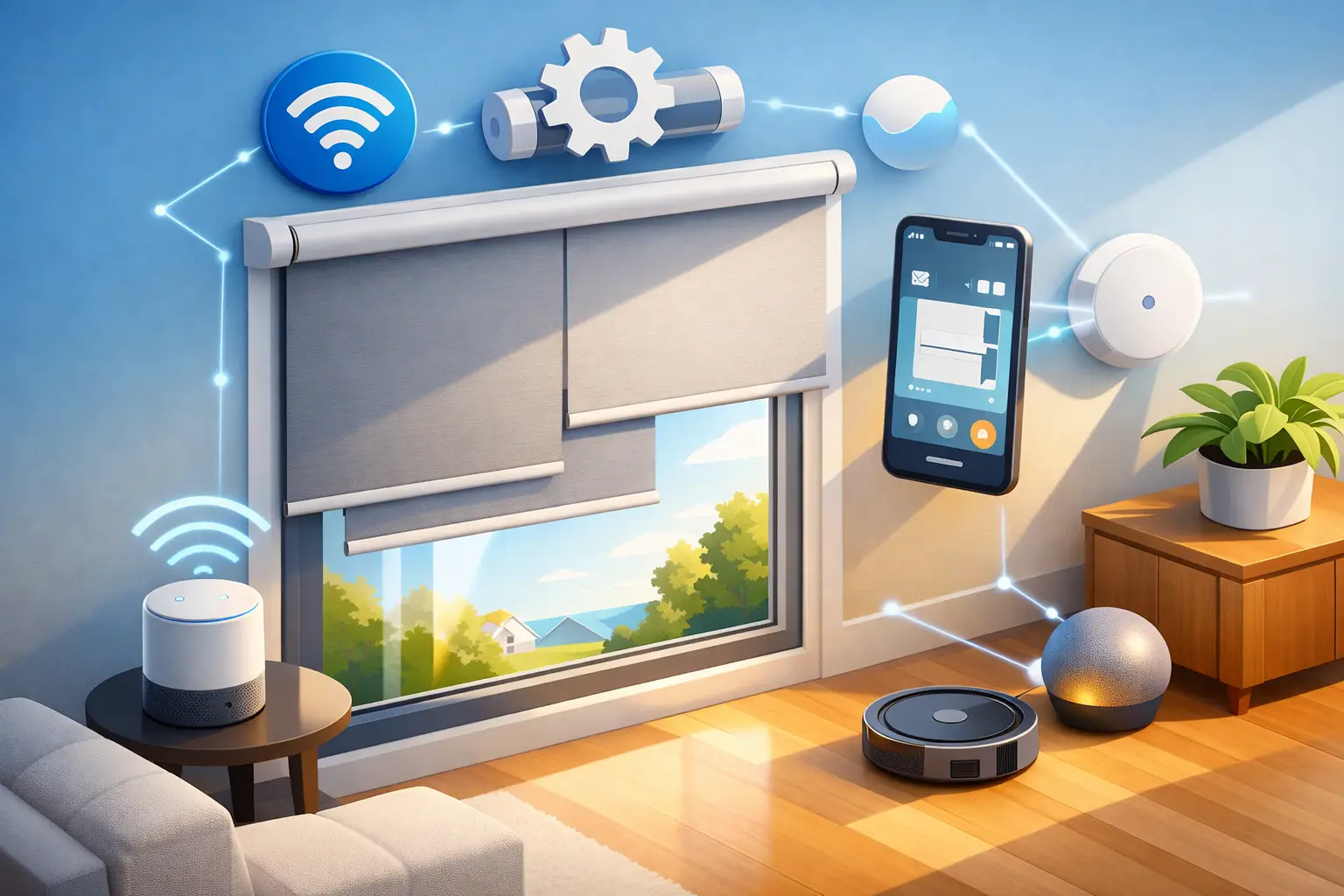
App control adds flexibility. You can adjust shades from another room, set schedules, or check their position while away from home. For busy households, scheduled operation is often where automation delivers its greatest value. Instead of remembering to close every shade before leaving for work, the home can follow a routine.
Voice control and smart-home integration can be useful, especially when paired with lighting, thermostats, and security systems. Still, these features should not be the only method of operation. A well-designed installation should include an easy local control option, so the shades remain simple to use for guests, children, and anyone who prefers a button over an app.
How to Automate Roller Shades With Schedules and Scenes
Once the shades are powered and connected, programming is what turns motorization into a daily convenience. A schedule can be as simple as opening shades at 7:00 a.m. and lowering them at sunset. It can also be more tailored to the orientation of your home and the way each room is used.
Consider creating a few practical scenes rather than programming every window independently. A “Morning” scene might raise bedroom shades and partially lower east-facing solar shades. An “Away” scene can lower visible ground-floor shades for privacy while maintaining a consistent exterior appearance. An “Evening” scene can close living-room and bedroom shades together as daylight fades.
Sun-based scheduling is particularly useful for rooms with strong exposure. Rather than following the clock, shades can respond around sunrise and sunset. This can help manage glare as seasons change, although it is not a substitute for choosing the right fabric and openness level. A very transparent solar fabric will still allow more light through than a room-darkening fabric, even when it is fully lowered.
Decide Whether to Retrofit or Replace Existing Shades
Homeowners often ask whether they can automate the roller shades they already own. Sometimes the answer is yes, but it depends on the shade’s tube, clutch system, fabric weight, overall width, and condition. Retrofitting may be worthwhile if the existing shades are high quality, properly sized, and compatible with a motor solution.
In many cases, replacement delivers better long-term value. Older shades may have worn mechanisms, fabrics that no longer suit the room, or proportions that do not allow for a concealed motorized system. Replacing them allows you to choose a fabric for the room’s light conditions, coordinate the hardware with your décor, and specify the correct motor from the start.
Large windows deserve special attention. A shade that looks simple can become heavy when it spans a wide opening or uses a dense blackout fabric. The motor, roller tube, brackets, and mounting surface must all be matched to the application. This is one reason custom measurement and professional installation matter more with motorized products than with basic manual shades.
Do Not Overlook Design Details
Automation should make a room look more considered, not more technical. Roller shades are available in a wide range of colors, textures, opacities, and decorative details. A carefully selected fabric can quietly complement custom draperies, contrast with painted trim, or create a soft architectural backdrop for a modern space.
Hardware placement also affects the finished result. Inside mounts can create a clean, minimal look when the window opening has sufficient depth and is reasonably square. Outside mounts can make a window appear larger and provide stronger light control by covering more of the wall area around the opening. Fascia panels, valances, and pocket installations can conceal the roller and create a more tailored appearance.
For rooms that need both filtered daylight and nighttime privacy, dual shades may be the answer. This approach pairs a solar or light-filtering shade with a room-darkening shade, allowing the space to adapt throughout the day. It costs more than a single treatment, but it can be a smart investment for primary bedrooms, media spaces, and glass-heavy living areas.
Why Professional Planning Makes a Difference
Ordering motorized shades online can appear straightforward until the decisions start to stack up: exact measurements, mounting depth, fabric opacity, motor capacity, battery placement, programming, grouping, and smart-home compatibility. A small measuring error or an overlooked obstruction can affect how the shade operates and how the finished room looks.
A professional consultation replaces guesswork with a plan built around your home. At Covering Windows, that means reviewing fabric samples in your actual light, discussing power and control options, measuring each opening, and installing the finished treatment with the details handled correctly. It also gives you a real person to call if you need help after installation.
The most successful automated roller shade projects feel effortless because the planning happened before the shades arrived. Choose a system that suits your windows, your routine, and your design vision, and the convenience will become part of the way your home works every day.