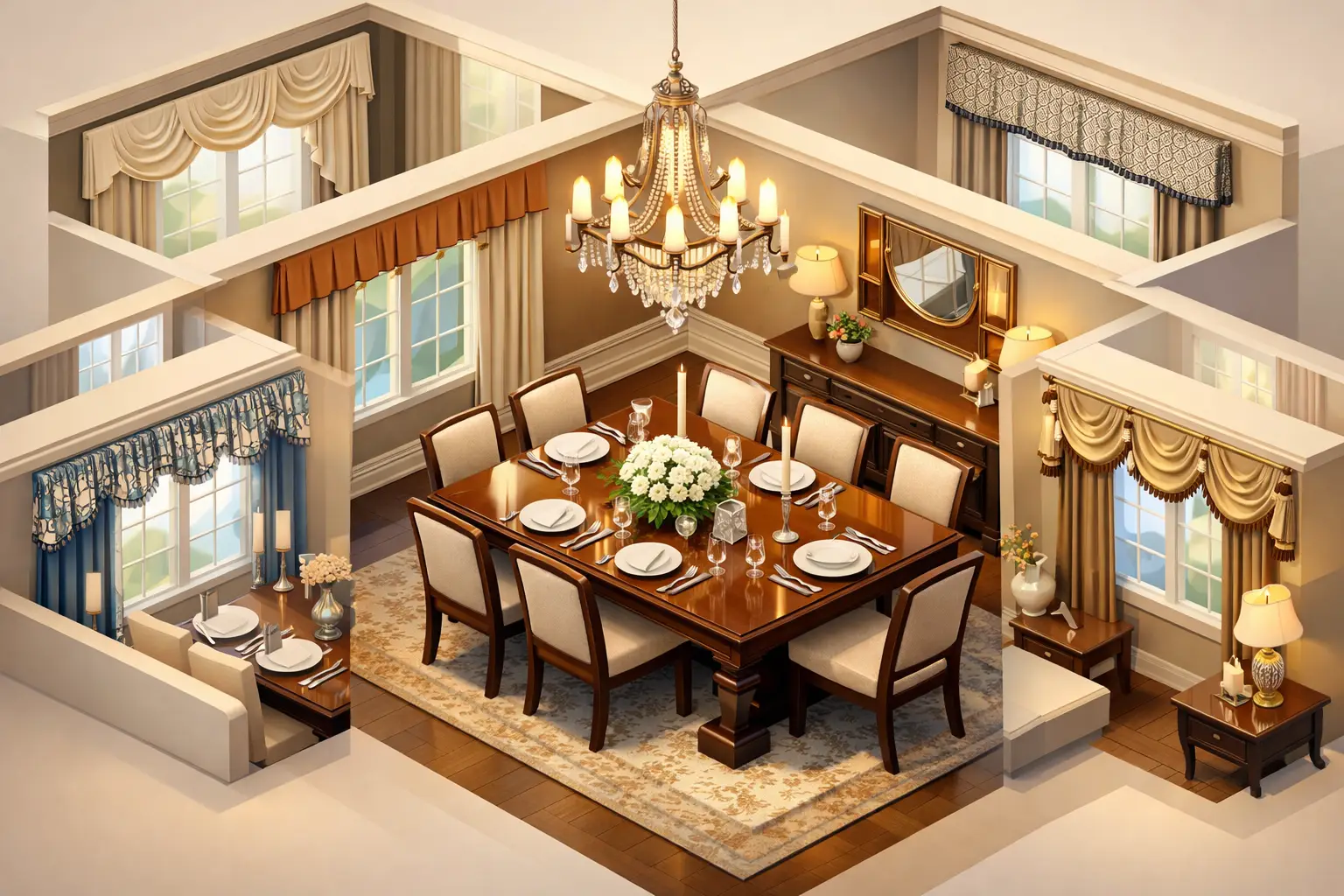
A formal dining room can look beautifully finished everywhere except the windows. You may have the chandelier, the table, the millwork, and the right paint color, yet the room still feels slightly incomplete. That is usually where the right valance comes in. The best valance ideas for formal dining room spaces do more than decorate the top of a window. They frame the room, reinforce the architecture, and make the entire setting feel intentional.
In a space meant for holidays, dinner parties, and polished everyday living, details matter. A casual kitchen valance rarely translates well here. Formal dining rooms usually ask for better tailoring, richer materials, and proportions that relate to the ceiling height, trim, and furniture below.
What makes a dining room valance feel formal?
A formal look is less about fussiness and more about structure. Clean lines, quality fabric, proper fullness, and a shape that fits the room all matter more than heavy ornament. In many homes across Northern Virginia, the most successful dining room treatments are the ones that feel custom to the architecture rather than pulled from a shelf.
That means scale should come first. A shallow valance on a tall window can look skimpy. An oversized swag in a room with clean transitional furniture can feel out of place. The style has to connect with the home itself, whether that leans traditional, classic, transitional, or slightly modern.
Valance ideas for formal dining room windows
1. Tailored box pleat valances
If you want something refined without looking overly decorative, a box pleat valance is one of the safest and strongest choices. It has a crisp silhouette, a tailored face, and enough softness to keep the room from feeling rigid.
This style works especially well in transitional and traditional dining rooms. In solid silk-look fabrics, linen blends, or subtle woven patterns, it brings polish without competing with wallpaper, chandelier details, or statement chairs. It is also a smart option when you want the treatment to complement the room rather than dominate it.
2. Upholstered cornice valances
For a more architectural effect, upholstered cornices are hard to beat. They create a defined top line, hide hardware cleanly, and instantly make the window look more substantial. In formal dining rooms with crown molding, wainscoting, or larger trim packages, a cornice often feels right at home.
Cornices can be straight, shaped, banded, or trimmed. A simpler profile keeps the room current, while a curved or stepped shape brings in more traditional character. This is a good choice if you prefer a polished, custom-built appearance and want a treatment that reads as part of the room design.
3. Soft swags with restrained detail
Swags still have a place in formal dining rooms, but the key is restraint. Older versions were often overdone, with excessive jabots, fringe, and volume. Today, a softer, more controlled swag can look elegant, especially in a traditional home.
This style works best when the room already supports it, such as spaces with ornate chandeliers, carved furniture, or classic architectural detailing. If your dining room is cleaner and more modern, swags may feel too dressed. That is where honest design guidance matters, because the same treatment can look timeless in one home and dated in another.
4. Scalloped valances for a classic profile
A scalloped valance introduces softness and visual rhythm across the top of the window. It is formal, but not severe. This can be a beautiful fit in dining rooms that need a little movement, especially if the furniture lines are straight and the wall treatment is simple.
Scallops look best when the curve is generous and the fabric has enough body to hold its shape. Small, fussy scallops tend to age a room quickly. Larger, better-proportioned curves feel more sophisticated and are easier to integrate with updated interiors.
5. Flat valances with decorative trim
Sometimes the right answer is the simplest one. A flat valance with a contrast band, tape trim, or subtle edge detail can be incredibly effective in a formal dining room. It gives the window a finished look without adding too much depth or formality.
This is a strong option for rooms with bold wallpaper, dramatic light fixtures, or beautiful outdoor views. It brings enough design interest to complete the window while allowing other elements to lead. If you want elegance without visual weight, this style is worth serious consideration.
6. Relaxed valances in luxury fabrics
Not every formal dining room needs sharp structure. In homes with a softer, more collected design style, a gently gathered valance in a high-end fabric can feel graceful and inviting. The difference between relaxed and messy comes down to fabric quality, pattern scale, and installation.
Silk blends, textured neutrals, embroidery, and tone-on-tone damasks all work well here. The look is especially appealing when you want the room to feel warm and upscale rather than stiff. Still, fullness needs to be controlled. Too much fabric can make the treatment feel heavy.
7. Layered valances over drapery panels
If your dining room has larger windows or you want more presence, layering a valance over side panels creates a rich, complete look. The valance handles the top line, while stationary drapery panels add height, softness, and a more luxurious frame.
This combination is ideal when the dining room is a showcase space visible from the foyer or main living areas. It also helps balance larger rooms where a valance alone might look undersized. The trade-off is that layering requires stronger attention to scale, fabric coordination, and mounting height. When done well, it feels custom and elevated. When done poorly, it can feel crowded.
Choosing the right fabric, color, and pattern
In formal dining rooms, fabric is often what separates a nice window treatment from one that truly elevates the room. Matte linens can look beautiful in transitional spaces, while silk-look textiles, jacquards, and woven patterns often suit more classic interiors. The goal is not to pick the most expensive-looking fabric. It is to choose one that supports the room’s level of formality.
Color should relate to the rest of the room, not just the wall color. Often, the best valances pull from the rug, chair upholstery, art, or wallcovering. Deep neutrals, warm ivories, soft taupes, muted blues, and understated metallic tones all work well in formal dining rooms because they feel rich without overwhelming the space.
Pattern depends on what is already happening in the room. If the wallpaper or rug is busy, a solid or textured fabric is usually the better move. If the room is more restrained, a subtle medallion, stripe, or damask can add much-needed depth.
When valances work best on their own, and when they need support
Some formal dining room windows look complete with a valance alone, especially if the room already has shutters, shades, or attractive trim. In those cases, the valance acts as the finishing touch.
Other windows need more visual weight. Tall windows, wide openings, and rooms with high ceilings often benefit from layered treatments. A valance plus drapery panels can better match the scale of the architecture. If privacy and light control matter, you may also want to pair the valance with woven shades, Roman shades, or plantation shutters underneath.
This is where custom planning makes such a difference. The right solution is rarely about one decorative idea in isolation. It is about how the valance works with the window size, the exposure, the furniture placement, and the level of formality you want the room to project.
Common mistakes with formal dining room valances
The most common mistake is choosing a style that is either too casual or too ornate for the room. Another is getting the height wrong. Valances mounted too low can make the ceiling feel shorter and the whole room feel dated. Mounting higher often creates a more elegant line and makes the window appear larger.
Fabric selection causes problems too. Thin, limp materials rarely look luxurious once installed. On the other hand, overly shiny or heavily embellished fabrics can feel forced. Proportion is another issue. A valance should relate to the size of the window and the room, not just fit the glass opening.
This is one reason homeowners often appreciate a hands-on design process. Seeing samples in the room, against the actual paint, trim, and furnishings, removes much of the guesswork. At Covering Windows, that kind of guidance helps homeowners avoid expensive design missteps and get to a finished look with more confidence.
How to choose the best valance for your room
Start with the architecture. If your home is traditional, a shaped cornice, box pleat, or controlled swag may fit naturally. If your dining room is transitional, a flat or tailored valance often gives you the right balance of elegance and restraint.
Next, look at what the room already has. A dramatic chandelier and patterned wallpaper may call for a quieter valance. A simpler dining room may need more shape or fabric detail at the window to feel complete. Then think about the practical side. Do you need privacy, glare control, or insulation, or is this treatment mainly decorative?
A beautiful formal dining room should feel composed, not overworked. The right valance does exactly that. It brings order to the window, supports the style of the home, and gives the room the finished quality guests may not be able to name but will absolutely notice.