
Large windows are a gift right up until you have to dress them. What looks stunning in an empty room can feel exposed at night, overly bright in the afternoon, or simply unfinished once the furniture is in place. That is where custom draperies for large windows make a noticeable difference. They do more than cover glass. They bring proportion, softness, privacy, and a sense that the entire room was designed on purpose.
For homeowners in Northern Virginia, this decision often sits at the intersection of style and function. A two-story family room in Ashburn, a wall of windows in a McLean renovation, or oversized sliders in a Great Falls home all create different design challenges. The right drapery treatment can make those windows feel grand and balanced. The wrong one can look skimpy, fight the architecture, or become difficult to open and maintain.
Why custom matters on oversized windows
Large windows amplify every decision. On a standard bedroom window, slight measuring errors or a less-than-ideal fabric choice may go unnoticed. On a 12-foot-wide span or a tall window wall, those mistakes become obvious fast.
Custom draperies are built for the actual dimensions of the space, the way the room is used, and the visual weight needed to match the scale of the architecture. That means panel widths are calculated correctly, hardware is selected to carry the load, and the finished height works with your ceiling line rather than cutting the room short.
This is also where custom outperforms ready-made panels from a design standpoint. Store-bought drapes are produced in fixed widths and lengths, which often leaves large windows looking underdressed. You may end up piecing together too many narrow panels, compromising the look, or settling for a length that almost reaches the floor. In a well-designed room, almost right rarely feels right.
Custom draperies for large windows start with proportion
The biggest design mistake on large windows is underestimating scale. Wide expanses of glass need enough fabric to look intentional when the draperies are closed and attractive when they are open. If the panels are too narrow, they can appear flat and strained. If the rod is too short, the stackback covers too much glass and reduces daylight.
Proportion affects more than appearance. It changes how the room feels. Properly scaled draperies can visually widen a window, emphasize ceiling height, and soften hard architectural lines. In open-concept homes especially, draperies often help larger spaces feel warmer and more finished.
Placement matters just as much. Mounting hardware higher and wider than the window frame is a common designer move because it creates a taller, more expansive effect. But it has to be done with care. The best mounting height depends on ceiling details, crown molding, and how dramatic or tailored you want the treatment to feel.
Fabric choice changes performance, not just style
Fabric is usually the first thing homeowners notice, but on large windows it also affects function. A beautiful textile that looks great on a sample may hang very differently once it spans a broad opening.
Heavier fabrics tend to create a more formal, substantial look. They can help oversized windows feel grounded and luxurious, especially in dining rooms, formal living spaces, and primary bedrooms. Lighter fabrics feel more relaxed and airy, which works well in sunrooms, casual family spaces, or homes aiming for a softer transitional style.
There is a practical side to this decision too. Large windows often bring intense sunlight, heat gain, and glare. The right fabric and lining combination can improve light control, protect interiors from fading, and add insulation value. That does not mean every room needs blackout draperies. In many cases, privacy lining or interlining provides the right balance between softness and performance.
This is one of those areas where it depends. If your goal is filtered light and a layered, elegant feel, sheer draperies or lighter fabrics may be ideal. If the room faces strong western sun or needs nighttime privacy, a lined drapery system usually makes more sense.
Fullness, pleats, and lining are what make draperies look finished
When homeowners compare custom draperies to off-the-shelf options, the difference is often in the details they cannot name at first glance. Fullness is one of them.
Fullness refers to how much fabric is used relative to the width of the window. On large windows, this matters a lot. Proper fullness gives draperies body, shape, and elegant folds. Too little fullness makes even an expensive fabric look thin and underwhelming.
Pleat style also affects the final character of the room. Pinch pleats feel classic and structured. Ripplefold draperies offer a cleaner, more contemporary line and work especially well on wide spans and modern homes. Tailored pleats can bridge traditional and transitional interiors nicely.
Then there is lining. Good lining helps draperies hang better, last longer, and perform more consistently over time. In large installations, lining is not just an upgrade for appearance. It often improves durability and light control in a meaningful way.
Hardware has to do real work
With large windows, hardware is not decoration alone. It is structural.
A wide drapery installation may require stronger rods, specialized brackets, center supports, or traversing systems that allow the panels to move smoothly. If the drapery is heavy or especially wide, motorization may be worth considering, not as a luxury add-on but as a practical solution.
Motorized draperies are especially useful for tall windows, hard-to-reach areas, and homes where convenience matters. They also help protect the fabric from repeated tugging by hand. For busy households, that kind of daily ease tends to be appreciated more than expected.
The visible hardware should also match the room. Sleek metal finishes can sharpen a modern interior. Warmer finishes and more decorative rods can complement traditional or transitional spaces. Again, scale matters. Thin rods and small finials can get visually lost on a major window wall.
Layering often gives the best result
Many of the most successful large-window treatments are layered. That might mean draperies over woven shades, decorative side panels paired with functional roller shades, or lined drapery panels used alongside sheers.
Layering gives you more control without forcing one treatment to do everything. A shade can manage glare and privacy during the day, while draperies add softness, insulation, and a more finished look. In bedrooms and media rooms, layering can also improve room darkening.
This approach is especially useful when a homeowner wants the beauty of draperies but also needs practical solar control. Large windows often ask for both.
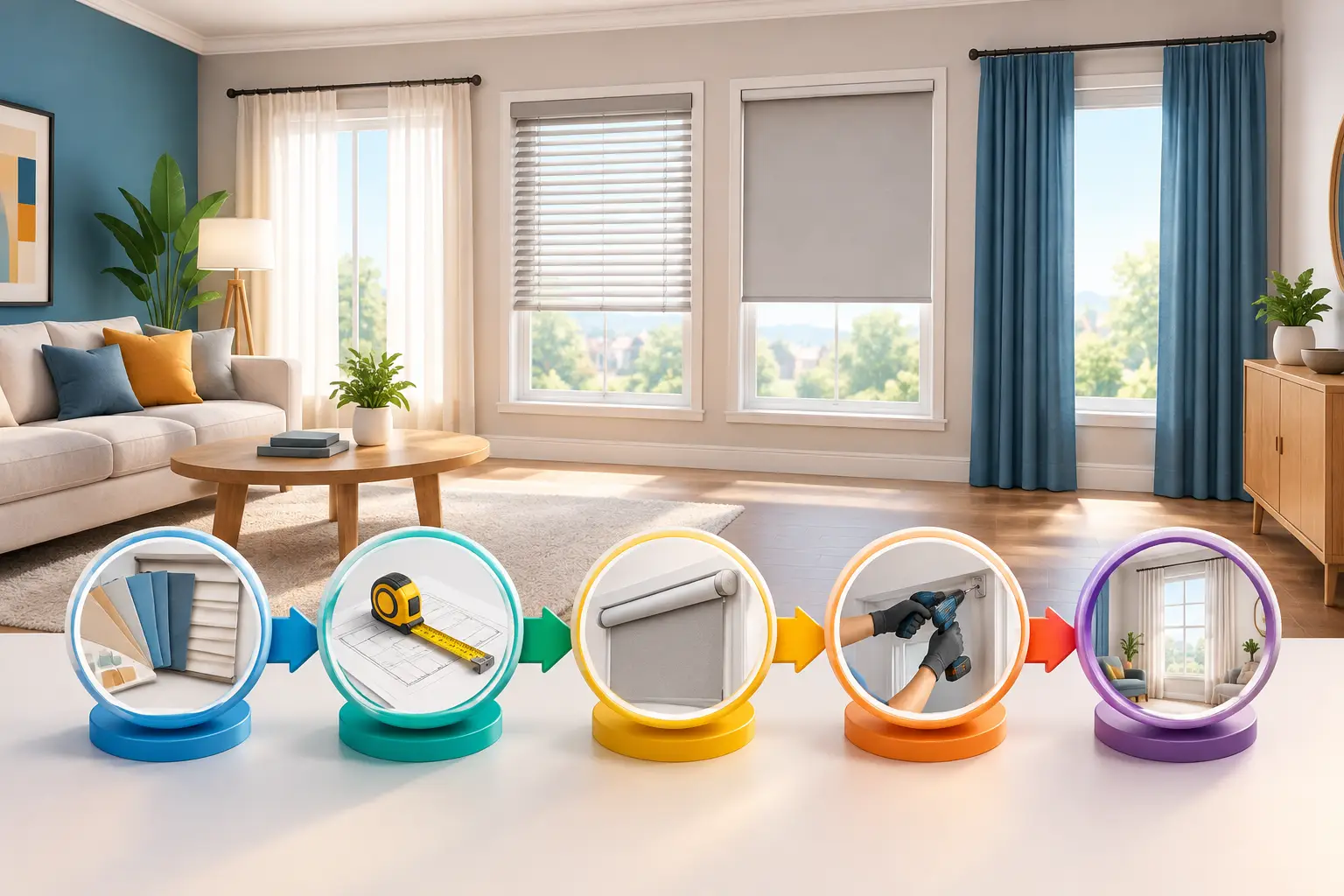
Professional measuring and installation are part of the product
Custom draperies for large windows are only as good as the measuring and installation behind them. This is where many online purchases go wrong. The fabric may be fine, but the panels are too short, the rod placement is off, or the stackback was never considered.
On oversized windows, those issues are expensive to correct and hard to ignore once installed. Professional guidance removes much of that risk. It also helps homeowners make better decisions before ordering, when changes are still easy.
An in-home consultation is valuable because large windows interact with the whole room. Ceiling height, wall space, trim depth, furniture placement, and natural light all influence the right drapery solution. Seeing fabrics and hardware samples in the actual home usually leads to better choices than trying to imagine them from a screen.
That hands-on process is one reason many homeowners choose a local specialist instead of managing everything alone. Companies like Covering Windows can guide the design, present workable options, and ensure the final installation looks polished rather than improvised.
What to consider before you choose custom draperies for large windows
Before selecting fabrics or pleat styles, it helps to be clear on what the room needs most. Some homeowners want softness and visual drama. Others care most about privacy, heat control, or ease of operation. The best drapery plan usually balances all of those rather than maximizing just one.
Budget is another factor worth discussing early. Larger windows require more fabric, stronger hardware, and more labor, so the investment is naturally higher than for smaller openings. But that does not mean every choice has to be premium in every category. Sometimes a simpler fabric with excellent construction delivers a better outcome than a more expensive textile used in the wrong way.
The key is to avoid treating large windows like standard windows at a larger size. They need a solution built around scale, use, and architectural impact.
When custom draperies are done well, they do not feel like an afterthought. They complete the room, soften the light, and bring a sense of quiet luxury that is hard to replicate with anything off the shelf. If your windows are one of the defining features of your home, the treatment should rise to that level too.