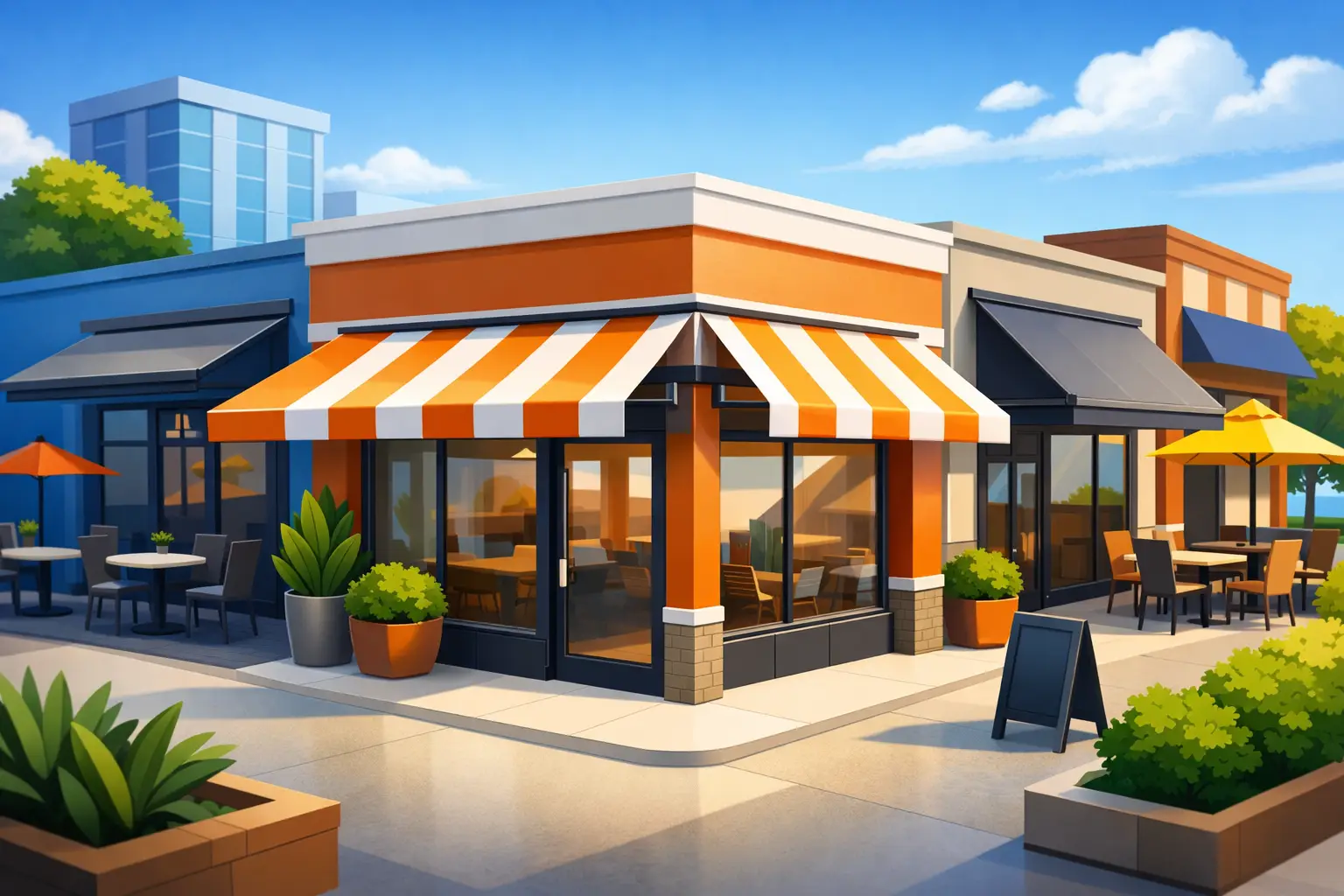
A storefront has a few seconds to make the right impression. If the entry looks hot, glaring, faded, or closed off, people notice before they ever read a sign. That is why outdoor shades for business storefronts are not just a finishing touch. They shape comfort, visibility, curb appeal, and how customers experience your space from the sidewalk in.
For retail shops, restaurants, salons, offices, and service businesses, exterior shading solves a very practical problem. Sun exposure can overheat front windows, wash out merchandise displays, make seating uncomfortable, and raise cooling costs. At the same time, the wrong shade system can block your branding, darken the entry, or make the business feel less inviting. The best result comes from choosing a custom solution that balances appearance and performance.
Why outdoor shades for business storefronts matter
Most business owners start looking at exterior shades because something is not working. Afternoon sun turns the front of the space into a hot zone. Customers avoid patio seating. Glare makes it hard to see digital displays or product features near the windows. Fabrics fade. Employees end up lowering interior blinds, which helps with heat but can make the storefront look closed during business hours.
Outdoor shades address the problem earlier, before the sun reaches the glass. That distinction matters. By stopping a significant portion of heat and glare outside, they can help maintain a more comfortable interior without sacrificing the open, polished look that many storefronts need. In practical terms, that can mean a better customer experience, more usable square footage near windows, and less strain on HVAC systems during the hottest months.
There is also the visual side. A clean, well-designed shade system can make a business look more established and intentional. It frames the storefront, softens harsh sun, and creates a tailored exterior rather than an improvised one. For businesses in competitive shopping areas, that polished presentation matters.
What a good storefront shade system should do
Not every business needs the same level of sun control. A west-facing café with outdoor seating has very different needs from a boutique with full-height front glass or a medical office that wants more privacy near reception. Still, most successful installations aim for the same core outcomes.
First, the shade should reduce heat and glare without hiding the business. Visibility is still the priority. Customers need to feel welcome, and signage still needs to read clearly from the street. Second, the materials should be durable enough for constant exposure. Commercial storefronts do not benefit from products that look tired after one season. Third, the system should feel easy to live with, whether that means manual operation, motorization, or integration with a larger commercial setup.
That balance is where many off-the-shelf products fall short. A stock solution may seem less expensive at first, but if the size is wrong, the fabric openness is not suited to the exposure, or the hardware looks too light for the building, the result can feel temporary. On a business frontage, temporary is rarely the look you want.
Choosing the right outdoor shades for business storefront applications
The right choice depends on sun direction, window size, business type, local code requirements, and the experience you want customers to have. There is no single best product for every storefront, which is why consultation matters.
Solar shades for visibility and glare control
Exterior solar shades are often the strongest fit when you want to keep outward visibility while cutting glare and heat. These fabrics are designed with an openness factor that affects how much light comes through and how much you can see out. A tighter weave offers more sun protection and privacy, while a more open fabric preserves a stronger visual connection to the outside.
For a storefront, this is usually a trade-off rather than a simple yes-or-no decision. Too open, and you may not get enough heat control. Too closed, and the business may feel shaded off from foot traffic. The best selection is usually based on the orientation of the building, what is displayed behind the glass, and whether the goal is daytime comfort, display protection, privacy, or all three.
Patio and café shades for outdoor customer areas
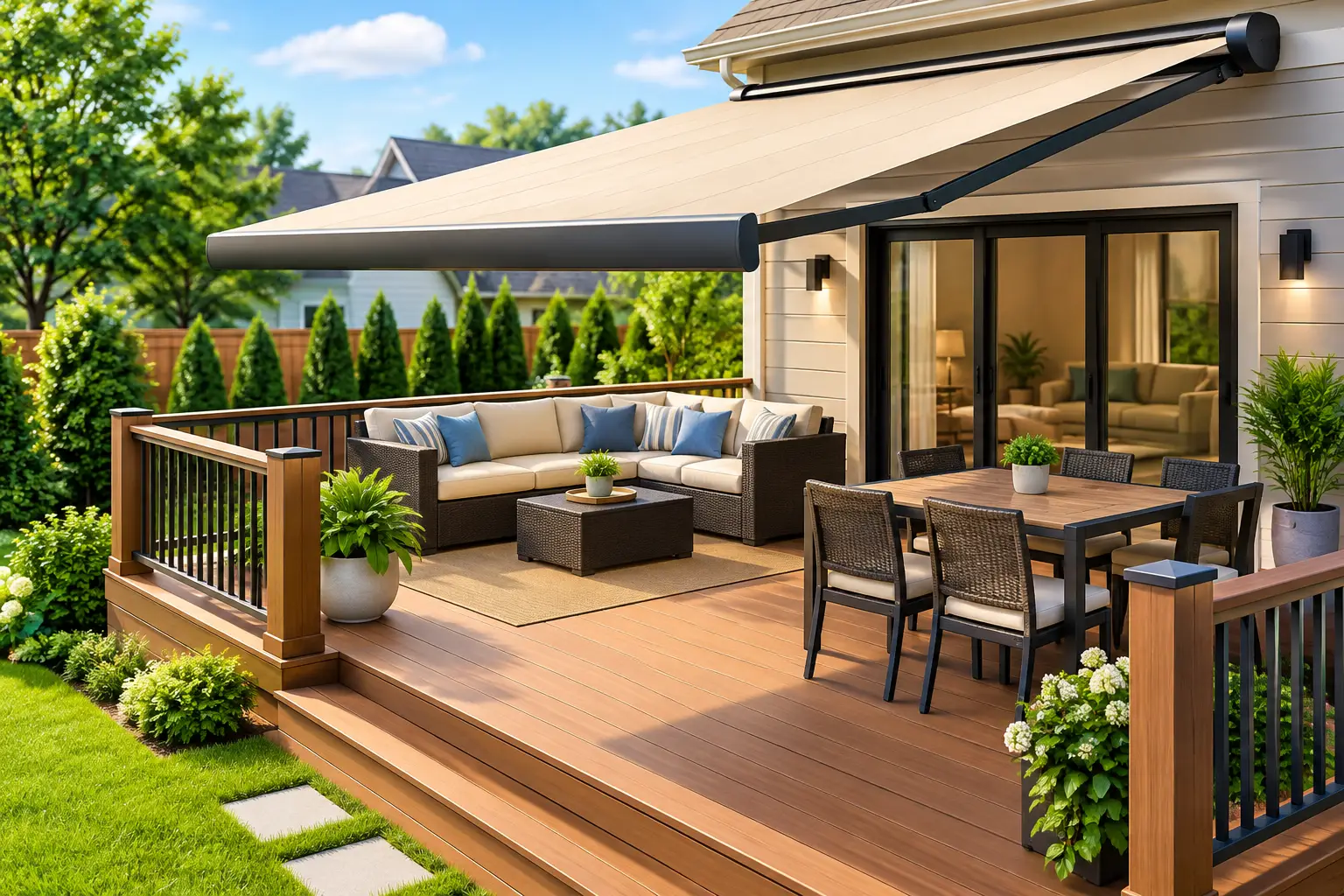
Restaurants, coffee shops, breweries, and salons with outdoor service areas often need shades that extend the usability of exterior seating. In those cases, coverage and comfort become just as important as storefront appearance. A well-designed exterior shade system can make a patio far more usable during peak sun hours and can help define the space so it feels intentional rather than exposed.
This is especially valuable in regions with strong summer sun. Customers stay longer when seating feels cooler and more comfortable. Staff can also work more effectively in spaces that are not fighting full glare all afternoon.
Motorized systems for convenience and consistency
For many businesses, motorization is not a luxury feature. It is a practical one. If staff need to adjust multiple shades during the day, or if the storefront has large or hard-to-reach openings, motorized exterior shades create consistency and reduce wear from constant manual use.
They also help maintain a more polished appearance. Instead of one shade lowered, another halfway up, and a third ignored entirely, motorized systems allow the business to present a uniform front. For customer-facing spaces, that consistency supports the overall brand image.
Design matters more than many owners expect
Commercial shading is often treated like a purely functional purchase, but customers read design details quickly. The shade color, cassette style, hardware finish, and fabric density all affect how the storefront feels. A heavy dark fabric can look sleek on one building and too severe on another. A light neutral can feel refined and open, but in some exposures it may not deliver the best glare control.
This is where samples and on-site guidance make a real difference. Looking at swatches indoors or on a screen is not the same as seeing how a fabric behaves against your actual façade in direct afternoon sun. Custom recommendations help you avoid a very common mistake: choosing a product based only on category, without considering how it will read on the building.
Businesses also need to think about branding. Exterior shades should complement signage, architectural trim, and the overall look of the property. They do not need to compete for attention. They need to support the brand by making the storefront look cared for, comfortable, and professionally finished.
Installation is where performance is won or lost
Even a high-quality shade can disappoint if it is measured or mounted incorrectly. Commercial storefronts often involve wide spans, uneven surfaces, masonry, metal framing, or other conditions that make precision essential. Poor installation can lead to gaps, sagging, premature wear, or a finished look that feels slightly off even if the customer cannot explain why.
That is one reason many business owners prefer a full-service process. When the same team handles consultation, measurement, product selection, and installation, there is less guesswork and less room for expensive correction later. For busy owners and property managers, that kind of oversight is not just convenient. It protects the investment.
Covering Windows works with business clients who want that guided approach, especially when the goal is to get the look right the first time while also improving comfort and sun control.
When outdoor shades are worth the investment
The return is not always measured in one line item. Some businesses will notice lower cooling demand, but the value often shows up in other ways too. A more comfortable front seating area can increase usable capacity. Reduced glare can improve product visibility. Better UV protection can help preserve flooring, furnishings, and displays. And a stronger storefront presentation can support walk-in traffic and customer perception.
That said, it depends on the property. If the building has deep overhangs or limited direct sun, the need may be lighter. If the storefront is fully exposed and west-facing, the impact can be immediate. This is why a site-specific recommendation tends to produce better results than guessing based on photos or standard sizes.
A smarter way to approach the project
If you are considering outdoor shades for business storefront needs, start by thinking beyond shade alone. Ask what the storefront needs to do better. Stay cooler during peak sun? Keep window displays visible? Make patio seating more usable? Improve curb appeal without making the front look closed off? The right solution comes from those answers.
A well-chosen exterior shade system should feel like part of the architecture, not an afterthought. When it is designed properly, it protects the space, supports the brand, and makes the business more comfortable for everyone walking through the door. That kind of upgrade tends to pay off every day, quietly, in all the ways customers remember.