A beautifully finished room can still feel incomplete when the window treatment is treated as an afterthought. The most compelling designer drapery trends are moving away from quick, undersized panels and toward intentional fabric, tailored proportions, and functional details that make a home feel more comfortable as well as more refined.
For homeowners in Northern Virginia, drapery is doing more than framing a view. It softens clean-lined new construction, adds warmth to renovated spaces, manages intense afternoon sun, and creates privacy without sacrificing the feeling of openness. The right choice depends on the architecture, how the room is used, and the look you want to live with for years.
Designer Drapery Trends That Feel Tailored, Not Trendy
The strongest direction in custom drapery is restraint. Rather than relying on dramatic patterns or complicated embellishments, designers are choosing materials and construction details that look considered from every angle. Think generous fabric fullness, quiet texture, and hardware that belongs to the room rather than competing with it.
This matters because drapery occupies a large visual area. A fabric that looks subtle in a small sample can become the defining surface in a room once it spans a wide wall. During an in-home consultation, seeing samples beside your flooring, wall color, upholstery, and natural light makes it much easier to select a fabric with confidence.
Fuller panels create a more luxurious finish
One of the clearest shifts is toward proper fullness. Panels that barely cover the glass when closed often look flat and underwhelming. Custom draperies are typically made with enough fabric to form soft, consistent folds, whether they are open or drawn.
The exact amount of fullness depends on the fabric and heading style. A crisp linen-blend may need a different treatment than a heavier velvet or wool-look material. The goal is not excess for its own sake. It is a graceful, substantial appearance that gives the window architectural presence.
Ripplefold and tailored pleats remain favorites
Ripplefold drapery continues to be a smart choice for contemporary homes, large windows, and sliding glass doors. Its evenly spaced waves look clean and relaxed, and the track allows the panels to glide smoothly. It is especially effective when mounted high and wide to emphasize ceiling height and make a window feel more expansive.
For more traditional homes in places like Vienna, McLean, or Great Falls, pinch pleats and tailored pleats bring a more formal level of craftsmanship. They complement detailed millwork, classic furnishings, and layered interiors beautifully. Neither style is inherently better. Ripplefold feels more streamlined; pleated drapery offers more structure and decorative weight.
Texture Takes the Place of Busy Pattern
Patterned drapery still has a place, particularly in powder rooms, dining rooms, and spaces that need a clear focal point. But many homeowners are gravitating toward solids and semi-solids with tactile depth. Linen blends, woven textures, subtle slubs, boucle9-inspired weaves, and soft matte fabrics add dimension without making a room feel visually crowded.
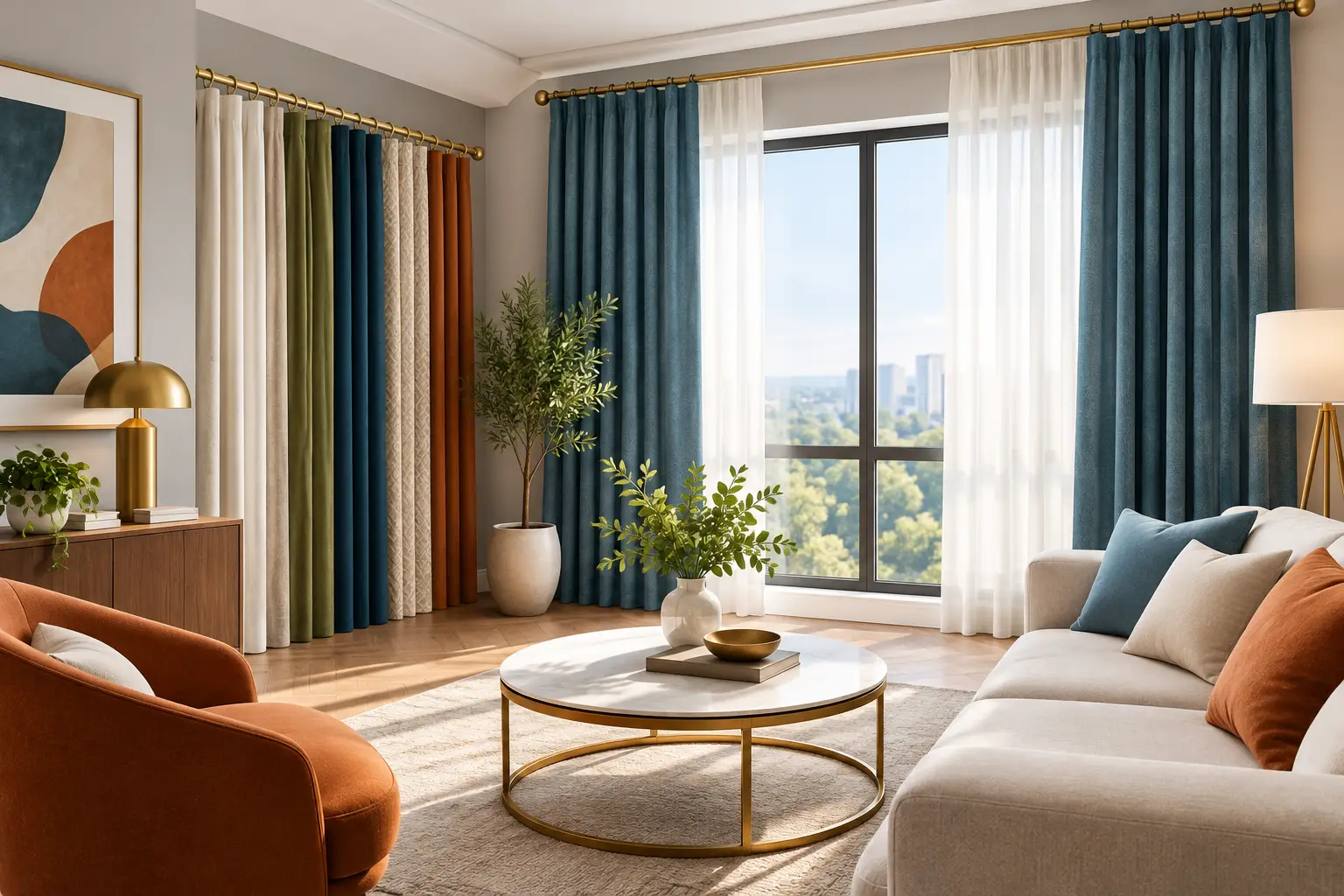
Warm neutrals are leading the conversation, including oat, mushroom, sand, putty, soft taupe, and muted olive. These colors work well with the natural woods, stone finishes, and layered whites common in elevated Northern Virginia interiors. They also tend to age more gracefully than a highly specific trend color.
That does not mean every room should be beige. Deep blue, charcoal, tobacco, forest green, and earthy rust can bring welcome depth to a study, media room, or formal dining area. The key is to balance color with the room’s light exposure. A dark fabric can feel sophisticated in a bright space, while the same choice may make a low-light room feel heavy.
Layering Drapery With Shades Adds Comfort and Control
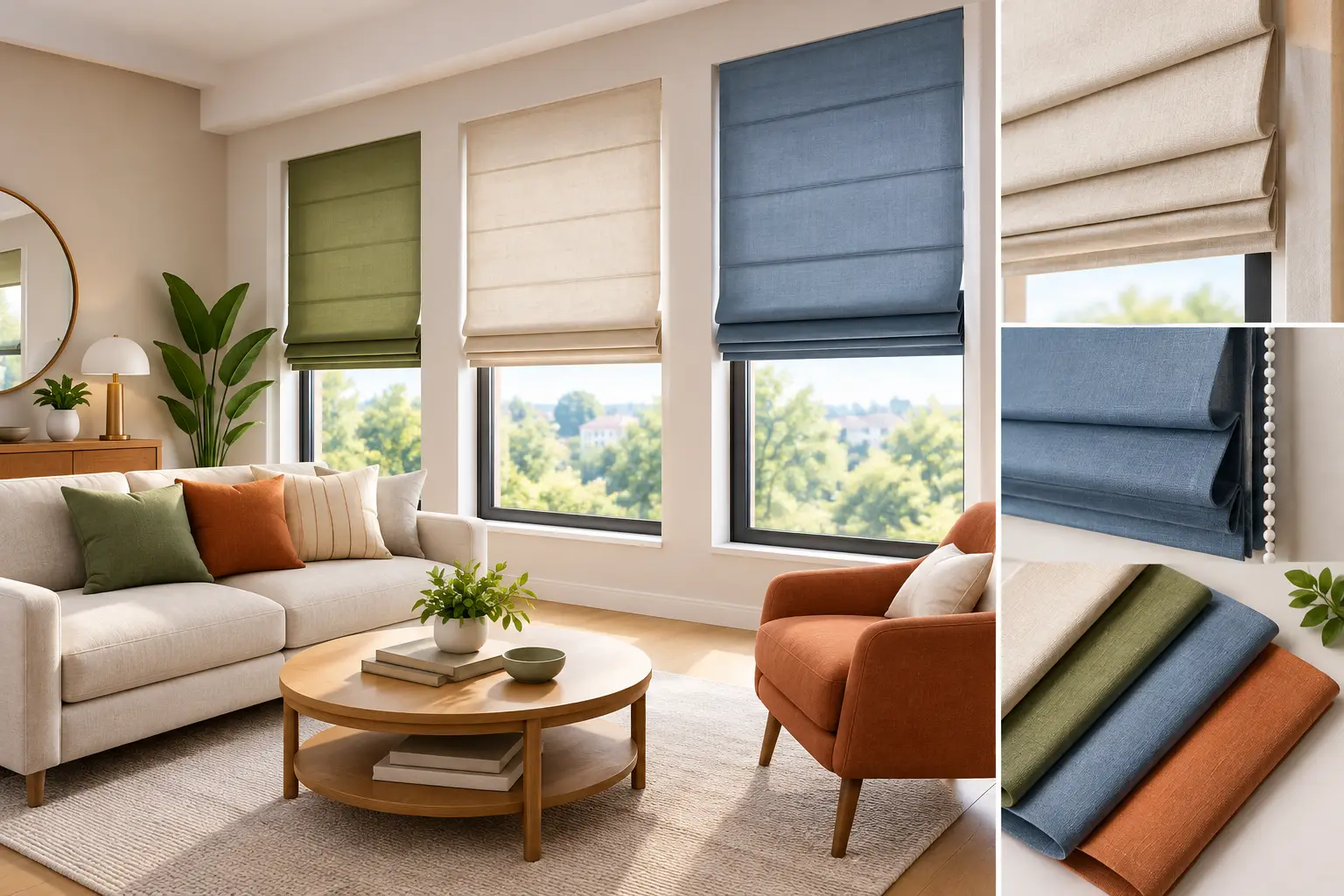
Beautiful drapery does not have to carry every functional responsibility alone. Layering stationary or operating panels with custom shades has become one of the most practical design approaches for bedrooms, family rooms, and large expanses of glass.
A shade handles daily privacy and light control close to the window. Drapery adds softness, insulation, and a finished designer look. For example, a solar shade can reduce glare while preserving much of the view during the day, while side panels make the room feel complete. In a bedroom, a room-darkening roller shade or cellular shade paired with lined drapery can produce a much more restful result.
This approach is also useful when the view is a priority. Homeowners often worry that drapery will cover too much glass. Properly planned panels can stack beyond the window opening, leaving more of the view visible when open. Measuring the stack-back, track placement, and projection is where professional guidance makes a meaningful difference.
Lining is a design and performance decision
Lining is often invisible, but it changes how drapery hangs, protects fabric from sun exposure, and improves privacy. A standard privacy lining may be enough for a living room, while a room-darkening lining is usually better suited to bedrooms and media spaces.
Blackout lining offers the strongest light reduction, though it is not always the best answer. In a formal room where you want the soft glow of daylight, blackout material can be unnecessary and may make lighter fabrics appear stiffer. The right lining should support the way you use the space, not simply follow a label.
Motorization Is Becoming Part of the Design Brief
Motorized drapery and shades are no longer reserved for the most elaborate homes. They are increasingly requested for tall windows, hard-to-reach openings, wide sliding doors, and rooms with strong sun exposure. Convenience is part of the appeal, but so is protecting furnishings and maintaining a consistent look throughout the day.
With programmable schedules, treatments can close during the hottest part of the afternoon and open again as the sun moves. In bedrooms, a scheduled opening can make mornings gentler. In living areas, one control can manage multiple window treatments without requiring you to adjust each one by hand.
For a clean appearance, planning power early is ideal. Battery options can work well in many retrofit projects, while hardwired systems are often preferred during new construction or major renovation. A consultation should cover not only fabric and style, but also how the treatment will be operated every day.
Hardware Is More Minimal, but Never an Afterthought
Decorative rods with oversized finials are giving way to slimmer profiles, hidden tracks, and thoughtfully selected finishes. A concealed ceiling track can create the striking effect of drapery falling directly from the ceiling, an especially valuable technique in rooms with lower windows or modest ceiling heights.
Visible hardware still works when it suits the home. Matte black can bring definition to a modern interior; warm brass complements transitional and traditional spaces; bronze often works beautifully with darker woods. The scale must be right. A narrow rod may look inadequate over a broad wall of windows, while overly heavy hardware can overwhelm a delicate fabric.
Placement matters just as much. Mounting drapery several inches above the window, or at the ceiling where possible, creates a taller and more polished impression. Extending the rod beyond the window frame also helps panels clear the glass when open. These are small decisions on paper that have an outsized effect once the room is complete.
Choose a Look That Works Beyond the Photograph
The best designer drapery trends are not about copying a showroom image. They are about making your home feel composed, private, comfortable, and distinctly yours. A dramatic puddled hem may suit a formal sitting room, but a family room with pets or frequent patio access may benefit from a clean floor-skimming length. A delicate sheer can be beautiful, yet it may need a shade behind it if privacy is a daily concern.
Custom drapery earns its value in these practical decisions: accurate measuring, fabric that works in your light, hardware sized for the opening, and installation that leaves every panel hanging correctly. Covering Windows brings those details together in the home, where they can be evaluated against the rooms and routines that matter most. When drapery is planned as part of the room rather than added at the end, it has a quiet way of making everything around it look better.