A beautiful arched window should feel like an architectural feature, not a decorating problem. Yet many homeowners leave arches uncovered because they assume shutters will block the shape, fit poorly, or cost more than the rest of the room. The right arched window shutter options do the opposite: they frame the curve, give you practical privacy and light control, and make a custom home feel thoughtfully finished.
For homes across Northern Virginia, arched windows often appear where light matters most – over front doors, in two-story living rooms, primary suites, and formal dining spaces. That makes the decision less about simply covering glass and more about balancing beauty, function, and the way the room is used every day.
Why Arched Windows Need a Different Approach
A standard rectangular shutter is built from straight rails, square corners, and adjustable louvers. An arch introduces a curve, and that curve must be measured precisely so the finished shutter follows the window rather than fighting against it. Even a small measurement error can create uneven gaps, awkward proportions, or an installation that looks visibly off from across the room.
That is why off-the-shelf solutions rarely deliver the result homeowners expect. Online measurements can be confusing, especially when an arch is not perfectly symmetrical or includes a rectangular lower section. Custom shutters are made to the true dimensions of the opening, accounting for the arch rise, width, depth, trim, and any handle or crank that affects clearance.
The payoff is substantial. When properly designed, shutters make the architecture look intentional. They can also reduce glare, improve privacy near neighboring homes, and create a cleaner finish than layered temporary coverings.
The Main Arched Window Shutter Options
The best choice depends on whether your priority is preserving a clear view, gaining adjustable light control, adding insulation, or dressing a window that is primarily decorative. Most arched shutters fall into two broad designs: fixed arch panels and operable arch panels.
Fixed Arch Shutters Preserve the Shape
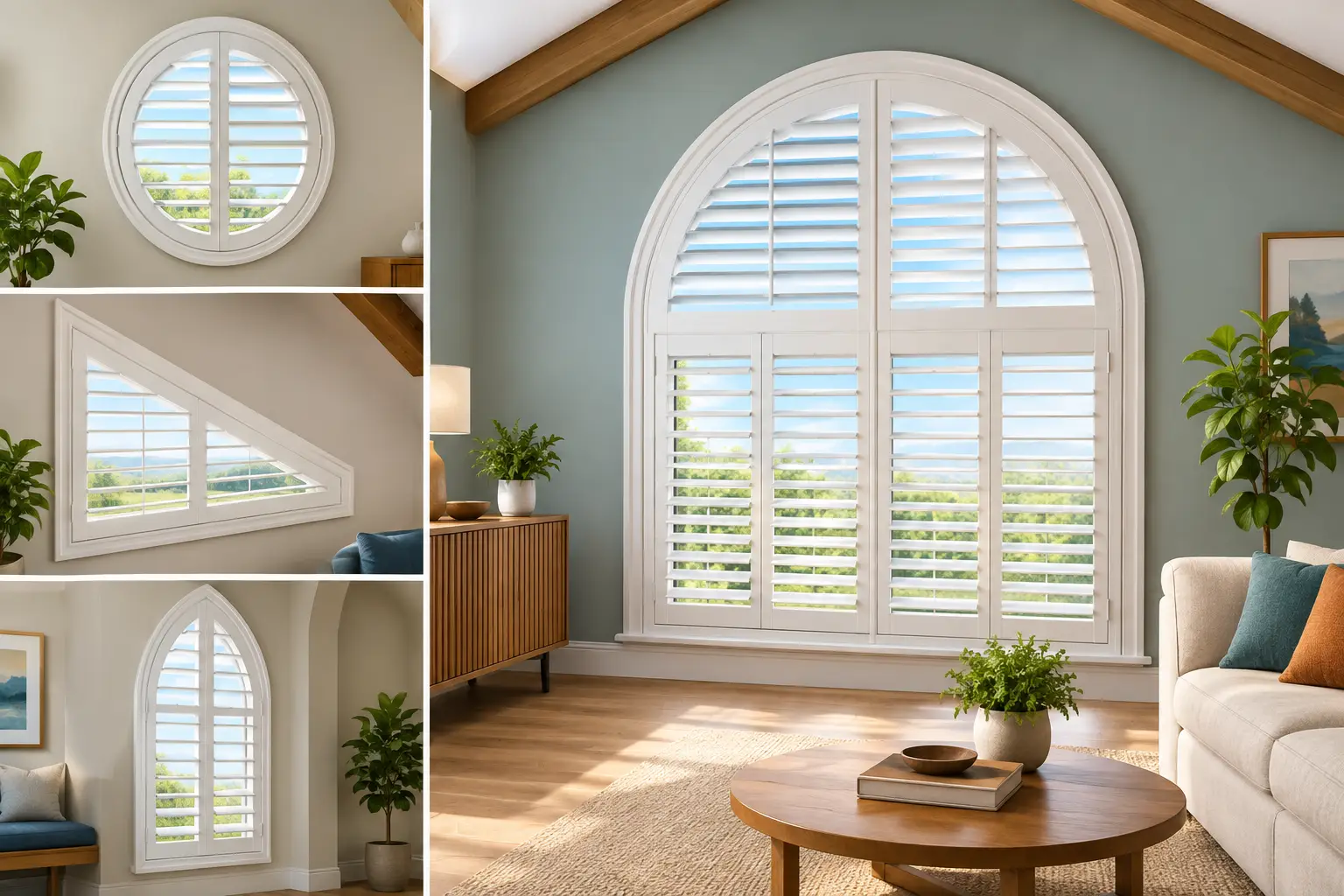
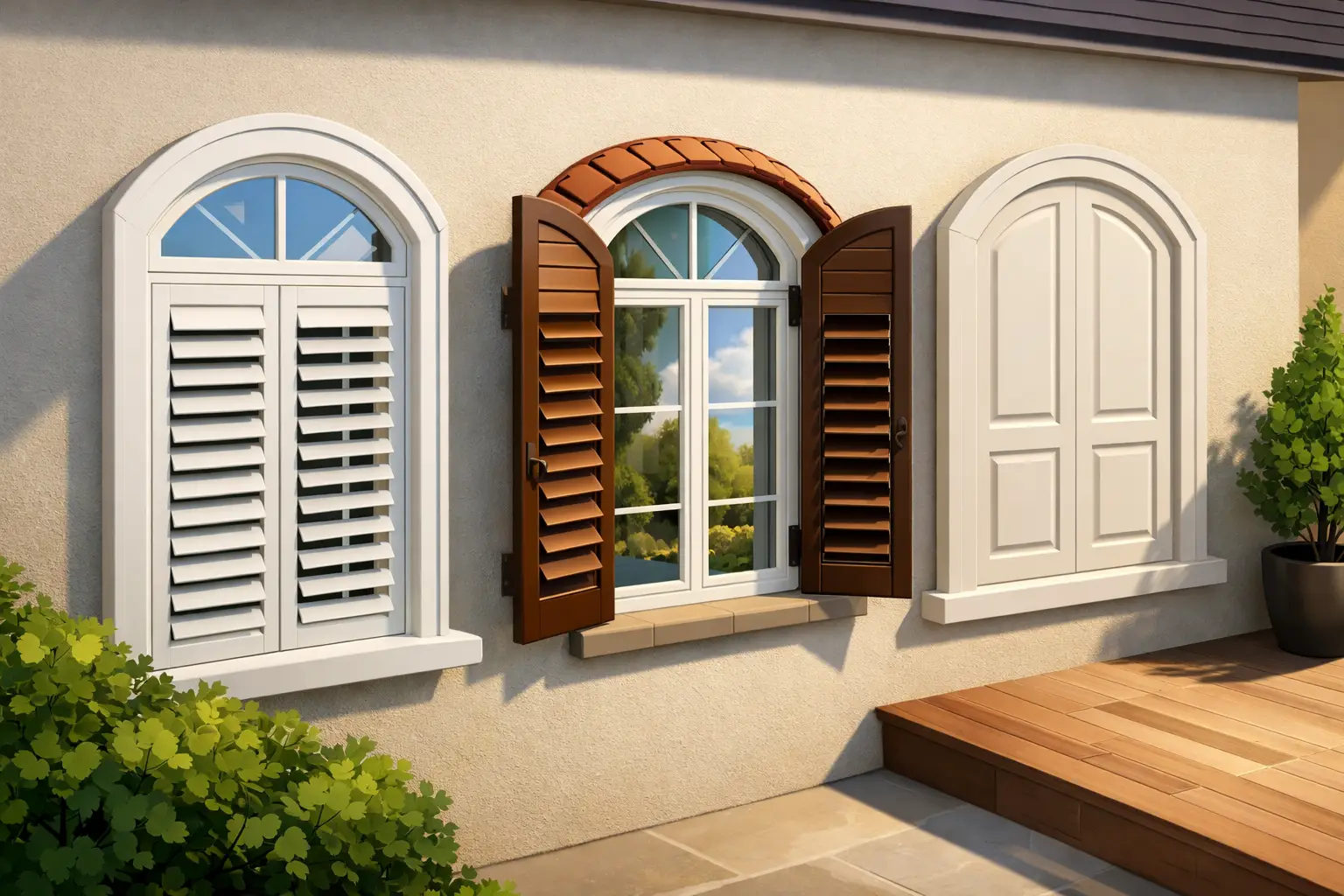
A fixed arch shutter is a stationary panel made to follow the curve of the window. It does not open, but it provides a tailored, architectural look with clean lines and permanent privacy or filtered light, depending on louver size and construction.
This option works especially well for high transom windows, arched windows above doors, and upper-level openings that are difficult to reach. If the window is mostly there for daylight and visual impact rather than ventilation, a fixed shutter can be the most sensible investment. It avoids unnecessary moving parts while giving the room the finished character of custom millwork.
Fixed panels are also a strong choice when an arch is combined with rectangular windows below. The arched portion can remain stationary while the lower shutters operate independently. This keeps the curve visually clean while preserving everyday light and privacy control where you can actually use it.
Operable Arch Shutters Give You More Control
Operable arched shutters use specially shaped louvers that follow the curve. Depending on the window’s design and size, the louvers may tilt to direct sunlight and provide more flexible privacy. This is a refined option for bedrooms, living rooms, and other spaces where the arch is at eye level or receives strong afternoon sun.
The trade-off is that operable arches are more complex to manufacture and install. Their moving parts must align neatly across the curve, and not every arch shape can accommodate the same level of operation. A very shallow arch, an unusually narrow opening, or an irregularly shaped window may call for a fixed treatment instead.
For many homeowners, a combination approach offers the best result: an operable rectangular shutter on the lower section and a fixed or separately operable arch above it. During an in-home consultation, seeing a sample against the actual window helps clarify which approach will look balanced rather than overly busy.
Full-Height Shutters Can Unify an Arched Opening
If the arch sits above a tall rectangular window, full-height shutters may cover the opening from bottom to top. The upper panel is custom shaped to follow the arch, creating one continuous design statement. This is often the most dramatic choice for formal rooms and street-facing windows where curb appeal matters.
A divider rail can separate the upper and lower louver sections, allowing different positions for each. For example, you may angle lower louvers for privacy while leaving the upper portion open to bring daylight deeper into the room. That flexibility is valuable in Northern Virginia homes where neighboring properties, changing sun angles, and large living spaces can make one-position window coverings frustrating.
The consideration here is proportion. A full-height shutter should suit the scale of the wall, the trim, and the furniture below it. On a small arch, too many visible louvers can feel crowded. On a large feature window, however, the same design can look elegant and purposeful.
Material Choices Matter as Much as the Shape
The material behind the shutter affects color, durability, weight, and the character of the finished room. Real wood is often the preferred choice for arched applications because it can be crafted with fine detail and has a warm, furniture-quality appearance. It is particularly compelling in formal spaces, historic-style homes, and rooms with stained millwork or rich flooring.
Wood is lightweight relative to its strength, an advantage for larger custom panels. It can also be painted in a crisp white for a classic plantation shutter look or finished to complement existing trim. At Covering Windows, homeowners often appreciate that high-quality wood shutters can be priced competitively with many faux wood alternatives, without sacrificing the elevated look they want.
Faux wood and composite shutters can be practical in moisture-prone areas, but their suitability depends on the arch design and product line. They may be heavier, which matters for large panels, and options for intricate curved fabrication can be more limited. In a bathroom with a simple arch, they can make sense. For a grand living-room feature window, wood may deliver a more refined result.
Color is another decision that deserves attention. Matching the trim creates a built-in appearance that emphasizes the window’s architecture. Choosing a soft contrasting white can give the shutter a furniture-like presence. A consultation is useful here because the same white can look dramatically different beside warm paint, cool gray walls, or natural wood flooring.
Louver Size Changes the Look and the Light
Louver size has a surprising influence on arched shutters. Larger louvers create a more open view and a contemporary, less visually busy look. They are often ideal for generous windows with a landscape, wooded view, or substantial natural light.
Smaller louvers provide a more traditional appearance and can work well with smaller openings. However, they introduce more horizontal lines across the arch. There is no universal right answer. The window scale, the style of the home, and how much direct sunlight enters the room should guide the decision.
For a large arched window in a Great Falls or McLean living room, wider louvers may feel appropriately clean and architectural. In a more traditional Vienna or Fairfax home with divided-light windows and detailed trim, a slightly smaller louver may be a more natural fit. Samples make these distinctions much easier to see than photos on a screen.
Design Details That Prevent a “Made-For-Another-Window” Look
Custom shutters succeed when the details are resolved before manufacturing begins. The panel layout should align with the lower windows whenever possible. The arch shape should follow the glass and trim correctly, not simply approximate the curve. Hinges, tilt bars, and frame selection should support the overall design rather than distract from it.
It also helps to consider what is outside the window. A street-facing arch may need privacy at certain times but not all day. A rear-facing arch may benefit from maximum view and daylight. For rooms with intense western exposure, adjustable louvers can reduce glare on floors, artwork, and television screens without making the space feel closed in.
For two-story or hard-to-reach arches, permanent shutter panels often offer a more polished solution than cords, poles, or fabric treatments that require frequent adjustment. If light control is needed at a height, a separate motorized shade may be considered for the rectangular window below or nearby openings, while the arch remains a fixed architectural feature.
Start With the Room, Not the Product
The most successful shutter choice starts with a simple question: what should this window do for you? In a bedroom, privacy may lead. In a foyer, the goal may be showing off the curve while softening the view from outside. In a family room, glare control and comfortable daylight may matter most.
A professional measurement and design conversation remove the guesswork from that decision. You can compare materials, louver sizes, colors, and panel configurations in the room where they will live, then have the shutters built and installed for the exact opening. Your arch deserves more than a workaround. A well-fitted shutter lets it remain the feature that made you notice the room in the first place.