A sun-filled great room in Ashburn may need a very different solution than a bedroom facing a neighbor in Fairfax. That is why the choice between roller shades vs cellular shades should be about more than color or price. Both can look polished, operate beautifully, and be customized for your windows. Their real differences show up in insulation, light control, privacy, stack height, and the overall character they bring to a room.
For homeowners who want window treatments to feel intentional rather than like an afterthought, the better shade is the one that solves the room’s specific challenges while supporting the look of the home.
Roller Shades vs Cellular Shades at a Glance
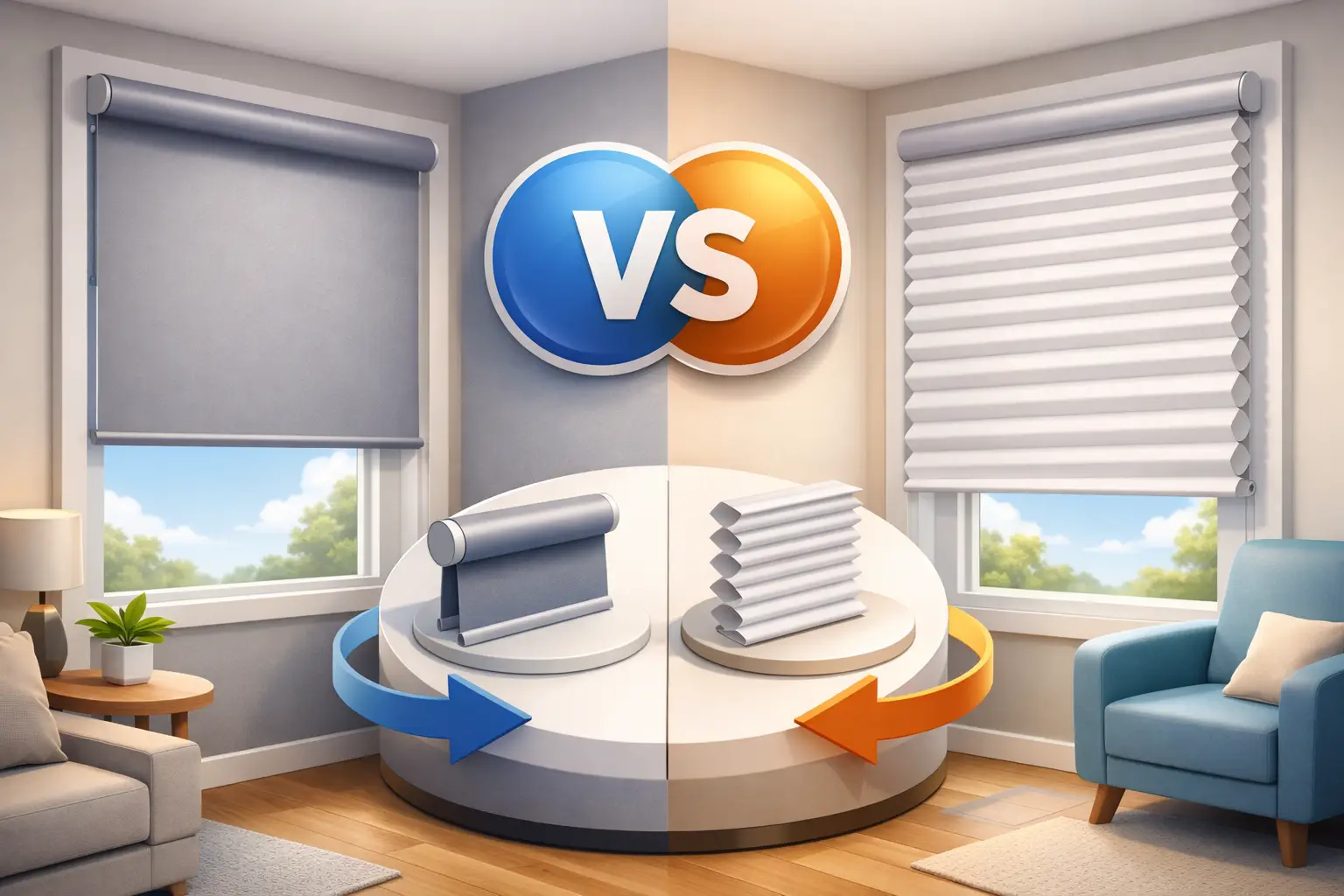
Roller shades are made from a single flat panel of fabric that rolls neatly around a tube at the top of the window. Their appeal is immediate: clean lines, a low-profile appearance, and an impressive range of fabrics, colors, textures, and openness levels. They are especially popular in modern homes, transitional interiors, offices, and rooms where you want the shade to visually disappear when raised.
Cellular shades, often called honeycomb shades, are built with pleated fabric cells that trap air. That structure gives them their signature soft, tailored appearance and makes them one of the strongest choices for insulating a window. They can be light-filtering, room-darkening, or blackout, and they are available in single-, double-, and sometimes triple-cell designs.
Neither option is automatically better. A roller shade usually wins when streamlined design and view-through solar control are the priority. A cellular shade often takes the lead when temperature management, softness, or flexible privacy matter most.
The Biggest Difference: Energy Efficiency
Windows can be a major source of heat gain during a humid Northern Virginia summer and heat loss during a cold winter evening. Cellular shades address that issue directly. Their pockets of air create an insulating layer between the glass and the room, helping reduce drafts and moderate the temperature near the window.
For bedrooms over a garage, rooms with older or expansive windows, and spaces that always seem warmer or colder than the rest of the home, cellular shades can make a noticeable comfort difference. Double-cell styles generally provide greater insulation than single-cell styles, though the best choice depends on the window, exposure, and how much visual bulk you want.
Roller shades are not typically as insulating by design, but they can still provide meaningful solar control. A solar roller fabric can cut glare and reduce harsh sunlight before it heats the room, while preserving an outward view during the day. That makes roller shades a practical choice for south- and west-facing living rooms, home offices, and kitchens with large glass areas.
If your primary concern is winter heat loss, cellular shades have the advantage. If your concern is intense afternoon sun, glare on screens, or UV exposure on floors and furnishings, roller shades with the right solar fabric may be the more targeted solution.
Light Control and Privacy Are Not the Same Thing
Many homeowners ask for privacy and light control as if they are one feature. In practice, they can pull in different directions. The best shade depends on whether you want daylight, an open view, nighttime privacy, or a truly dark room.
Where Roller Shades Shine
Roller shades offer exceptional fabric choice. Solar fabrics come in different openness levels, which determine how much you can see through the shade and how much light enters. A lower openness fabric provides stronger glare control and daytime privacy, while a higher openness fabric retains more of the view.
That view comes with a trade-off: solar roller shades do not provide complete nighttime privacy when indoor lights are on. At night, people outside may see silhouettes or more, depending on the fabric and conditions. For a street-facing room or a first-floor space near neighbors, a more opaque roller fabric, a privacy liner, or layered drapery may be a better fit.
Room-darkening and blackout roller shades are also available. They work well in bedrooms, media rooms, and nurseries, though small light gaps at the sides of a standard shade are normal. Side channels or carefully selected mounting details can improve darkness when that is a high priority.
Where Cellular Shades Shine
Cellular shades diffuse light beautifully. A light-filtering fabric can soften a bright room without making it feel closed off, while still creating more consistent privacy than an open solar roller fabric. They are often an excellent answer for bathrooms, bedrooms, and family spaces that need privacy throughout the day and evening.
For maximum flexibility, consider top-down/bottom-up cellular shades. This option lets you lower the top of the shade while keeping the bottom portion in place. You can welcome daylight through the upper part of the window and maintain privacy below – a particularly useful feature for bedrooms, townhomes, and homes with close neighboring windows.
Blackout cellular shades are a strong bedroom option, although the term describes the fabric rather than a guarantee of zero light around every edge. Professional measuring and installation make a meaningful difference in how well the finished treatment performs.
Style: Crisp Minimalism or Soft Dimension?
Roller shades have a modern, architectural quality. When raised, they roll into a compact profile that leaves more of the window visible. When lowered, the flat fabric creates a calm, uncluttered plane. They can be nearly invisible in a neutral solar fabric or become a design feature in a woven texture, linen-like material, or richly colored opaque fabric.
This versatility makes roller shades a natural fit for contemporary interiors, large banks of windows, and rooms where the view is part of the design. They also pair easily with decorative side panels or drapery when you want softness and luxury without sacrificing practical light control.
Cellular shades create more visual texture because of their horizontal pleats. Their look is still clean, but warmer and softer than a flat roller fabric. They complement bedrooms, casual living spaces, and traditional or transitional homes particularly well. In a room with extensive millwork or layered furnishings, that gentle dimension can feel more at home than a very minimal shade.
For a tailored result, consider the shade as part of the room rather than an isolated purchase. Wall color, trim depth, window shape, flooring, and how the room is used all influence which style will look most natural.
Operation, Window Shape, and Daily Convenience
Both roller and cellular shades can be operated by cordless lift systems or motorization. Motorized shades are especially helpful for tall windows, wide windows, hard-to-reach locations, and rooms where several shades need to move together. They also eliminate the visual clutter of cords and make it easier to use the treatment as intended every day.
Roller shades tend to be especially well suited to wide windows because their simple construction creates a clean, continuous look. Cellular shades can also cover wide openings, but large sizes may require multiple shades depending on dimensions and fabric selection. This is one area where custom measurement matters: the right product must look proportionate and operate reliably over time.
Cellular shades are often the better choice for specialty needs such as top-down/bottom-up control and certain shaped windows. Roller shades generally work best on standard rectangular openings, though custom systems can address many configurations.
Cost and Value: Look Beyond the Starting Price
At a basic level, both shade types are available across a range of budgets. Fabric selection, window size, lining, operating system, motorization, and installation requirements all affect the final investment. It is easy to compare a low online price with a custom quote, but the two often do not include the same product quality, fit, hardware, or accountability.
Cellular shades may cost more when you choose double cells, blackout fabrics, specialty operating systems, or large custom sizes. Their energy-saving potential can support that investment in rooms that are difficult to heat or cool.
Roller shades can be remarkably cost-effective for large windows, especially when a simple solar fabric provides the exact glare control a space needs. Premium decorative fabrics, fascia options, and motorization can raise the price, but they also create a more finished, furniture-quality appearance.
The best value is not necessarily the least expensive shade. It is the one that fits precisely, performs consistently, and prevents you from replacing a disappointing off-the-shelf treatment a year or two later.
Which Shade Is Right for Your Room?
Choose roller shades when you want a crisp contemporary look, daytime view preservation, solar glare control, or a compact shade that stays out of sight when raised. They are often ideal for kitchens, offices, living rooms, and large windows with beautiful outdoor views.
Choose cellular shades when energy efficiency, soft light diffusion, nighttime privacy, and versatile top-down/bottom-up operation are at the top of your list. They are especially effective in bedrooms, bathrooms, nurseries, and comfort-challenged rooms.
Some homes benefit from both. A solar roller shade in a bright family room and insulating cellular shades in bedrooms is not an inconsistency – it is a thoughtful response to how each space is used. During a free in-home consultation, Covering Windows can bring samples to your space so you can see the fabrics against your own light, finishes, and views before making a decision.
The right shade should make a room easier to live in from morning through night. Start with the problem you want to solve – glare, privacy, heat, sleep, or style – and the right window treatment choice becomes much clearer.