A beautiful shutter can make a room feel finished. A poorly chosen one can make even an expensive home look off – too bulky, too flat, too white, or simply wrong for the way the room is used. If you are wondering how to choose plantation shutters, the right approach is not starting with color or price alone. It starts with how you live, what your windows need, and how permanent you want the result to feel.
Plantation shutters are one of the few window treatments that can add architecture, privacy, and day-to-day function at the same time. They look tailored because they are tailored. That is also why the decision deserves more thought than a quick online comparison. The best choice is rarely the cheapest panel that looks good in a sample photo. It is the shutter that fits your windows correctly, complements your home, and performs well for years.
How to choose plantation shutters without guesswork
The biggest mistake homeowners make is treating shutters like a simple decorative add-on. In reality, shutters are a built-in feature. Once installed, they become part of the room in the same way trim, flooring, or cabinetry does. That means proportion, construction, and installation quality matter just as much as style.
Start by thinking about your priorities. In some homes, privacy is the main goal. In others, the room gets harsh afternoon sun and needs better light control. In a front-facing living room, appearance may come first. In a bathroom, moisture resistance matters more than anything else. The right shutter choice depends on which of those needs comes first and which ones you are willing to compromise on.
If that sounds less straightforward than picking a paint swatch, it is. But that is exactly why shutters reward a guided, custom approach.
Start with the room, not the product
A kitchen, a primary bedroom, and a two-story family room do not ask the same things from a shutter. The room should shape the product choice.
In bedrooms, many homeowners want strong privacy with flexible light control. Larger louvers often work well here because they give a cleaner view out when open and a more current look. In living rooms and dining rooms, shutters often serve a design role first, so frame style, divider rails, and panel configuration deserve more attention. In bathrooms, durability becomes the priority, especially when the space sees steam and frequent humidity.
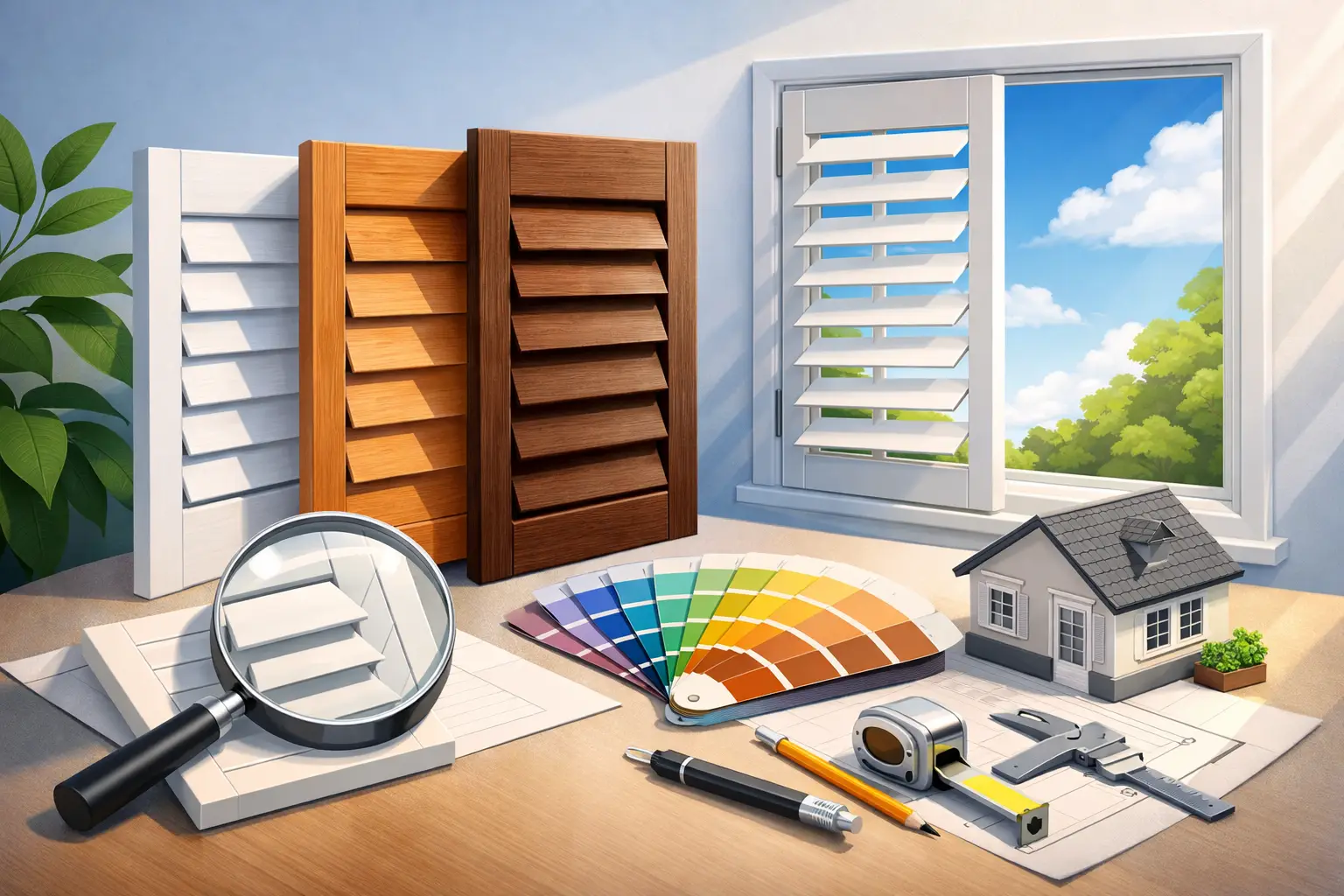
This is where material choice becomes practical rather than theoretical. Real wood shutters are prized for their craftsmanship, warmth, and furniture-like finish. They are also lighter in weight, which can be an advantage on larger windows. Faux wood and composite shutters are often chosen for moisture-prone areas or for homeowners who want a durable painted look at a different price point. Neither is universally better. It depends on the room, the window size, and the finish you want to achieve.
Wood vs faux wood plantation shutters
When homeowners ask how to choose plantation shutters, this is usually the first comparison they want to make. It is an important one, but it should not be reduced to a simple premium-versus-budget conversation.
Wood shutters tend to offer a refined look with crisp detailing and a lighter panel weight. They are especially appealing in formal spaces, larger openings, and homes where finish quality matters. If your home has custom millwork, hardwood floors, or a more elevated design palette, wood often looks more natural in the space.
Faux wood or composite shutters can be a smart option when moisture resistance, durability, or value are top concerns. They are popular in bathrooms, laundry rooms, and some kitchens for that reason. They can also perform very well in many everyday living spaces.
The trade-off usually comes down to weight, detail, and finish quality. Some composite products are heavier and may have a different feel or profile than wood. That does not make them a poor choice. It simply means the best answer depends on the size of the window and the level of design polish you expect.
Louver size changes the whole look
Louver size has a bigger visual impact than most people expect. It affects how contemporary or traditional the shutter feels, how much light comes in, and how open the view looks when the louvers are tilted.
Smaller louvers create a more classic, traditional appearance. Larger louvers often feel more current and can make the window look less busy. Many homeowners prefer larger louvers because they allow more visibility to the outside and create a cleaner line across the room.
That said, bigger is not always better. On smaller windows or in more traditional homes, oversized louvers can feel out of scale. The right size should relate to the room, the architecture, and the actual proportions of the window.
Frame style and mount matter more than buyers expect
A shutter panel does not float on the window by itself. The frame and installation method shape the final appearance. This is often where custom service makes the biggest difference.
Inside-mount shutters sit within the window opening and usually create the cleanest, most tailored appearance. They work best when the window depth and squareness allow for it. Outside-mount shutters can be the better choice when depth is limited, when a window is out of square, or when you want to make the opening look larger.
Frame choice also affects the finish. Some frames feel minimal and modern. Others are more substantial and decorative. The right one should complement your trim, not compete with it. In many homes, a frame that looked fine in a showroom sample can feel heavy once it is scaled to a real window. That is why seeing options in the home is so valuable.
Matching shutters to your home’s style
Plantation shutters are versatile, but they are not one-style-fits-all. The best installations feel like they belong to the home.
In a classic Colonial or traditional Northern Virginia home, shutters often look best when the proportions are restrained and the finish works with existing trim colors. In newer homes with larger windows and more open layouts, wider louvers and cleaner frame profiles may feel more appropriate. In transitional interiors, the goal is usually balance – enough presence to add character, but not so much that the shutters dominate the room.
White remains the most requested finish because it is timeless, bright, and easy to coordinate. Still, bright white is not the only white. The wrong undertone can fight with wall color, trim, flooring, or cabinetry. Off-white, soft white, and custom-painted finishes can make a meaningful difference, especially in homes with layered neutrals.
Budget matters, but value matters more
Shutters are not a throwaway purchase. They are a long-term home upgrade. That is why the lowest quote is not always the best value.
Price differences often come from material quality, panel construction, finish consistency, customization, and installation standards. A shutter that looks similar in a small sample can perform very differently once it is manufactured to size and installed across multiple windows.
This is also where homeowners can get frustrated with online ordering or one-size-fits-most retail solutions. Measurements have to be precise. Window openings are rarely perfect. A product can be technically installed and still look misaligned, leave awkward gaps, or operate poorly. The cost of fixing those mistakes usually wipes out the original savings.
A strong value purchase is one where the shutter suits the room, fits correctly, and holds up over time. That is especially true in homes where appearance matters as much as function.
The details that separate a good result from a great one
Once the big decisions are made, smaller details start to matter. Divider rails can help shutters align with window lines and improve operation on taller panels. Hidden tilt options create a cleaner look, while traditional front tilt bars can feel more classic. Panel configuration affects both symmetry and usability, especially on wide windows, French doors, and specialty shapes.
These details are easy to overlook when you are shopping from photos. In person, they are often what makes the finished product feel custom.
This is one reason many homeowners prefer working with a local specialist rather than trying to sort through every option alone. A guided in-home consultation helps you compare materials, finishes, and configurations against your actual light, trim, furnishings, and architecture. For busy homeowners, that removes a great deal of uncertainty. Covering Windows sees this every day – once people can view the options in their own space, the right choice becomes much clearer.
How to know you are making the right choice
If you are still narrowing down options, ask yourself a few practical questions. Do you want shutters to disappear into the trim or stand out as a design feature? Is this a moisture-prone room? Are the windows large enough that weight could become an issue? Do you want the widest possible outdoor view when open? Are you trying to match an existing style throughout the home, or create a more updated look in one area?
Good shutter decisions come from honest priorities, not pressure. Sometimes the right answer is wood for the main living areas and a composite option for bathrooms. Sometimes it is a larger louver for the back of the home and a more traditional proportion in the front rooms. Sometimes it is worth stretching the budget for a more architectural finish because the windows are such a visible part of the room.
The best plantation shutters do not just cover a window. They make the room feel intentional, polished, and easier to live in. When the proportions are right and the installation is precise, shutters stop feeling like a product choice and start feeling like part of the home.