Choosing the right window treatments involves more than just picking a color you like. Each room in your home has unique requirements for privacy, light control, and durability. What works in a cozy bedroom might be a disaster in a humid bathroom.
This guide breaks down the best window treatments for every room in your house. We focus on functionality and style to help you make the smartest investment for your home. Whether you need blackout shades for sleep or moisture-resistant blinds for the shower, you will find the direct answers you need below.
Living Room Window Treatments
Best Overall Choice: Cellular Shades or Layered Drapery
The living room is often the center of the home, requiring a balance between natural light and privacy. You want treatments that look polished but also reduce glare on TV screens.
Why They Work Best
Cellular shades (also known as honeycomb shades) are the top recommendation for living rooms because they offer superior insulation and light filtration. They trap air in their pockets, keeping the room comfortable year-round. Alternatively, layering sheer curtains with heavier drapes provides the ultimate flexibility in style and light control.
Key Considerations
- Light Control: Look for light-filtering options that soften harsh sunlight without darkening the room completely.
- Privacy: Top-down/bottom-up cellular shades allow you to lower the top half for light while keeping the bottom covered for privacy from the street.
- Style: Drapery adds softness and texture, elevating the room’s decor. Floor-to-ceiling drapes can make ceilings appear higher.
Expert Recommendation
Install light-filtering cellular shades for daily use and energy efficiency. For added elegance, frame the window with stationary curtain panels in a complementary fabric.
Bedroom Window Treatments
Best Overall Choice: Blackout Roller Shades or Roman Shades with Blackout Lining
The primary function of a bedroom window treatment is to promote better sleep by blocking external light.
Why They Work Best
Blackout shades are essential for bedrooms. They block 99% of incoming light, making them perfect for light sleepers or shift workers. Roller shades offer a clean, modern look, while Roman shades add a layer of soft fabric that feels more traditional and cozy.
Key Considerations
- Light Control: This is the priority. Ensure the shades are mounted properly (outside mount is often better for blackouts) to minimize “light gaps” at the edges.
- Privacy: You need total privacy day and night. Opaque fabrics are non-negotiable here.
- Noise Reduction: Heavier fabrics, like velvet drapes or thick Roman shades, can help dampen street noise.
Expert Recommendation
Choose custom-fitted blackout roller shades for the most effective light blocking. If you prefer a softer look, opt for Roman shades with a dedicated blackout liner. Pair either with heavy drapes to eliminate side light gaps.
Kitchen Window Treatments
Best Overall Choice: Faux Wood Blinds or Woven Wood Shades
Kitchens are high-traffic work zones prone to heat, humidity, and food splatters. Durability is key.
Why They Work Best
Faux wood blinds are the gold standard for kitchens. They look like real wood but are made from a composite PVC material that resists warping and moisture. They are also incredibly easy to wipe clean. Woven wood shades (like bamboo) are a great alternative if you want to add organic texture to a sterile kitchen space.
Key Considerations
- Moisture Resistance: Avoid real wood or delicate silks. The fluctuations in heat and humidity from cooking will damage them.
- Cleanability: You must be able to wipe grease or sauce off the blinds easily.
- Light Control: You generally want plenty of light for cooking, so treatments that can be tilted or easily raised are ideal.
Expert Recommendation
Install faux wood blinds specifically for windows near the sink or stove. They are moisture-proof and wipeable. For a breakfast nook far from the stove, woven wood shades add warmth and texture.
Bathroom Window Treatments
Best Overall Choice: Faux Wood Shutters or Vinyl Roller Shades
Bathrooms present the toughest environment for window treatments due to high humidity and the absolute need for privacy.
Why They Work Best
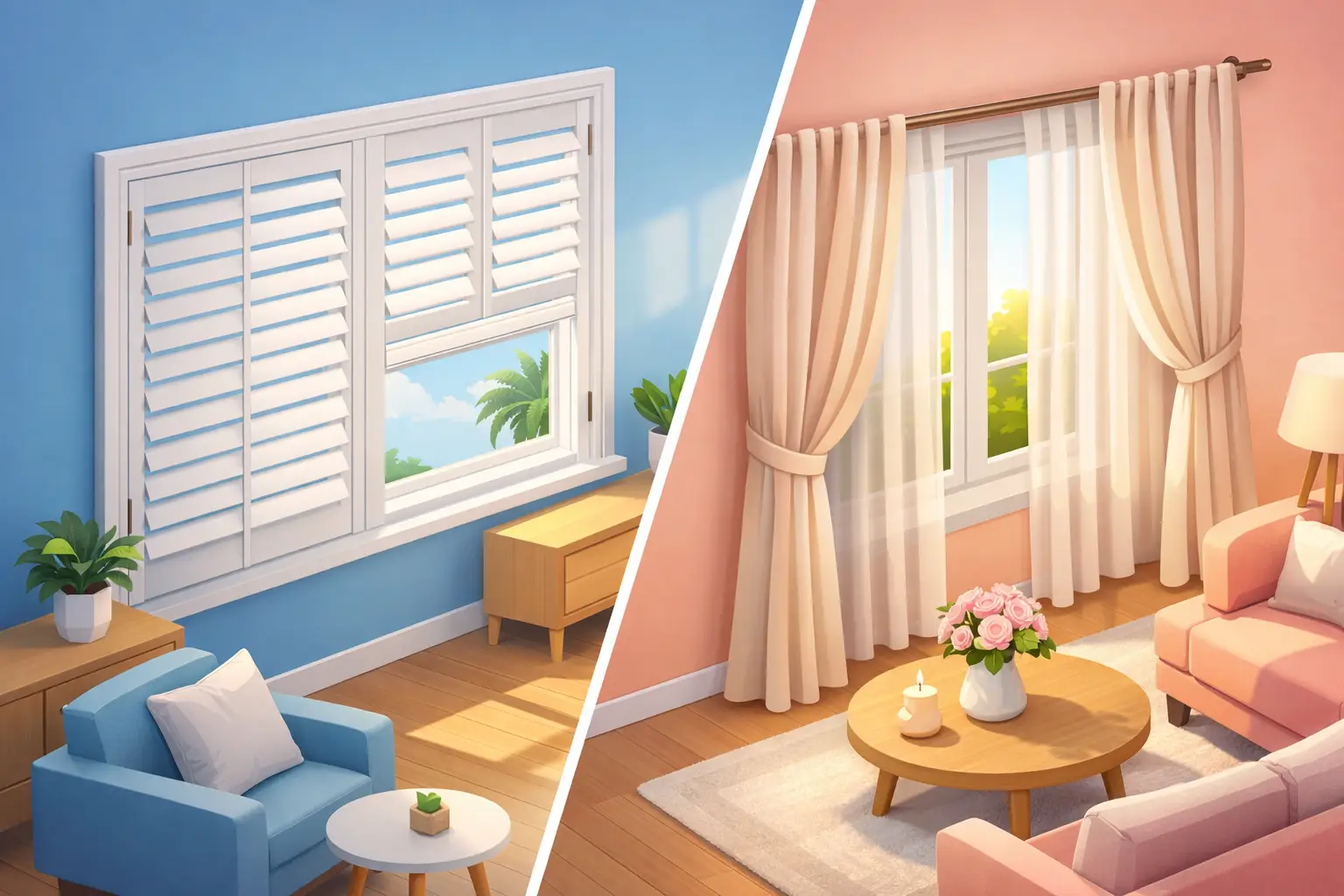
Faux wood shutters (plantation shutters) are excellent because they are often made of composite materials that are 100% waterproof. They will not crack, peel, or mildew. Vinyl roller shades are another strong contender because the material repels water and provides full privacy when lowered.
Key Considerations
- Moisture Resistance: This is critical. Fabric curtains can harbor mold if the room isn’t well-ventilated. Stick to non-porous materials.
- Privacy: You need a solution that guarantees privacy while still allowing ventilation. Shutters allow you to tilt louvers for airflow without exposing the interior.
- Style: Clean lines work best in bathrooms to avoid a cluttered look.
Expert Recommendation
Invest in composite plantation shutters. They offer a permanent, upscale look, provide excellent ventilation, and are completely impervious to water damage.
Home Office Window Treatments
Best Overall Choice: Solar Shades
With the rise of remote work, controlling screen glare has become a major priority for home offices.
Why They Work Best
Solar shades are designed specifically to cut glare and UV rays while maintaining your view of the outdoors. Unlike standard blackout shades, solar shades have an “openness factor” (usually 1% to 10%) that dictates how much light passes through.
Key Considerations
- Light Control: The goal is to reduce contrast on computer monitors. A 3% to 5% openness factor is the sweet spot for reducing glare without darkening the room too much.
- UV Protection: These shades protect your office furniture and flooring from fading under direct sun.
- Productivity: maintaining a view of the outside has been shown to reduce eye strain and improve mood.
Expert Recommendation
Select solar roller shades with a 3% openness factor. This blocks the majority of UV rays and glare, allowing you to work comfortably without feeling closed in.
Frequently Asked Questions
What are the most durable window treatments?
Faux wood blinds and shutters are generally the most durable options. They resist moisture, scratching, and warping better than real wood or fabric options. They are particularly good for homes with pets or children.
Which window treatments are best for insulation?
Cellular shades (honeycomb shades) are the most energy-efficient window treatment. Their unique honeycomb structure traps air, creating a barrier between the window glass and the room. This keeps your home warmer in winter and cooler in summer.
Can I mix different window treatments in the same room?
Yes, layering is a great design choice. A common combination is mounting blinds or shades inside the window frame for functionality, and adding drapery panels on the outside for style and softness.
How do I measure for window treatments?
For an inside mount, measure the width at the top, middle, and bottom of the window frame, and use the narrowest measurement. Measure the height at the left, center, and right, using the longest measurement. For an outside mount, measure the area you want to cover, typically adding 2-3 inches on each side of the frame for better light blockage.
Are motorized shades worth the cost?
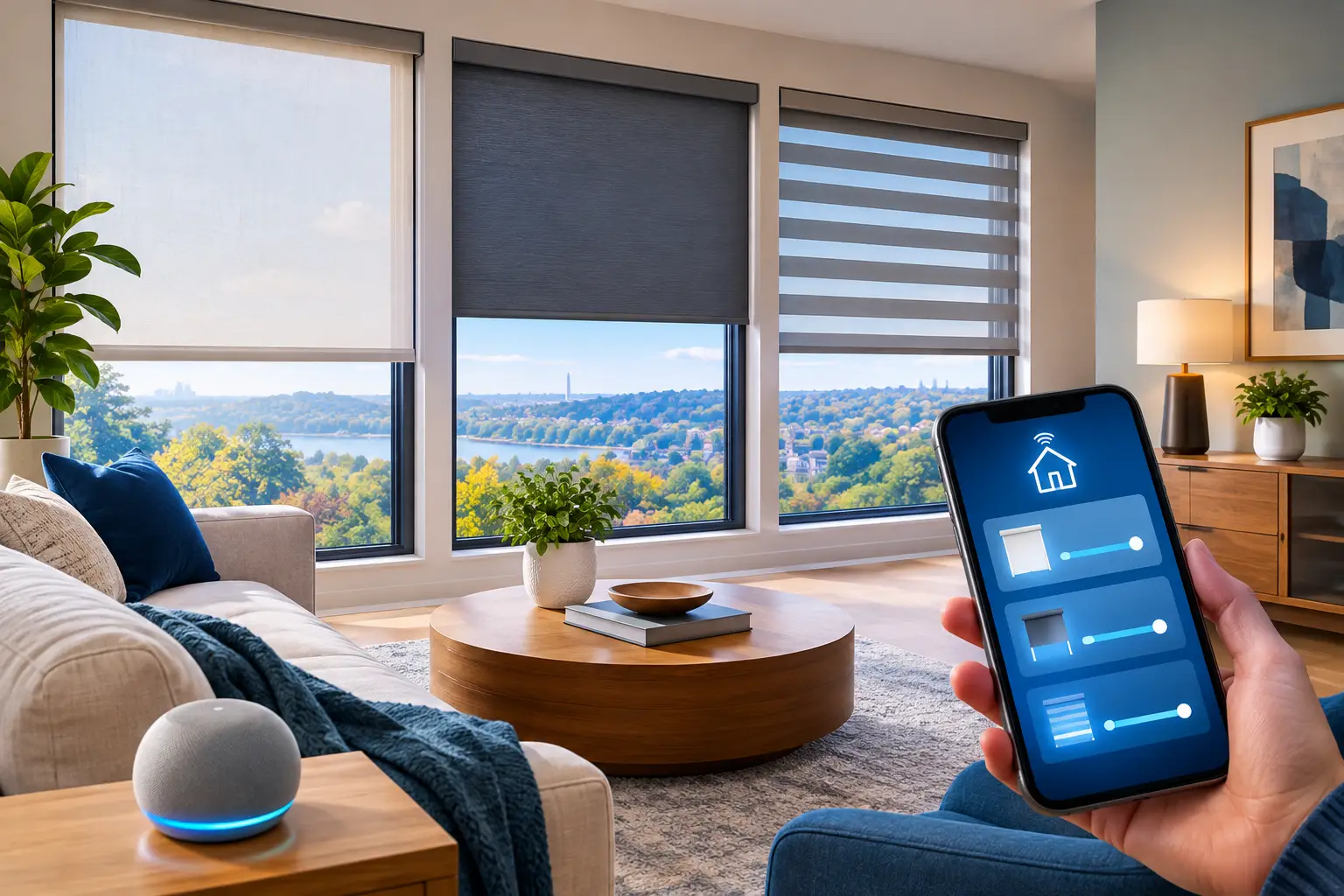
Motorized shades are worth the investment for hard-to-reach windows (like skylights or high foyers) or for homes with children and pets, as they eliminate dangerous cords. They also add convenience, allowing you to control multiple windows with a remote or smartphone app.