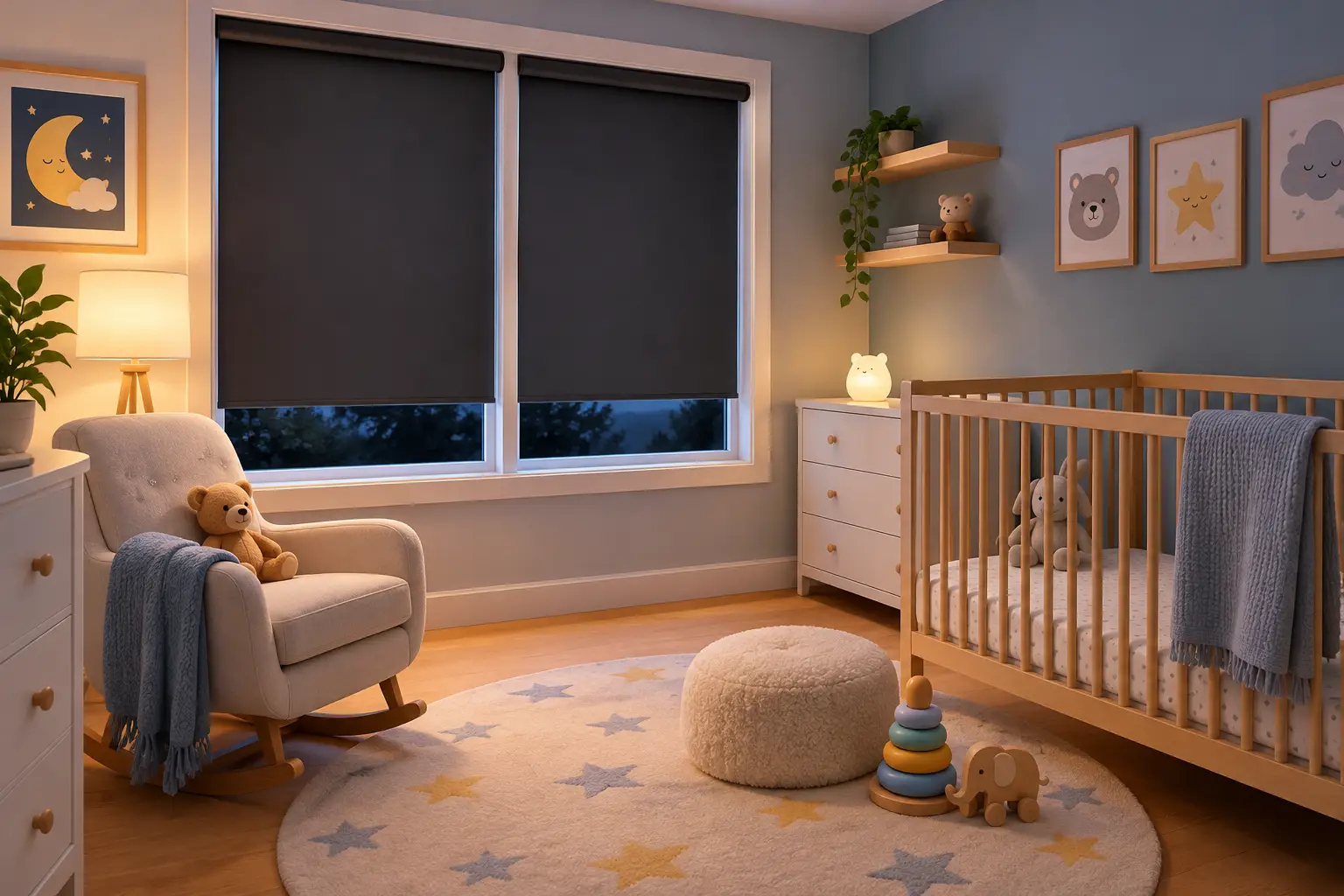
A nursery can look beautifully finished and still be too bright for a midday nap. Early morning sun, a neighbor’s porch light, and long Northern Virginia summer evenings can all make it harder to create a calm sleep environment. The right room darkening shades for nurseries help manage those disruptions while adding the softness, privacy, and polished design a child’s room deserves.
The key is choosing more than a dark fabric. A shade’s performance depends on its material, how closely it fits the window, the operating system, and the light that enters around the edges. For parents who want reliable results without turning the nursery into a cave, a custom solution is usually the difference.
What Room Darkening Actually Means
“Room darkening” and “blackout” are often used interchangeably, but they do not always deliver the same result. Room-darkening shades substantially reduce incoming daylight. They are an excellent choice for naps, bedtime routines, and privacy, though some glow or light leakage may remain around the sides of the shade.
Blackout fabrics block light through the material itself. Even then, a standard inside-mounted shade can allow light to enter through the gap between the shade and window frame. That is normal, not a product failure. If your baby is especially sensitive to early light or the nursery faces a bright street, the installation details matter as much as the fabric.
A well-planned nursery may use blackout roller shades or cellular shades as the functional layer, then add drapery panels for warmth and stronger edge coverage. This layered approach also gives the room a more complete, designer-level finish than a single off-the-shelf shade.
Start With the Nursery’s Real Light Challenges
Before selecting colors and fabrics, look at when and where light enters the room. A west-facing nursery may be comfortable at bedtime but glaring during late-afternoon naps. An east-facing room can become bright well before the household is ready to wake up. Skylights, transom windows, and glass doors require their own strategy.
Consider artificial light, too. Streetlamps and landscape lighting can be surprisingly disruptive once the room is dark. During an in-home consultation, it helps to point out the view from the crib and describe your child’s sleep schedule. The best option for a newborn’s nursery may be different from the right choice for a toddler who later wants to operate the shade independently.
The Best Shade Styles for a Darker Nursery
Roller Shades Offer a Clean, Modern Look
Roller shades are a favorite for nurseries because they are simple, tailored, and available in a wide range of room-darkening and blackout fabrics. They sit close to the window, making them well suited to clean-lined, contemporary spaces and rooms where the crib or changing table limits access around the window.
For better light control, consider an outside mount that extends beyond the window opening. A properly sized outside-mounted roller shade can reduce side gaps more effectively than a typical inside mount. Add decorative drapery panels or a valance if you want a softer, more layered look.
Cellular Shades Add Insulation and Softness
Cellular shades are an especially practical choice for nursery windows that feel chilly in winter or warm in direct sun. Their honeycomb construction creates air pockets that can help improve insulation, supporting a more comfortable room temperature through changing seasons.
Room-darkening cellular shades diffuse and reduce light, while blackout versions offer stronger control. They have a gentle, fabric-like appearance that works beautifully in traditional, transitional, and cozy nursery designs. Keep in mind that cellular shades have a more textured profile than roller shades, which may or may not fit the look you have in mind.
Roman Shades Bring a More Decorative Finish
A custom Roman shade can make the window a focal point, especially in a nursery with wallpaper, painted millwork, or a classic color palette. With the right lining, Roman shades provide meaningful light reduction and a tailored look that feels more like custom upholstery than a basic window covering.
They are a strong choice when design is the priority, but they may not be the best standalone answer for a room that needs near-total darkness. Pairing a lined Roman shade with side panels, or placing a room-darkening roller shade behind it, can provide the beauty you want with more dependable sleep support.
Fit Matters More Than Most Parents Expect
The biggest disappointment with ready-made nursery shades is often not the fabric. It is the fit. A shade that is too narrow, mounted too high, or installed slightly out of level can leave visible slivers of light and make an otherwise lovely room feel unfinished.
Custom measurements account for the window opening, trim depth, hardware placement, and the clearance needed for the shade to operate properly. They also help determine whether inside mounting, outside mounting, or a layered treatment will deliver the best result. This is particularly valuable in older homes, where windows that look identical may vary in size.
For the strongest possible darkness, a professional may recommend a shade that overlaps the window frame, side channels in certain applications, or drapery panels that extend beyond each side of the window. No solution needs to be overly complicated, but it should be designed around the room rather than selected from a generic size chart.
Nursery Shade Safety Is Non-Negotiable
Any window treatment in a nursery should be selected with child safety at the center of the decision. Avoid exposed looped cords and keep cribs, chairs, and climbing furniture away from windows. Cordless shades and motorized shades offer a cleaner appearance while removing a common concern for growing families.
Motorization is also a practical luxury, not just a convenience feature. You can lower shades for a nap without disturbing a sleeping baby, schedule them to close before sunset, or control hard-to-reach windows from across the room. As your child grows, motorized operation keeps the treatment simple and out of reach.
A professional installation ensures brackets are properly secured and controls are placed thoughtfully. It also means you do not have to manage the frustration of measuring, drilling, and troubleshooting while preparing for a new arrival.
Choose Color and Fabric With the Whole Room in Mind
Dark shades do not have to look dark. Many blackout and room-darkening fabrics come in soft whites, warm neutrals, pale blue-grays, muted greens, and subtle woven textures. The opacity comes from the construction or backing, not necessarily from the face color you see in the room.
Lighter fabrics can preserve an airy, serene nursery design during the day. Deeper tones may better suit a moody, sophisticated space or help conceal everyday marks near active play areas. Sample viewing is valuable because a fabric can look very different against a wall color and in the specific daylight of your home.
If the nursery is part of a broader renovation, coordinate the shade with adjacent bedrooms and common areas without making every room match exactly. Repeating a warm neutral, natural texture, or hardware finish can create a refined connection throughout the home.
A Better Path Than Guessing Online
Online shopping makes window treatments look simple until measurements, mounting choices, fabric opacity, and installation enter the picture. In a nursery, those details affect sleep, safety, and the finished appearance of a room you have worked hard to prepare.
Covering Windows helps Northern Virginia homeowners compare samples in their own space, identify the right light-control level, and select custom treatments that fit beautifully from the start. Professional measuring and installation replace uncertainty with a finished room that feels considered, comfortable, and ready for the moments ahead.
The most successful nursery window treatment is not necessarily the darkest one. It is the one that gives your family dependable light control, safe operation, and a peaceful backdrop for bedtime stories, midday naps, and the many small routines that make a house feel like home.