A deck that is too hot at lunch, too exposed during a light rain, or too glaring for an afternoon gathering rarely gets used as often as it should. The best awnings for backyard decks solve those problems without turning a beautiful outdoor space into a dark, enclosed patio. The right choice depends on how you use the deck, how much sun it receives, the architecture of your home, and how much flexibility you want day to day.
For homeowners across Northern Virginia, an awning is more than a shade accessory. It can make a west-facing deck comfortable in late afternoon, protect outdoor furnishings from fading, and create a polished extension of the home. Choosing well means looking beyond a fabric color or a sale price. The frame, projection, mounting surface, wind exposure, and installation details all affect how the finished space looks and performs.
What Makes the Best Awnings for Backyard Decks?
The best deck awning is the one that provides meaningful shade when you need it, complements the home, and is built for the conditions it will face. A small awning may look proportional on paper but leave the dining table exposed. A large fixed cover may provide excellent protection but block winter sunlight from nearby rooms. There is no single best style for every deck.
Start with the direction your deck faces. South-facing decks receive strong midday sun, while west-facing decks can become uncomfortable later in the day when the sun is lower and more direct. East-facing decks may need shade primarily for morning coffee, and north-facing decks often benefit more from rain protection than intense solar control.
Also consider the deck’s role in your home. If it is used for occasional entertaining, a manually operated retractable awning may be an excellent value. If it is your everyday outdoor dining area, motorization and sun or wind sensors can make the space far easier to enjoy. If you want permanent coverage through every season, a fixed awning may be the better fit.
Retractable Awnings Offer the Most Flexibility
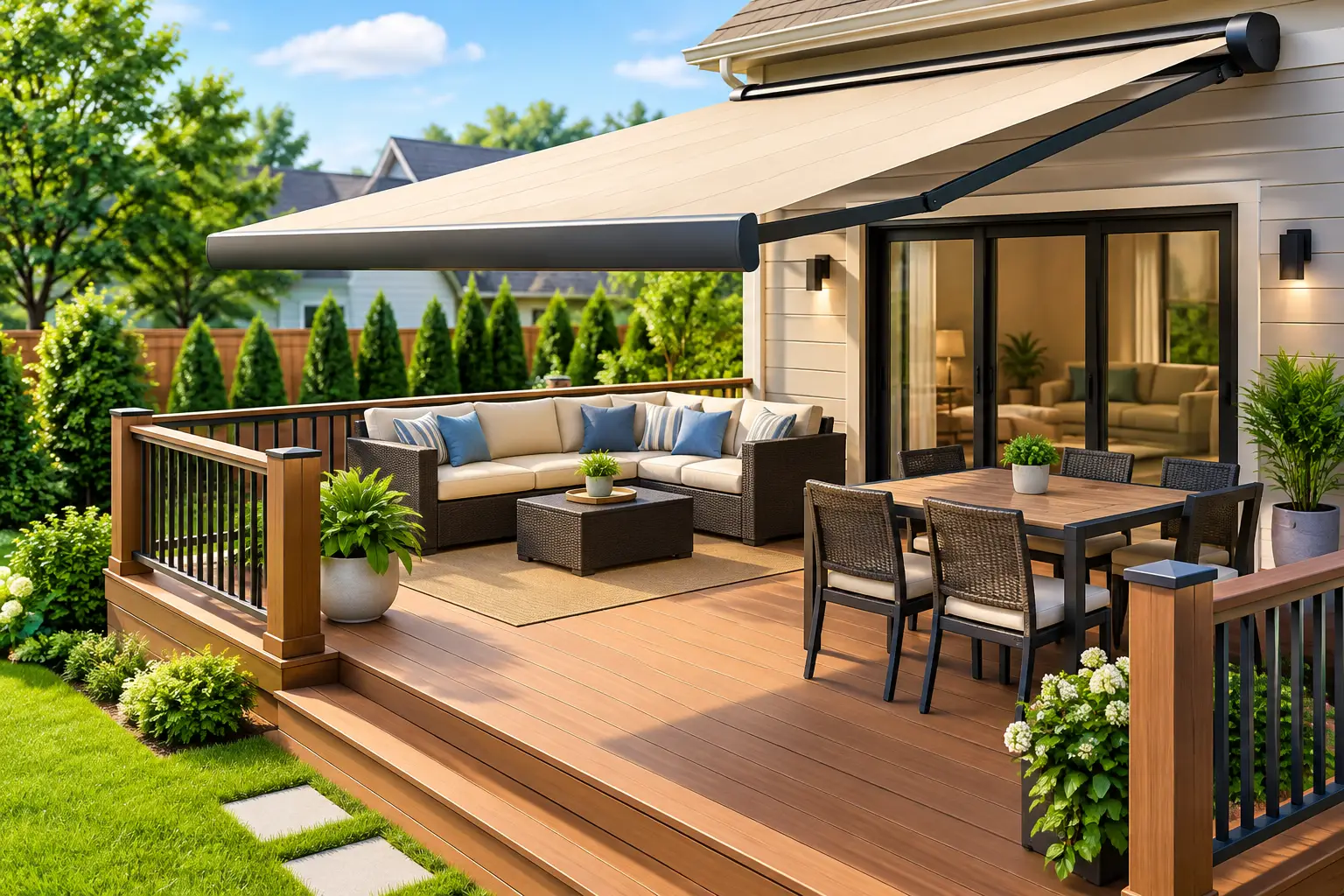
Retractable awnings are a popular choice for homeowners who want shade on demand without permanently covering the deck. When extended, they can create a generous area of shade over a seating or dining space. When retracted, they preserve open sky, sunlight, and clear views of the yard.
This flexibility matters in Virginia, where a cool spring morning and a hot July afternoon can call for very different outdoor settings. A retractable awning lets you enjoy sunshine when it is welcome and cover when it is not. It is also an attractive option for homes with architectural details you do not want to conceal year-round.
Manual retractable models use a crank and can work well for smaller installations or owners who prefer a straightforward, lower-cost option. Motorized awnings are especially appealing for larger decks, frequent use, or hard-to-reach locations. With a remote, wall switch, or smart-home control, opening the awning becomes as simple as adjusting a shade indoors.
The trade-off is that retractable awnings are not designed to remain extended in high winds, heavy rain, or snow. Quality models are engineered for outdoor use, but they should be retracted when weather conditions become severe. Wind sensors add valuable protection by automatically closing the awning when gusts reach a set threshold.
Cassette Styles Protect the Fabric and Hardware
Retractable awnings are available with different levels of enclosure. An open style leaves the rolled fabric and arms more exposed when the awning is retracted. A semi-cassette offers partial protection. A full cassette encloses the fabric, arms, and mechanical components in a finished housing.
For a design-conscious home, a full-cassette awning often creates the cleanest appearance. It also helps shield the fabric from dirt, moisture, and debris while the awning is closed. The initial investment is higher, but the added protection and refined look can be worthwhile for a prominent deck or patio.
Fixed Awnings Are Built for Consistent Coverage
A fixed awning stays in place and provides reliable shade and weather protection every day. It can be a smart solution for decks that receive constant intense sun, outdoor kitchens, entry-adjacent seating areas, or homeowners who do not need the option to open the space to full sun.
Unlike a retractable unit, a fixed awning can be designed with a more permanent architectural presence. Depending on the material and structure, it may use a fabric cover over a rigid frame, metal panels, or other durable roofing materials. The best design should feel integrated with the home’s exterior rather than added as an afterthought.
Fixed awnings have their own considerations. Because they remain in place, they can reduce natural light inside adjoining rooms. They also require careful attention to drainage, snow load, permits where applicable, and the condition of the mounting wall or support structure. A professionally planned installation is particularly valuable here, since a permanent cover needs to perform beautifully over time, not just look good on installation day.
Fabric Matters as Much as the Frame
Awning fabric has a major effect on comfort, longevity, and style. Premium solution-dyed acrylic fabrics are a strong choice for many residential deck awnings because they are made to resist fading, mildew, and ordinary outdoor moisture. They are available in a broad range of solids, stripes, and textured neutrals, making it possible to coordinate with trim, siding, stonework, or outdoor furniture.
Darker fabrics often reduce glare more effectively, but they may make the area beneath the awning feel slightly dimmer. Lighter colors create a brighter atmosphere, although they can allow more reflected light. A sophisticated neutral is often the safest long-term choice, especially when the awning will be visible from the yard, kitchen, or upper-level windows.
Do not choose fabric by a small swatch alone. View samples outdoors in natural light and hold them against the home exterior. A color that appears warm and understated indoors can read much cooler or brighter in direct sun. This is one reason an in-home consultation can prevent costly guesswork.
Measure Shade by Projection, Not Just Width
Homeowners often focus on how wide an awning should be, but projection is equally important. Projection is the distance the awning extends outward from the house. It determines whether the shade reaches the area where people actually sit.
For example, an awning that covers the width of a deck but projects only a few feet may shade the doors while leaving the dining set in direct sun. A deeper projection can create a truly usable outdoor room, but it must be selected with appropriate mounting height, pitch, clearance, and structural support in mind.
The sun’s angle changes throughout the day, so a deck that feels protected at noon may still receive low-angle glare in late afternoon. If that is your biggest problem, consider adding a valance, drop shade, or exterior solar screen to the plan. These features can help block low sun without giving up the open feel that makes a deck appealing.
Installation Is Where Value Becomes Performance
Even a premium awning can disappoint if it is mounted incorrectly or sized without regard for the home’s structure. The attachment point must be sound, properly reinforced when needed, and positioned to provide safe clearance above doors, windows, light fixtures, and railings. The awning also needs the right pitch so rainwater runs off rather than pools on the fabric.
This is not a project where online dimensions tell the full story. Brick, stucco, siding, trim depth, rooflines, utility fixtures, and deck layout can all affect what will work. Professional measuring also helps prevent a common mistake: buying an awning that looks appropriately sized in a product image but overwhelms the facade or fails to shade the seating zone.
At Covering Windows, the planning process begins with how you want to use the space. From there, product options, fabric samples, motorization choices, and installation requirements can be evaluated at your home, where the sun exposure and architecture are clear. That hands-on approach makes it easier to invest confidently in a result that feels custom rather than improvised.
Choose Features That Match How You Live
Motorization is often worth considering for a deck awning, particularly when the awning is wide, frequently used, or positioned above a second-story door. It encourages regular use because there is no crank to retrieve and no effort required to adjust coverage as the day changes.
Sensors can add another layer of convenience and protection. A wind sensor can retract the awning during strong gusts, while a sun sensor can extend it when direct sun reaches the deck. These features are not essential for every household, but they are especially practical for busy families, frequent travelers, and homeowners who want a more polished outdoor living experience.
If insects are a concern, side screens or coordinated exterior shades may be a better addition than choosing a heavier, more enclosed awning structure. If rain protection is the priority, discuss that early. Standard retractable awnings handle light rain at the correct pitch, but they are not substitutes for a fully engineered roof cover in persistent or heavy weather.
A well-chosen awning should make stepping onto the deck feel effortless: cooler, more comfortable, and more inviting at the exact hours you want to be outside. Let the way you live guide the design, then choose materials and installation quality that allow that comfort to last.