A beautiful drapery panel can make a room feel finished, but the wrong fabric can leave even a well-designed space looking flat, fussy, or impractical. This custom drapery fabric selection guide helps Northern Virginia homeowners make confident choices around color, texture, fullness, lining, and performance before fabric is ordered and installed.
Custom drapery is not a one-size-fits-all purchase. The same linen that looks relaxed and luminous in a Great Falls sitting room may be too sheer for a McLean bedroom or too delicate for a sunny family room in Ashburn. The right choice begins with how you want the room to feel, then balances that vision with the realities of light, privacy, maintenance, and daily life.
Start With the Room’s Job
Before falling in love with a pattern or color, consider what the window needs to do. In a formal dining room, drapery may be primarily about softness, scale, and a more luxurious finish. In a bedroom, light control and privacy may be the priority. In a family room, the fabric needs to stand up to children, pets, sun exposure, and regular use while still looking tailored.
A room with hard surfaces such as wood floors, stone, glass, and painted walls often benefits from the warmth of a textured fabric. If the room already includes an upholstered sofa, patterned rug, and decorative wallpaper, a quieter drapery may create better balance. Drapery does not have to be the boldest feature in the room to make an impact. Often, its role is to frame the view and make the whole space feel more intentional.
Consider Light Before Color
Natural light changes fabric dramatically. A soft ivory may read crisp and clean in a bright, south-facing room but appear warmer in a shaded space. Darker colors can add depth and drama, although they may fade more noticeably in windows that receive strong afternoon sun.
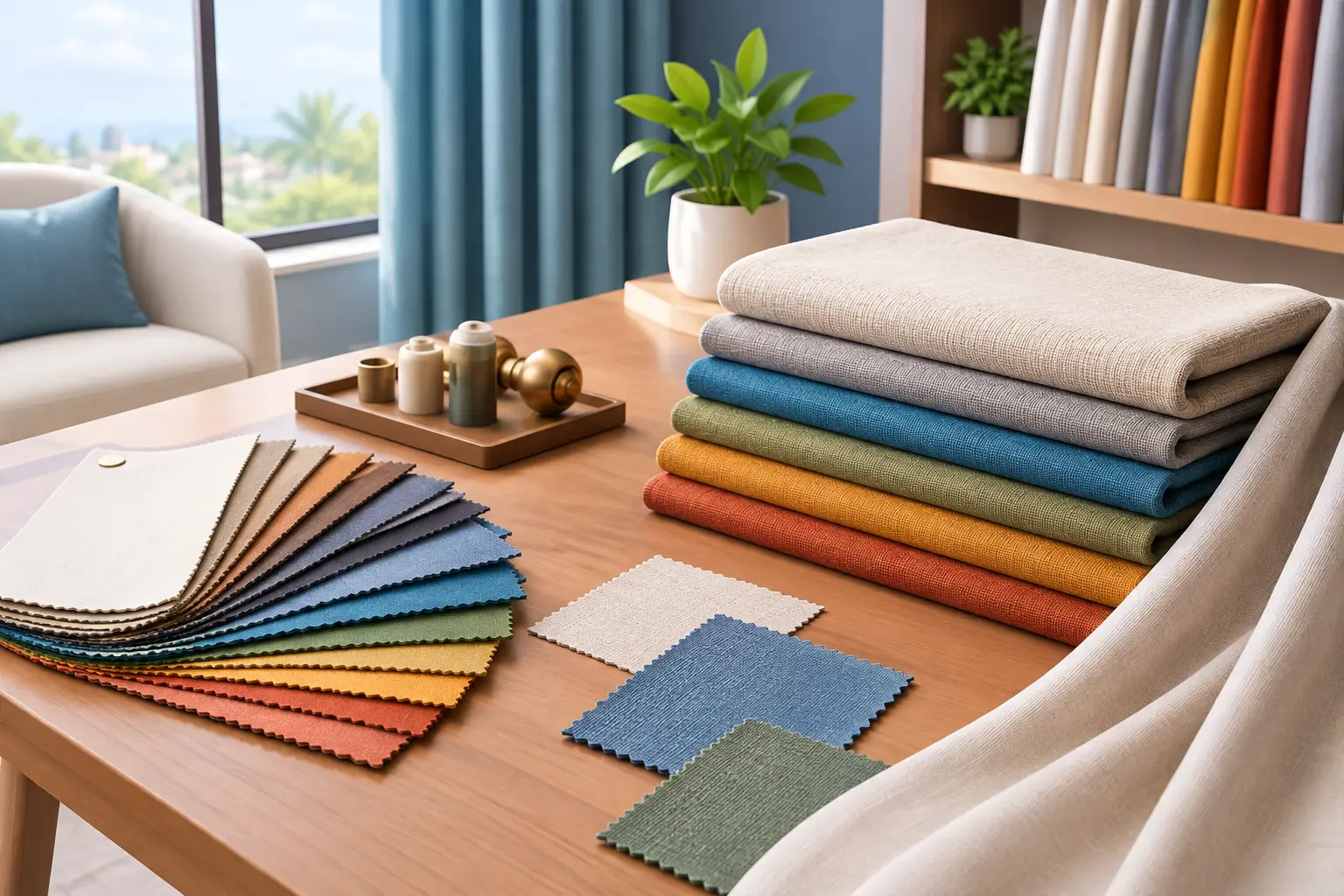
Always view fabric samples at the actual window, at several times of day. Hold the sample vertically instead of laying it on a table. This gives you a more accurate sense of how the color, weave, and opacity will look once the fabric is hanging in full light.
Custom Drapery Fabric Selection Guide: Choose the Right Fiber
Fiber content affects appearance, drape, durability, and care requirements. There is no single best fabric. The best material is the one that serves the room and your expectations over time.
Linen has an airy, natural character that suits relaxed traditional, transitional, coastal, and contemporary interiors. It brings texture without feeling heavy, but it can wrinkle and may have natural slubs or variation. For homeowners who love an easy, collected look, that character is part of its appeal. A linen blend can offer a similar appearance with improved stability and easier care.
Cotton is versatile, approachable, and available in a broad range of prints and weights. It works well for casual living areas and bedrooms, particularly when lined. Pure cotton can fade in direct sun, so window orientation and lining matter.
Silk has an unmistakable sheen and elegant drape, making it a strong choice for formal living rooms and dining rooms. It is also sensitive to sunlight and moisture. Interlining and protective lining are typically recommended to preserve its appearance, which adds to the investment but can be worthwhile in a special space.
Velvet creates richness, depth, and excellent light control. It is ideal when you want a more substantial look, better insulation, or a dramatic finish. Velvet is not limited to traditional homes. In the right color and with a clean ripplefold or tailored pleat, it can feel distinctly modern.
Polyester and performance blends have come a long way. High-quality options can mimic the look of linen, silk, or textured natural fibers while offering better fade resistance, durability, and easier maintenance. For busy homes, these fabrics are often a smart value rather than a compromise.
Weight, Fullness, and How the Fabric Will Hang
A fabric sample tells only part of the story. Its weight determines how it falls from the hardware, how much body it has, and whether it can support the style you want.
Lightweight sheers soften daylight and preserve a connection to the outdoors, but they do not provide significant privacy at night on their own. They are often paired with shades, blinds, or a second layer of drapery for a more flexible solution.
Medium-weight fabrics are the most adaptable choice for many homes. They provide enough structure for tailored pleats while remaining soft and inviting. Heavier fabrics, including velvet and densely woven jacquards, create a more formal appearance and can help reduce drafts and glare.
Fullness is equally important. Drapery that looks skimpy usually does not have enough fabric width, even if the material itself is beautiful. The required fullness varies by fabric and heading style. A tailored ripplefold calls for a different calculation than pinch pleats or grommet panels. Professional measuring and fabrication ensure the finished panels look generous without becoming bulky.
Use Pattern and Texture With Intention
Patterned drapery can define a room, but it needs enough visual space to be appreciated. In a room with neutral walls and simple upholstery, a large-scale floral, geometric, or botanical print can become a memorable design feature. If the room already has several patterns, consider a solid fabric with a visible weave, embroidery, or subtle tonal movement.
Scale matters. A small pattern can disappear across wide panels or read busy from across the room. A large pattern can be stunning on expansive windows but may overwhelm a narrow opening. Pattern matching also affects yardage and cost, especially with bold repeats. That extra fabric is not waste. It is what allows the design to continue cleanly across each panel.
Texture is often the answer for homeowners who want visual interest without a prominent print. A bouclé-inspired weave, nubby linen blend, basket weave, or understated damask can add dimension while giving the rest of the room room to breathe.
Do Not Treat Lining as an Afterthought
Lining is one of the most valuable parts of custom drapery, even though it is rarely the first thing homeowners notice. It helps panels hang better, protects the face fabric from sun exposure, improves privacy, and gives the drapery a more polished appearance from outdoors.
Standard privacy lining is suitable for many living spaces. Room-darkening lining is helpful in bedrooms, media rooms, and nurseries, though small gaps around the edges are normal with drapery. Blackout lining offers the strongest light control, but it can add weight and change the softness of certain fabrics.
Interlining is an additional layer placed between the face fabric and lining. It adds body, insulation, and a more luxurious drape. It is especially valuable with silk, lightweight fabrics, and windows that receive strong sun. Whether it makes sense depends on the fabric, the room, and the result you want, not simply on whether it is considered an upgrade.
Coordinate Drapery With Other Window Treatments
Drapery does not need to handle every function alone. Pairing it with woven shades, cellular shades, roller shades, or shutters can give you more precise privacy and light control while allowing the panels to provide softness and style.
For example, a bedroom may use room-darkening shades for practical sleep conditions, then add lined drapery panels to make the window feel taller and more refined. In a living room, a solar shade can control harsh glare while stationary drapery panels introduce color and texture. Layered treatments are especially useful on large windows, doors, and spaces where privacy needs change throughout the day.
Why Samples and Professional Guidance Matter
Online images cannot show how a fabric feels, how it reflects light, or how it relates to your flooring and furnishings. They also cannot account for ceiling height, window depth, stack-back space, or the hardware needed to achieve a specific look. These details shape the finished result as much as the material itself.
During an in-home consultation, Covering Windows can bring samples into the space where they will live, compare options against your existing finishes, and help you weigh the trade-offs honestly. A delicate linen may be perfect for one room and impractical for another. A slightly higher-performance fabric may save you from early fading or disappointment later.
The strongest drapery choice is the one you will still enjoy after the samples are gone and the panels become part of daily life. Choose a fabric that supports how your home works, then let professional design, precise measuring, and careful installation turn that choice into a finish that feels effortless.