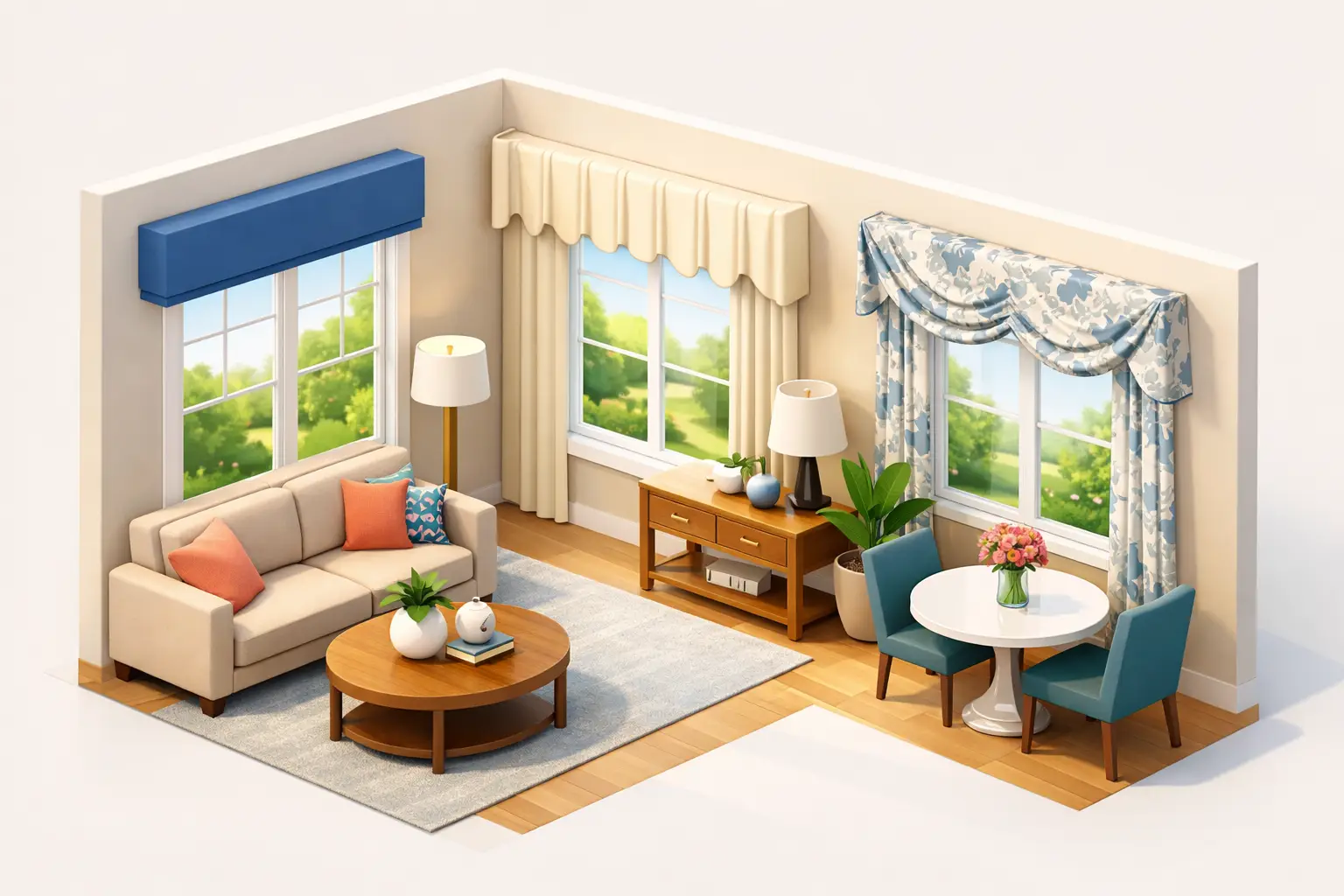
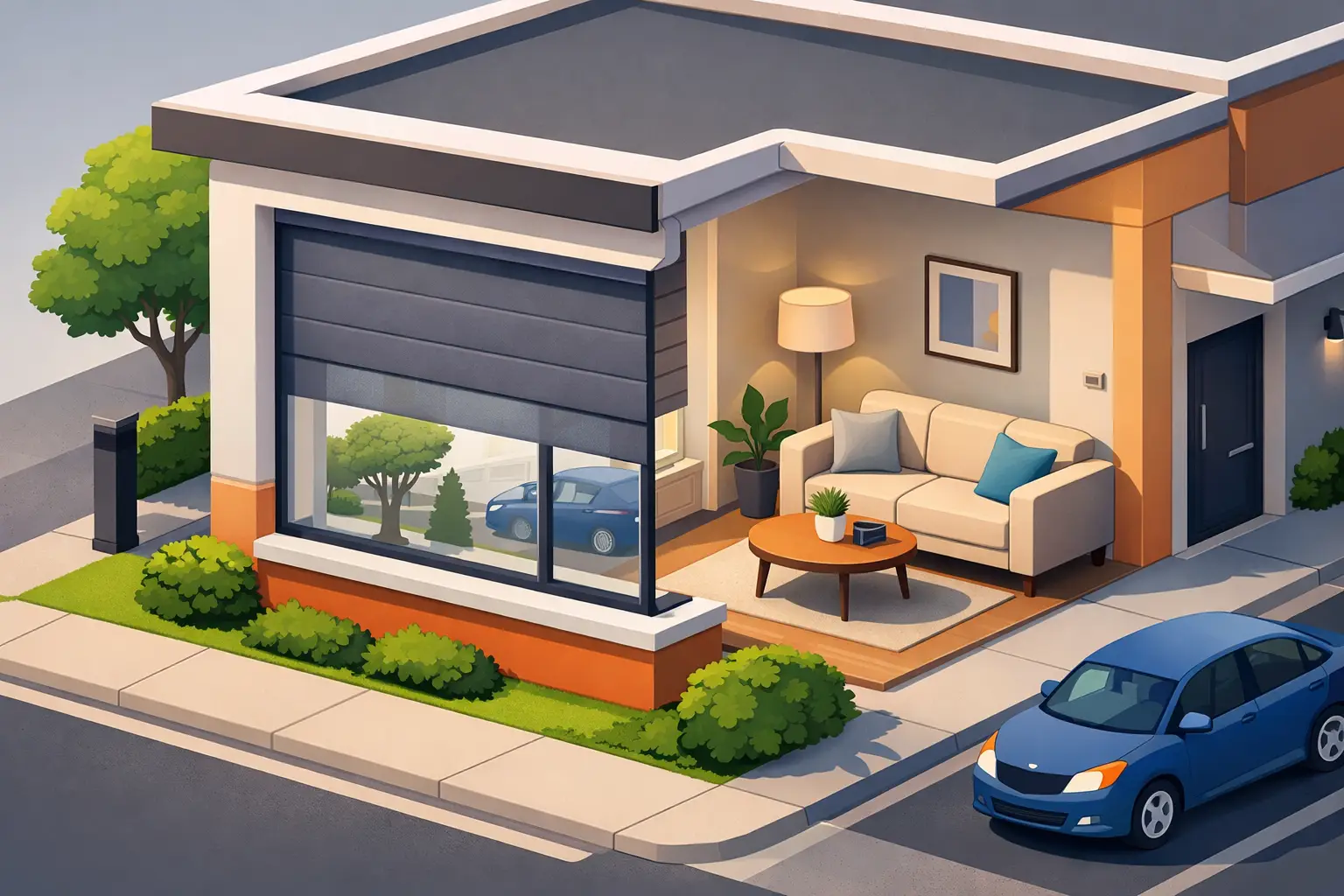
A beautiful front room can become the least-used space in the house when every passing neighbor, dog walker, or delivery driver has a clear view inside. The right privacy shades for street facing rooms change that feeling immediately. They let you enjoy the daylight, architecture, and design of your home without living behind closed drapes all day.
For Northern Virginia homeowners, the answer is rarely a single off-the-shelf product. A street-facing window may need privacy during the day, glare control in the afternoon, insulation in winter, and a polished appearance from the curb. The best solution balances each of those needs with the room’s style, window shape, and how you actually use the space.
Start With the Direction of the View
Privacy is not always an evening-only issue. If a room faces a sidewalk, neighboring driveway, or busy street, people outside can often see in during the day, especially when the window is open and the interior is brighter than expected. At night, the effect reverses: illuminated rooms become highly visible from outside.
That is why a shade that offers only daytime filtering is not necessarily a complete privacy treatment. Sheer fabrics and many solar shades can soften what people see from the street during daylight hours, but they do not provide reliable nighttime privacy when lights are on. In a family room, front bedroom, or home office, that distinction matters.
Before selecting a fabric or operating system, consider where sightlines begin. Are people looking in from a sidewalk at ground level? From cars approaching a corner lot? From a neighboring home set slightly uphill? An experienced designer will look at those angles during an in-home consultation, not just at the width and height of the glass.
The Best Privacy Shades for Street Facing Rooms
Several shade styles can create real privacy without making a street-facing room feel dark or closed off. The right choice depends on whether your priority is a clean modern look, soft texture, precise light control, or architectural presence.
Cellular Shades for Soft Light and Insulation
Cellular shades are a strong choice for bedrooms, nurseries, and living spaces where comfort matters as much as privacy. Their honeycomb construction helps reduce heat loss and gain at the window, which can be especially useful on exposed front elevations. Available in light-filtering and room-darkening fabrics, they provide a tailored, quiet look without adding visual bulk.
A top-down/bottom-up option is particularly effective for a room facing the street. Lower the shade from the top to bring in daylight and preserve a view of the sky while keeping the lower portion of the window covered. It is one of the most practical ways to make a ground-floor room feel open and protected at the same time.
Roller Shades for a Clean, Contemporary Finish
Roller shades suit homeowners who prefer crisp lines and an uncluttered window. With a wide selection of fabrics, textures, and opacities, they can look understated or become a design feature in their own right.
For direct street exposure, an opaque or room-darkening roller shade offers the most dependable privacy. A light-filtering roller shade can work beautifully in a formal living room when daytime softness is the goal, but it may need to be paired with side panels or drapery for evening coverage. This layered approach also adds visual depth and can make a large front window feel more finished.
Woven Wood Shades for Warmth and Character
Woven wood shades bring natural texture to rooms that need more warmth than a standard fabric shade provides. They are a favorite in homes with transitional, organic modern, coastal, or traditional design elements. Their materials can filter daylight beautifully, but the weave alone does not guarantee privacy.
For a street-facing room, a privacy liner is often the deciding detail. A liner limits visibility through the weave and gives the shade a more substantial appearance from outdoors. If the room is used at night, choose a liner designed for privacy rather than relying on the woven material alone.
Roman Shades for a Custom, Furnished Look
Roman shades offer softness and tailored luxury, making them especially fitting for formal dining rooms, sitting rooms, and front-facing bedrooms. The fabric, fold style, lining, and trim can be selected to coordinate with upholstery, wall color, and other finishes in the room.
A lined Roman shade provides excellent privacy when lowered. The trade-off is that it generally operates as an all-or-nothing treatment: open for the view and daylight, or lowered for coverage. If you want filtered daytime light with dependable nighttime privacy, layering a Roman shade with drapery or adding another shade type may offer more flexibility.
Light Filtering Is Not the Same as Privacy
This is one of the most common sources of disappointment with online window-treatment purchases. A fabric may be described as light filtering, yet still allow silhouettes, interior colors, and movement to show through after dark. It can be a lovely daylight treatment and still be the wrong choice for a front window.
Ask two separate questions: How much daylight should enter the room, and what should be visible from outside after sunset? Room-darkening and blackout fabrics provide greater coverage, although small light gaps can remain around the sides of an inside-mounted shade. Professional measurement helps minimize those gaps, while an outside mount can offer broader coverage when the window frame allows it.
Blackout is not always necessary. In a living room, an opaque privacy shade may be enough. In a front-facing bedroom where sleep and privacy are both priorities, blackout fabric can be worth the investment. The best choice should reflect the room’s purpose rather than a one-size-fits-all rule.
Consider Layered Window Treatments
Layering is often the most elegant answer for prominent street-facing windows. A functional shade handles privacy and light control, while drapery panels add softness, scale, and another layer of coverage. This combination is especially valuable for wide picture windows, bay windows, and rooms with high ceilings where a shade alone can look visually spare.
For example, you might keep a light-filtering shade lowered during the day to reduce glare, then close lined drapery in the evening. Or, choose a room-darkening shade for everyday privacy and use decorative panels to frame the window. The result feels intentional from both inside and outside, not like a compromise made solely for privacy.
Shutters can also be an excellent street-facing solution. Their adjustable louvers let you direct light upward while blocking direct views into the room. They bring permanent architectural character, though they have a more structured look than fabric shades and are best selected when that style suits the home.
Motorization Makes Privacy Easier to Maintain
The best privacy treatment only works when it is used. In busy households, shades are often left open because the window is hard to reach, the room has several windows, or no one wants to adjust each treatment individually every evening.
Motorized shades solve that problem with scheduled operation. A front living room can lower automatically around sunset and raise in the morning, giving you privacy at the time it matters without sacrificing daylight for the entire day. Motorization is also a smart option for tall entry windows, windows behind furniture, and homes where clean cordless operation is preferred.
Why Custom Fit Matters on Front Windows
Street-facing rooms are the windows people notice first, both from the curb and from inside the home. Poorly fitted shades can leave visible gaps, sit unevenly, interfere with trim, or make an otherwise refined space look unfinished. Those details are hard to judge from a product photo and even harder to correct after a do-it-yourself order arrives.
Custom treatments allow for fabric selection, lining, mounting style, valances, hardware, and dimensions that work with your exact windows. At Covering Windows, the process is designed to replace uncertainty with hands-on guidance: samples are brought into your home, options are considered in your actual light, and professional installation ensures the final treatment operates and fits as intended.
The goal is not to cover every front window in the same way. A sunny home office may need solar control and adjustable privacy. A first-floor guest room may need room darkening. A formal front room may call for layers that make the space feel as luxurious as the rest of your home.
When you choose privacy shades, do not settle for a room that feels hidden away. The right custom treatment lets your street-facing space stay bright, welcoming, and beautifully yours, while keeping the view into your home exactly where it belongs.