Sliding doors are one of the best features in a home until the sun hits at the wrong hour, the room loses privacy after dark, or a bulky treatment makes the door harder to use. Choosing the best shades for sliding doors means balancing three things at once: smooth operation, clean design, and the level of light control your space actually needs.
That balance matters even more in Northern Virginia homes, where large patio doors often connect kitchens, family rooms, sunrooms, and primary suites. These are high-use spaces. The shade has to look polished, hold up to daily traffic, and feel intentional with the rest of the room, not like an afterthought added just to block glare.
What makes the best shades for sliding doors?
Sliding doors create a different design challenge than a standard window. They are wider, they move constantly, and they sit at eye level, so every detail is more noticeable. A shade that works beautifully over a single window can feel awkward or impractical on a large expanse of glass.
The best option usually depends on how you use the door. If it opens dozens of times a day to the patio or backyard, ease of operation should be near the top of the list. If the door faces strong afternoon sun, solar control and heat reduction may matter more. If the room is formal and design-driven, stack size, fabric texture, and how the treatment frames the glass may carry more weight.
This is why off-the-shelf answers often disappoint. Measurements need to be exact, especially on wider openings, and the wrong product can interfere with the handle, drag during operation, or leave more light gaps than expected.
1. Vertical cellular shades
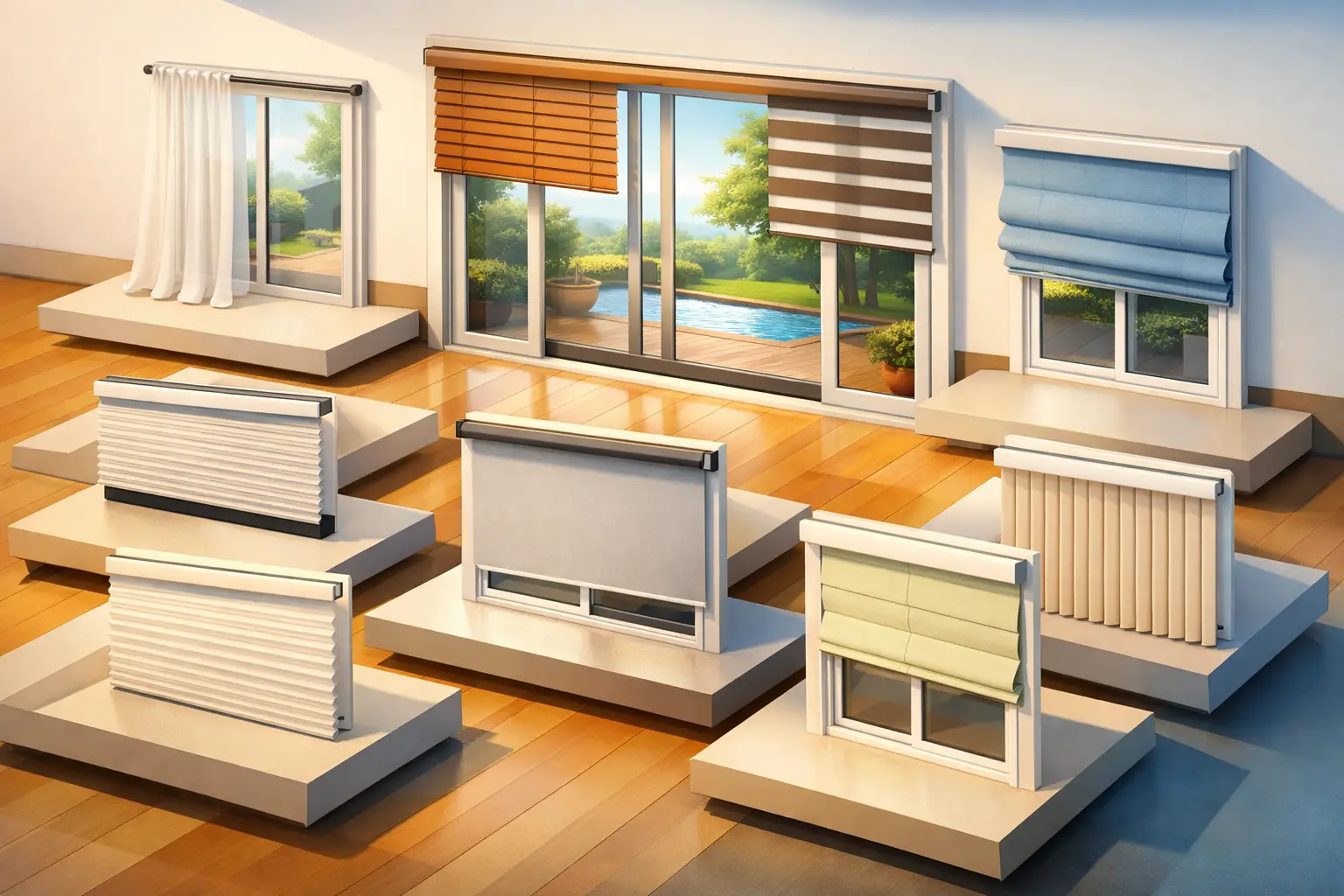
For many homeowners, vertical cellular shades are one of the smartest answers for sliding doors. They combine the side-to-side function you need with the softer look people usually want from a shade rather than a blind.
The honeycomb construction helps insulate large glass areas, which can make a real difference in rooms that heat up quickly or feel drafty in winter. They also stack neatly, making them practical for everyday traffic. Compared with older-style vertical blinds, they look more current and much more refined.
The trade-off is that fabric selection and panel size matter. A lower-quality version can look flat or too utilitarian. Done well, though, this is one of the most balanced choices for privacy, energy efficiency, and clean lines.
2. Panel track shades
Panel track shades are often among the best shades for sliding doors when the goal is a modern, architectural look. Instead of narrow vanes or a single lifting shade, these use broad fabric panels that glide smoothly across a track.
They work especially well in contemporary homes, open-concept spaces, and rooms with large expanses of glass. The wider panels create a calm, tailored appearance that feels intentional and upscale. You can also select screen fabrics, woven textures, or room-darkening materials depending on how much privacy and light control you want.
That said, panel track shades are more about style and broad coverage than a soft, gathered look. If you prefer a traditional aesthetic, another option may feel more at home. They also require careful planning so the stack-back does not eat up too much of the glass when open.
3. Sheer shades for patio doors
If your priority is filtered light and elegance, sheer shades designed for larger openings can be a strong fit. These are ideal in living rooms, dining rooms, or sitting areas where you want to soften daylight without making the room feel closed off.
The appeal is obvious. They add a luxury feel, reduce harsh glare, and give the glass a more finished presence in the room. In the right fabric, they can make a large sliding door feel lighter and more elevated.
The limitation is privacy at night and, in some cases, durability in high-traffic family spaces. If kids and pets are constantly moving in and out, a more structured treatment may be easier to live with. Sheers are beautiful, but beauty should match real life.
4. Roller shades with a sliding door layout
Roller shades are one of the most versatile choices for modern homes, and they can work very well on sliding doors when configured correctly. Clean lines, a minimal profile, and a huge range of fabrics make them attractive to homeowners who want simplicity without sacrificing customization.
For sliding doors, the key is usually using multiple shade panels aligned to the opening rather than treating the entire span as one oversized unit. This gives you more control and often makes operation easier. Depending on the fabric, roller shades can provide anything from filtered natural light to near blackout privacy.
Roller shades are especially popular in kitchens, family rooms, and new construction homes where a streamlined appearance fits the architecture. Their main consideration is usability. If the door is opened frequently, motorization or careful panel planning can make a big difference in convenience.
5. Roman shades for a softer, tailored look
Roman shades are not always the first product people think of for sliding doors, but in the right room, they can be a beautiful solution. If you want softness and a more decorative feel, especially in a bedroom or formal space, Roman shades can bring warmth that more technical-looking products sometimes lack.
They work best when the door is not the home’s main traffic route, or when the design is planned with operability in mind. Fabric selection is critical here. The right material gives the room richness and polish. The wrong one can feel bulky on a large opening.
Roman shades are a style-first option, but they do not have to sacrifice function. With proper customization, they can offer privacy and light control while helping the sliding door feel integrated with the rest of the room’s design.
6. Woven wood shades
Woven wood shades are a favorite for homeowners who want texture, warmth, and a natural look. They pair beautifully with transitional, coastal-inspired, and organic modern interiors. On sliding doors, they add character in a way that flat synthetic materials simply cannot.
These shades filter light beautifully and help a room feel layered and inviting. They are especially attractive in breakfast areas, sunrooms, and casual living spaces where a relaxed but upscale style is the goal.
There are trade-offs. Woven woods typically provide less privacy unless paired with a liner, and the material itself can allow more visible variation in light filtering. For some homeowners, that is part of the charm. For others, especially in tightly spaced neighborhoods, adding a privacy liner is the better move.
7. Motorized shades for convenience and control
Sometimes the best choice is not just about fabric or style. It is about how the shade operates day after day. Motorized shades can be one of the best upgrades for sliding doors because large openings are simply easier to manage when you do not have to tug, adjust, or work around furniture.
Motorization is particularly useful on tall or wide doors, in homes with strong sun exposure, or for homeowners who want a polished, high-end experience. It also makes it easier to protect interiors from glare and heat during the brightest part of the day without constantly thinking about it.
This is one of those upgrades that sounds optional until you live with it. Then it often becomes the feature you appreciate most. For busy households, it adds convenience. For design-conscious homeowners, it keeps the look clean and uncluttered.
How to choose the right shade for your space
There is no single winner for every home. The best shades for sliding doors depend on the room, the direction of the sun, the amount of daily traffic, and the overall design of the home.
If your sliding door is in a busy family room, prioritize easy operation and durability. Vertical cellular shades, panel tracks, and motorized roller shades often make the most sense. If the space is more formal, sheer shades or tailored Roman shades may create a more finished result. If energy efficiency matters, cellular construction deserves a close look. If the room needs softness and texture, woven woods or decorative fabric shades may be the better fit.
It also helps to think beyond the product category and consider installation details. Inside mount versus outside mount, stack direction, fabric openness, and handle clearance all affect how successful the final result feels. These details are easy to miss online and expensive to fix later.
That is why many homeowners prefer to see samples in their own space before making a decision. Lighting changes everything. A fabric that looks perfect in a showroom or on a screen can read completely differently against your flooring, wall color, and outdoor exposure. A custom consultation helps narrow the field quickly and prevents buying based on guesswork.
At Covering Windows, we see this often with sliding doors because they are one of the largest and most visible treatment areas in the home. When the scale, function, and style are handled correctly, the entire room feels more finished.
A well-chosen shade should do more than cover glass. It should make the room easier to live in, more comfortable at every hour, and noticeably more beautiful every time you walk through the door.