Steam on the mirror, water in the air, and a direct line of sight from the neighbor’s second story window – bathrooms ask more from window treatments than almost any other room in the house. If you are searching for the best window treatments for bathrooms, the right answer is rarely just about style. It is about balancing privacy, moisture resistance, easy maintenance, and a finished look that feels intentional instead of improvised.
That is why bathroom windows deserve the same level of planning as a kitchen remodel or a primary suite refresh. A good treatment has to perform every day, hold up over time, and still look beautiful in a room where heat, humidity, and hard surfaces can make design feel a little cold.
What matters most in bathroom window treatments
In most rooms, homeowners start with color or fabric. In a bathroom, function has to lead. Privacy is usually the first priority, especially in street-facing bathrooms, powder rooms near entryways, and primary baths with oversized windows. But privacy is only one piece of the decision.
Moisture matters just as much. Real wood can be stunning, but not every wood product belongs in a high-humidity space. Some fabrics can absorb moisture and show wear faster if the room is poorly ventilated. Hardware choices matter too, especially if windows sit close to showers or tubs.
Then there is light. Bathrooms need enough natural light to feel open and clean, but not so much exposure that the room feels uncomfortable. The best choices soften daylight while preserving privacy, or give you flexible control throughout the day.
Best window treatments for bathrooms by product type
Faux wood blinds
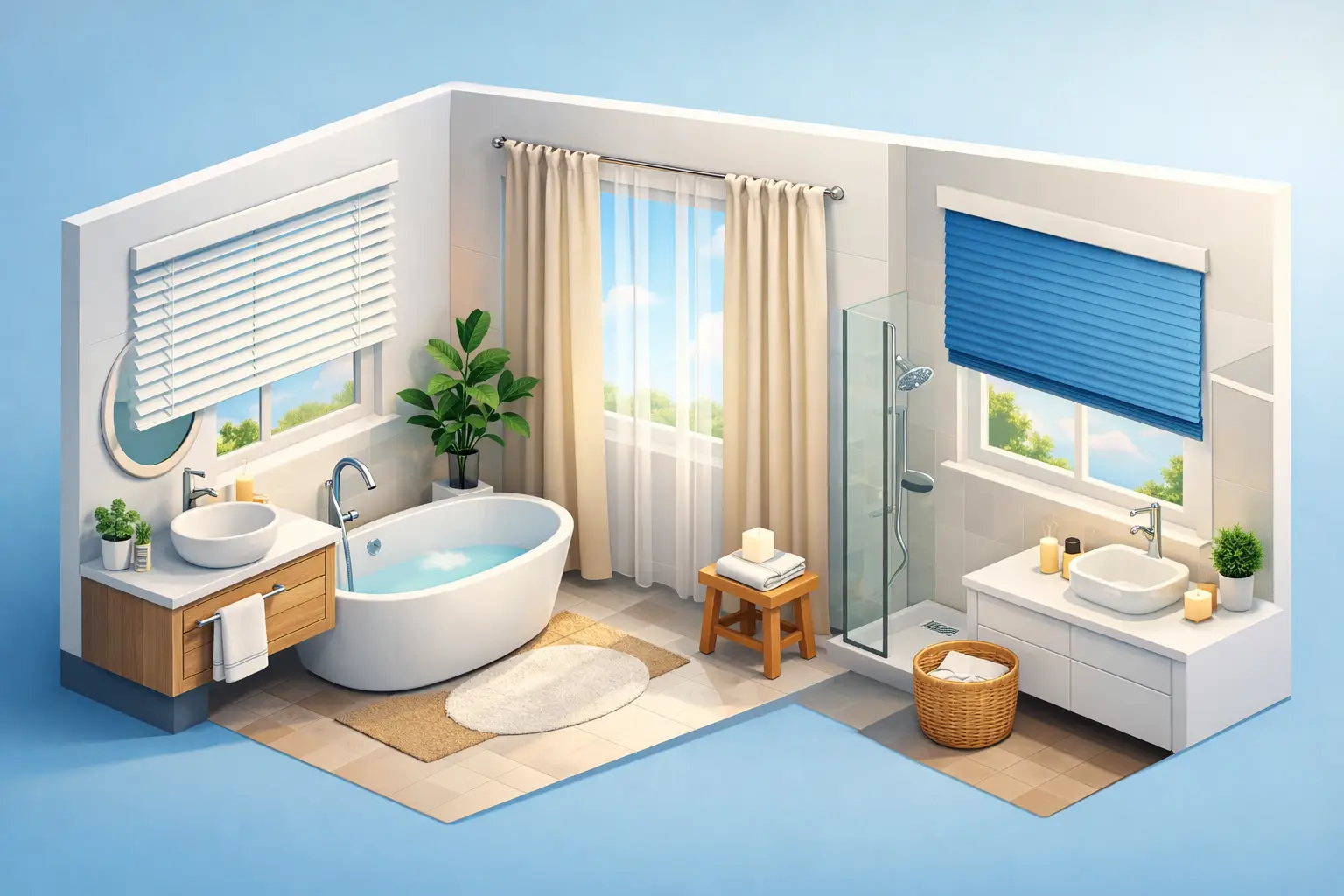
Faux wood blinds remain one of the most practical bathroom choices for a reason. They handle humidity better than many natural materials, they are easy to wipe clean, and they give you adjustable light control with a familiar, tailored look.
For homeowners who want a crisp, structured finish, faux wood blinds work especially well in hall baths, kids’ bathrooms, and guest bathrooms. They can suit traditional, transitional, and even more modern interiors depending on slat size and color. Bright white is a common choice because it feels clean and timeless, but warmer painted tones can soften the room and coordinate with custom trim.
The trade-off is that blinds have more horizontal surfaces, which means they can collect dust a bit faster than some other options. If simple maintenance is a top concern, shades may feel cleaner visually and practically.
Composite or moisture-resistant shutters
If you want the most architectural look, shutters are hard to beat. They add structure, elevate the window itself, and bring a custom, high-end finish that looks built with the home rather than added later. In bathrooms, the key is choosing a moisture-resistant material suited to the environment.
Shutters are especially strong in primary bathrooms where design matters as much as performance. They provide excellent privacy, allow for controlled daylight, and fit beautifully with upscale interiors. Café-style shutters can also be a smart solution when you want privacy on the lower half of the window while keeping the upper portion open to natural light.
The main consideration is cost and fit. Shutters are a more permanent investment, and because they are custom-fitted, measurements and installation need to be exact. Done well, though, they often become one of the most polished details in the room.
Solar shades and light-filtering roller shades
For bathrooms with a clean, modern design, roller shades are often the best visual fit. Their profile is simple, uncluttered, and easy to coordinate with contemporary finishes like large-format tile, floating vanities, and frameless glass showers.
In bathrooms, light-filtering fabrics usually make more sense than blackout materials. They obscure views while still allowing daylight to come through, which helps the space feel bright and open. Depending on the window location, you may also consider top-down or specialty privacy solutions if the goal is to block sight lines without losing every bit of natural light.
Not every fabric is ideal for every bathroom, though. In a low-ventilation space with frequent steam, product selection should be more careful. This is where custom guidance helps – two roller shades may look similar online but perform very differently over time.
Woven wood shades with privacy liners
Woven wood shades can look beautiful in a powder room or a well-ventilated bathroom where you want texture and warmth. They soften hard surfaces and make the space feel more layered and residential, which is especially valuable in bathrooms that otherwise lean cold or overly polished.
The caution here is simple: woven materials are more style-driven than utility-driven in moisture-heavy spaces. With a privacy liner, they can absolutely work in the right setting, but they are usually better for lower-humidity bathrooms than a primary bath with a daily steamy shower.
If your priority is a spa-like aesthetic, woven shades may be worth considering. If your priority is maximum durability, there are safer options.
How to choose the best window treatments for bathrooms
The right product depends on how the bathroom is used and where the window sits. A guest powder room and a busy family bath do not need the same solution.
For a bathroom facing the street, privacy will likely outrank every other factor. That usually points toward shutters, privacy-focused shades, or blinds that can fully close while still admitting some light. For a bathroom with a high window that brings in daylight but does not create much exposure, you may have more flexibility to prioritize style.
Window location matters too. A treatment mounted right beside a shower needs stronger moisture resistance than one installed across the room from the wet zone. If the bathroom has weak ventilation, that adds another layer to the decision. Even a beautiful product can become the wrong product if the environment is working against it.
It also helps to think about the design of the whole home. Bathrooms should not feel disconnected from the rest of your interiors. The best result is usually one that complements nearby bedrooms, hallways, or the overall architecture of the home while still solving the bathroom’s practical needs.
Common mistakes homeowners make
One of the most common mistakes is choosing purely by appearance. A treatment may look perfect in a showroom photo, but bathrooms are demanding spaces. Materials that work beautifully in a bedroom may not hold up the same way in humidity.
Another mistake is underestimating privacy. Homeowners often assume frosted glass or a higher window is enough, then realize later that nighttime lighting changes everything. What feels private during the day can feel exposed after dark.
There is also the fit issue. Bathroom windows are often smaller, deeper, or surrounded by tile and trim details that leave very little room for error. Off-the-shelf solutions can work in some cases, but they often leave awkward gaps, uneven mounting, or a finish that feels more temporary than designed.
Why custom window treatments often make more sense in bathrooms
Bathrooms tend to expose every shortcut. A slightly crooked blind, a fabric that puckers from moisture, or a color that clashes with the vanity can stand out immediately because these rooms are compact and detail-heavy.
Custom window treatments solve several problems at once. They allow you to choose the right material for the environment, tailor privacy and light control to the specific window, and match the treatment to the room’s finishes instead of settling for the closest option on a shelf. Professional measuring also matters more than many homeowners expect, especially with shutters and inside-mounted shades.
For many Northern Virginia homeowners, the real value is confidence. You are not guessing whether a product can handle humidity, whether the white matches your trim, or whether installation will damage surrounding tile or woodwork. A guided process removes a lot of the friction that makes window treatment shopping frustrating in the first place.
The best choice is the one that fits the room
If you want the safest all-around answer, faux wood blinds and moisture-resistant shutters are usually at the top of the list. If your bathroom leans modern, light-filtering roller shades may be the better fit. If you are designing a decorative powder room and want warmth, woven wood shades can add a beautiful layer in the right conditions.
There is no single bathroom product that wins every time. The best window treatments for bathrooms are the ones that suit the window, the moisture level, the privacy needs, and the style of the home as a whole. At Covering Windows, that is exactly why an in-home consultation makes such a difference – the right answer becomes much clearer when you can compare materials, see samples in your light, and choose with confidence.
A bathroom window treatment should do more than cover glass. It should make the room feel finished, comfortable, and quietly luxurious every time you walk in.