By 3 p.m., the patio that looked perfect in the morning can feel unusable. The glare is harsh, the seating gets hot, and suddenly the outdoor space you paid for sits empty. If you are comparing the best patio shades for sun, the right answer is rarely just “the darkest shade” or “the cheapest screen.” It depends on how your patio is built, how much direct exposure it gets, and how polished you want the finished look to feel.
For most homeowners, patio shades are doing three jobs at once. They need to reduce heat, cut glare, and make the space more comfortable without closing it off completely. The best options also complement the architecture of the home, operate smoothly, and hold up well through changing weather. That is where custom guidance matters, because a shade that works beautifully on one patio can feel disappointing on another.
What makes the best patio shades for sun?
The best patio shades for sun balance solar protection with visibility, airflow, and appearance. A shade that blocks every bit of light may also make the patio feel dark and boxed in. On the other hand, a shade that preserves a beautiful view may still allow too much afternoon heat.
This is why fabric openness matters so much. Exterior solar shade fabrics are designed with different weave densities, often described by openness percentage. Lower openness blocks more sun and glare, while higher openness preserves more of the outward view. A tighter weave usually performs better on west-facing patios that get intense afternoon sun. A more open fabric can work well when the goal is softening brightness without losing the airy feel of the space.
Color also affects performance. Darker fabrics often maintain better visibility to the outside during the day, while lighter fabrics can reflect more heat. Neither is automatically better. It depends on whether your priority is view, temperature control, privacy, or a combination of all three.
Exterior solar shades are usually the strongest choice
For patios that receive serious sun exposure, exterior solar shades are often the most effective solution. Because they stop sunlight before it passes through the patio opening, they do a better job reducing heat gain than interior products ever could. They also help protect outdoor furniture from fading and make the space feel noticeably more comfortable during peak sun hours.
A well-made exterior shade can still keep the patio open and inviting. You are not creating a wall. You are filtering light in a controlled way. That distinction is what makes exterior shades so appealing for homeowners who want relief from the sun without sacrificing the outdoor experience.
Motorized exterior shades are especially popular on larger patios and covered outdoor living areas. They allow you to adjust the level of protection throughout the day, which matters when the angle of the sun changes. If your patio is part of how you entertain, work from home, or spend family time outdoors, that convenience tends to pay off quickly.
When motorization is worth it
Motorization is not just a luxury add-on. On wide spans or hard-to-reach openings, it can make the difference between using the shades regularly and leaving them up all season. If a shade is difficult to operate, many homeowners simply stop adjusting it, which limits its value.
Motorized patio shades also give the installation a cleaner, more finished look. There are fewer cords, smoother operation, and better integration with the architecture of the home. For high-end outdoor spaces, that polish matters.
Retractable awnings work differently, but can be excellent
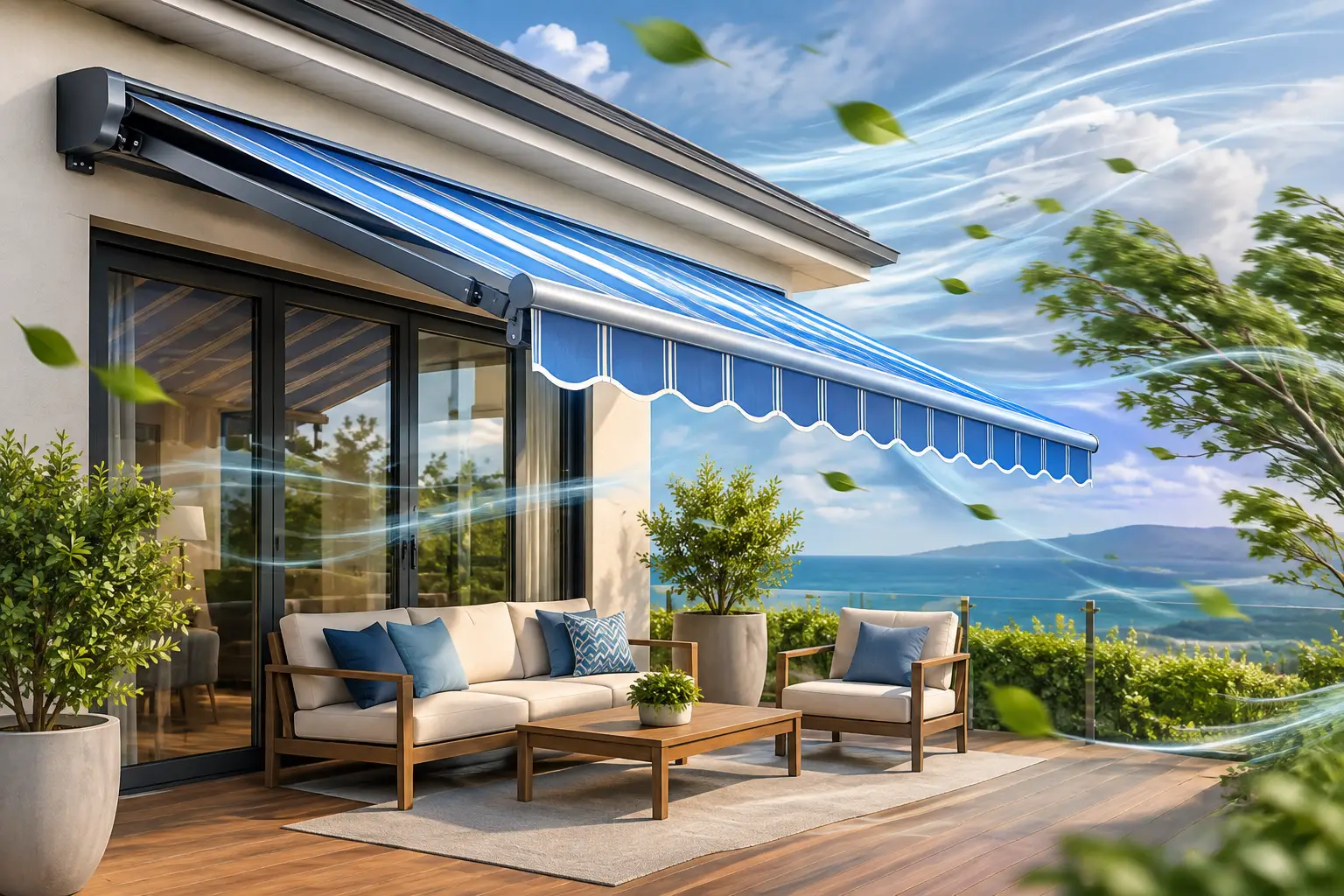
If your main issue is overhead sun rather than low-angle glare, a retractable awning may be a better fit than a vertical shade. Awnings provide broad coverage over seating and dining areas, creating instant shade where the sun hits from above. They are especially effective on patios with strong midday exposure.
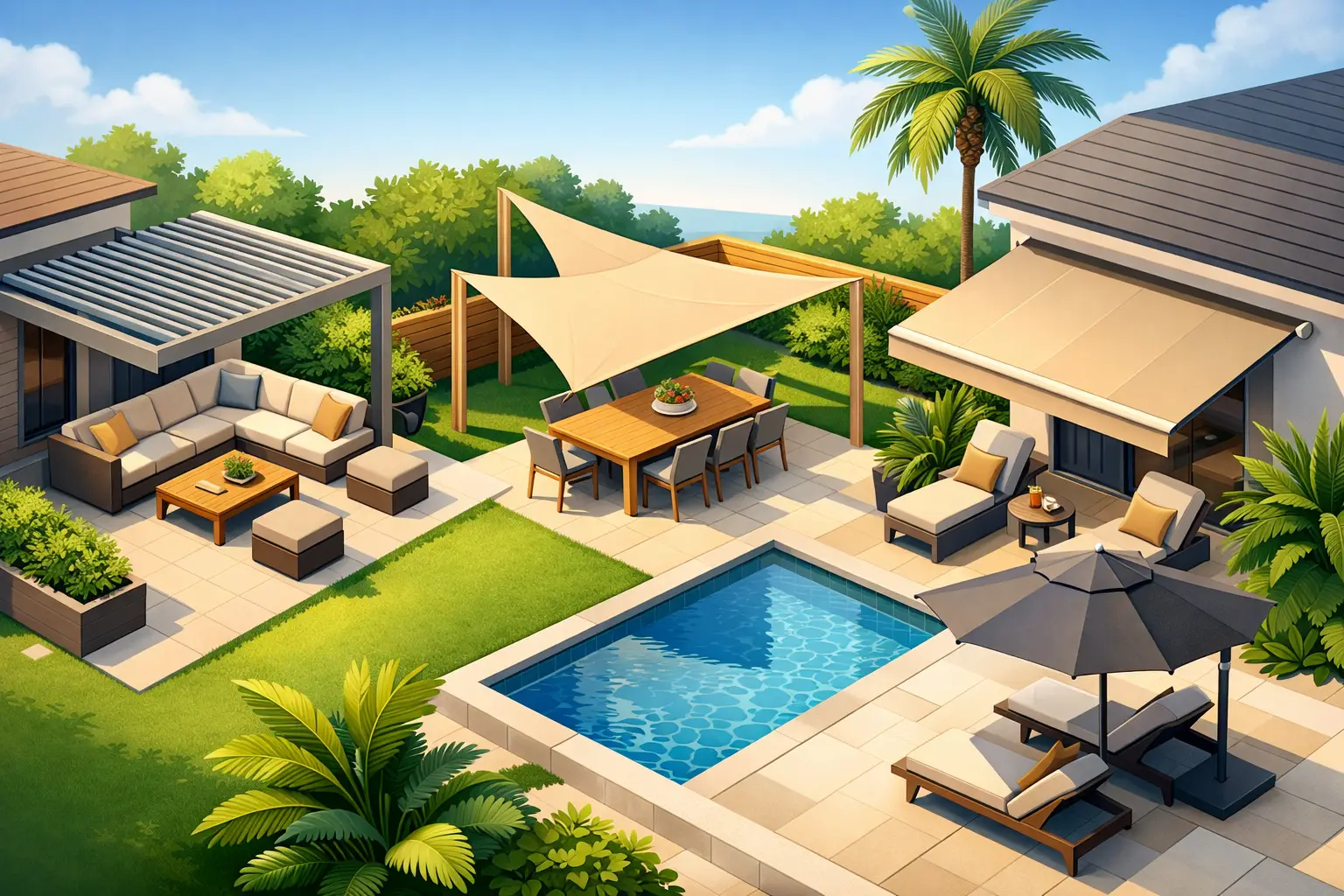
That said, awnings and patio shades solve different problems. Awnings excel at covering the top of the space, while vertical exterior shades are better at handling glare and heat coming in from the side. In some cases, the best solution is a combination of both.
For homeowners who want flexibility, retractable awnings offer an advantage. You can extend them when you want protection and retract them when you prefer full sun or open sky. The trade-off is that they will not block low western sun the way exterior roller shades can.
Patio curtains and budget options have limits
Outdoor curtains are often considered because they soften the look of a patio and can add privacy. They can be attractive, especially in decorative settings, but they are usually not the best-performing patio shades for sun when strong solar control is the priority.
Fabric curtains tend to move with wind, allow more light gaps, and require more maintenance. They also do not typically provide the same sleek, tailored appearance as a fitted exterior shade system. If your goal is a resort-inspired look and only moderate sun reduction, curtains may be enough. If your goal is real comfort on a hot west-facing patio, they often fall short.
This is where many homeowners get frustrated with off-the-shelf products. The package may promise shade and privacy, but the actual result can feel temporary, uneven, or underwhelming. On outdoor installations, fit and hardware quality matter more than most people expect.
Choosing the right fabric and openness
This is usually the decision that has the biggest impact on satisfaction. A very open fabric may seem ideal because it protects the view, but on a patio with intense direct exposure, it may not reduce enough heat or glare. A very dense fabric can create dramatic sun protection, but it may also make the space feel more enclosed than you want.
For many homes, the sweet spot is a performance fabric that filters harsh sunlight while preserving some visibility and airflow. Patios used for dining, reading, or watching television outdoors often benefit from greater glare control. Patios that overlook a landscaped yard or pool may call for more view preservation.
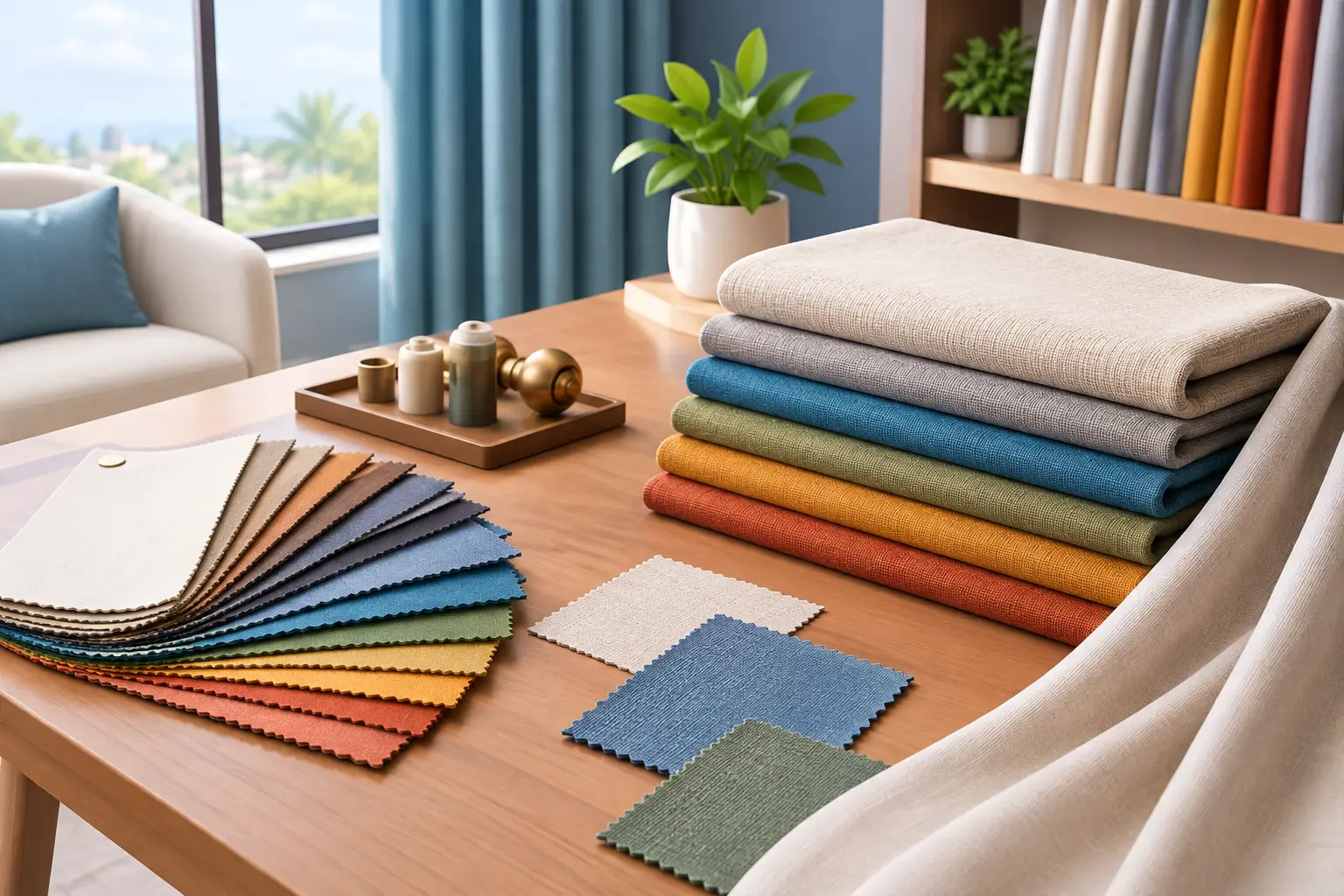
This is also why samples matter. Looking at a fabric indoors or online is not the same as seeing it in actual outdoor light against your home’s finishes. The right choice should work with your stone, siding, trim, and furnishings while still delivering practical solar protection.
Fit, installation, and wind performance matter more than most people think
A patio shade can have excellent fabric and still disappoint if the fit is wrong. Gaps at the sides, poor alignment, or weak hardware reduce performance and make the entire installation look less refined. On larger patios, even slight measurement errors become noticeable.
Wind is another factor that should never be treated as an afterthought. Some patios are naturally sheltered, while others are exposed to regular gusts. In those cases, the mounting method, edge retention, and product construction all influence how well the shade performs over time.
That is one reason custom installation is so valuable. It helps ensure the shade is selected for the actual structure, not just the rough size of the opening. A well-planned system looks better on day one and tends to last longer with fewer operational issues.
Style should not be separate from function
The best patio shades for sun should improve comfort, but they should also elevate the space. A patio is not just a utility zone. For many homeowners, it is an extension of the home’s living area and a meaningful part of how the property is enjoyed.
That means color, hardware profile, valance design, and overall proportion all deserve attention. A custom exterior shade can look clean and understated or more architectural and defined, depending on the home. The right design choice makes the product feel integrated rather than added on.
For homeowners in Northern Virginia, where outdoor living spaces often serve as entertaining areas for much of the year, that finished look has real value. The patio should feel cooler and more usable, but it should also feel more beautiful.
So what is the best choice for most patios?
If your goal is serious sun control, a polished appearance, and daily ease of use, custom exterior solar shades are usually the best overall solution. They offer the strongest balance of heat reduction, glare control, view preservation, and visual refinement. Motorization makes them even more practical, especially on large or frequently used patios.
If overhead coverage is the main issue, retractable awnings are also an excellent option. And if your patio has both overhead and side exposure, a layered approach may give you the best result.
The right answer is not about picking the most expensive product or the trendiest one. It is about matching the shade system to the way your patio actually gets used, the direction it faces, and the level of finish you expect from your home. When that fit is right, the patio stops being a place you avoid in the afternoon and becomes one of the most comfortable spaces on the property.
A good patio shade should do more than block sunlight. It should give you back the hours of the day when your outdoor space feels best used, not best avoided.