Your living room may have the best natural light in the house, but if that light comes with a clear view from the street, it stops feeling comfortable fast. The best window coverings for privacy solve that problem without making your home feel closed off, dark, or overly formal. The right choice depends on how exposed the window is, how much daylight you want to keep, and how polished you want the finished room to look.
Privacy is rarely a one-size-fits-all decision. A front-facing breakfast nook has different needs than a primary bathroom, a first-floor office, or a bedroom that catches neighboring sightlines at night. That is why the best results usually come from matching the product to the room, not choosing one treatment and repeating it everywhere.
What makes the best window coverings for privacy?
A good privacy treatment does more than block views. It should also fit the way you live. Some homeowners want soft filtered daylight during the day and full privacy after dark. Others want a clean, architectural look with as little fabric as possible. In many Northern Virginia homes, the goal is a balance of elegance, convenience, and practical coverage.
That balance usually comes down to four factors: opacity, adjustability, fit, and style. Opacity controls how much can be seen through the material. Adjustability matters because many people want privacy without losing all natural light. Fit is critical because gaps at the sides or bottom can make even a premium product feel ineffective. Style matters because window treatments are a major visual element, not just a functional add-on.
Shades are often the most versatile privacy solution
Shades are one of the strongest choices for homeowners who want a clean look and dependable coverage. They work well in bedrooms, family rooms, offices, and bathrooms because they can be customized in a wide range of fabrics and opacities.
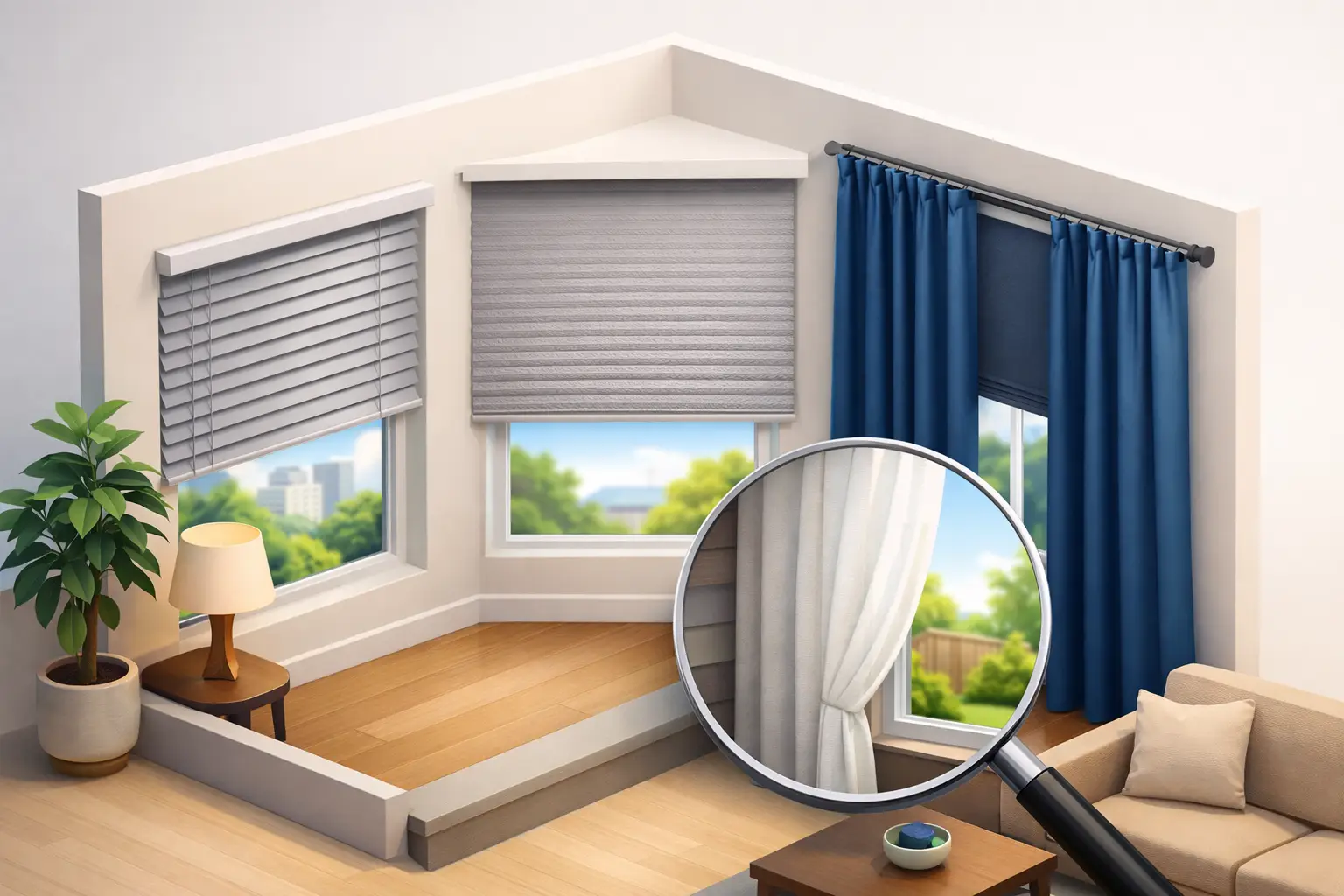
Cellular shades are especially popular for privacy because they offer a tailored appearance and excellent light control. When ordered in light-filtering or blackout fabrics, they can give you strong privacy while also helping with insulation. That makes them a smart option for street-facing windows or any room where comfort matters as much as appearance.
Roman shades bring a softer, more decorative feel. If privacy is your top concern, fabric selection is everything. A beautiful Roman shade in a sheer linen look may not provide the same coverage as a lined fabric. This is where homeowners often get frustrated shopping online. A material can look substantial on a screen and still allow more visibility than expected in real daylight.
Roller shades are another strong contender, especially in modern or transitional interiors. They sit close to the window, look streamlined, and come in privacy fabrics ranging from lightly filtered to room-darkening. If you want simplicity without sacrificing design, roller shades are hard to beat.
Shutters offer high privacy with a more permanent look
If you want privacy that feels built into the architecture of the room, shutters are one of the best investments you can make. They give you excellent control over visibility because you can adjust the louvers instead of simply raising or lowering the treatment.
This is especially useful in rooms where you want daylight but not direct sightlines. You can tilt the louvers to admit light from above while blocking views from outside. In front-facing dining rooms, bedrooms, and home offices, that flexibility makes a real difference.
Wood shutters also add a sense of craftsmanship that many homeowners love. They look finished, substantial, and upscale. Faux wood shutters can be a practical option in humid areas, but real wood delivers a warmth and richness that is difficult to replicate. The trade-off is that shutters are more of a long-term design decision. They are not the casual, easily changed option that fabric treatments can be.
Blinds can work well, but quality and fit matter
Blinds are often chosen for privacy because they are familiar and adjustable. Tilt them one way, and you can reduce views in. Tilt them another, and you can bring in more light. That flexibility is useful, but blinds are not all equal.
Mini blinds and lower-end options can technically provide privacy, but they do not always deliver the finished appearance homeowners want in a well-designed space. Larger slat wood or faux wood blinds tend to look better and perform better. They offer stronger visual presence and improved control over light and visibility.
That said, blinds do have limits. Even when closed, they usually leave small gaps that can allow light through and reduce privacy at certain angles. If a room needs a softer, more polished look or stronger nighttime privacy, blinds are often better when paired with drapery panels.
Drapery adds softness and closes privacy gaps
Drapery is sometimes overlooked in privacy conversations because people think of it as decorative first. In reality, well-designed drapery can be one of the most effective ways to increase privacy, especially when layered over shades or blinds.
A lined drapery panel helps block side gaps, softens the room, and creates a more luxurious finished look. In bedrooms and front rooms, that layered approach often gives homeowners the best of both worlds. You can use the shade for daily light control and privacy, then close the drapery when you want complete coverage or a more intimate feel.
This is also where design matters most. The right drapery fabric can elevate the entire room, while the wrong one can feel heavy or dated. Length, fullness, lining, and hardware all affect the final result. Privacy is important, but so is making the room feel intentional.
The best window coverings for privacy by room
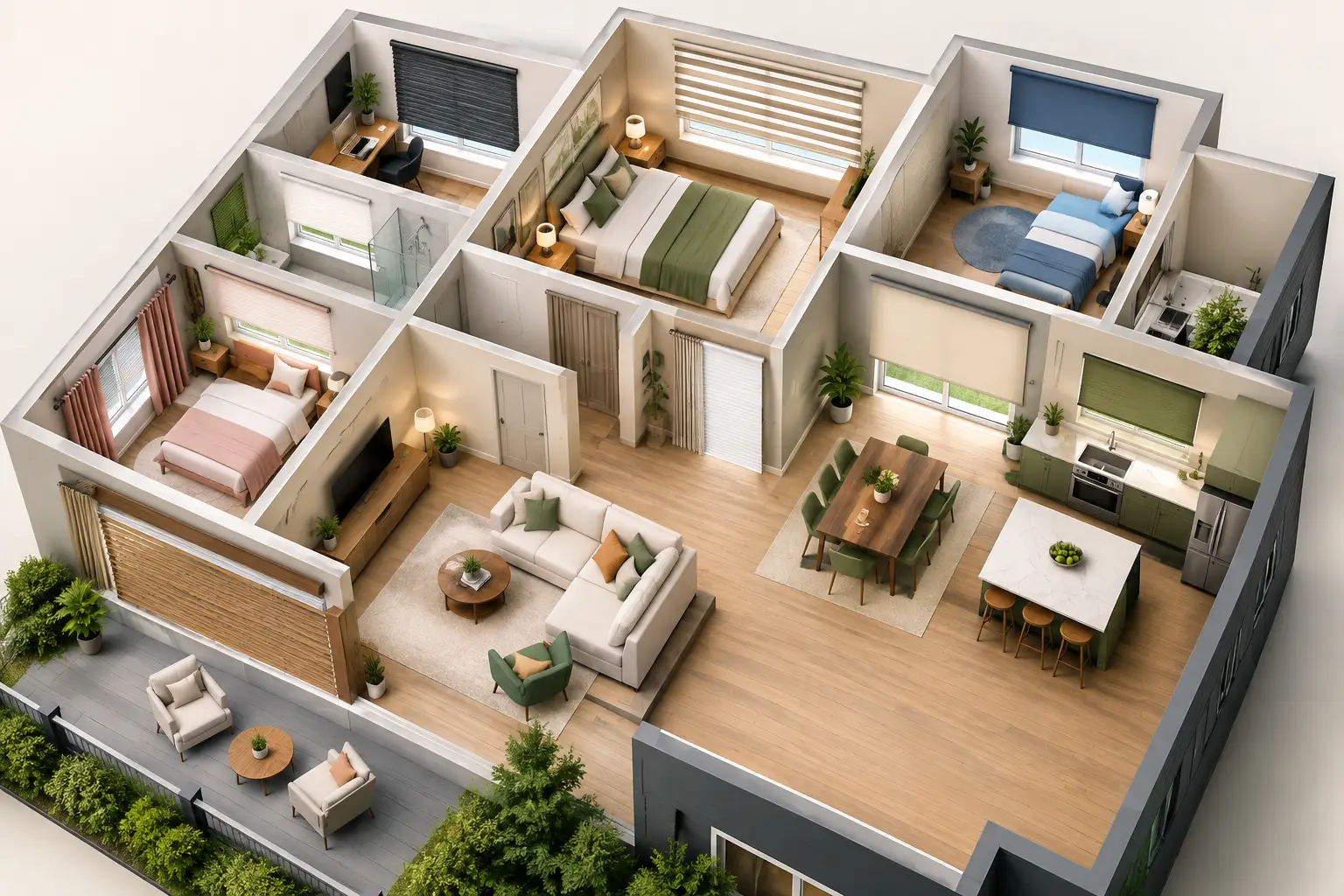
Different rooms ask for different solutions. In bedrooms, blackout roller shades, lined Roman shades, and shutters are all strong options because they support both privacy and sleep. In bathrooms, shutters and moisture-resistant shades tend to work best, especially when you want coverage without sacrificing daylight.
For living rooms and front-facing family spaces, privacy often needs to feel elegant rather than purely functional. This is where layered shades and drapery, or shutters with soft side panels, can create a balanced look. In a home office, glare control may be just as important as privacy, so solar or light-filtering shades with the right opacity can be a better fit than heavier coverings.
Large windows and sliding doors deserve extra attention. Standard off-the-shelf products often fall short here, either visually or functionally. Privacy treatments for expansive glass need to be sized correctly, easy to operate, and scaled to the room so they do not feel like an afterthought.
Daytime privacy and nighttime privacy are not the same
This is one of the biggest points homeowners miss. Some shades offer excellent daytime privacy because they diffuse light and obscure views from outside. At night, when interior lights are on, those same materials may reveal more than you expect.
If your windows face a street, sidewalk, or nearby home, nighttime privacy should be part of the decision from the beginning. That may mean choosing a more opaque fabric, layering treatments, or selecting shutters that can be fully adjusted after dark. A treatment that looks beautiful at noon can feel far less private at 8 p.m.
Why custom fit makes such a difference
Privacy problems often come from the details. Side gaps. Uneven mounting. A fabric that is too sheer. A blind that rattles or hangs awkwardly. These are common issues with ready-made products, and they are exactly why many homeowners end up replacing a cheaper solution sooner than expected.
Custom window coverings are designed around the actual opening, the room’s lighting conditions, and the way the space is used. That leads to a better fit, cleaner lines, and more dependable performance. It also gives you access to materials and operating systems that are harder to judge correctly without seeing samples in the room.
For busy homeowners, that guidance matters. A treatment may need to coordinate with trim color, furniture, flooring, and the home’s overall style. It is much easier to make a confident decision when you can compare real options in your own space instead of guessing from a product thumbnail.
Choosing the right solution for your home
The best privacy treatment is the one that fits your home both functionally and visually. If you want a sleek, understated look, roller shades or cellular shades may be the right answer. If you want a more architectural finish, shutters are hard to top. If your room needs softness and polish, layering drapery with a shade usually creates the richest result.
At Covering Windows, we see this every day. Homeowners are often choosing between several good options, not one obvious winner. The right decision comes from understanding how the room faces, how much visibility you need to block, and what kind of look you want to live with for years.
A beautiful room should feel comfortable after sunset too. The right window covering gives you that confidence quietly, every single day.