A beautiful shutter can make a room feel finished in a way few other window treatments can. But the material behind that polished look matters just as much as the color, louver size, or panel style. This wood shutter material guide helps Northern Virginia homeowners understand what they are choosing, where real wood shines, and when another material may be the smarter fit.
Real wood shutters bring warmth, architectural character, and a tailored sense of luxury to living rooms, bedrooms, dining rooms, and home offices. They can also be a practical investment when they are properly specified, professionally measured, and installed with care. The right decision starts with more than asking whether you like the look of wood. It starts with understanding how the shutter will perform in your particular room.
Why Real Wood Shutters Still Stand Apart
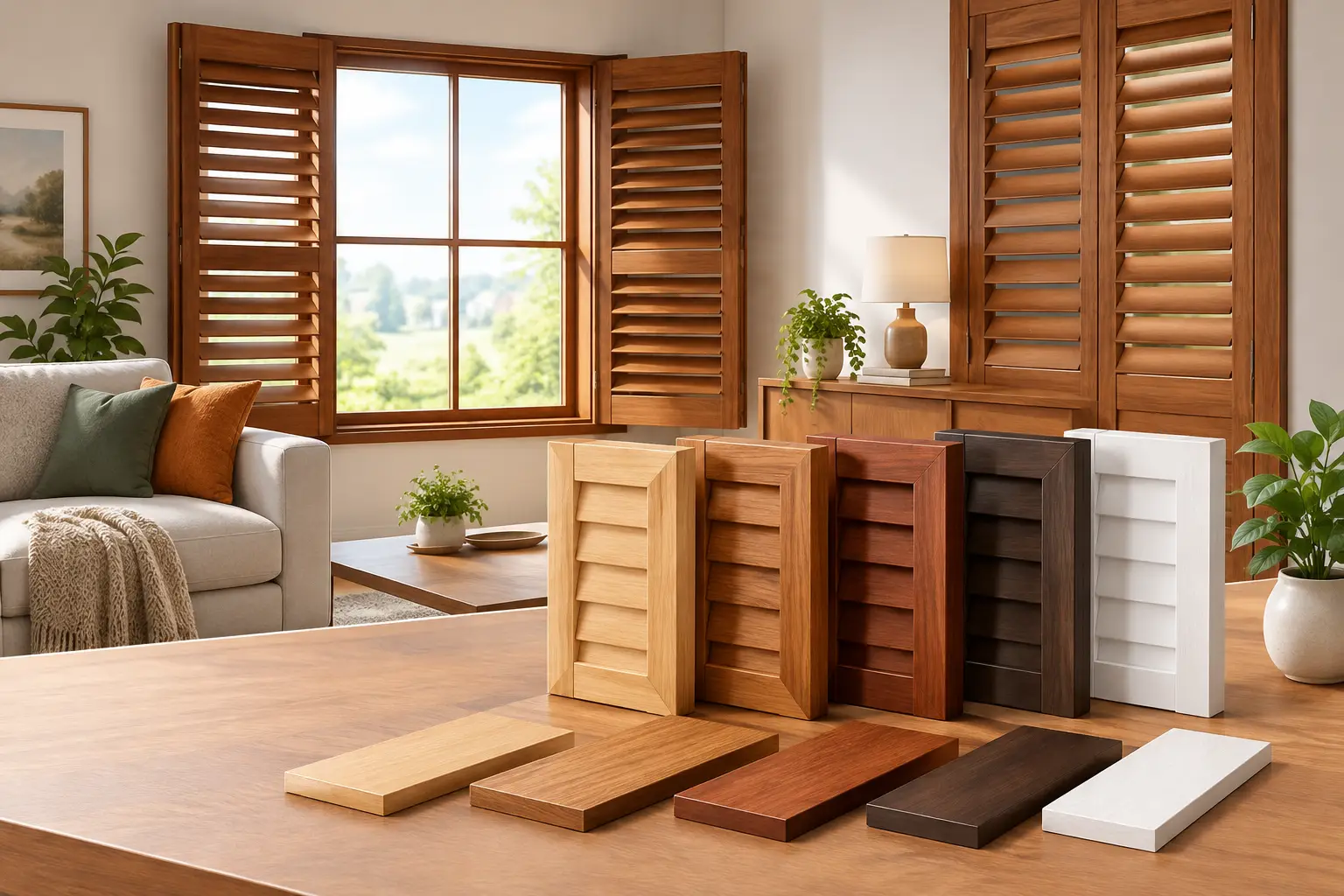
Wood has a depth that painted composite materials cannot fully duplicate. Its natural grain, crisp edges, and lighter weight create a refined result that feels at home in traditional, transitional, and contemporary interiors alike. A painted wood shutter can look clean and tailored, while a stained finish can highlight the character of the grain and complement hardwood floors, cabinetry, or exposed beams.
Weight is one of wood’s most useful advantages. Because quality wood shutters are lighter than many engineered alternatives, they are especially well suited to wide windows, tall openings, French doors, and custom shapes. Lighter panels place less stress on hinges and frames, making them easier to operate and helping them maintain their alignment over time.
Wood is also highly customizable. It can be painted in a carefully selected white, warm neutral, or statement color, and it accepts stain beautifully. For homeowners who want shutters to feel integrated into the home’s millwork rather than added as an afterthought, that flexibility is hard to beat.
Wood Shutter Material Guide: What the Wood Is Made Of
Not all wood shutters are made from the same material, and the label “wood” does not always tell the full story. Quality shutters are typically built from hardwoods or engineered wood components chosen for stability, finish quality, and strength.
Hardwood for strength and detail
Hardwoods are prized because they hold up well under daily use and provide a smooth, furniture-grade surface for paint or stain. They are generally more resistant to dents than softer woods and can be machined with clean detail around louvers, rails, stiles, and panel profiles.
Basswood is a common choice for premium shutters because it is relatively lightweight, stable, and fine-grained. It takes paint evenly and supports precise craftsmanship. Other hardwood options may be used depending on the manufacturer and finish requirements. Rather than focusing only on the species name, ask about the construction quality, finish process, warranty, and how the shutter is designed to perform in your home.
Engineered wood components
Some shutters use engineered wood in selected components. These materials can offer consistency and can be a sensible choice for painted designs, particularly when they are made and finished to a high standard. However, engineered wood is not automatically equal to solid hardwood in every application.
The key question is where the material is used and how it will be exposed. A well-built shutter system may combine materials thoughtfully, while a lower-quality product may use heavier, less stable components that compromise operation or appearance. Your consultant should be able to explain the construction clearly, without vague claims or pressure.
The finish is part of the material decision
A shutter’s finish is not simply decorative. It is a protective layer that affects how the surface resists everyday wear, sunlight, and cleaning. A professionally applied painted finish offers a smooth, durable appearance and works beautifully with painted trim. Stained wood highlights natural variation, bringing warmth and texture into the room.
For a painted look, consider the rest of your interior. Bright white shutters can sharpen a room with cool walls and modern furnishings, while softer whites and warm greiges often suit homes with creamy trim, oak floors, or traditional details. Samples matter here. A color that looks perfect under showroom lighting can read very differently in a sun-filled Great Falls living room or a shaded Reston bedroom.
Where Wood Shutters Work Best
Wood shutters are an excellent choice for most dry interior spaces. Living rooms, family rooms, bedrooms, studies, dining rooms, and entryways are all strong candidates. They provide adjustable privacy, light control, and a custom-built look that can elevate both everyday comfort and resale appeal.
They are also a smart option when proportions matter. Oversized windows and wide openings benefit from a material that is strong without being unnecessarily heavy. Custom wood shutters can be configured in multiple panels so each section opens smoothly and the room remains easy to use.
For specialty windows, wood offers real design freedom. Arched, angled, bay, bow, and unusually shaped windows often call for a custom solution rather than a one-size-fits-all product. The details of the frame, panel arrangement, and louver size should be planned around the window and the room’s architecture, not selected from an online chart.
When Faux Wood May Be the Better Choice
The best shutter material is not always real wood. In bathrooms, laundry rooms, kitchens near heavy steam, or other high-humidity areas, a quality faux wood or composite shutter may offer better long-term peace of mind. These materials are designed to resist moisture and are often easier to maintain around splashes and humidity changes.
This is not a compromise in every sense. Today’s premium faux wood shutters can look polished and substantial, especially in painted white finishes. They are an excellent solution when moisture resistance is the priority. The trade-off is that faux wood is often heavier, offers fewer stain options, and may not provide the same fine-grained warmth or lightweight performance as real wood.
Sun exposure deserves a conversation as well. Any window treatment can be affected by intense UV light over time. High-quality finishes and proper product selection help, but a south- or west-facing window may need additional planning. In some rooms, pairing shutters with drapery panels or shades can soften harsh light while adding another layer of design and comfort.
Construction Details That Affect Everyday Performance
A shutter may look impressive on day one, but construction determines how it performs years later. Look beyond the showroom sample and consider the elements that influence operation: panel weight, hinge quality, louver tension, frame fit, and the way the shutters attach to the opening.
Louver size changes both the appearance and function. Smaller louvers create a more traditional, detailed look. Larger louvers feel more open and contemporary, provide a broader view when tilted open, and allow more daylight into the room. Neither is universally better. The right size depends on window scale, ceiling height, surrounding trim, and your preference for privacy versus view.
Panel configuration matters too. A wide window may need several panels, or a divider rail that lets you tilt the top and bottom louvers independently. This can be especially helpful in bedrooms and street-facing rooms, where you may want privacy below while still welcoming daylight from above.
Professional measurement is essential because shutters are built to the window opening with very little room for error. Walls are not always square, trim can vary, and windows that appear identical may have small differences. Proper installation ensures panels hang level, close correctly, and look intentional from every angle.
Balancing Budget, Beauty, and Long-Term Value
Wood shutters are often viewed as a premium purchase, and they should be evaluated that way. The value is not just in the material. It comes from custom sizing, craftsmanship, finish quality, hardware, design guidance, and installation that protects the final result.
Still, premium does not have to mean overpaying. A local specialist can help you compare wood and faux wood side by side, identify where each material makes sense, and avoid spending on features that do not improve your room. At Covering Windows, homeowners can see materials and finish samples in their own light before choosing a shutter solution that fits both the design vision and the budget.
The most satisfying shutter projects are rarely the ones chosen fastest. They are the ones where material, proportion, color, and function all work together. When you can open the panels easily, adjust the light without effort, and enjoy how the shutters frame the room every day, the right choice becomes clear.