
That bright afternoon sun may make a room feel beautiful for a few minutes, then make it nearly impossible to read a screen, watch television, prepare dinner, or enjoy the view. Knowing how to reduce window glare is less about making a room dark and more about controlling sunlight at the right angle, at the right time of day, without sacrificing the natural light that makes your home feel open.
For homeowners in Northern Virginia, glare is often most noticeable in rooms with large south- or west-facing windows. It can also become a daily frustration in home offices, kitchens with polished countertops, living rooms with televisions, and bedrooms where early sun arrives before the alarm. The right window treatment can soften that intensity while adding privacy, insulation, and a finished, design-forward look.
Why Window Glare Is Harder Than It Looks
Glare is not simply direct sunshine. It is the visual discomfort created when intense light hits a surface and reflects toward your eyes. A low afternoon sun can bounce off hardwood floors, granite, glass tabletops, white cabinetry, and computer monitors. Even a room with plenty of daylight can feel harsh when the contrast between a bright window and a darker interior is too strong.
Window direction matters. West-facing rooms usually deal with the strongest late-day glare, while east-facing bedrooms and kitchens can be difficult in the morning. South-facing windows receive extended sun exposure through much of the year. North-facing rooms typically have gentler light, although reflective outdoor surfaces such as water, concrete, or a neighboring roof can still create problems.
The solution depends on what you want to preserve. A media room may need room-darkening control. A kitchen may need filtered daylight and an unobstructed view. A home office may need the flexibility to reduce screen glare during work hours and raise the treatment completely afterward. That is why an off-the-shelf blind is not always the best answer.
How to Reduce Window Glare With Light-Filtering Shades
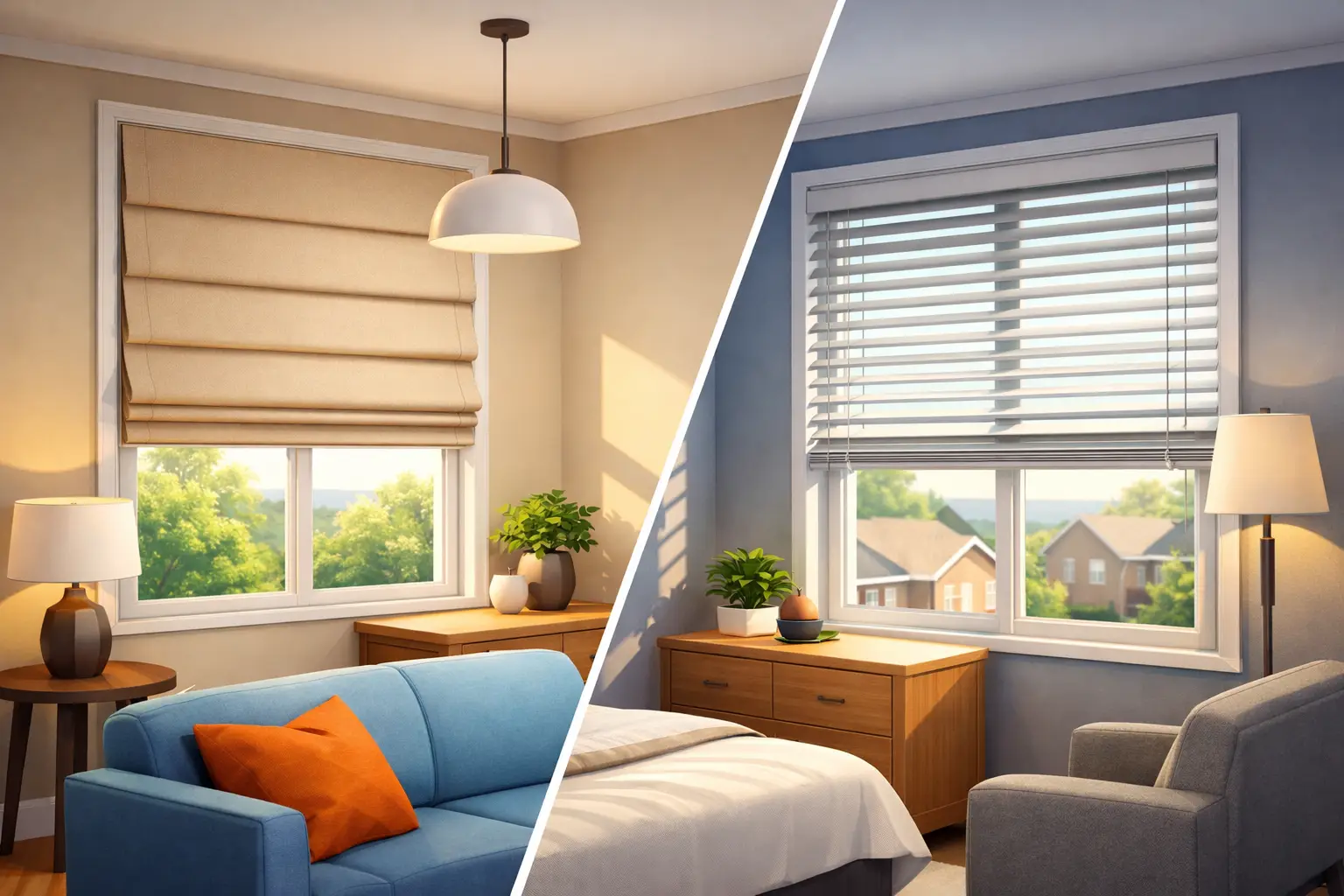
Light-filtering shades are often the most balanced choice for rooms that need daytime glare control without feeling closed in. They diffuse direct sunlight, reduce harsh contrast, and create a softer glow throughout the room. The effect is especially appealing in open-concept living areas where you want the space to remain bright and welcoming.
Roller shades, Roman shades, and cellular shades are all available in light-filtering fabrics. The fabric selection makes a meaningful difference. A tighter weave provides more glare reduction and privacy, while a more open weave preserves a clearer view outside. For a family room with a view of the yard, a solar shade may be a better fit than an opaque fabric. For a breakfast nook where privacy matters as much as light control, a more substantial light-filtering shade may be the better choice.
Color also affects performance and appearance. Darker solar shade fabrics can improve outward visibility in bright conditions because they reduce reflected light inside the room. Lighter fabrics can create a softer, airier appearance but may offer less view-through clarity. Seeing full-size samples in your own windows is valuable because daylight, wall color, and the view outside all change how a fabric looks.
Choose Solar Shades for Views and Screen Comfort
Solar shades are designed specifically to manage sun while retaining a connection to the outdoors. Their openness factor indicates how tightly the fabric is woven. A lower openness factor blocks more light and reduces more glare, while a higher openness factor lets in more daylight and provides a more open view.
For a home office or a room with a television, a lower openness fabric is often worth considering. It can cut down on reflections without making the room feel like a cave. In a sunroom or a living room with scenic views, a slightly more open fabric may offer a better balance. The trade-off is simple: greater view-through generally means less solar control and less daytime privacy.
Motorized solar shades are particularly useful on tall, wide, or hard-to-reach windows. You can lower them during the hours when sun is strongest and raise them later with a remote, wall control, or scheduled setting. That convenience can make glare control much more consistent, especially in busy households where no one wants to adjust several windows by hand every afternoon.
Use Adjustable Blinds and Shutters for Precise Control
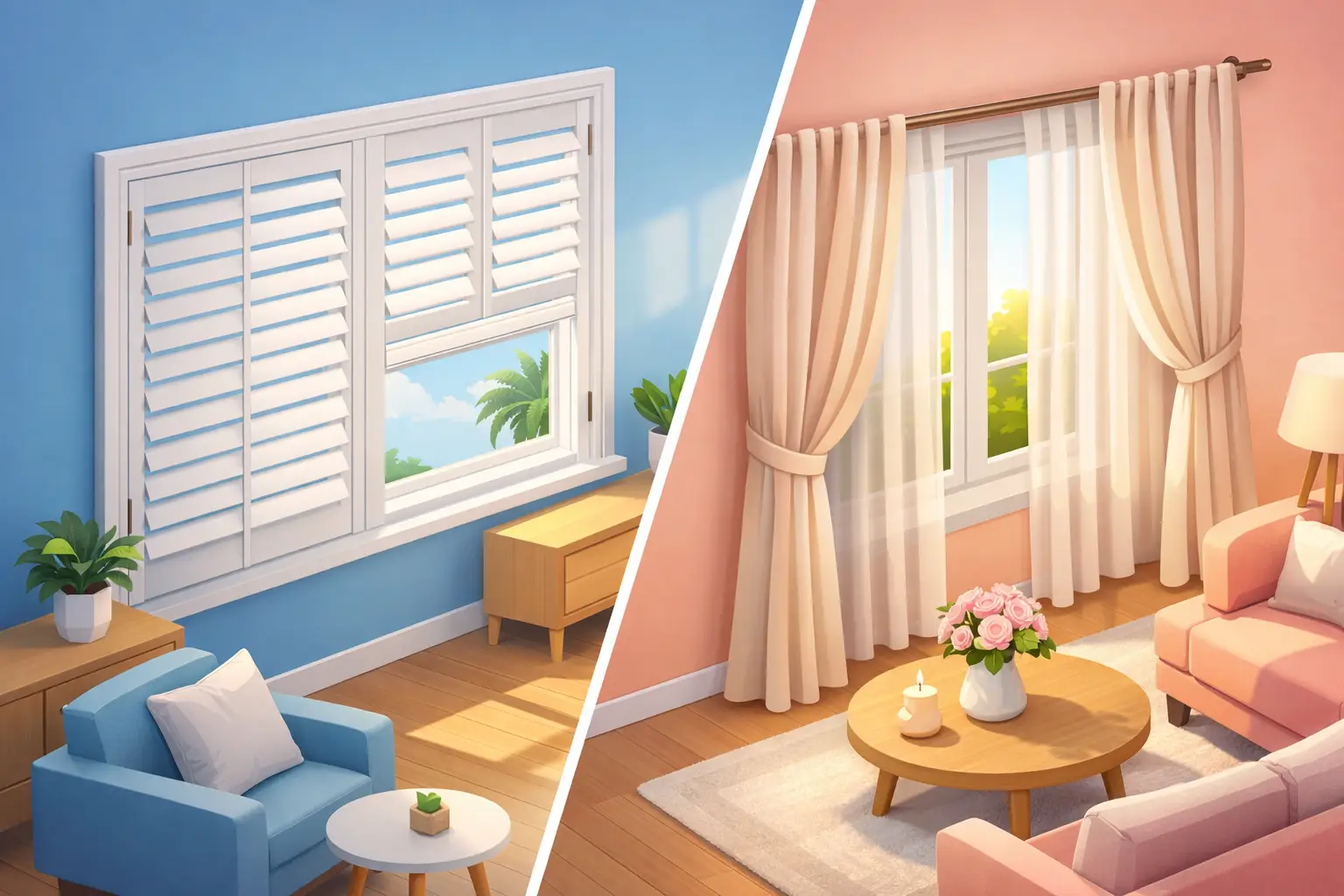
When the angle of the light changes throughout the day, adjustable slats can offer a level of control that a single-piece shade cannot. Wood blinds, faux wood blinds, and plantation shutters allow you to tilt the louvers to redirect sunlight upward or downward. You can block the glare hitting a screen or tabletop while still allowing some daylight into the room.
Plantation shutters are a strong choice for homeowners who want glare control to feel like a permanent architectural feature rather than an add-on. Their wide louvers create clean lines, provide excellent privacy, and can be adjusted with remarkable precision. They work especially well in formal living rooms, bedrooms, offices, and front-facing spaces where curb appeal and interior design both matter.
The material choice should fit the room. Premium wood shutters bring warmth and craftsmanship to living spaces, offices, and bedrooms. In bathrooms, laundry rooms, or humid areas, moisture-resistant options may be more practical. The best treatment is not always the one with the most features. It is the one that performs well in that particular window, complements the room, and remains easy to use every day.
Add Room-Darkening Layers Where Glare Cannot Be Negotiated
Some spaces need more than filtered light. A media room, nursery, bedroom, or dedicated office used for video calls may benefit from room-darkening shades or drapery panels. These treatments reduce the intensity of sunlight substantially and help control the bright perimeter around windows that can still distract from a screen.
Blackout does not always mean total darkness. Light can enter around the sides of many standard shade installations, particularly if the window is wide or deeply recessed. For the strongest result, consider a treatment designed with side channels, an outside mount that covers more of the window opening, or layered drapery that overlaps the edges. Professional measuring matters here. A small gap can make a noticeable difference when the goal is screen comfort or better sleep.
Layering is also one of the most attractive ways to solve a difficult window. Pair a functional shade with stationary drapery panels, for example, and you gain daytime control, evening privacy, texture, and a more luxurious finished look. The shade handles the glare. The drapery adds softness and helps visually frame the window.
Consider Exterior Shades Before Sun Reaches the Glass
If heat and glare are both major concerns, exterior solar shades deserve serious consideration. Because they stop a significant amount of sun before it reaches the glass, they can reduce solar heat gain as well as interior glare. This is particularly helpful for west-facing patios, large walls of glass, sunrooms, and commercial spaces with expansive windows.
Exterior shades are not the right solution for every home. They need to suit the architecture, exposure, wind conditions, and the way you use the outdoor area. But in the right setting, they can make an indoor room more comfortable while improving the usability of a patio or covered outdoor living space.
Awnings can offer similar relief above windows and doors by shading the glass from overhead sun. They are especially effective where summer sun is high in the sky, though their performance will vary as the sun angle lowers in the morning, afternoon, and winter months.
Small Changes That Make Your Treatment Work Better
Window treatments do most of the work, but a few design choices can reduce glare further. Move a desk or television so it is perpendicular to the window rather than directly facing it. Choose matte finishes near strong windows when possible, since glossy paint, glass, and polished stone reflect more light. On a computer, a monitor hood or anti-glare screen can help, but it should support a window solution rather than replace one.
Also pay attention to timing. The most effective setup is often a treatment you can adjust easily as the sun moves. Motorization, dual shades, top-down/bottom-up configurations, and smart scheduling can turn glare control from a daily annoyance into a background comfort feature.
A well-chosen window treatment should let your home keep its best qualities: the view, the daylight, the warmth, and the beauty of the room. At Covering Windows, an in-home consultation makes it easier to compare fabrics, slat sizes, opacity levels, and operating options against the actual light conditions in your space. The goal is not to block the sun at all costs. It is to make every room more comfortable to live in, from the first bright morning to the last golden hour.