You feel the difference between a window treatment you use every day and one you quietly avoid. That is why the conversation around motorized shades vs manual shades matters so much for homeowners who want a home that looks polished and actually functions well. The right choice is not just about price. It is about how you live, how often you adjust light and privacy, and whether you want your window coverings to feel like a small daily chore or a finished part of the home.
For some rooms, manual shades are the smart, sensible answer. For others, motorization is the upgrade that makes the whole space feel more luxurious and more practical at the same time. The key is knowing where each option truly delivers value.
Motorized shades vs manual shades: what really changes?
At a basic level, both options do the same job. They manage sunlight, privacy, glare, and energy efficiency while helping complete the design of a room. The difference is in how they operate and how that changes your experience over time.
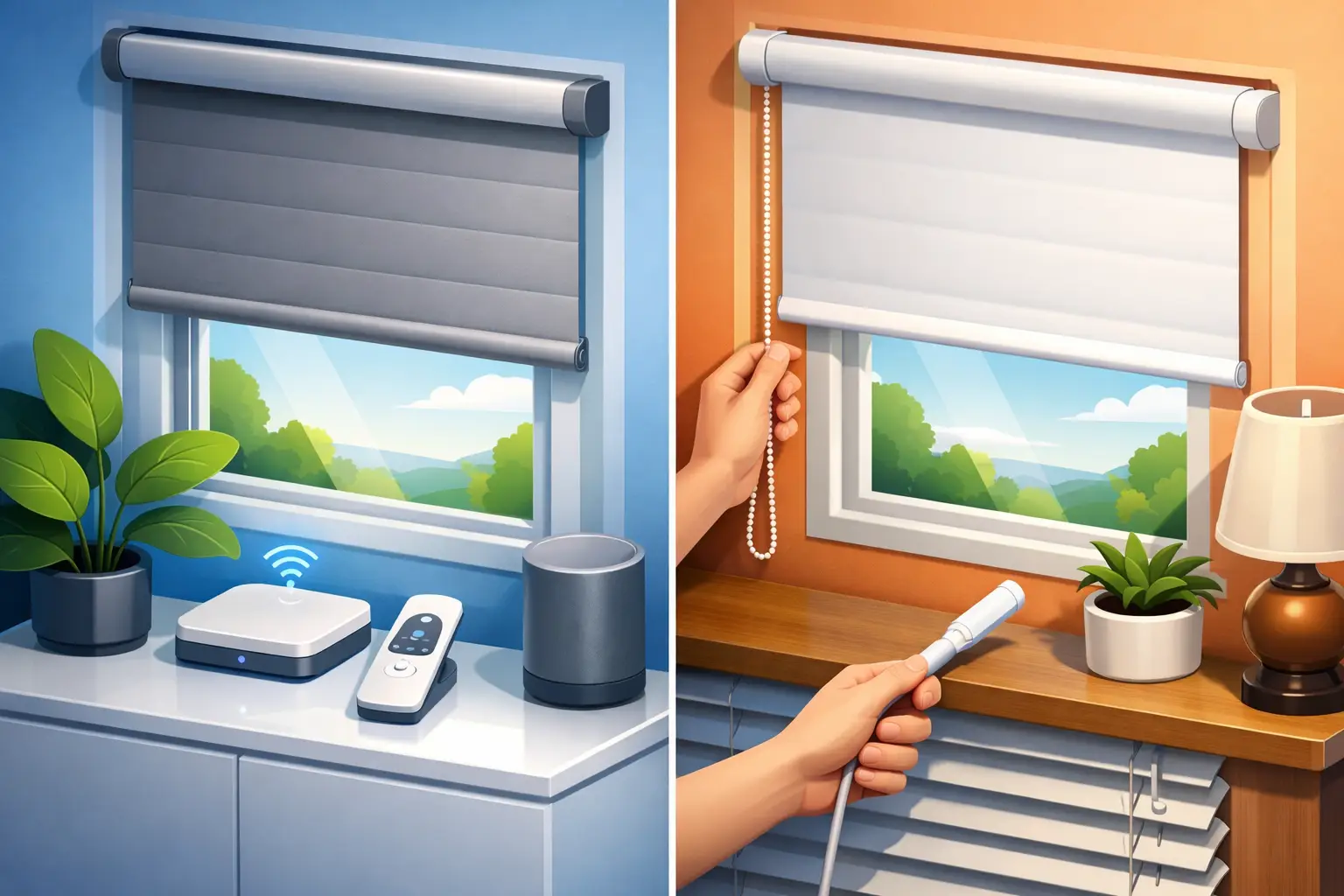
Manual shades use a cord, continuous loop, or cordless lift system that you adjust by hand. Motorized shades raise and lower with a remote, wall switch, app, or smart home integration. That sounds simple enough, but the day-to-day impact can be significant, especially in homes with large windows, hard-to-reach openings, or rooms where lighting shifts throughout the day.
If you only open and close a single shade once in a while, manual control may be perfectly adequate. If you are managing a wall of windows in a family room every morning and evening, the convenience equation changes quickly.
When manual shades make the most sense
Manual shades are often the better fit for homeowners who want custom window treatments without paying for features they may not use. They are straightforward, dependable, and generally more budget-friendly upfront.
In guest rooms, small bedrooms, offices, or spaces where the shades stay in roughly the same position most of the time, manual operation can be the practical choice. Many homeowners also prefer manual shades when they are prioritizing design and fabric selection across multiple rooms and want to keep the overall project cost controlled.
That does not mean manual shades feel basic. With the right materials, tailored sizing, and professional installation, they can still look refined and high-end. In fact, a well-designed manual shade often gives homeowners exactly what they need without unnecessary complexity.
There are trade-offs, of course. If a shade is behind furniture, over a soaking tub, or mounted on a tall or oversized window, manual operation becomes less convenient. What feels easy during a showroom visit can feel frustrating six months later when the shade is part of your everyday routine.
Where motorized shades earn their price
Motorized shades tend to make the strongest case in homes where comfort, convenience, and clean design matter as much as the initial budget. They are especially appealing in primary bedrooms, living rooms with expansive glass, stairwells, media rooms, and homes with high or awkwardly placed windows.
The biggest benefit is not just pressing a button. It is consistency. You are much more likely to use your shades as intended when they are effortless to operate. That means better privacy at night, better glare control during the day, and better protection for flooring, furniture, and artwork from harsh sun exposure.
Motorization also improves the visual experience of a room. Without dangling cords or chains, the overall look is cleaner and more architectural. In design-forward homes, that detail matters. The treatment feels integrated rather than added on.
For busy households, scheduling is another major advantage. Shades can be set to rise in the morning, lower during the hottest part of the afternoon, and close in the evening without anyone thinking about it. That level of control supports comfort and energy efficiency in a way manual shades usually do not, simply because people forget or do not want to adjust them repeatedly.
Cost is real, but so is value
One of the biggest questions in motorized shades vs manual shades is cost. Manual shades usually win on upfront affordability. If you are covering many windows at once, the difference can be substantial.
Motorized shades require more investment because you are paying for the motor, power source, controls, and in some cases smart home integration. That said, the right comparison is not just price per shade. It is value over the life of the product.
For example, motorized shades may be worth every dollar in rooms with intense sun, difficult window access, or daily use. In those spaces, homeowners often find that convenience alone justifies the upgrade. In secondary rooms, the same upgrade may not deliver enough practical benefit to make sense.
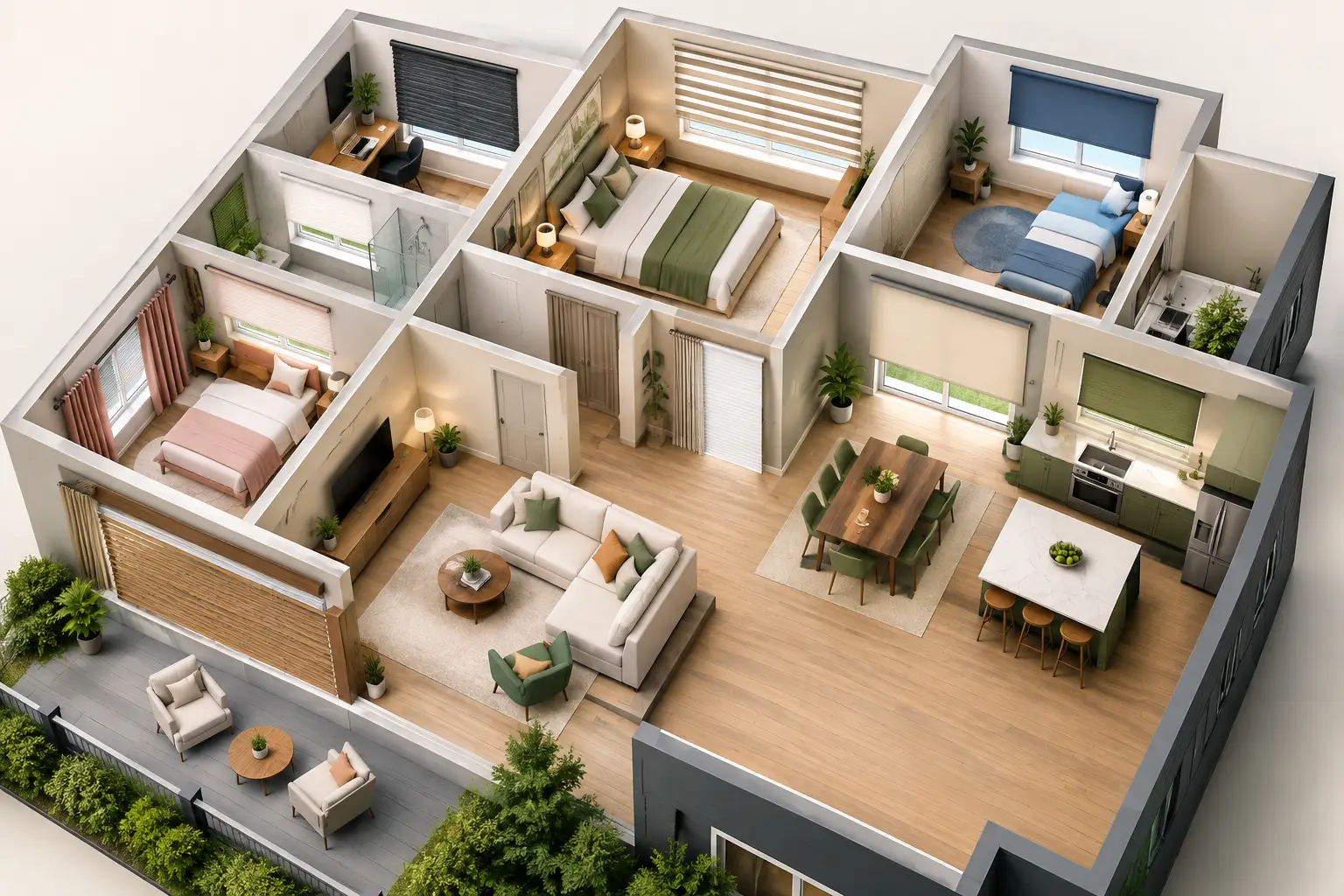
This is where a customized recommendation matters. A whole-home window treatment plan does not need to be all motorized or all manual. Many of the best projects combine both, using motorization where it adds meaningful function and manual operation where it keeps the budget efficient.
Safety, child-friendliness, and peace of mind
For families with young children or pets, safety is not a minor detail. It is often one of the deciding factors. While modern manual options can be cordless and much safer than older corded styles, motorized shades offer one of the cleanest solutions because there is no need for everyday handling or exposed operating cords.
That cleaner setup also appeals to homeowners who simply want less visual clutter. It is a subtle upgrade, but one that contributes to a calmer, more finished interior.
In homes where grandparents visit often, or where rooms need to be easy for everyone to use, motorized operation can also improve accessibility. Reaching, pulling, and adjusting are not always simple for every member of the household.
Design flexibility and the custom factor
Both manual and motorized shades can be beautiful when they are properly selected for the room. Fabric, opacity, color, texture, fold style, and hardware all influence the final result far more than most homeowners expect.
What changes with motorization is the ability to preserve a cleaner silhouette, especially on larger or more prominent windows. That can be a major advantage in open-concept living spaces or homes with contemporary interiors where visual simplicity is part of the appeal.
Manual shades still offer plenty of design flexibility, and in some applications they are the more sensible match. The important thing is not treating window treatments like a one-size-fits-all purchase. A shade that looks good online can disappoint quickly if the operation feels inconvenient or the proportions are wrong for the space.
That is one reason many Northern Virginia homeowners prefer a guided, in-home process. Seeing materials in your lighting, comparing lift options in person, and planning around furniture placement usually leads to a much better outcome than choosing based on a screen.
Motorized shades vs manual shades for different rooms
The best answer often depends on the room.
In a primary bedroom, motorized blackout shades are often worth serious consideration. They make it easy to control privacy and morning light without getting out of bed, and they add a level of comfort that feels distinctly upscale.
In a family room or great room with many windows, motorization can save time and make daily light control far more realistic. In a formal dining room or guest room, manual shades may be all you need if adjustments are occasional.
Home offices fall somewhere in the middle. If glare is a regular issue during work hours, motorized shades can be a smart productivity upgrade. If the room has just one or two accessible windows, manual shades may be more than sufficient.
The same logic applies in commercial spaces. If appearance, solar control, and consistent operation are priorities, motorized systems often bring stronger long-term value. For simpler applications, manual shades may remain the practical choice.
The installation side matters more than most people think
A shade can have beautiful fabric and excellent features, but if it is measured poorly or installed incorrectly, the whole investment suffers. This is especially true with motorization, where alignment, power planning, programming, and fit all affect performance.
Manual shades are generally simpler, but custom sizing still matters for privacy, light gaps, and overall appearance. A professional consultation helps identify details homeowners often miss, such as window depth, trim interference, sun exposure, and how a shade will function once furniture is back in place.
That guidance is often what separates a product purchase from a finished solution. Covering Windows has built its reputation around that difference, helping homeowners choose what truly fits the room instead of pushing a generic upgrade.
Which one should you choose?
If you want the most budget-conscious path and your windows are easy to reach, manual shades can be an excellent choice. If you value convenience, have larger or harder-to-access windows, or want a cleaner, more luxurious everyday experience, motorized shades usually justify the investment.
For many homes, the smartest answer is not either-or. It is a balanced plan that puts motorization where it solves a real problem and keeps manual shades where simplicity works just fine.
A good window treatment should make your home easier to live in, not just nicer to look at. When the choice fits the room, the routine, and the way you want your home to feel, you will notice that every single day.